
Selecting the right training chair for multi-hour workshops requires balancing physical comfort, space efficiency, and structural durability. When participants sit for extended periods, standard office chairs might be too bulky, while basic folding chairs quickly lead to fatigue and distraction. The ideal training chair must offer targeted ergonomic support, breathable materials, and flexible configurations that adapt to dynamic learning environments.
Ergonomic Support for Multi-Hour Comfort
Long training sessions demand active postural support to prevent slouching and lower back strain. Lumbar support is critical here; while fixed lumbar curves offer standard support for average heights, adjustable lumbar mechanisms allow users to align the support with their lower back curve.
The seat pan design also plays a major role in maintaining lower-body circulation. Look for a waterfall front edge, which slopes slightly downward to relieve pressure behind the knees and thighs. This contour helps prevent the numbness often experienced during long lectures.
Products mentioned in this guide
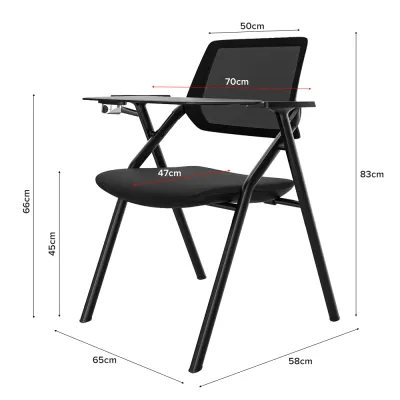
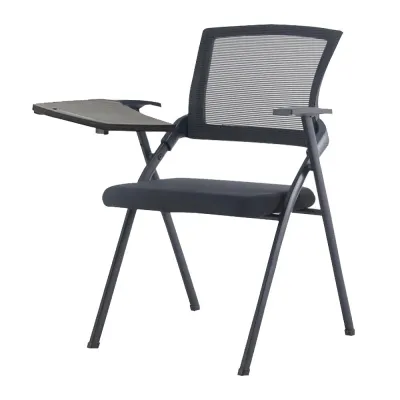
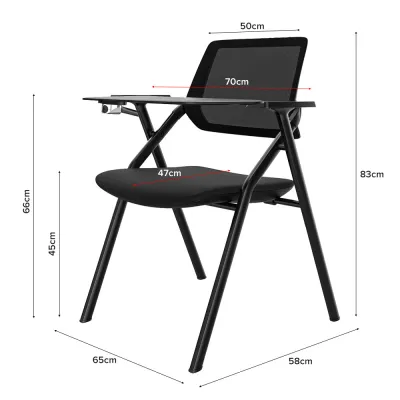
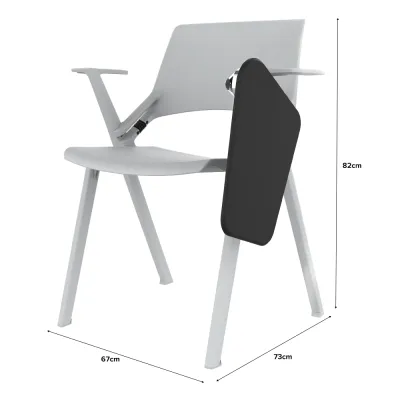
Prices are valid at publication and may change. Please refer to the product page for the latest price.
Armrests provide essential relief for the neck and shoulders, but their configuration must match your training room setup. Fixed armrests can block the chair from sliding under training desks, forcing users to lean forward. Adjustable or flip-up armrests offer the best of both worlds, providing support during discussions and folding away to clear desk edges when writing.
Additionally, consider the seat width and depth. A seat that is too deep prevents shorter users from utilizing the backrest, while a seat that is too narrow restricts movement. Ensuring a balanced seat dimension accommodates a wider demographic of participants.
Material and Breathability Specifications
Upholstery directly affects thermal comfort and long-term maintenance in busy training rooms. Mesh backrests excel in warm climates, promoting continuous airflow to keep users cool. However, for the seat pan, a tightly woven fabric or commercial-grade polyurethane (PU) might be preferred for durability, provided the underlying cushioning is high quality.

Do not judge seat comfort solely by visual thickness. Cheap, low-density foam can look plush but will flatten quickly under continuous use, leading to bottoming out. Instead, verify the manufacturer’s specifications for high-density, molded polyurethane foam, which retains its shape and supportive tension over years of heavy use.
For high-traffic commercial spaces, check the fabric’s double-rub count (such as Wyzenbeek or Martindale ratings) on the specification sheet to ensure wear resistance. Look for stain-resistant surface treatments and reinforced double-stitched seams, which prevent fraying and simplify cleaning after spills.
Furthermore, consider the ease of sanitization. In shared training environments, materials that can withstand mild disinfectant wipes without degrading or discoloring are essential for maintaining hygiene standards between different user groups.
Adjustability and Mobility Features
While highly adjustable task chairs are great for dedicated desks, training chairs need intuitive, streamlined adjustments that any user can operate instantly. A reliable pneumatic gas lift is the most critical adjustment. Always verify safety certifications, such as BIFMA X5.1 or TÜV LGA Class 3 or 4, by checking the manufacturer’s technical data sheet.
A gentle tilt or tension-adjustable recline mechanism allows users to shift their posture naturally, reducing spinal compression. However, for focused note-taking or exams, ensure the chair features a tilt-lock mechanism to keep the backrest upright and stable when needed.
Mobility requirements depend heavily on your flooring and room layout. Hard nylon casters are ideal for carpeted training rooms, whereas soft polyurethane casters prevent scratching on vinyl, laminate, or hardwood floors. For tiered seminar rooms or fixed-row layouts, glides or fixed-base sled frames are often safer and keep the room organized.
Space Management and Structural Durability
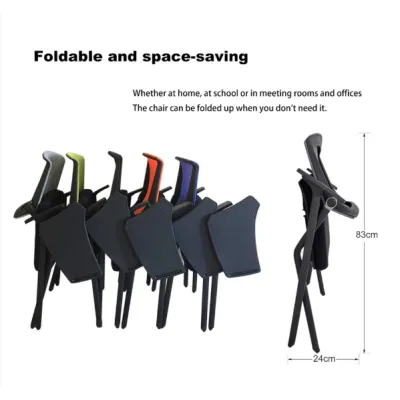
Training rooms are multi-functional spaces that often require rapid reconfiguration. If you need to clear the floor regularly, look for nesting chairs with flip-up seats that roll together horizontally, or stacking chairs that stack vertically. Check the manufacturer’s recommended stacking limit to prevent tipping or frame deformation.
To protect the chairs during storage, ensure the frames feature protective bumper guards or anti-scratch glides. These small plastic components prevent metal-on-metal contact when chairs are nested or stacked together.
If your training setup relies on integrated writing tablets, evaluate their structural rigidity and attachment mechanism. Ensure the tablet can support the weight of a laptop without sagging. Additionally, check if the manufacturer offers left-handed tablet options or ambidextrous designs to accommodate all participants.
Frame material also dictates durability. Steel frames with powder-coated finishes offer excellent resistance to impacts and scratches, making them far more suitable for high-frequency commercial use than lightweight plastic alternatives.
Pre-Purchase Evaluation and Space Planning
Before placing a bulk order, measure your training room dimensions, aisle widths, and desk clearances carefully. Ensure there is enough clearance behind each chair for participants to stand up and walk comfortably without blocking emergency exit paths. Don’t forget to measure your doorways and lift dimensions to guarantee easy delivery and installation.
Requesting a physical sample from the supplier is highly recommended. Have team members of varying heights test the chair for at least an hour to evaluate real-world comfort, foam resilience, and ease of adjustment.
Finally, review the commercial warranty terms, lead times, and bulk return conditions. A robust commercial warranty (typically 3 to 5 years for training environments) indicates the manufacturer’s confidence in the frame and mechanism durability under daily, multi-user wear.
Confirm whether the chairs arrive fully assembled or require on-site assembly. If assembly is required, clarify if the supplier provides installation services, as assembling dozens of chairs can significantly impact your project timeline.
Frequently Asked Questions (FAQ)
Are mesh back training chairs always better for long workshops?
Mesh backrests are excellent for ventilation, especially in rooms with variable air conditioning. However, they are not universally superior. Some users prefer the structured, cushioned support of a fully upholstered fabric backrest, which can distribute pressure more evenly during full-day sessions.
Do training chairs need armrests for extended use?
For sessions lasting over two hours, armrests are highly beneficial as they support the weight of the arms and reduce shoulder fatigue. However, if your training desks have low clearance or if space is highly constrained, armless chairs or models with flip-up armrests are more practical to prevent layout interference.
How do I verify the commercial weight capacity of a training chair?
Avoid relying on vague marketing claims of durability. Instead, request the official product specification sheet and look for compliance with recognized commercial standards, such as ANSI/BIFMA X5.1. These standards certify that the chair has undergone rigorous static and dynamic load testing for commercial environments.
Community discussion
Share your experience or ask a question. Comments are reviewed before publication.