
In Singapore’s space-efficient apartments, storage beds are essential for maximizing bedroom layouts. However, when the hydraulic rods—also known as gas springs or struts—begin to lose their lifting power, accessing your stored items becomes a physical chore and a safety hazard. Choosing the correct replacement storage bed hydraulic rod requires looking beyond visual similarities. You must match the exact Newton force rating, extended length, compressed length, stroke length, and mounting hardware. Getting these engineering specifications right ensures your bed lift mechanism operates smoothly, stays open safely, and closes flush without damaging your bed frame.
Why Guessing Hydraulic Rod Specs Leads to Lifting Failures
Gas springs are precision-engineered components designed to balance a specific weight within a highly constrained physical space. When homeowners guess these specifications, they risk structural damage and personal injury. If you install replacement rods with insufficient force, the heavy mattress and wooden platform will struggle to stay open, often slamming down unexpectedly. Conversely, choosing rods with excessive force can warp the wooden frame, bend the steel brackets, or prevent the bed from closing entirely.
Before attempting to replace or adjust any lifting hardware, always check your bed frame manufacturer’s instructions and safety guidelines. If the original manual is unavailable, or if the replacement hardware instructions conflict with your bed frame’s design, stop and consult the manufacturer or a qualified professional. Incorrect physical lengths can cause the mechanism to bind, preventing the bed platform from sitting flat. This mechanical strain can crack the bed frame joints or strip the mounting screws from the engineered wood commonly used in modern bed bases.
Products mentioned in this guide
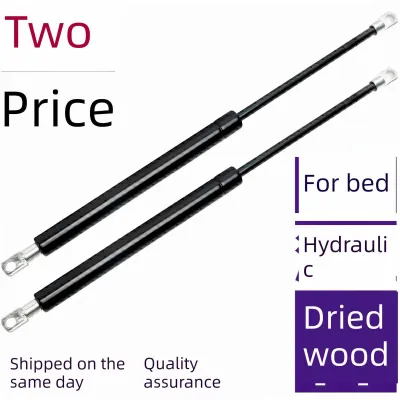
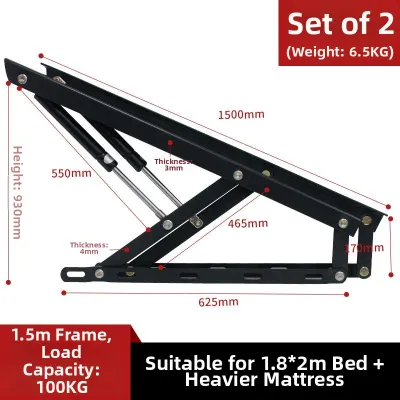
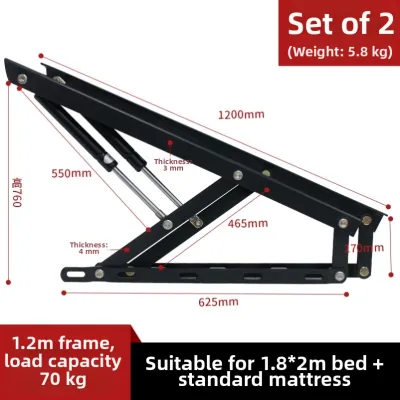
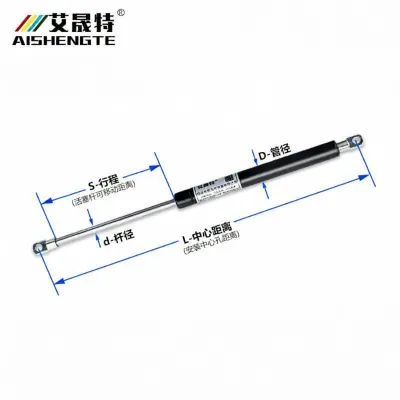
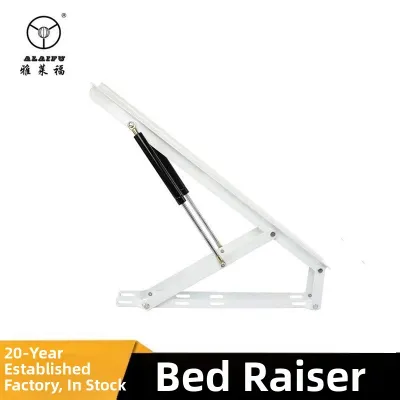
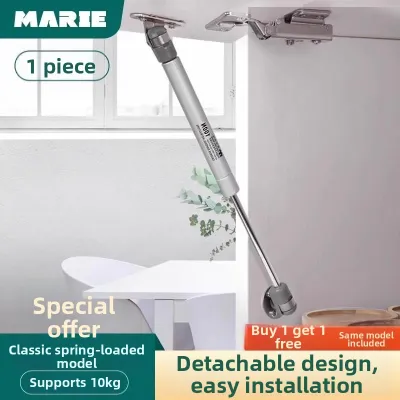
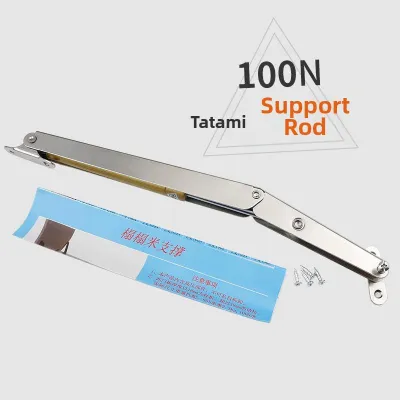
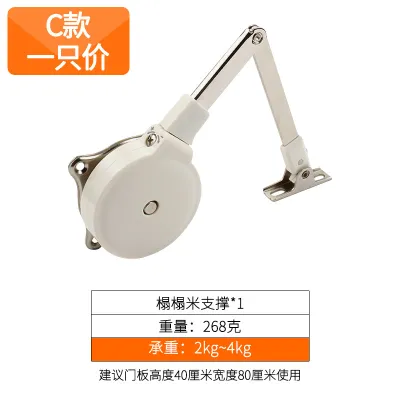
Prices are valid at publication and may change. Please refer to the product page for the latest price.
Decoding Force Ratings (Newtons) to Support Your Mattress
The lifting capacity of a storage bed hydraulic rod is measured in Newtons (N). As a general rule of thumb used by manufacturers, every 10 Newtons of force equates to approximately 1 kilogram of lifting capacity. For example, a rod rated at 800N provides roughly 80kg of lifting force. To determine the required force, you must account for the total weight of the lift-up timber platform, the mattress, and any heavy bedding.

Rather than trying to calculate this weight from scratch, your first step should always be to inspect the cylinder of the existing rod. Manufacturers typically print the force rating directly on the metal casing, often indicated by a number followed by “N” (such as “800N” or “1100N”). If the label has worn off, consult the original assembly manual or contact the furniture manufacturer.
Avoid the common mistake of buying the highest force rating available. If your bed requires 600N and you install 1200N rods, the lifting mechanism will resist compression so strongly that you may not be able to close the bed. This excessive resistance puts immense strain on the hinges and can crack the wooden frame at the mounting points.
Measuring Length and Stroke for a Perfect Frame Fit
Physical dimensions are just as critical as force ratings. To find a compatible replacement, you must measure three distinct dimensions: the extended length, the compressed length, and the stroke length. The extended length is measured from the center of one mounting point (such as the ball socket) to the center of the other when the rod is fully open. The compressed length is the total length of the rod when it is fully pushed in, while the stroke length is the distance the thin piston rod actually travels inside the thicker cylinder.
The stroke length directly determines how wide your storage bed will open. A stroke that is too short restricts access to the storage compartment, while a stroke that is too long can cause the mattress to collide with the headboard. To get accurate measurements, always remove at least one functioning rod from the bed frame first. Measuring a rod while it is still mounted or partially compressed will lead to inaccurate numbers.
If both original rods are missing or damaged beyond measurement, do not guess the dimensions based on similar-looking beds. Refer to the manufacturer’s technical specifications for your specific bed model. Even a small discrepancy of 10mm to 20mm in extended or compressed length can prevent the bed from closing flush, leaving an unsightly gap and putting constant, uneven pressure on the frame hinges.
Matching Mounting Hardware and Installation Clearances
Beyond force and length, the replacement rod must physically connect to your bed frame’s brackets. The most common mounting style for residential storage beds is the ball joint, which uses a socket on the rod that snaps onto a ball stud mounted on the frame. Other configurations include eyelets, which secure with a clevis pin, or integrated flat brackets. If your bed uses threaded ball studs, verify the thread size—typically M6, M8, or M10—to ensure the new rod’s end fittings can screw on securely.
Additionally, check the physical clearance around the rod. Replacement rods with higher force ratings sometimes feature thicker cylinders. If the replacement cylinder’s diameter is larger than the original, it may rub against the wooden side panels or the metal lifting bracket during operation, leading to friction wear.
Take a moment to inspect the existing metal brackets screwed into your bed frame. If these brackets are bent, loose, or have stripped screw holes in the wood, they must be repaired or replaced. Installing brand-new hydraulic rods onto compromised brackets will lead to unstable lifting and premature failure of the entire mechanism.
Your Pre-Purchase Measurement Checklist
Before searching online marketplaces or visiting a local hardware store in Singapore, compile a precise technical profile of your required hardware. Use this checklist to record your specifications:
- Force Rating: Expressed in Newtons (N) (e.g., 600N, 900N, 1200N).
- Extended Length: Measured from center-of-connector to center-of-connector (mm).
- Compressed Length: Fully closed length (mm).
- Stroke Length: The travel distance of the piston rod (mm).
- End Fitting Type: Ball joint socket, eyelet, or flat bracket.
- Thread/Ball Size: Diameter of the mounting studs (e.g., 8mm or 10mm ball).
Take clear, high-resolution photos of the printed label on your old rod and the mounting brackets to cross-reference with product listings. Always purchase and replace hydraulic rods in pairs. Replacing only one rod causes uneven force distribution, which twists the bed frame, accelerates wear on the new rod, and can cause the platform to rise crookedly. Lastly, verify the seller’s return and exchange policy, as even minor measurement errors can necessitate a swap.
Community discussion
Share your experience or ask a question. Comments are reviewed before publication.