
Selecting a modular book shelf for a child’s room requires balancing immediate storage needs with long-term safety and adaptability. Unlike standard adult furniture, children’s shelving must withstand active play, accommodate changing physical heights, and transition from holding oversized picture books to standard school textbooks. The ideal modular system is one that anchors securely to your specific wall type, features rounded edges, and offers a clear path for expansion as your child grows. By focusing on structural integrity and flexible configurations, you can invest in a storage solution that remains functional from toddlerhood through the teenage years.
Essential Safety Features for Kids' Shelving
Safety is the non-negotiable foundation of any children’s furniture piece. The most critical risk associated with shelving units is tipping, which can occur when a child attempts to climb the shelves or pull down a heavy book. To mitigate this hazard, always verify that the modular system includes a dedicated anti-tip kit. Depending on your home’s construction, the anchoring requirements will vary. For instance, in homes with solid concrete or brick walls, standard plastic drywall plugs included in flat-pack furniture are insufficient. You must source heavy-duty masonry wall plugs and appropriate screws to ensure a secure hold. If you are anchoring to drywall, you must locate the wall studs or use specialized toggle bolts rather than simple self-drilling anchors.
Beyond wall anchoring, the physical finish of the shelving unit requires close inspection. Run your hands along the edges and corners of the modular components before assembly. Sharp 90-degree corners pose a significant impact hazard during active play. Look for units that feature rounded radius edges or soft-edge banding to cushion accidental bumps. Additionally, check the manufacturer’s documentation for weight capacity limits. This includes both the maximum load for individual shelves and the cumulative weight limit for the entire assembled unit. To maintain stability, always place the heaviest books on the lowest shelves to keep the center of gravity as low as possible.
Products mentioned in this guide
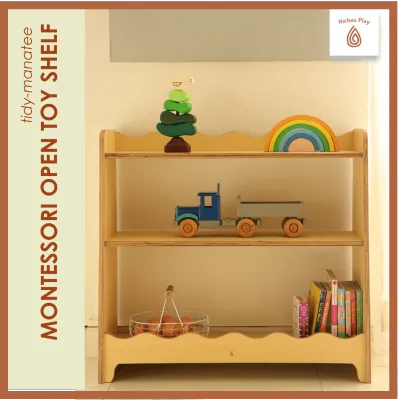
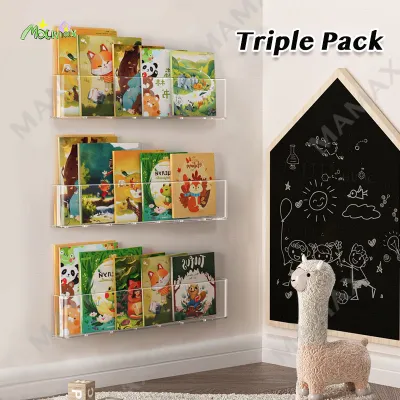
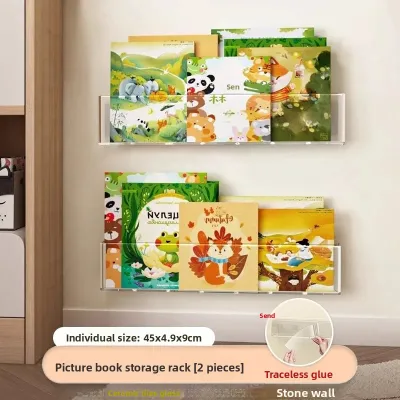
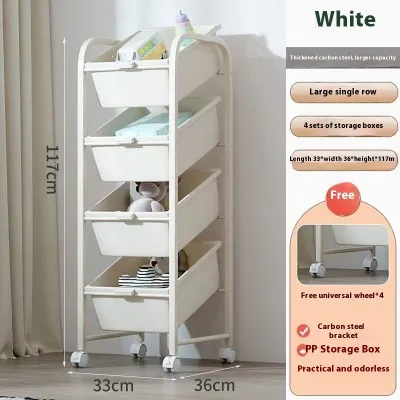
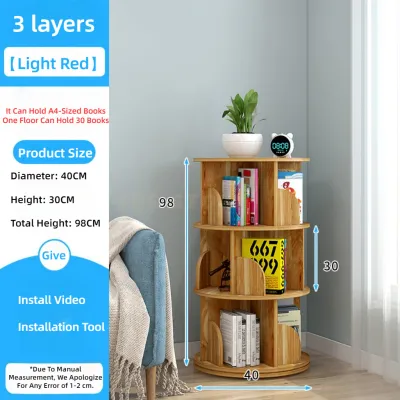
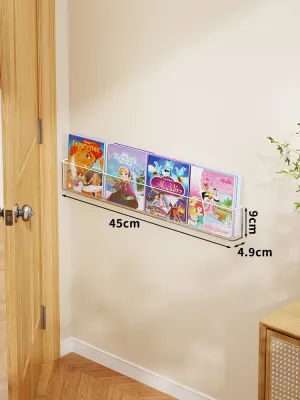
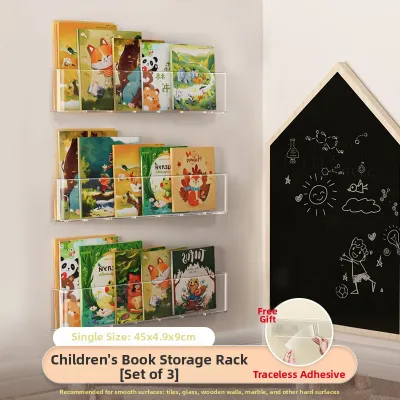
![[S]Bookcase Storage Rack Book Shelf Rack Shelf Storage Bedside Shelf Kids Book Shelf Cabinet Storage 书架](https://img.lazcdn.com/g/p/fb8f95bdc58ac8714fa57723e79de5ba.jpg_webp_400x400q80.jpg_.webp)
Prices are valid at publication and may change. Please refer to the product page for the latest price.
Chemical safety is another vital consideration, as children frequently touch furniture surfaces and may even chew on them during toddlerhood. Review the product specifications to verify that the materials and finishes carry non-toxic certifications. Look for engineered wood products that meet low-emission standards, such as E0 or E1 grade ratings, which indicate minimal formaldehyde off-gassing. Finishes should be water-based, lead-free, and certified safe for children’s products. Avoid any shelving units that emit a strong, chemical odor upon unboxing, as this can indicate high levels of volatile organic compounds (VOCs) that can compromise indoor air quality in a compact bedroom.
Evaluating Modular Design and Adaptability
The primary advantage of a modular book shelf is its ability to evolve alongside your child’s changing needs and abilities. When evaluating different systems, look closely at the adjustability of the shelf heights. Systems with closely spaced pre-drilled peg holes or adjustable track systems allow you to customize the vertical clearance of each shelf. This flexibility is essential for transitioning from tall, oversized picture books to smaller chapter books and school binders without wasting valuable vertical space.

Expansion capabilities are another hallmark of a high-quality modular system. Consider whether the manufacturer offers a wide range of compatible add-on components, such as extra storage cubes, drawer inserts, lateral extension units, or toy bins. A system that allows you to start with a low, two-tier horizontal layout and later stack units vertically or expand them sideways provides excellent long-term value. This adaptability ensures you do not have to replace the entire furniture piece when your child’s book collection outgrows the initial setup.
The assembly mechanism itself plays a significant role in how easily you can reconfigure the shelving. Some modular systems feature tool-free assembly, utilizing interlocking dowels, tension clips, or magnetic connectors. While these systems offer unmatched convenience for quick reconfigurations, you must verify that the joints remain rigid and do not wobble under load. Conversely, hardware-secured systems that use metal cams, screws, or bolts require more effort and tools to adjust, but they generally offer superior structural rigidity. If you plan to reconfigure the layout frequently, look for systems that use metal-to-metal connection inserts rather than screwing directly into raw engineered wood, which can strip the holes over time.
Finally, consider how the system handles the transition between different display styles. Toddlers and early readers benefit immensely from forward-facing picture book displays, where the book covers are visible and easily accessible. This visual layout encourages independent reading habits. However, as children grow and accumulate more books, forward-facing storage becomes highly space-inefficient. A truly adaptable modular shelf will allow you to swap out slanted display shelves for standard flat utility shelves, transitioning the unit into a traditional spine-out storage system as your child’s reading habits mature.
Sizing, Accessibility, and Room Layout
To foster independence and ensure safety, the physical dimensions of the modular shelf must align with your child’s physical reach. As a general rule, the maximum height of active-use shelves should not exceed your child’s shoulder height. For toddlers, this typically means keeping the height below 80 to 90 cm, while older children can safely reach shelves up to 120 to 140 cm. Any shelves positioned above this safe reach should be reserved for decorative items, seasonal storage, or books that require parental supervision to access, reducing the temptation for the child to climb the unit.
Calculating the unit’s footprint against the available floor space is especially critical in compact bedrooms or HDB flats where space is at a premium. Measure the designated wall space carefully, keeping in mind that you need to maintain clear walkways. Ensure there is at least 60 to 80 cm of open floor space in front of the shelving unit. This clearance allows your child to sit comfortably on the floor to browse books, open any integrated drawers, and navigate the room without tripping over the furniture.
Room layout constraints extend beyond simple floor measurements. Evaluate the swing paths of bedroom doors, wardrobe doors, and nearby windows to ensure the shelving unit does not obstruct them. Additionally, avoid placing the book shelf directly adjacent to a bed, desk, or window sill. Children can easily use these nearby surfaces as stepping stools to climb onto the upper sections of the shelving, bypassing the safety limits of the lower shelves and putting excessive stress on the wall anchors.
The choice between forward-facing and spine-facing storage also impacts your room layout. Forward-facing shelves require more depth to accommodate the angled display of books, which can encroach on narrow walkways. Spine-facing shelves are much shallower, making them ideal for tight spaces, though they require the child to be able to read titles or recognize books by their spines. Balancing these two styles within a single modular unit can optimize both space efficiency and accessibility.
Material Durability and Maintenance Checks
Children’s furniture must endure a high level of daily wear and tear, from spilled drinks and crayon marks to accidental toy impacts. Before purchasing, review the manufacturer’s care labels and cleaning instructions. Opt for surfaces that can be easily wiped clean with a damp cloth and mild soap. Avoid delicate wood veneers or unsealed solid woods that can warp, stain, or harbor mold when exposed to spills or high indoor humidity. Melamine laminates, high-pressure laminates (HPL), and durable water-resistant lacquers are generally the most resilient options for busy kids’ rooms.
The integrity of the joints, brackets, and connectors is just as important as the surface material. Inspect the quality of the hardware that holds the modular components together. Plastic connectors can become brittle over time, especially when exposed to sunlight or fluctuating room temperatures. Metal brackets and steel dowels offer far greater longevity and structural stability under active daily use. If the modular system relies on peg-and-hole adjustments, ensure the pegs are made of metal or heavy-duty plastic that will not shear under the weight of heavy books.
When evaluating scratch and dent resistance, do not rely solely on the material name. For example, while solid pine is a natural material, it is a soft wood that dents and scratches very easily under the impact of toy cars or hard-covered books. Instead, look for the specific finish type applied to the material. A hard polyurethane coating or a scratch-resistant laminate layer will protect the underlying material far better than a simple oil or wax finish.
Lastly, investigate the availability of replacement parts from the manufacturer. Modular systems are designed to be reconfigured, but this process increases the risk of losing small hardware pieces or damaging an individual shelf panel during a move. Choosing a brand that sells individual replacement connectors, shelf pins, and single panels ensures that a minor mishap does not render your entire modular system obsolete. This availability is a key indicator of a brand’s commitment to the longevity of their product line.
Building Your Conditional Shortlist
To translate these criteria into an actionable purchase decision, begin by creating a simple feature matrix tailored to your specific home environment. Divide your requirements into “must-have” safety and sizing constraints and “nice-to-have” aesthetic preferences. Your must-have list should always include compatible anti-tip hardware, non-toxic material certifications, and dimensions that fit your measured wall space without blocking doors or walkways. Nice-to-have features might include specific colorways, integrated fabric storage bins, or modular drawer inserts.
Next, establish a realistic budget boundary in S$ that accounts for both your immediate needs and future expansion. A basic modular starter set typically ranges from S$120 to S$300, while premium solid wood or highly customizable European modular systems can easily exceed S$600. When comparing options, calculate the cost of adding extra modules later. A system with a lower initial price might end up costing more overall if the add-on components are disproportionately expensive or difficult to source individually.
Before finalizing your purchase, verify the retailer’s return policies, assembly support, and warranty coverage. Flat-pack modular furniture can sometimes arrive with minor shipping damage or missing hardware. Ensure the retailer offers a straightforward exchange policy for damaged parts. If you are not confident in your DIY skills, check if the retailer provides professional assembly and wall-anchoring services, which can guarantee that the unit is installed safely and securely according to local building standards.
Finally, plan the entire installation process before the furniture arrives. Identify the exact wall location, locate any electrical wiring or plumbing pipes behind the wall to avoid drilling into them, and gather the necessary tools, such as a spirit level, a stud finder, and a drill with the correct masonry or wood bits. By preparing your space and verifying all safety and structural requirements beforehand, you can ensure that your new modular book shelf provides a safe, organized, and inspiring reading corner for your child for years to come.
Frequently Asked Questions (FAQ)
At what age can a child safely use a modular book shelf without supervision?
Children can typically begin accessing the lower shelves of a book shelf independently around 18 to 24 months, provided they can walk steadily and follow simple instructions. However, independent use of the entire unit without direct supervision should only occur once the child has reached a developmental stage where they understand not to climb, pull, or hang on the furniture, which usually occurs around four to five years of age. Regardless of the child’s age, maturity level, or the presence of adult supervision, installing secure anti-tip wall anchors is mandatory. You can gauge your child’s readiness for independent retrieval by observing their behavior; if they consistently use the shelf only for retrieving and replacing books without attempting to use the shelves as steps, they are ready for unsupervised access to their books.
Can I mix and match modular shelving components from different brands?
It is highly discouraged to mix and match modular shelving components from different manufacturers. There are no industry-wide standards for modular connection points, peg hole spacing, locking mechanisms, or panel thicknesses. Attempting to force components from different brands together can severely compromise the structural integrity of the unit, leading to wobbling, joint failure, or an increased risk of collapse. Furthermore, using third-party parts or modifying the original structure will void any manufacturer warranties and safety certifications. To ensure a perfect fit, reliable weight distribution, and tested safety performance, always stick to a single brand’s ecosystem for all your modular components and expansion parts.
How often should I check the wall anchors on a kids' book shelf?
You should perform a visual and physical inspection of the wall anchors and anti-tip straps at least once every six months. Over time, daily use, subtle vibrations from nearby doors closing, and environmental factors like high indoor humidity can cause wall plugs to loosen or straps to degrade. During your check, gently wiggle the top of the shelving unit to ensure there is no play or movement in the anchor points. Inspect the wall surface around the screws for any signs of cracking, crumbling plaster, or drywall dust, which indicate that the anchor is pulling away. If you notice any loosening, immediately remove all books from the upper shelves and reinstall the anchoring hardware in a fresh, secure section of the wall.
Community discussion
Share your experience or ask a question. Comments are reviewed before publication.