
Maximizing floor space is a constant priority for homeowners living in compact Singapore apartments, such as Housing & Development Board (HDB) flats and modern condominiums. A multi-functional storage bench sofa offers an elegant solution to this spatial puzzle by combining comfortable seating with hidden, highly accessible storage. Instead of cluttering your entryway or living room with separate chairs, shoe racks, and storage boxes, a single well-chosen bench sofa consolidates these functions into a streamlined footprint. Finding the right piece requires a systematic approach that balances precise spatial measurements, access routes, and storage mechanisms with your household’s daily routines.
Assessing Your Space and Functional Needs
Before browsing online marketplaces or visiting local furniture showrooms, you must establish the exact physical boundaries of your intended space. In typical Singapore layouts, entryways and foyers are often narrow corridors where every centimeter counts. Start by measuring the width and depth of the available floor area, keeping a close eye on the swing paths of nearby doors. Your main entrance door, metal security gate, and even the household shelter (bomb shelter) door must be able to open fully without colliding with the bench. Additionally, if you plan to place the bench adjacent to an existing shoe cabinet or built-in console, ensure there is at least 90 to 100 centimeters of clear walkway space remaining so family members can pass through comfortably.
Defining the primary role of the storage bench sofa will help you narrow down the structural design. If your household needs a dedicated spot to sit while putting on footwear, the bench should feature a lower, firmer seat and quick-access storage for daily shoes. Conversely, if the bench is intended as extra seating for guests in the living room, you should prioritize a model with a higher backrest, plush cushioning, and deep internal compartments for storing bulky, less frequently used items like spare cushions or board games. For bedroom placement, the primary focus often shifts to storing seasonal linens, winter clothing, or extra pillows, which requires a clean, dust-free interior environment.
Products mentioned in this guide
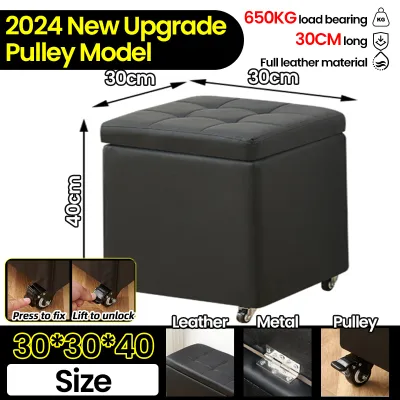
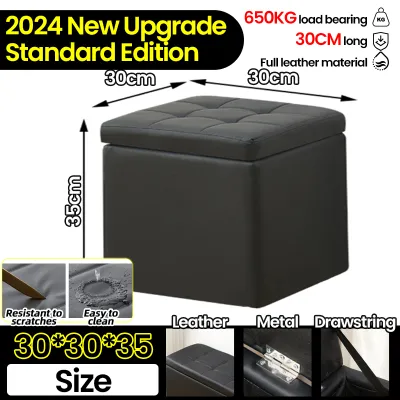
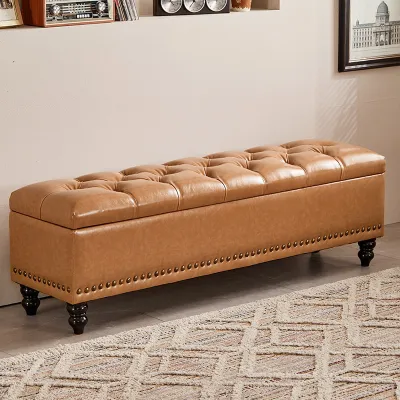
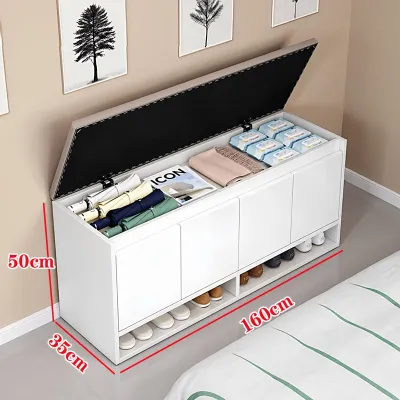
![[FABRIC] Foldable Storage Ottoman Bench For Living Room Bedroom Entryway](https://img.lazcdn.com/g/p/039bf582e2daaba41ba4126dc41fc823.png_400x400q80.png_.webp)
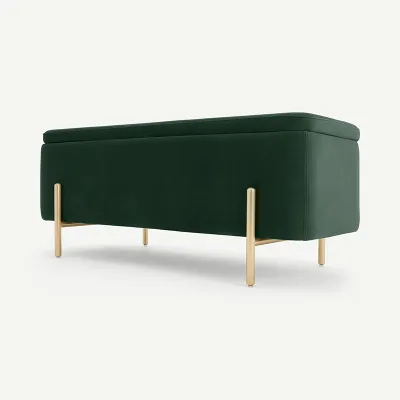
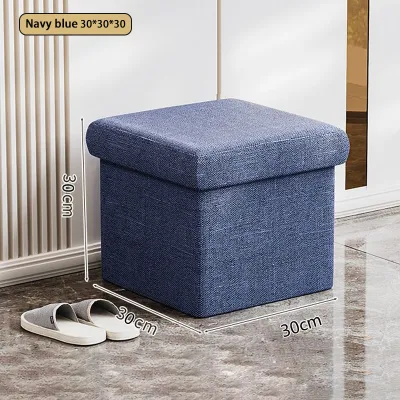
Prices are valid at publication and may change. Please refer to the product page for the latest price.
Logistical constraints are another critical factor that homeowners frequently overlook until the delivery day. Singapore’s high-rise living means your new furniture must travel through communal corridors, lift lobbies, and passenger elevators before reaching your front door. Measure the height, width, and diagonal clearance of your building’s service lift, as well as any tight turns in the common corridors. If you live in an older estate with walk-up stairs or narrow stairwells, these dimensions are even more critical. Verifying these measurements beforehand ensures that your selected storage bench sofa can be delivered safely without getting stuck or requiring expensive, last-minute return fees.
Exploring Multi-Functional Storage Bench Sofa Designs
Storage bench sofas come in several distinct configurations, each offering unique advantages depending on your spatial limitations and how often you need to access the stored items.

Lift-Top and Flip-Seat Benches
Lift-top and flip-seat models feature a hinged seat cushion that lifts upward to reveal a large, undivided storage chest underneath. This design is highly efficient for storing bulky, lightweight items such as winter coats, travel bags, or extra bedding that you only need to access occasionally. When evaluating these models, pay close attention to the lifting mechanism. Manual flip-tops rely on standard hinges, meaning you must hold the heavy seat open with one hand while reaching inside with the other, which can be inconvenient and poses a finger-pinch risk. Models equipped with hydraulic gas struts or soft-close tension hinges are much safer and easier to operate, as they hold the seat open automatically and close slowly with minimal effort.
Another crucial consideration for lift-top benches is wall clearance. Traditional hinged lids swing backward as they open, meaning the bench cannot sit completely flush against a wall or window bay without scraping the paint or preventing the lid from opening fully. If you plan to place the bench directly against a wall, look for “zero-clearance” or wall-hugger hinge designs. These specialized mechanisms slide the seat slightly forward as it lifts, allowing you to position the furniture flush against the wall without sacrificing accessibility.
Drawer-Based and Sliding-Door Models
For items that you need to access multiple times a day, such as school bags, daily footwear, or dog leashes, drawer-based or sliding-door benches are highly practical. Drawer-based models feature pull-out compartments beneath the seat, allowing you to organize smaller items systematically without disturbing anyone sitting on the bench. However, drawers require significant physical clearance in front of the unit. If a bench has a depth of 40 centimeters and the drawers extend fully, you will need at least 80 to 90 centimeters of open space in front of the bench to pull the drawers out completely and stand comfortably beside them.
If your entryway or hallway is too narrow to accommodate fully extended drawers, sliding-door or louvered-panel designs offer an excellent alternative. Because the doors slide horizontally within a track, they require zero forward clearance to open, keeping your walkways completely unobstructed. The main trade-off with sliding doors is that they only expose half of the storage interior at any given time. Louvered doors provide the added benefit of natural ventilation, which is highly beneficial in Singapore’s humid climate to prevent musty odors and mold growth on stored shoes or fabrics.
Modular and Convertible Configurations
Modular storage benches offer the ultimate flexibility for dynamic, multi-functional spaces. These designs consist of individual, lightweight units that can be rearranged to serve different purposes. For example, a modular system might feature three separate storage cubes that sit side-by-side to form a long entryway bench, but can be separated to serve as individual footstools, side tables, or extra dining seats when hosting guests. Some advanced convertible models can even unfold into a single daybed or a low-profile lounger, making them ideal for study rooms or small guest bedrooms.
When choosing modular or convertible furniture, structural stability and joint durability are paramount. Because these pieces are designed to be moved and reconfigured frequently, they are subject to more wear and tear than static furniture. Inspect the spec sheets for robust locking mechanisms, such as heavy-duty metal clips, alignment pins, or industrial-strength connector brackets that prevent the modules from sliding apart when someone sits down. Additionally, verify the weight capacity of each individual module to ensure they can safely support adult users when detached from the main configuration.
Evaluating Build Quality and Material Specifications
To ensure your storage bench sofa survives the rigors of daily use in a busy household, you must carefully evaluate its build quality and material specifications. Start by checking the manufacturer’s stated weight capacity on the product specification sheet. A reliable bench designed for multiple users should clearly specify its maximum load limit. Be sure to distinguish between static weight capacity (the maximum weight the bench can support when users sit down gently) and dynamic weight capacity (which accounts for the sudden impact of someone sitting down quickly). For a standard two-to-three-seater bench, look for a static weight rating of at least 150 to 200 kilograms to ensure long-term structural safety.
Upholstery materials play a major role in both the comfort and maintenance of your bench, especially in high-traffic zones like the entryway. Singapore’s warm, humid climate demands breathable, easy-to-clean fabrics. Synthetic performance fabrics, such as high-density polyester blends treated with water-resistant coatings, are highly durable and resist staining from spilled liquids or dirty shoes. Polyurethane (PU) synthetic leather is another popular choice because it can be wiped clean easily with a damp cloth, though you should check that the material is UV-resistant if placing the bench near a sunny window to prevent cracking. If you prefer natural fabrics like cotton or linen, look for models with removable, machine-washable covers to simplify your cleaning routine.
The longevity of any moving furniture piece depends heavily on its hardware. When reviewing product details, look for high-quality hardware indicators such as ball-bearing drawer slides, rust-resistant stainless steel hinges, and soft-close dampers. Low-grade hardware can lead to sagging drawers, squeaky hinges, and misaligned doors within a few months of use. If the manufacturer does not specify the hardware brand or material, look for descriptive terms like “heavy-duty,” “soft-close,” or “hydraulic” on the specification sheet, and verify the warranty coverage for moving parts.
Strategic Placement for Compact Layouts
Integrating a multi-functional storage bench sofa into a small floor plan requires strategic placement to maximize utility without disrupting the natural flow of your home.
In the entryway or foyer, the bench should serve as a welcoming transition zone. Align the bench flush against the wall adjacent to your main door, ensuring it does not block access to your electrical distribution board (DB box) or the household shelter door. If your entryway opens directly into the living room, you can use a medium-sized storage bench to create a faux foyer. By placing the bench perpendicular to the wall, you establish a clear visual boundary that defines the entryway while providing a convenient spot to drop keys, bags, and shoes as soon as you step inside.
The bedroom and window bay areas offer excellent opportunities for secondary placement. Positioning a low-profile storage bench at the foot of your bed creates a classic bed-end seating area while providing a discreet home for extra pillows, seasonal duvets, or bedsheets. If your apartment features built-in window bays (bay windows), placing a custom-fit storage bench directly against the ledge turns an underutilized architectural feature into a cozy reading nook. This setup allows you to enjoy natural light while keeping your favorite books or hobby supplies neatly tucked away underneath.
In open-concept living and dining areas, a storage bench sofa can be used as an effective zoning tool. Instead of a bulky, high-backed armchair that blocks sightlines and makes the room feel smaller, a low-profile, backless storage bench can act as a subtle room divider. Placing the bench behind your main sofa or between the living and dining zones maintains an open, airy feel while adding valuable seating and storage. This arrangement is particularly useful during social gatherings, as guests can sit on either side of the bench to face different areas of the room.
Frequently Asked Questions (FAQ)
How much weight can a typical storage bench sofa support?
The weight capacity of a storage bench sofa varies significantly depending on its construction materials, dimensions, and design. To find the exact limit, always refer to the manufacturer’s official product specification sheet rather than relying on general industry estimates. Generally, a well-constructed wooden or metal-framed storage bench designed for two adults will support a static weight capacity of approximately 150 to 200 kilograms. It is important to distinguish this from the internal storage weight limit, which is typically much lower (often between 15 to 30 kilograms) to prevent the bottom panel from sagging or breaking.
Are there specific fire safety or material regulations for upholstered furniture?
Yes, reputable furniture manufacturers often certify their upholstered products to meet specific safety and environmental standards. When purchasing an upholstered storage bench, look for product tags or manufacturer declarations indicating compliance with recognized fire retardant standards, such as the British Standard (BS 5852) or local equivalent guidelines. Additionally, you can check for material safety certifications like CertiPUR-US for polyurethane foam or OEKO-TEX for fabrics, which verify that the materials are free from harmful chemicals and heavy metals. Always verify these certifications directly on the retailer’s official website or product documentation.
What should I do if the bench dimensions exceed my HDB lift or stairwell limits?
If you discover that a fully assembled storage bench sofa is too large to fit through your HDB service lift, corridor, or stairwell, you should explore alternative delivery options before canceling your order. Many retailers offer flat-pack versions of their furniture that can be transported easily in pieces and assembled directly inside your home. When purchasing, consult the retailer to see if they provide professional on-site assembly services. If flat-pack delivery is not an option, you may need to measure your apartment’s windows or balcony to see if a specialized hoisting service is feasible, though this typically incurs significant additional fees.
Community discussion
Share your experience or ask a question. Comments are reviewed before publication.