
Finding the right 3-seater recliner sofa in Singapore requires balancing comfort, multi-functional utility, and the physical constraints of local living spaces. Whether you are furnishing a cozy HDB flat or a spacious condominium, a multi-functional recliner serves as the centerpiece of your living room, acting as a relaxation hub, a temporary guest bed, or even a charging station. To make an informed decision, you must evaluate how the reclining mechanisms interact with your floor plan, assess the durability of materials under tropical humidity, and verify the safety of integrated electrical components. Focusing on these practical parameters ensures your investment provides lasting comfort without disrupting the flow of your home.
Evaluating Multi-Functional Features for Daily Use
Multi-functional 3-seater recliners often come equipped with a variety of mechanical and electrical features designed to enhance convenience. When comparing manual and motorized adjustable headrests or lumbar support systems, the primary trade-offs lie in ease of operation, precision, and noise levels. Motorized systems allow you to adjust the angle incrementally at the push of a button, which is highly beneficial for finding the exact position for neck support. However, these systems require proximity to an electrical outlet and can produce a low humming noise during adjustment. Manual mechanisms, while silent and independent of power sources, require physical effort to adjust and typically offer fewer fixed angle increments, which may not suit users with limited physical strength.
Built-in storage compartments, such as those hidden within center consoles or under-seat drawers, add significant utility but demand close inspection of their hardware. Check the durability of the hinges and gas struts; heavy-duty, soft-closing metal hinges are essential to prevent the lid from slamming shut unexpectedly. You must also evaluate the internal capacity to ensure it accommodates your intended items, such as remote controls, blankets, or tablets. Crucially, verify whether the storage compartment can be fully accessed when the sofa is partially or fully reclined, as some designs restrict opening clearance when the footrest or backrest is in motion.
Products mentioned in this guide
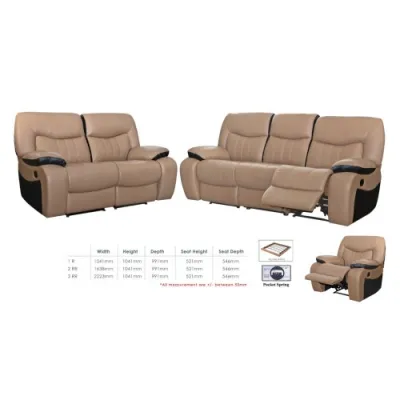
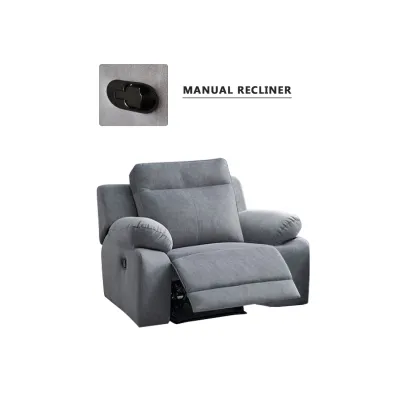
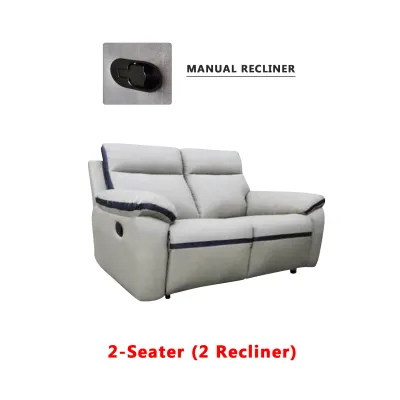
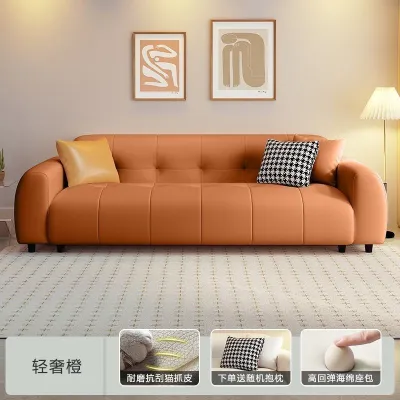
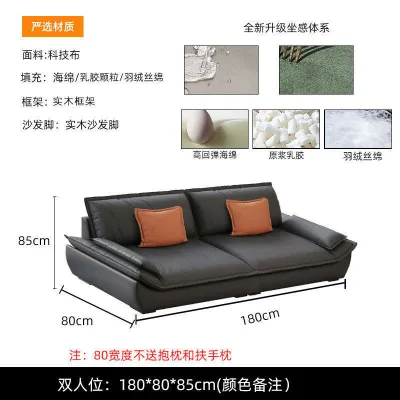
Prices are valid at publication and may change. Please refer to the product page for the latest price.
Convertible configurations, such as 3-seater recliners that transform into temporary beds or feature modular sections, offer excellent flexibility for hosting guests. When assessing these models, focus on the structural stability of the joints and the locking mechanisms that secure the frame in its flat position. A sagging middle section or a flimsy transition joint can compromise both safety and comfort. Additionally, inspect the mattress or cushioning thickness in the sleeping configuration; look for high-density foam or pocket spring layers that prevent users from feeling the underlying metal support bars.
Modern recliners frequently integrate convenience features like USB charging ports, wireless charging pads, and cup holders. While highly convenient, these electrical additions require careful safety verification. Look for recognized electrical safety labels, such as the Safety Mark in Singapore, to ensure the built-in transformers and wiring meet local safety standards. Examine the cable management system underneath the sofa to confirm that power cords are safely routed away from the moving parts of the reclining mechanism, preventing the wires from being pinched, frayed, or severed during operation.
Measuring Space and Clearance for Reclining Mechanisms
Accurately measuring your living room is the most critical step in selecting a 3-seater recliner, as these pieces of furniture require significantly more physical clearance than standard stationary sofas. Begin by calculating the full footprint of the sofa when all three seats are fully extended. This includes the maximum forward projection of the footrests and the backward tilt of the backrests. Ensure that even with all mechanisms fully deployed, there remains a clear walkway of at least 60 to 70 centimeters around the sofa to allow household members to move safely without tripping over extended footrests.

Understanding the difference between standard reclining mechanisms and wall-hugger designs is essential for space planning. Standard recliners slide backward as they tilt, requiring a substantial gap—often between 30 and 50 centimeters—between the back of the sofa and the wall. In contrast, wall-hugger recliners utilize a forward-sliding track mechanism that allows the sofa to sit as close as 10 to 15 centimeters from the wall. Always consult the specific product manual or manufacturer specification sheet to verify the exact rear clearance requirements before finalizing your living room layout.
Delivery logistics present a common bottleneck for homeowners in Singapore, particularly those living in high-rise apartments. You must measure the width and height of all doorways, corridors, elevator entrances, and staircase turns along the delivery path. Many 3-seater recliners are delivered in modular sections or with removable backrests to facilitate transport, but you must confirm these packaging dimensions with the retailer. A sofa that fits perfectly in your living room is of no use if it cannot clear the elevator doors or the tight corners of an older HDB corridor.
Finally, consider the physical weight of the recliner and its impact on your flooring. Multi-functional recliners, especially motorized models with steel frames and built-in motors, are substantially heavier than traditional sofas. Ensure your flooring material, whether vinyl, engineered wood, or large-format tiles, can support this concentrated weight without scratching or denting. Placing heavy-duty felt pads or rubber caster cups under the sofa’s contact points can help distribute the load and protect your floors during minor adjustments or cleaning.
Assessing Upholstery and Frame Durability
The choice of upholstery directly affects how well your 3-seater recliner withstands daily wear and Singapore’s warm, humid climate. Genuine leather offers excellent durability and a classic aesthetic, but it requires regular conditioning to prevent cracking and can feel warm if your living room is not air-conditioned. Synthetic blends and performance fabrics, such as water-resistant microfibers, provide high breathability and are easier to clean, making them highly practical for daily use. Always check the manufacturer’s care labels to identify the recommended cleaning agents and verify if the material has been treated for moisture and stain resistance.
The internal frame serves as the backbone of any reclining sofa, bearing both the weight of the users and the mechanical stresses of the reclining action. Look for frames constructed from kiln-dried solid hardwoods or heavy-duty metal alloys, as these materials resist warping and structural fatigue over time. Avoid frames made primarily of low-grade particleboard or thin plywood, which can split under the repetitive movement of a recliner. A reliable indicator of structural integrity is the manufacturer’s warranty; look for brands that offer a dedicated warranty of at least five to ten years on the frame and mechanical joints.
When testing a recliner in-store, pay close attention to the construction details that indicate long-term durability. Inspect the stitching quality along the seams, ensuring there are no loose threads, uneven tension, or pulling fabric near the joints. Sit on the sofa and operate the mechanism multiple times to assess the cushion density recovery; high-density polyurethane foam or pocketed spring cushions should quickly regain their shape when you stand up. Flimsy cushioning will flatten rapidly, leading to discomfort and mechanical parts pressing against your body.
For households prone to spills, check if the sofa features removable and washable covers, particularly on the armrests and headrests where skin oils and sweat accumulate. While fully removable covers are rare on complex motorized recliners, some models offer detachable seat cushions or zippered fabric panels. If removable covers are not an option, verify that the upholstery can be safely treated with aftermarket fabric protectors or easily spot-cleaned with mild, water-based upholstery cleaners.
Building Your Shortlist Based on Household Needs
To narrow down your choices, align the specific configurations of a 3-seater recliner with your household’s daily routines and spatial constraints. For compact living spaces, such as typical three-room or four-room HDB flats, your shortlist should prioritize wall-hugger mechanisms and compact footrest designs. Look for models where the footrest extends straight out rather than pivoting widely, and select built-in storage options that feature zero-clearance access, such as front-sliding drawers, so you do not have to rearrange surrounding furniture to open them.
Families with young children or pets require a focus on safety and robust materials. In these households, prioritize stain-resistant performance fabrics or scratch-resistant synthetic leathers that can withstand claws and spills. Ensure the recliner design features rounded edges and well-padded armrests to minimize the risk of bumps during active play. Most importantly, inspect the underside of the reclining mechanism; high-quality family recliners should have protective fabric guards or enclosed metal frames to prevent curious fingers or small pets from accessing the moving gears and scissor joints.
If your primary goal is hosting overnight guests, evaluate the convertible features of the recliner with a focus on ease of deployment. The transition from a 3-seater sofa to a flat sleeping surface should be smooth and manageable by a single person, utilizing secure locking mechanisms that prevent the frame from shifting overnight. Check the mattress thickness and support structure; a thicker, high-density foam mattress is essential to ensure your guests enjoy a comfortable night’s sleep without feeling the structural frame beneath them.
For tech-heavy households where the living room doubles as a home office or entertainment hub, integrated power modules are a major selling point. When shortlisting these models, verify that the built-in USB ports, power outlets, and wireless chargers carry recognized safety certifications. Look for integrated surge protection to safeguard your connected devices from electrical fluctuations. Additionally, check that the sofa design includes clean, built-in cable management channels to keep power cords organized and safely tucked away from foot traffic.
Finalizing Your Purchase: Delivery and Warranty Checks
Before finalizing your purchase of a multi-functional 3-seater recliner, clarify all delivery and installation details with the retailer. Because these sofas are heavy and mechanically complex, professional assembly is highly recommended. Confirm whether the delivery fee includes bringing the sofa up to your specific floor, assembling the modular sections, and testing the electrical components in your home. Additionally, inquire about old furniture disposal services if you need to clear out an existing sofa, as many local town councils or private delivery services require advance booking for large item disposal.
Carefully review the warranty terms, paying close attention to the division of coverage. It is common for manufacturers to offer different warranty periods for different components of a multi-functional recliner. For instance, the structural frame might be covered for ten years, the mechanical reclining joints for five years, and the electrical motors, wiring, and USB ports for only one or two years. Understanding these distinctions beforehand prevents unexpected repair costs if an electrical component fails after the initial coverage period.
Perform a rigorous in-store test of the exact floor model or a demonstration unit before making your payment. Sit in each of the three seats and operate the reclining mechanism through its full range of motion. Listen closely for any unusual squeaking, grinding, or clicking noises, which can indicate poor alignment or inadequate lubrication of the metal joints. Assess the weight distribution when fully reclined; the sofa should feel stable and grounded, without any tendency to tip backward or wobble when you shift your weight.
Finaly, read the retailer’s return and exchange policy thoroughly. Returning a large, heavy piece of multi-functional furniture can be complicated and costly. Verify the duration of the return window, the exact conditions under which a return is accepted, and whether restocking fees or transport charges will be deducted from your refund. Having a clear understanding of these policies provides peace of mind and protects your investment in the event that the sofa does not fit your space or meet your comfort expectations.
Frequently Asked Questions (FAQ)
How much wall clearance does a standard recliner sofa need?
A standard 3-seater recliner typically requires between 30 and 50 centimeters of clearance between the back of the sofa and the wall to allow the backrest to tilt fully backward. To determine the exact clearance needed for your home, always measure from the furthest projecting point of the sofa’s backrest to the wall when the unit is in its upright position. If your living space is limited, look specifically for wall-hugger designs, which slide forward during operation and require as little as 10 to 15 centimeters of rear clearance.
Can I add aftermarket storage or USB ports to a basic recliner?
It is highly discouraged to add aftermarket storage compartments, USB ports, or electrical wiring to a basic recliner sofa. Modifying the physical frame can compromise its structural integrity and weight distribution, while altering the electrical systems poses significant safety risks, including short circuits or fire hazards. Furthermore, any unauthorized modifications will almost certainly void the manufacturer’s warranty. To ensure safety, durability, and proper function, it is best to purchase a sofa with factory-integrated multi-functional features.

Community discussion
Share your experience or ask a question. Comments are reviewed before publication.