
Finding the right storage for your child’s growing book collection in a compact HDB bedroom often feels like a balancing act between keeping the space organized and preventing it from feeling claustrophobic. To choose a kids’ bookshelf that fits a small bedroom without overcrowding, you must select a unit with a shallow depth (typically under 30 centimeters), prioritize vertical or wall-mounted configurations that preserve floor space, and verify that the unit can be securely anchored to the wall to ensure safety. By focusing on exact physical dimensions and smart design features, you can create an inviting reading nook that leaves plenty of room for play and daily activities.
How much floor space and wall area can you actually dedicate to a kids book shelf?
Before browsing online marketplaces or visiting showrooms, you must measure the exact footprint of your available floor space and the clear vertical wall area, keeping a minimum walkway clearance of 60 to 70 centimeters. This clearance ensures that your child can move around the room, open wardrobe doors, and play on the floor without bumping into furniture corners.
Start by mapping out the existing furniture layout. Use a measuring tape to record the width and depth of the empty floor zones. Pay close attention to skirting boards along the base of the walls; these boards often protrude by one to two centimeters, which can prevent a flat-backed bookshelf from sitting completely flush against the wall unless the unit features a base cutout.
Products mentioned in this guide
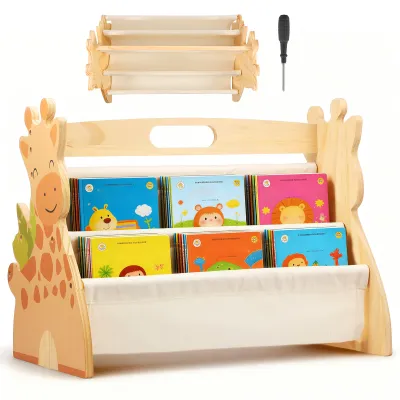
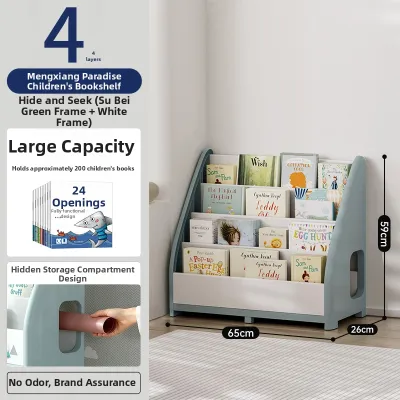
5 Lazada user ratings
It looks great, but the installation took quite a bit of effort and a few hours to figure out.
Really good, the customer service was great, and I will definitely buy again next time.
I'm really happy with this! 👍🏻 It can hold so many books, and the kids love it.
The quality is really great.
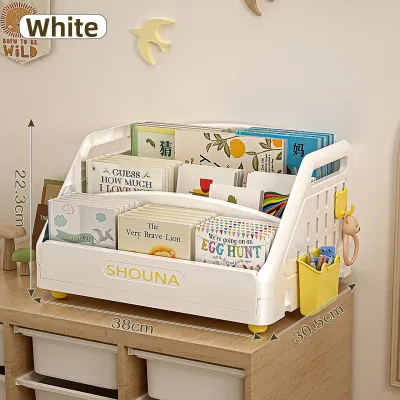
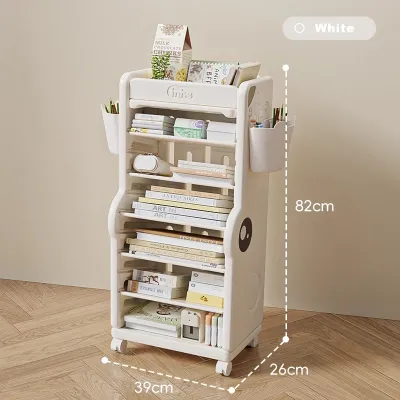
12 Lazada user ratings
There were some minor imperfections, but overall it’s pretty good. Just hope the quality check is a bit more thorough next time.
I've been a loyal customer for a long time and I really appreciate the unique design and quality of this product.
The material has a unique texture that gives the product a very distinct look compared to the photos.
The shelf is very stable and doesn't wobble at all when pushed. The craftsmanship is excellent.
It's a really great product and the quality is excellent.
Prices are valid at publication and may change. Please refer to the product page for the latest price.
Next, inspect the wall area for potential obstructions. Note the locations of electrical outlets, light switches, and air conditioning units. Blocking power sockets with a heavy bookshelf is not only inconvenient but can also pose a safety hazard if cables are pinched. Additionally, measure the swing path of bedroom doors, wardrobe doors, and windows to ensure the new shelf will not obstruct their movement.
Finally, look for underutilized dead spaces in the room. The area directly beside a bed, the corner behind a door, or the wall space above a low study desk can often accommodate specialized shelf shapes. Identifying these zones early allows you to consider alternative designs, such as corner shelving units or wall-mounted ledges, which utilize vertical space without consuming valuable floor real estate.
Which bookshelf dimensions and orientations prevent a small room from feeling cramped?
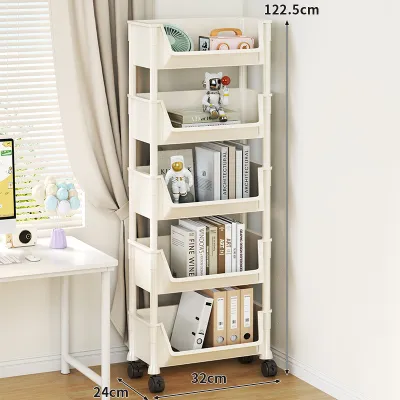
Choosing a tall, narrow vertical bookshelf instead of a short, wide horizontal one maximizes your storage capacity per square meter of floor space while keeping the room’s visual lines clean. In a compact bedroom, horizontal units spread across the floor, reducing the available play area and making the layout feel congested.

Vertical shelving units draw the eye upward, making use of the room’s height. However, you must balance height with accessibility. For toddlers and younger children, a very tall shelf means they cannot reach the upper tiers independently. In this case, you can store active reading books on the lower shelves and keep keepsake books, seasonal items, or decorative pieces on the higher levels.
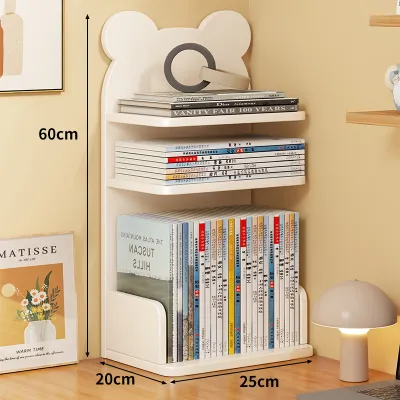
Shelf depth is another critical dimension that dictates how much a unit encroaches on a room. Standard children’s books, picture books, and school materials rarely require deep shelving. A shelf depth of 20 to 28 centimeters is usually sufficient for most children’s literature. Selecting a shallow shelf prevents the unit from protruding unnecessarily into the walking path, preserving a spacious feel.
When shopping, avoid relying on generic marketing terms such as “compact,” “mini,” or “space-saving.” Always check the manufacturer’s technical specifications for the exact finished dimensions, including the outer width, depth, and height. Additionally, verify the assembly conditions and ensure that the packaged box can fit through your home’s doorways and lift access during delivery.
What design features maximize storage capacity without adding visual clutter?
To maximize storage without creating a heavy visual presence, look for bookshelves that combine open front-facing display rails with light-colored finishes, slim frames, or wall-mounted configurations. The right design features can make a physically large storage unit appear light and unobtrusive.
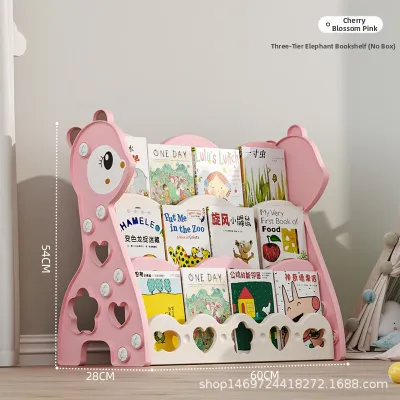
Consider the style of shelving based on your child’s age and storage needs. Front-facing book displays, where book covers face outward, are highly engaging for younger children and encourage independent reading. However, they hold fewer books overall. A hybrid design that features a few front-facing display ledges at the top and standard spine-out shelves below offers a practical compromise.
To manage visual clutter, look for units that incorporate closed lower cabinets, drawers, or integrated fabric storage bins. These compartments allow you to hide mismatched toys, coloring books, and art supplies, keeping the room looking tidy. Keeping the upper shelves open and dedicated solely to books maintains an airy, uncluttered look at eye level.
Adjustable shelving is another highly beneficial feature. Because children’s books come in highly irregular sizes—ranging from oversized picture books to small paperbacks—fixed shelves often result in wasted vertical space. Adjustable shelves allow you to customize the height of each tier, maximizing the storage capacity within the same overall footprint.
Finally, pay attention to colors and materials. Bookshelves with light wood tones, white finishes, or slim, minimalist frames reflect more light and tend to blend into typical light-colored walls. Wall-mounted floating shelves or book ledges are excellent alternatives to freestanding units; they lift the storage completely off the ground, leaving the floor area open and making the entire bedroom feel larger.
How do you verify safety and stability for a tall or narrow bookshelf in a child's room?
Verifying safety requires choosing a bookshelf that includes a dedicated wall-anchoring kit and checking that its base design and weight distribution prevent tipping. Because space-saving designs are often tall and narrow, they have a higher center of gravity and are more susceptible to tipping over if a child climbs or pulls on them.
Always check the product description or manual to confirm that the manufacturer includes anti-tip hardware, such as wall straps or brackets. Before installation, verify that the included anchors are compatible with your specific wall type. For example, concrete walls common in many residential buildings require sturdy masonry wall plugs and screws, whereas drywall partitions require specialized hollow-wall anchors.
Review the manufacturer’s specified weight capacity limits per shelf and for the entire unit. To maintain stability, practice proper load distribution: always place the heaviest books, such as thick encyclopedias, heavy board books, or toy storage bins, on the bottom shelves. This keeps the center of gravity low, significantly reducing the risk of tipping. Reserve the lighter paperbacks and decorative items for the upper shelves.
Lastly, inspect the base of the bookshelf before assembly. A wider bottom plinth, a solid base plate, or adjustable leveling feet help stabilize the unit on slightly uneven flooring. If the bookshelf does not sit flush against the wall due to a thick skirting board, look for models with a pre-cut skirting indentation at the back, or use spacer brackets to secure the anchor safely without bending the unit’s frame.
Community discussion
Share your experience or ask a question. Comments are reviewed before publication.