
Finding the right over-door hanging rack for heavy items like winter coats, loaded backpacks, and shopping bags requires looking beyond basic designs. While many organizers claim to be heavy-duty, true durability depends on specific structural features, correct door measurements, and safe loading practices. In space-constrained homes, such as apartments in Singapore, utilizing the vertical space behind doors is an excellent way to keep bags and coats organized. However, choosing an inadequate rack or overloading a fragile door can lead to bent hooks, scratched paint, or even warped door frames.
To find a rack that securely holds heavy items, you must evaluate the physical construction of both the rack and your door. A reliable setup ensures that your belongings remain securely suspended without compromising the smooth operation of your entryway or room doors. By focusing on material thickness, bracket design, and proper weight distribution, you can maximize your storage capacity safely and effectively.
Key Features to Look for in Heavy-Duty Over-Door Racks
When shopping for a heavy-duty over-door hanging rack, the manufacturer’s stated maximum weight capacity is the first specification to verify. Rather than relying on vague marketing terms like “ultra-strong” or “industrial grade,” look for explicit weight ratings in the product documentation. A truly heavy-duty rack should specify a total weight capacity as well as a per-hook limit, allowing you to calculate whether it can safely support your heaviest items.
Products mentioned in this guide
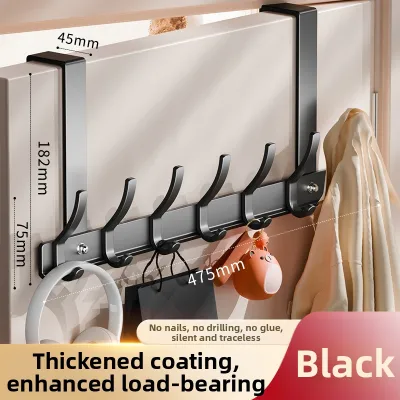
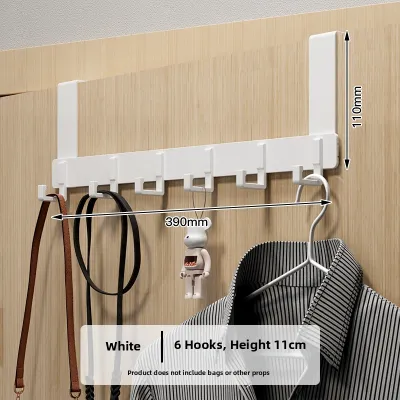
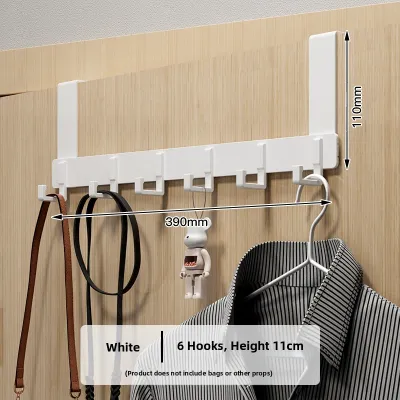
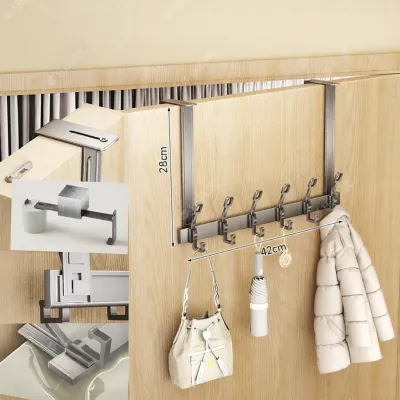
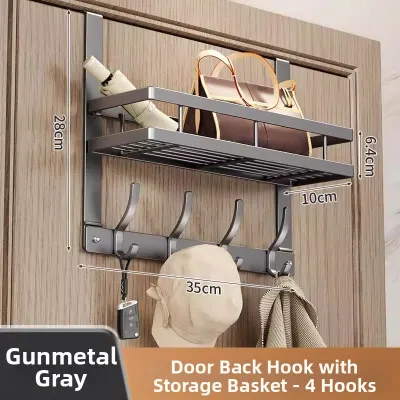
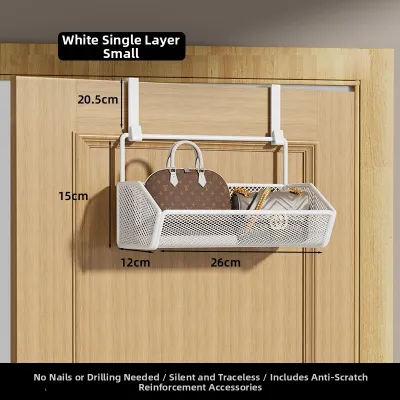
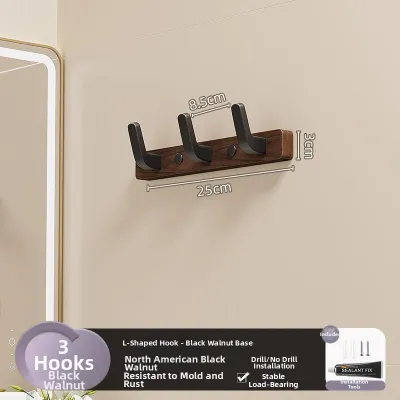
Prices are valid at publication and may change. Please refer to the product page for the latest price.
The design and thickness of the hooks themselves play a critical role in preventing structural failure. Opt for hooks made from thick, flat-metal bands or heavy-gauge wire that resist bending under downward pressure. The curvature of the hooks should be deep and angled slightly upward to prevent heavy bag straps or bulky coats from slipping off when the door is opened or closed. Additionally, adequate spacing between individual hooks is essential; if hooks are too close together, bulky items will crowd each other, pushing the rack away from the door and creating uneven tension.
The top brackets, which hang over the top edge of the door, are the primary load-bearing components of the entire assembly. These brackets must have a depth and angle that match the thickness of your door as closely as possible to prevent shifting. A bracket that is too wide will cause the rack to tilt forward under load, concentrating all the weight on the front edge of the door and increasing the risk of damage. Look for brackets with a low-profile, flush-fitting design that distributes the downward force evenly across the entire top surface of the door.
Measuring Your Door and Clearance for a Secure Fit
Before purchasing any over-door rack, taking precise measurements of your door is a critical step that cannot be overlooked. Start by measuring the exact thickness of the door where the rack will hang, as standard interior doors typically range from 35mm to 40mm, while main entrance doors can be significantly thicker. Matching this measurement to the bracket gap of the rack ensures a snug fit, which is vital for preventing the rack from wobbling or sliding side-to-side during daily use.

Next, you must check the clearance gap between the top of the door and the door frame or ceiling. Open and close the door slowly while observing the space at the top; there must be enough clearance—typically at least 1.5mm to 2mm—to accommodate the thickness of the metal brackets. If the clearance is too tight, the bracket will scrape against the frame every time the door is operated, damaging the paint and eventually preventing the door from closing properly.
Finally, assess the hinge clearance and the overall swing radius of the door within the room. Hanging heavy, bulky items like winter coats or packed backpacks adds significant depth to the back of the door. Ensure that when the door is fully opened, these items will not smash into adjacent walls, light switches, or furniture. If your door opens flat against a wall, you may need to install a doorstop to limit the swing radius and protect both your walls and your stored belongings from impact.
Evaluating Material Strength and Build Quality
The overall durability of an over-door rack is determined by its material composition and the quality of its manufacturing. Inspect the weld points and joints where the hooks meet the main frame; these connections should be smooth, uniform, and free of visible gaps or stress fractures. Cheaply made racks often rely on weak spot welds that can easily snap under the leverage exerted by a heavy backpack, whereas high-quality options feature continuous welds or single-piece stamped metal construction.
Do not assume that all metal racks offer equal strength, as the specific material gauge and surface treatment vary widely. Look for racks constructed from high-carbon steel or heavy-duty aluminum alloys that offer high tensile strength without excessive weight. In humid environments, such as Singapore, choosing a rack with a rust-resistant surface treatment is essential. Powder-coated finishes, electroplated coatings, or stainless steel construction will prevent moisture from corroding the metal, ensuring the rack remains structurally sound and does not leave rust stains on your clothes.
Another critical quality indicator is the presence and thickness of protective padding on the inside of the brackets and the back of the frame. High-density EVA foam or silicone pads serve a dual purpose: they absorb the vibrations of the door opening and closing, and they prevent the hard metal of the rack from grinding into the door’s finish. Ensure the padding is thick enough to cushion the contact points under heavy loads, protecting delicate wood veneers or painted surfaces from deep scratches and indentations.
Safe Loading and Daily Usage Guidelines
Even the strongest over-door rack can fail or cause damage if it is loaded incorrectly. To maintain stability, always distribute heavy items evenly across the hooks rather than clustering them on one side. Concentrating all the weight on a single hook or on one end of the rack can warp the main frame, cause the rack to sit crookedly, and place uneven stress on the door’s hinges, which may lead to the door sagging over time.
It is equally important to avoid introducing dynamic loads to the rack during daily use. Dynamic loads occur when you drop or swing a heavy bag onto a hook, momentarily creating a force that far exceeds the static weight of the item. Always place your bags and coats onto the hooks gently to avoid sudden shocks that could bend the metal, crack the door frame, or cause the rack to bounce violently against the door surface.
To ensure long-term safety, establish a routine of periodically checking the condition of your rack and the door itself. Every few months, lift the rack slightly to inspect the top edge of the door for signs of indentation, paint wear, or wood splitting. Check that the protective foam pads remain securely attached and have not compressed to the point of uselessness, and inspect the metal joints for any signs of material fatigue or bending.
When to Consider Alternatives to Over-Door Racks
While over-door racks are highly convenient, they are not suitable for every situation, and recognizing their limitations is key to protecting your home. If your door is a hollow-core model—which consists of thin outer wood veneers over a cardboard honeycomb interior—it may not have the structural integrity to support heavy loads. Hanging multiple heavy bags and coats on a hollow-core door can cause the hinges to pull loose from the frame or cause the door face to crack under the concentrated pressure.
In cases where your doors are fragile, poorly hinged, or lack the necessary top clearance, wall-mounted coat racks offer a much more robust alternative. When properly anchored into concrete walls or wooden wall studs, wall-mounted racks can support significantly higher weight capacities without putting any stress on your doors. This option is particularly ideal for heavy winter gear, sports equipment, or large backpacks that exceed the safe limits of an over-door organizer.
For renters or those who prefer not to drill into walls, freestanding hall trees or heavy-duty valet stands provide an excellent, non-destructive storage solution. These independent structures can be placed in entryways, hallways, or bedroom corners, offering dedicated hooks, shelving, and shoe storage in a single unit. Because they rest firmly on the floor, they eliminate any risk of door or wall damage while still providing the heavy-duty weight capacity needed for your daily essentials.
Frequently Asked Questions (FAQ)
Can an over-door rack damage my door?
Yes, an over-door rack can damage your door if it is overloaded, poorly fitted, or lacks adequate padding. The primary causes of damage are friction from the rack shifting during door movement, which scratches paint and veneer, and concentrated pressure on the top edge of the door. Hollow-core doors are particularly vulnerable to warping or hinge damage under heavy loads. To prevent damage, always use high-density foam padding, ensure a snug bracket fit, and avoid overloading the rack beyond the door’s structural capacity.
How do I stop the rack from swinging when I open the door?
To prevent an over-door rack from swinging or banging against the door, you can use non-destructive stabilizing methods. Applying adhesive hook-and-loop strips (such as Velcro) to the back of the rack’s vertical bars and the door surface will keep it firmly in place without the need for screws. Alternatively, placing small foam wedges or double-sided mounting tape behind the contact points can absorb movement and dampen noise. Avoid using nails or screws, as these will permanently damage the door and may void rental agreements.
Community discussion
Share your experience or ask a question. Comments are reviewed before publication.