
Finding the right foldable storage cart for a small HDB flat is about balancing immediate accessibility with effortless concealment. In compact Singapore apartments, floor space is at a premium, making static furniture a potential bottleneck in high-traffic areas like kitchens, service yards, and home offices. A well-chosen foldable cart serves as a temporary workstation or storage hub that completely disappears when not in use. To make the best choice, you must look beyond aesthetics and evaluate the collapsed thickness, structural stability under load, and wheel compatibility with your home’s flooring.
Key Features to Evaluate for Compact Spaces
The primary appeal of a foldable storage cart lies in its ability to shrink when its services are no longer required. When evaluating different models, the folding mechanism itself is the first critical feature to examine. Some carts fold flat from side to side, while others collapse vertically or feature removable trays that allow the frame to fold inward. You must check the collapsed thickness of the cart; many high-quality space-saving models fold down to a profile of under 10 centimeters. This ultra-thin footprint is essential if you plan to slide the cart into narrow gaps, such as the space between your washing machine and the wall, or behind a utility room door.
Weight capacity and structural stability are equally vital, especially since foldable frames inherently possess more moving parts and joints than static shelving. A cart that wobbles when fully loaded is not only frustrating to use but can also pose a safety hazard in a busy household. Look for models that feature robust locking braces, cross-bars, or tension latches that secure the frame rigidly in its expanded state. Always check the manufacturer’s rated weight capacity, paying close attention to how that weight must be distributed. A stable cart should feel solid when pushed and should not twist or flex when you transition it from a stationary position to a rolling one.
Products mentioned in this guide
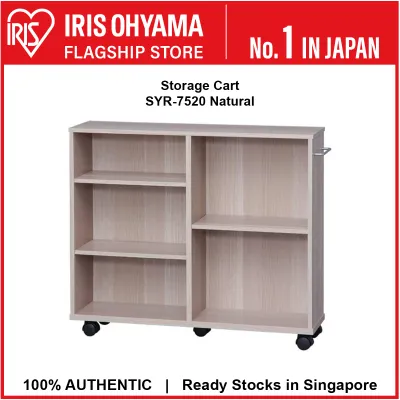
![2/3/4 Tiers Kitchen Bathroom Organizer Trolley Shelf/Rack/ Storage/Utility Cart with Rollers Wide - White / Grey Color [Stock in SG]](https://img.lazcdn.com/g/p/c3b7bda38d6f5ae35cdc88c062c34715.jpg_400x400q80.jpg_.webp)
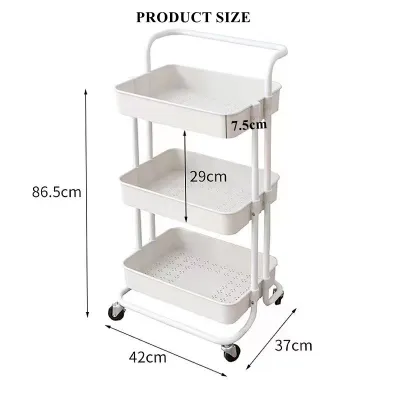
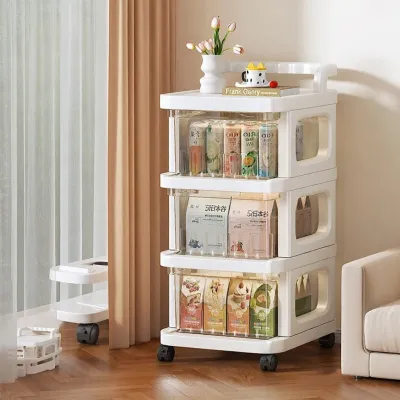
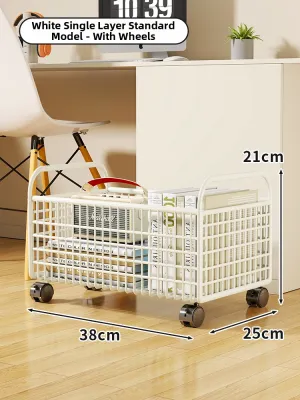
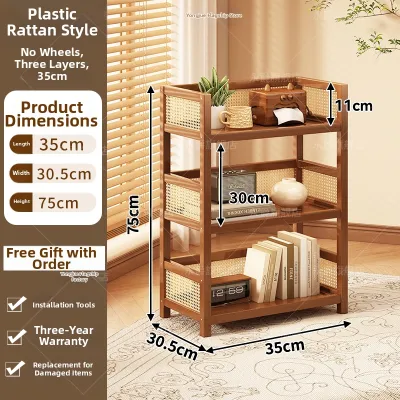
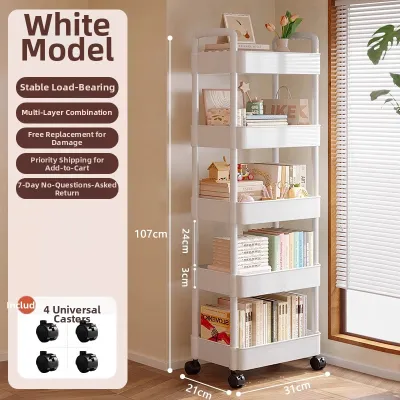
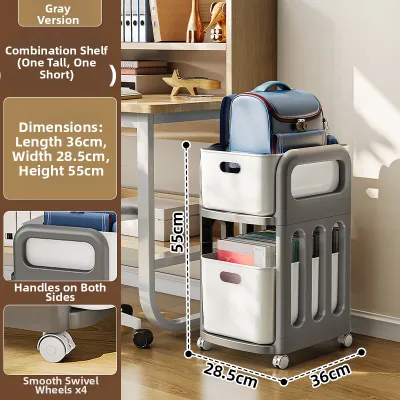
Prices are valid at publication and may change. Please refer to the product page for the latest price.
Because these carts are designed to be mobile, the quality of the wheels and their compatibility with your flooring cannot be overlooked. HDB flats commonly feature a variety of flooring materials, including vinyl, laminate, engineered wood, parquet, or polished porcelain tiles. Hard plastic wheels can easily scratch or scuff delicate wood and laminate surfaces over time. Instead, prioritize carts equipped with polyurethane or rubber-coated casters, which offer quiet operation and gentle contact with your floors. Furthermore, ensure that at least two of the wheels are equipped with reliable locking brakes. This prevents the cart from drifting on slightly uneven floors or shifting when you are retrieving items from the shelves.
Finally, consider the tier count and overall height restrictions of the cart in relation to your home’s layout. While a three-tier cart is the standard configuration for general utility, you must ensure the fully expanded height allows the unit to roll smoothly under low-clearance areas if that is where you intend to park it. For instance, if you want to store the cart under a study desk, a kitchen island, or a dining table when it is partially loaded, measure the clearance height of those furniture pieces beforehand. Choosing a cart with adjustable tier heights or a lower overall profile can prevent frustrating clearance issues later on.
Matching Cart Designs to Specific Room Needs
Different rooms in an HDB flat present unique environmental challenges and functional requirements, meaning a cart that works perfectly in the bedroom might perform poorly in the kitchen. For kitchen and dining areas, environmental resistance and hygiene are the top priorities. Kitchens are prone to high humidity, grease splatters, and water spills, which can quickly degrade low-quality materials. Look for carts constructed from powder-coated carbon steel or high-grade stainless steel, which resist rust and are easy to wipe clean. Additionally, consider the shelf design; mesh-bottom shelves promote airflow around fresh produce like onions and potatoes, while solid-panel shelves are better suited for holding small spice jars, oil bottles, or small kitchen appliances without the risk of items tipping over.

In living rooms and multi-purpose zones, the aesthetic integration of the cart becomes much more important. Since these areas are highly visible to guests, you may want to choose a cart with a refined finish, such as a matte powder coating or wood-grain accents, that complements your existing interior decor. Because these spaces often require rapid transitions—such as clearing away a temporary work-from-home setup before dinner—prioritize models with a quick-collapse feature. A single-motion folding latch allows you to fold the cart and tuck it away in seconds. The base of the cart must also be exceptionally stable if you plan to use it for serving tea, holding books, or displaying decorative items that could slide during transport.
For bedrooms and utility corners, lightweight construction and quiet operation are the key factors to consider. In these quieter zones, heavy metal carts can feel cumbersome and noisy. Carts featuring lightweight aluminum frames or high-quality plastic bins are much easier to maneuver, especially if you need to lift the cart over door sills or transition between different floor levels. If you are using the cart in a child’s room or a nursery for diapers and toys, fabric or soft plastic bins are excellent choices as they eliminate sharp edges and reduce noise when items are moved. Quiet-rolling wheels are also essential here to ensure that moving the cart during the night or early morning does not disturb sleeping family members.
Essential Space and Clearance Measurements
To avoid the disappointment of purchasing a foldable cart that does not fit your home, you must conduct precise physical measurements before making a decision. Do not rely on visual estimates or assume that a cart labeled “compact” will automatically fit your space. Begin by measuring the exact width, depth, and height of the target area where you plan to use the cart when it is fully expanded. If you intend to park the cart in a specific niche, such as beside the refrigerator or next to a bathroom vanity, allow at least 2 to 3 centimeters of clearance on all sides. This buffer space prevents the cart from scraping against your walls, cabinetry, or appliances as you roll it in and out.
Next, measure the dedicated storage slot where the cart will be kept when it is collapsed. If you plan to slide the folded cart behind a bedroom or kitchen door, measure the distance between the open door and the wall to ensure the door can still open fully without crushing the cart. If you intend to store it inside a utility closet, household shelter, or under a bed, verify that the height and depth of these storage zones can accommodate the fully collapsed dimensions of the cart. Remember to account for the wheels, as they often protrude slightly even when the frame is folded flat.
Finally, map out the path of travel that the cart will take throughout your HDB flat. Walk the route and check the width of your hallways, the clearance of your doorways, and the turning radiuses around tight corners or furniture. If your flat has raised floor transitions, such as the step-down often found leading into older kitchens or service yards, ensure the cart’s wheel diameter is large enough to roll over these thresholds smoothly. A cart with tiny wheels will struggle to cross even minor floor transitions, which may force you to lift a fully loaded cart and risk physical strain or spilled items.
What to Verify on Product Listings and Labels
When shopping for a foldable storage cart on online marketplaces or in physical retail stores, product listings can sometimes be confusing or misleading. To make an informed purchase, you must carefully verify the technical specifications provided on the product labels. Start by comparing the exact dimensions of the cart in both its expanded and collapsed states. Be cautious of listings that only provide a single set of dimensions, as these might refer to the shipping box rather than the product itself. Look specifically for diagrams or text that clearly state the “folded depth” or “collapsed thickness” so you can be certain it will fit into your designated storage gap.
Confirming the weight limits is another crucial step that requires close reading. Product titles often boast high total weight capacities, but this figure is typically the cumulative limit across all shelves under ideal, evenly distributed conditions. You must look for the individual per-tier weight capacity to understand how much weight a single shelf can safely hold. If you plan to store heavy items like laundry detergent bottles, stacks of books, or small kitchen appliances, ensure that the per-tier limit is sufficient. If a listing fails to specify the per-tier weight limit, it is wise to contact the seller or choose a different model that provides clear structural ratings.
Examine the material descriptions and surface treatments detailed in the product specifications. Avoid generic terms like “metal” or “steel” and look for precise descriptions such as “powder-coated carbon steel” or “rust-resistant finish.” If you plan to use the cart in a high-moisture environment like a bathroom or service yard, a high-quality surface treatment is essential to prevent rust and corrosion over time. Additionally, check the cleaning and maintenance instructions on the label. Some finishes can be damaged by abrasive scrubbers or harsh chemical cleaners, so look for materials that can be easily maintained with a simple wipe-down using a damp cloth.
Lastly, verify the assembly conditions and warranty terms before finalizing your purchase. Many foldable carts are marketed as “fully assembled” or “ready to use out of the box,” but some may still require minor assembly, such as screwing on the wheels or attaching the handle. Check if the product listing states that the necessary assembly tools, such as a small wrench or hex key, are included. Furthermore, review the warranty details to see if the manufacturer covers structural joints, folding hinges, and wheel mechanisms against defects. A clear warranty is often a good indicator of the manufacturer’s confidence in the cart’s durability and build quality.
Frequently Asked Questions (FAQ)
Is it safe to leave a foldable cart expanded permanently?
Yes, it is generally safe to use a foldable storage cart as a permanent shelving unit, provided you do not exceed the manufacturer’s specified weight limits and distribute the load evenly across all tiers. However, keeping a foldable cart permanently expanded under a heavy load can place continuous stress on the locking hinges, joints, and folding mechanisms. Over time, this constant tension can lead to minor joint wear or structural play, especially if the cart is frequently rolled around while fully loaded. To maintain structural integrity, periodically inspect the locking braces to ensure they remain tightly engaged and have not warped. If you notice any bowing in the shelves or looseness in the frame joints, reduce the load immediately and consult the manufacturer’s guidelines.
How should I maintain the folding joints and wheels?
Regular maintenance is key to ensuring your foldable cart operates smoothly and lasts for years. Perform a quick visual inspection every few months to check for accumulated dust, hair, or debris around the wheel axles, which can impede rolling and scratch your floors. Clean the wheels with a damp cloth and remove any tangled fibers. For the folding joints, wipe away dust that can grind into the hinges during folding and unfolding. If the joints become stiff, check the manufacturer’s instructions before applying any lubricants, as some materials do not tolerate standard household oils. If you observe cracked welds, bent metal frames, or severely damaged locking mechanisms, stop using the cart immediately and seek professional repair or a replacement to prevent accidental collapse.

Community discussion
Share your experience or ask a question. Comments are reviewed before publication.