
Finding the right furniture for a compact Housing & Development Board (HDB) flat requires balancing daily comfort with strict spatial limits. A fabric foldable sofa bed offers a highly practical solution for multi-functional living rooms or study rooms, serving as a cozy couch by day and a guest bed by night. However, selecting the right model involves more than just picking an attractive fabric color. Homeowners must carefully evaluate physical dimensions, folding mechanisms, and fabric performance to ensure the piece fits both the floor plan and Singapore’s humid climate. By focusing on structural efficiency and material durability, you can find a versatile piece that maximizes your living space without compromising on comfort.
Assessing Space and Layout Constraints in HDB Flats
Before browsing online marketplaces or visiting local furniture showrooms, you must establish the exact physical boundaries of your room. HDB living rooms, particularly in newer Build-To-Order (BTO) flats, often feature tight layouts where every centimeter counts. Start by measuring the designated floor area where the sofa will sit in its folded state. Next, project the fully extended bed configuration onto the floor using masking tape. This visual aid helps you see exactly how much floor space the bed will occupy when open, ensuring it does not block essential pathways or collide with other furniture.
Clearance is the next critical factor to analyze. A fully extended sofa bed must leave at least 50 to 60 centimeters of walking space around its perimeter so you can move comfortably without squeezing past walls. Consider the placement of your coffee table, television console, and any nearby balcony doors or built-in wardrobes. If the sofa bed requires you to move heavy furniture every time you open it, the setup will quickly become a daily hassle. Ensure that swing doors, drawer units, and floor-length curtains have unobstructed clearance when the bed is fully deployed.
Products mentioned in this guide
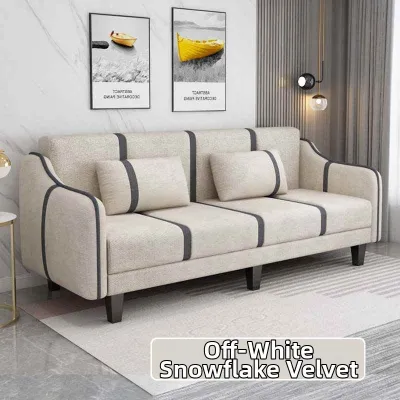
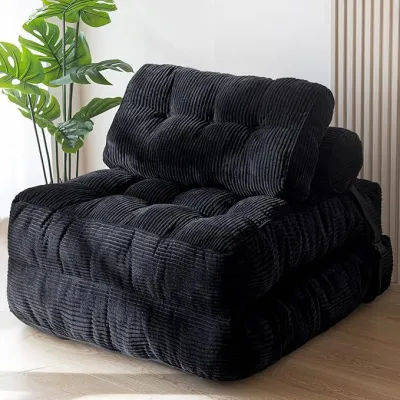
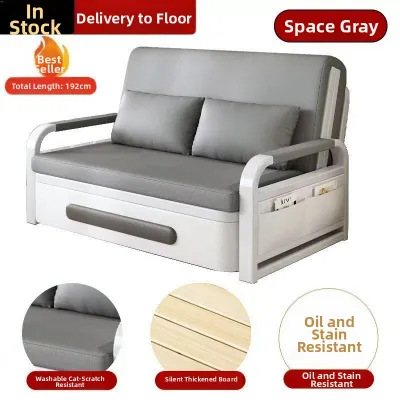
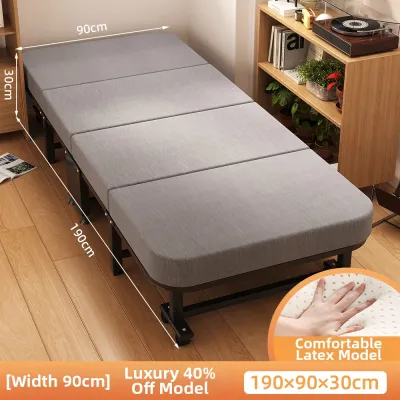
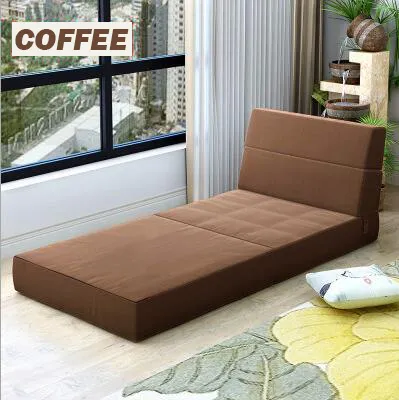
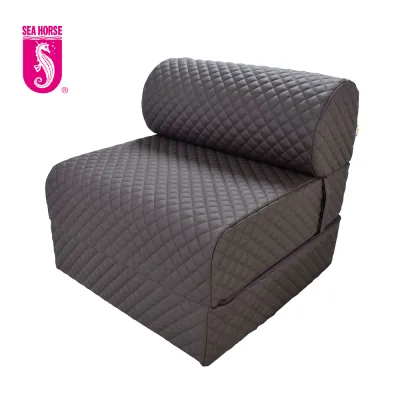
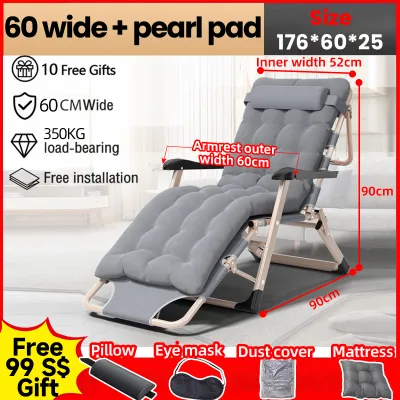
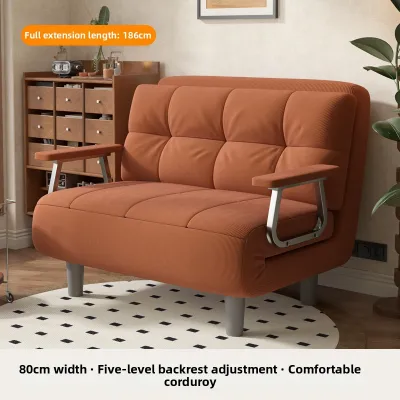
Prices are valid at publication and may change. Please refer to the product page for the latest price.
Finally, do not overlook the logistics of getting the sofa bed into your home. Many homeowners purchase furniture only to discover it cannot fit through the front door or into the lift. Measure the height and width of your HDB flat’s main entrance, the lift door, and the interior lift cabin dimensions. If your block requires using the staircase for delivery, measure the clearance of the stairwell landings and ceiling heights. Requesting the packaged dimensions from the retailer allows you to verify that the delivery team can safely transport the item to your living room without damaging the walls or the furniture itself.
Evaluating Dimensions and Space-Saving Features
When space is at a premium, the ratio between a sofa bed’s overall footprint and its actual sleeping surface is a vital metric. Some designs feature bulky, overstuffed frames that occupy significant floor space while offering only a narrow sleeping area. To maximize efficiency, look for models that prioritize a streamlined silhouette. A compact design should offer a standard single or queen-sized sleeping surface while keeping the external frame as close to those dimensions as possible.

Armrests and backrests are common culprits for wasted space in small living rooms. Wide, padded armrests can easily add 20 to 40 centimeters to the overall width of a sofa without adding any seating or sleeping value. Choosing an armless design or one with ultra-thin, structured armrests frees up valuable horizontal space, allowing you to fit a larger sleeping surface into a tight alcove. Similarly, a thick, angled backrest might look cozy, but it forces the sofa further away from the wall, wasting precious floor area. A slim, upright backrest that folds flat or integrates directly into the mattress structure is far more suitable for tight HDB layouts.
Structural integrity must not be sacrificed for the sake of a slim profile. A high-quality foldable sofa bed requires a robust frame capable of supporting both seated and sleeping weight over several years. Metal frames or solid hardwood structures (such as kiln-dried birch or oak) offer greater stability, whereas cheap particleboard frames are prone to warping and cracking under repeated stress. Always check the manufacturer’s specified weight capacity for both the sofa and bed configurations. A reliable double sofa bed should comfortably support at least 150 to 200 kilograms without showing signs of frame deflection or joint strain.
Comparing Folding Mechanisms for Daily Usability
The mechanism that converts your sofa into a bed dictates how easily you can use the piece on a daily basis. Different mechanisms suit different room layouts and physical capabilities, making it essential to understand their trade-offs before buying.
The three most common folding mechanisms are click-clack systems, pull-out frames, and modular folding designs. Click-clack models operate by tilting the backrest forward until it clicks, then laying it flat to align with the seat. This system is incredibly fast to operate but typically requires you to leave a gap between the back of the sofa and the wall, which can waste space. Pull-out mechanisms feature a hidden frame beneath the seat cushions that rolls forward on wheels or tracks. This design keeps the sofa flush against the wall but requires more physical effort to pull out and can scratch delicate flooring if not fitted with high-quality rubber casters. Modular folding designs rely on folding foam sections that unfold directly onto the floor, offering a lightweight and low-maintenance option, though they lack the elevated height of traditional beds.
| Mechanism Type | Space Clearance Required | Conversion Effort | Built-In Storage Potential |
|---|---|---|---|
| Click-Clack | Requires clearance behind the backrest to fold flat. | Low; simple tilt-and-click motion. | Minimal to none. |
| Pull-Out | Requires significant clearance in front of the sofa. | Moderate; requires pulling and lifting the frame. | High; often includes under-seat compartments. |
| Modular Folding | Requires clearance in front; sits directly on the floor. | Low; simple unfolding of foam sections. | None. |
When evaluating these mechanisms, consider the physical effort required for daily conversion. If the sofa bed is intended for nightly use, a heavy pull-out mechanism might become exhausting over time, making a smooth click-clack or a lightweight modular system more appealing. Examine the moving parts, hinges, and springs; they should operate smoothly without grinding, squeaking, or requiring excessive force. High-quality steel joints and reinforced hinges are essential to prevent the mechanism from jamming or sagging after a few months of regular use.
Selecting Fabrics for Tropical Climates and Easy Maintenance
Singapore’s high humidity and warm temperatures place unique demands on upholstery fabrics. A fabric that feels cozy in a temperate climate can quickly become hot, sticky, and prone to mold in a tropical environment. Therefore, prioritizing breathability and moisture resistance is essential for long-term comfort.
Natural fiber blends, such as cotton-linen mixes, offer excellent breathability and help dissipate body heat, making them comfortable for both sitting and sleeping. However, pure natural fibers can be difficult to clean and may absorb moisture from the air, increasing the risk of musty odors. Synthetic performance fabrics, such as high-grade polyester or nylon blends woven for breathability, offer a practical middle ground. These materials are highly durable, resist moisture absorption, and are much easier to spot-clean when spills occur. Avoid heavy velvet, thick chenille, or low-grade faux leather, as these materials trap heat and can feel uncomfortably warm against the skin.
Maintenance is another critical factor to consider. Look for sofa beds that feature removable, machine-washable covers. Being able to unzip the fabric covers and wash them regularly is a highly effective way to combat sweat, dust mites, and accidental spills. If the covers are non-removable, verify that the fabric has been treated with a water-resistant or stain-resistant coating. Always check the manufacturer’s care label to ensure the fabric can withstand standard cleaning agents without fading or shrinking.
In poorly ventilated HDB rooms, stagnant air can lead to mold growth on fabric surfaces. Inspect the weave of the fabric before purchasing; tight, dense weaves are more resistant to dust penetration but may restrict airflow, while loose weaves breathe better but can snag easily. Look for signs of pilling or loose threads, which indicate lower-quality fibers that will degrade quickly under the friction of daily sitting and sleeping.
Verifying Retailer Claims and Finalizing Your Purchase
Once you have narrowed down your choices, you must verify the retailer’s claims to avoid post-purchase regret. Marketing photos can be deceptive, often making sofa beds look larger or more robust than they are in reality.
Start by requesting exact dimension diagrams from the seller, showing the precise measurements of the sofa in both its folded and fully extended states. Do not rely solely on the general product description; ask for the specific width, depth, and height of the frame, cushions, and armrests. If you are purchasing online, ask the retailer to provide a video demonstration of the folding mechanism in action. This allows you to observe how much physical effort is required to convert the bed and whether the frame remains stable and level during the process.
Next, carefully review the warranty terms. A standard furniture warranty often covers only manufacturing defects for a short period, but a reliable sofa bed should come with a dedicated warranty covering the folding hinges, mechanical joints, and structural frame for at least one to three years. Read the fine print to understand what constitutes normal wear and tear versus a mechanical failure, and confirm whether the retailer covers the cost of replacement parts and on-site repair labor.
Finalizing your purchase also means clarifying all delivery, assembly, and disposal fees. Delivering heavy furniture to HDB flats can involve additional charges, especially if the delivery team must navigate tight corridors or stairs. Confirm whether the delivery fee includes professional assembly, as assembling a complex folding mechanism yourself can be difficult and may void the warranty if done incorrectly. If you are replacing an old sofa, ask if the retailer offers a disposal service and confirm the exact cost, which typically ranges from S$50 to S$150 depending on the size of the item. Securing these details in writing ensures a smooth, stress-free delivery process.
Frequently Asked Questions (FAQ)
Can a foldable sofa bed provide adequate back support for daily sleeping?
A foldable sofa bed can provide adequate back support for daily sleeping, provided you select a model designed with high-density foam or pocket spring structures. Cheap, low-density foam mattresses tend to sag quickly, leading to spinal misalignment and back pain over time. Look for a mattress thickness of at least 10 to 15 centimeters and a foam density rating of 30 kg/m³ or higher. Additionally, check the base support system; a sofa bed with wooden slats or a reinforced metal grid offers far better support and weight distribution than a model where the mattress sits directly on the floor or on a thin fabric canvas.
How do I prevent mold on a fabric sofa bed in a humid HDB flat?
To prevent mold on a fabric sofa bed in Singapore’s humid climate, position the furniture at least 10 to 15 centimeters away from walls to allow proper air circulation. Avoid placing the sofa directly beneath air conditioning units where condensation might drip, or against damp external walls. Open your windows daily to encourage airflow, or use a dehumidifier in the room to keep relative humidity levels below 60 percent. Regularly vacuum the fabric using a brush attachment to remove dust and organic matter, which can act as food for mold spores, and clean any spills immediately using a dry cloth and a fabric-safe disinfectant.

Community discussion
Share your experience or ask a question. Comments are reviewed before publication.