
Finding the right fabric foldable sleep sofa for a Singapore Housing & Development Board (HDB) flat requires balancing tight spatial limits with dual-purpose utility. Because HDB living rooms and spare rooms often feature compact layouts, the ideal choice must transition smoothly between seating and sleeping configurations without blocking essential pathways or architectural fixtures. Success depends on precise physical measurements, verifying the structural limits of the folding mechanism, and selecting a fabric finish that aligns with your household maintenance routine and Singapore’s humid climate. By taking a systematic approach to spatial planning and material evaluation, you can find a versatile piece of furniture that serves as a comfortable daily seat and a welcoming bed for guests.
Understanding HDB Space Constraints for Sofa Beds
Before browsing online marketplaces or visiting local showrooms, map out the exact footprint of your room in both configurations. A sofa bed has two distinct footprints: its compact seated state and its fully extended sleeping state. You must measure the floor area for both, ensuring that when the bed is fully deployed, there remains a clear walking path of at least 50 to 60 centimeters around the perimeter. This prevents the room from becoming completely impassable when guests stay overnight, allowing residents to move freely to the kitchen or bathroom. This is especially important in multi-functional rooms where a desk chair or a standing fan might block the extension path.
In typical HDB layouts, especially in newer BTO (Build-To-Order) flats, living rooms are narrower, and spare bedrooms often double as home offices. You must account for the swing radius of doors, particularly the heavy steel door of the household shelter (bomb shelter), which requires unobstructed clearance to open fully in an emergency. Ensure the extended bed does not block access to this shelter or collide with nearby wardrobes, study desks, or coffee tables that may need to be relocated when the bed is in use. If you must move other furniture to deploy the bed, verify that there is a temporary spot in the flat to store those items.
Products mentioned in this guide
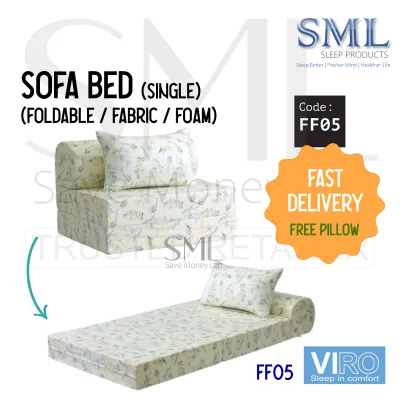
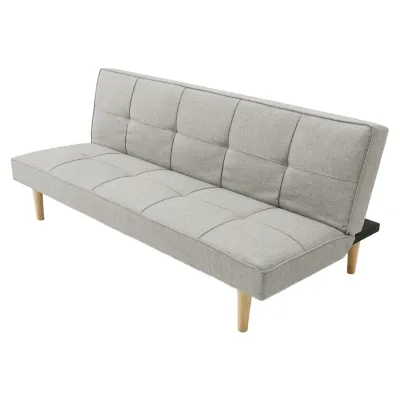
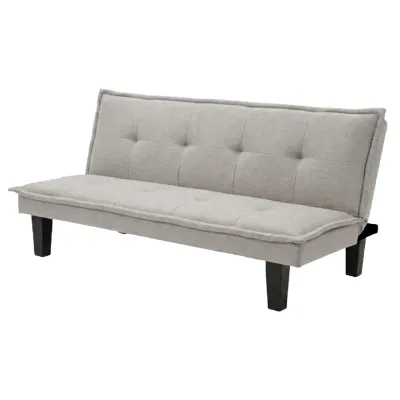
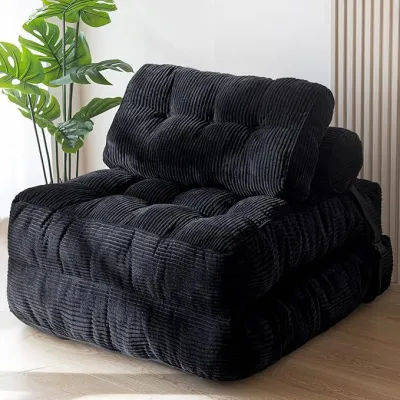
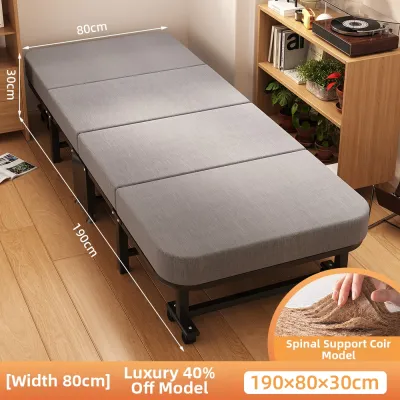
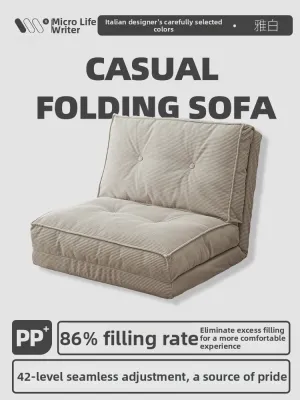
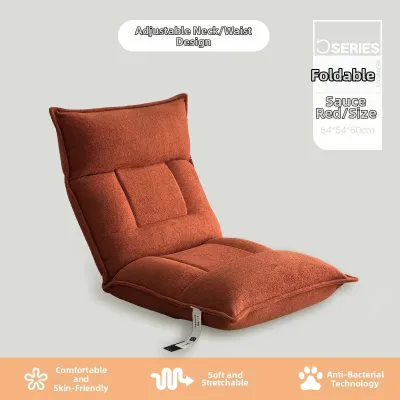
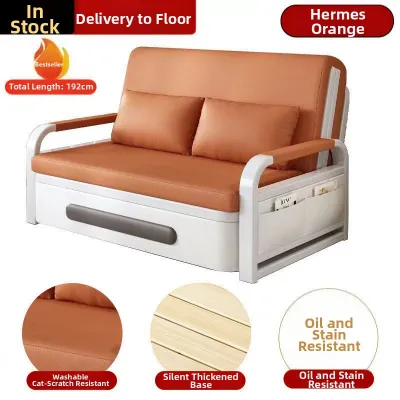
Prices are valid at publication and may change. Please refer to the product page for the latest price.
Vertical and wall-side obstructions are equally critical to evaluate before finalizing your purchase. Check the height of window sills to ensure the sofa backrest does not block natural light or interfere with window opening mechanisms. Note the locations of wall power outlets, internet data points, and air-conditioner trunking. Exposed trunking running along the baseboards or upper walls can prevent a sofa from sitting flush against the wall, which might steal precious centimeters from your deployment clearance or put uneven pressure on the sofa frame. Additionally, consider the height of the sofa backrest relative to wall-mounted air-conditioning units, ensuring that airflow is not restricted and that routine filter maintenance remains accessible.
Evaluating Fabric Types and Folding Mechanisms
Do not rely solely on material names to guarantee performance. While synthetic fibers like polyester are often marketed as durable and natural fibers like linen are praised for breathability, actual performance depends on the specific weave, finish, and manufacturer care instructions. Always check the manufacturer’s fabric care label for cleaning codes (such as W for water-based cleaners or S for solvents) and structural weight limits. In Singapore’s humid climate, look for fabrics with removable, washable covers or those treated for moisture resistance, and verify how the material handles spot cleaning to prevent permanent water rings or mildew. In Singapore’s high-humidity environment, tightly woven synthetic blends often resist moisture absorption better than loose natural weaves, though they may require more frequent vacuuming to prevent dust mite accumulation.

The folding mechanism determines both daily convenience and long-term durability. Common styles include click-clack systems, pull-out drawer mechanisms, and traditional fold-out futons. Click-clack models are highly efficient for quick transitions but often require a gap between the sofa back and the wall to operate. Pull-out drawer mechanisms extend forward, making them excellent for narrow rooms, but they rely heavily on smooth-rolling casters that must not scratch your flooring. Evaluate the frame material—typically steel or solid wood—and test the transition to ensure it does not require excessive physical strain.
Comfort is a balance between seating firmness and sleeping support. Sofa beds generally use high-density foam, pocket springs, or a combination of both. A cushion that feels comfortably firm for sitting may feel too rigid for sleeping, while a soft mattress might bottom out against the underlying metal or wooden support slats. Check the manufacturer’s specifications for cushion thickness and maximum weight capacity. Ensure the support system distributes weight evenly across the frame to prevent sagging over time, especially if the unit will be used frequently as a primary bed. If you plan to use the sofa bed as a primary sleeping surface for extended periods, look for models that allow you to add a thin mattress topper, which can protect the sofa fabric while significantly improving sleep posture support.
Building Your Shortlist: A Decision Matrix for Dual Functionality
To systematically compare your options, construct a decision matrix based on your household’s specific spatial limits and usage frequency. This matrix helps filter out models that look appealing but fail to meet the physical realities of your HDB flat. By laying out the specifications side by side, you can make an objective choice based on facts rather than aesthetics.
The following comparison matrix outlines the key dimensions and requirements you should verify for each candidate sofa bed:
| Sofa Bed Type | Folded Dimensions (Width x Depth) | Deployed Dimensions (Width x Length) | Mechanism Type | Fabric Care Requirements |
|---|---|---|---|---|
| Compact Click-Clack | Check manufacturer specs | Check manufacturer specs | Backrest folds flat | Dry clean or spot clean only |
| Pull-Out Drawer | Check manufacturer specs | Check manufacturer specs | Under-seat frame rolls out | Removable, machine-washable cover |
| Fold-Out Futon | Check manufacturer specs | Check manufacturer specs | Frame unfolds forward | Spot clean with mild detergent |
Evaluate the trade-offs between seating capacity and sleeping surface area. A three-seater sofa provides ample seating for daily living but, when unfolded, may yield a bed size that dominates your entire room or blocks access to built-in wardrobes. Conversely, a compact two-seater or armchair sleeper fits easily into a study but only accommodates a single sleeper. Decide whether your priority is maximizing daily living space or providing a spacious sleeping surface for couples.
Establish strict stop conditions before making a purchase. A stop condition is a non-negotiable threshold that immediately disqualifies a product. For example, if a sofa bed requires more than 210 centimeters of depth when fully extended, and your room only has 200 centimeters of clear space before hitting a fixed built-in wardrobe, that model must be eliminated. Other stop conditions include mechanisms that are too heavy for a single household member to operate safely, or fabrics that require professional dry cleaning if you have pets or young children.
Pre-Purchase and Delivery Checks for HDB Residents
The journey of your sofa bed begins long before it sits in your living room. You must verify the delivery pathway to ensure the packaged furniture can actually reach your flat. Measure the height and width of your HDB lift door, the interior cabin dimensions, and the clearance of common corridors and staircase turns. Many delivery failures occur because a bulky, non-disassembled sofa frame cannot clear the tight angles of HDB lift lobbies or corridor corners.
Once inside the flat, the assembly process and the sofa’s physical contact with your floor require careful attention. Check if the sofa legs are made of hard plastic, metal, or wood, and whether they include protective felt pads. Heavy sofa beds can easily scratch or dent common HDB flooring materials like vinyl, laminate, parquet, or polished porcelain tiles when transitioned between configurations. Ensure you have adequate floor protection during assembly, and verify if the manufacturer’s warranty covers structural damage caused during self-assembly if you choose not to use professional installation services.
Finally, clarify the administrative terms of your purchase. Confirm the exact duration and coverage of the manufacturer’s warranty, paying close attention to whether it covers both the fabric upholstery and the mechanical folding joints. Review the retailer’s return and exchange policies in case the item arrives with mechanical defects. If you are replacing an old sofa, check if the delivery service offers a bulky furniture disposal option, as HDB town councils have specific guidelines and scheduling requirements for disposing of large household items.
Frequently Asked Questions (FAQ)
How often should I clean a fabric foldable sleep sofa?
Routine maintenance should align with your usage frequency and the manufacturer’s specific care instructions. For daily seating, vacuum the fabric weekly using an upholstery attachment to remove dust, skin flakes, and loose debris that can wear down fabric fibers. If the sofa is used frequently for sleeping, perform a deeper clean every three to six months by spot-cleaning high-contact areas or washing removable covers according to the care label. Address spills immediately by blotting with a clean, dry cloth; never rub, as this can push the liquid deeper into the cushion fibers and cause permanent staining or mold growth within the foam.
Can I use a standard bedsheet on a foldable sleep sofa?
Whether a standard bedsheet fits depends entirely on the exact deployed dimensions of your sofa bed, which often differ from traditional mattress sizes. Measure the width, length, and depth of the extended sleeping surface before purchasing bedding. Many compact sofa beds fall between standard single, super single, or queen sizes, meaning standard fitted sheets may bunch up or slip off during the night. If the dimensions are non-standard, opt for flat sheets tucked tightly under the frame, or use elastic sheet straps underneath the mattress to secure a slightly larger fitted sheet in place.
What should I do if the folding mechanism gets stuck?
If you encounter resistance while transitioning the sofa, stop operating it immediately to prevent bending the frame or tearing the fabric. Begin by inspecting the visible tracks, hinges, and joints for obstructions such as loose bedding, cushions, toys, or accumulated dust and debris. Do not force the mechanism, as this can permanently warp the metal alignment or strip the internal gears. If the path is clear but the mechanism remains jammed, makes unusual grinding noises, or shows signs of structural damage, consult the manufacturer’s troubleshooting guide or contact a qualified technician for professional repair.

Community discussion
Share your experience or ask a question. Comments are reviewed before publication.