
Finding the right double foldable sofa bed brand for a compact Singapore home requires looking beyond aesthetics to evaluate mechanism efficiency, frame durability, and precise spatial footprints. In space-constrained HDB flats and condominiums, a double sofa bed must transition seamlessly between a comfortable couch and a supportive sleeping surface for two adults without obstructing daily foot traffic. While many brands market “double” options, their actual dimensions, unfolding mechanisms, and structural integrity vary widely. Buyers must assess brands based on engineering standards, warranty coverage, and local delivery logistics to ensure a long-lasting investment.
Key Dimensions for Evaluating Sofa Bed Brands
To find a reliable double foldable sofa bed brand, you must first understand how different manufacturers approach mechanical engineering and spatial design. In Singapore’s compact residential layouts, every square centimetre counts, making the choice of folding mechanism the most critical factor in your decision. Brands generally categorise their folding mechanisms into three main types: click-clack, pull-out, and fold-down. Each mechanism carries distinct trade-offs regarding ease of use, sleeping comfort, and the physical space it occupies when fully deployed.
The click-clack mechanism is highly popular among budget-friendly and minimalist brands. This design operates by folding the backrest forward until it clicks, then laying it flat to align with the seat cushion. While click-clack models are exceptionally easy to operate and have a shallow depth when folded as a sofa, they often require you to pull the entire unit away from the wall before unfolding. Furthermore, because the sleeping surface is formed by the seat and backrest cushions, a central seam runs down the middle of the bed, which can cause discomfort for two sleepers over time.
Products mentioned in this guide
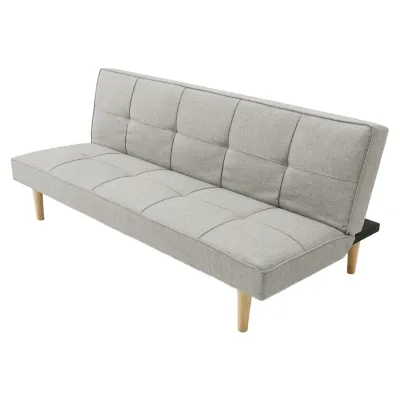
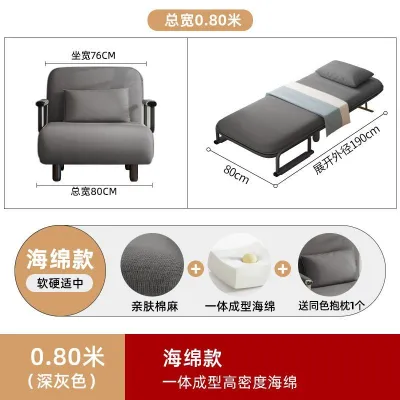


Prices are valid at publication and may change. Please refer to the product page for the latest price.
Pull-out mechanisms, often favoured by premium and mid-range brands, offer a more traditional sleeping experience. These models house a folded metal or wooden frame beneath the seat cushions, which rolls out forward on wheels or hinges. The primary advantage of a pull-out design is that it accommodates a separate, dedicated mattress, eliminating the uncomfortable seams associated with click-clack models. However, these mechanisms are significantly heavier, require more physical effort to deploy, and have a much larger forward footprint, which can severely restrict movement in a small bedroom or living room.
Fold-down foam models represent the simplest and most lightweight option. These designs do not use a metal frame; instead, the mattress itself is folded into three sections to form the sofa seat and backrest. Unfolding the bed simply involves flipping the foam sections forward onto the floor. While these models are highly affordable and virtually maintenance-free due to the absence of moving mechanical parts, they sit directly on the floor, which may not be ideal for older adults or those who prefer a standard bed height. They also lack edge support, meaning the sides can compress significantly when you sit on the edge of the bed.
Beyond the mechanism, you must scrutinise the actual sleeping surface dimensions. Many brands market their products as “double” sofa beds, but international sizing standards vary widely. A standard Singapore double mattress measures 137 cm by 190 cm, while a queen measures 152 cm by 190 cm. Some European brands use a compact double standard of 120 cm by 190 cm, which can feel incredibly cramped for two adults. Always check the exact width and length of the sleeping surface in the brand’s specification sheet rather than relying on generic marketing terms like “double” or “full.”
Finally, evaluate the mattress support system and foam density. A high-quality sofa bed brand will use a support base made of wooden slats or a reinforced steel mesh rather than simple elastic webbing, which tends to sag over time. For the mattress itself, look for high-density polyurethane foam with a density rating of at least 30 kg/m³, or pocket springs if your budget allows. A mattress that is too thin—typically under 10 cm—will allow sleepers to feel the hard metal or wooden support bars underneath, leading to poor sleep quality and morning discomfort.
Space Planning and Clearance for Compact Homes
Integrating a double foldable sofa bed into a compact HDB flat or condominium requires meticulous space planning. Before committing to a specific brand, you must measure both the static footprint of the sofa and its dynamic footprint when fully extended as a bed. The static footprint determines how much living space you lose during the day, while the dynamic footprint dictates whether the bed can actually be used without blocking essential pathways, doors, or built-in wardrobes.

To calculate the necessary clearance zone, measure the distance from the wall behind the sofa to the furthest point of the bed when fully unfolded. You should aim to maintain a minimum walking clearance of 50 to 60 cm around the sides and foot of the bed. This ensures that you do not have to climb over the bed to move around the room. Additionally, check the swing radius of nearby bedroom doors, wardrobe doors, and balcony sliding doors to ensure they do not collide with the extended bed frame.
Delivery access is another critical constraint that Singaporean homeowners frequently overlook. Many double sofa beds, especially those with heavy pull-out steel frames, are delivered fully assembled or in large, bulky sub-assemblies. You must measure the height, width, and diagonal clearance of your building’s passenger lift, as well as the width of your front door and any narrow corridors. If you live in a multi-storey HDB maisonette or a penthouse condo with tight internal staircases, a fully assembled sofa bed may be impossible to transport to the upper floors. In such cases, look for brands that deliver their products in flat-pack boxes or modular components that can be assembled directly inside the room.
The physical weight of a double sofa bed also warrants careful consideration, particularly regarding floor protection. A solid wood or steel frame, combined with the weight of two adults, exerts concentrated pressure on your flooring through small legs or castors. Over time, the repetitive action of folding and unfolding the bed can scratch or dent sensitive flooring materials such as parquet, engineered wood, or luxury vinyl tiles. To mitigate this risk, choose brands that equip their sofa legs with wide, non-marking rubber feet or nylon caps. For added protection, apply heavy-duty adhesive felt pads to the bottom of all contact points, and place a low-pile rug beneath the sofa to absorb friction and distribute the weight more evenly.
Verifying Build Quality and Mechanism Durability
A double foldable sofa bed is a complex piece of furniture subject to significant mechanical stress. To ensure your chosen brand offers long-term reliability, you must learn to identify key indicators of build quality and material durability. The frame serves as the foundation of the entire unit, and its material composition is the single most important factor in determining the sofa bed’s lifespan.
When reviewing product specifications, look for frames constructed from kiln-dried solid hardwoods, such as birch, beech, or oak, or heavy-gauge reinforced steel. Kiln-drying removes moisture from the wood, preventing it from warping, cracking, or shrinking in Singapore’s highly humid tropical climate. Conversely, you should exercise caution with brands that rely heavily on cheap particleboard, MDF, or low-grade plywood for load-bearing joints. These engineered woods are highly susceptible to moisture absorption, which can cause them to swell, weaken, and eventually fail under the mechanical strain of daily folding.
The folding mechanism itself requires close inspection. High-quality brands use heavy-duty steel hinges, rivets, and springs that operate smoothly without catching or grinding. When evaluating a brand, examine their warranty terms carefully. A standard one-year warranty on the entire sofa is often insufficient for a mechanical piece of furniture. Reputable brands will frequently offer an extended warranty—ranging from 5 to 10 years—specifically covering the metal folding mechanism and frame structure. Be sure to read the fine print to understand what constitutes normal wear and tear versus a manufacturing defect.
Upholstery fabric durability is equally vital, as the fabric will experience friction both as a seat and as a sleeping surface. Check the manufacturer’s specifications for the Martindale rub count, which measures a fabric’s resistance to abrasion. For a sofa bed that will see regular use, look for a Martindale rating of at least 20,000 rubs for light use, or 30,000 rubs and above for heavy daily use. Synthetic fibers like polyester, nylon, or acrylic blends generally offer superior durability, stain resistance, and ease of cleaning compared to natural fibers like cotton or linen.
Given Singapore’s warm and humid climate, hygiene and maintenance are paramount. Sweat, body oils, and ambient humidity can quickly lead to the accumulation of dust mites, bacteria, and musty odours in the sofa cushions. Brands that offer fully removable, machine-washable, or dry-cleanable covers provide a significant advantage. If the covers are fixed, ensure the fabric has been treated with an antimicrobial or water-resistant coating, and plan to use a high-quality, breathable mattress protector whenever the sofa bed is configured for sleeping.
Assessing Brand Support and Purchasing Channels
The purchasing experience and post-purchase support offered by a brand are just as important as the physical product itself. When shopping for a double foldable sofa bed in Singapore, you will encounter various retail channels, ranging from physical showrooms to online-only marketplaces. Each channel presents distinct advantages and potential pitfalls that you must navigate carefully.
While online marketplaces often tempt buyers with lower prices and convenient home delivery, visiting a physical showroom is highly recommended when buying a mechanical sofa bed. Testing the mechanism in person allows you to assess the physical effort required to convert the sofa into a bed. You can check whether the transition is smooth and silent, or if it requires significant upper-body strength and produces loud, metallic squeaks. Furthermore, sitting and lying on the sofa bed in the showroom is the only reliable way to evaluate mattress firmness, edge support, and overall comfort.
Professional assembly is another crucial service to evaluate. Assembling a double sofa bed with a complex pull-out steel frame can be incredibly frustrating and time-consuming for a layperson. Incorrect assembly can lead to misaligned hinges, uneven weight distribution, and premature mechanical failure. Prioritise brands that offer professional, on-site assembly services by trained technicians. While some brands include this service in the purchase price, others charge an additional fee, which should be factored into your overall budget.
You should also inquire about old furniture disposal services. Replacing an existing sofa with a new double sofa bed requires removing the old unit, which can be a logistical headache in Singapore. While HDB residents can coordinate with their local Town Council for free bulky item removal, this service often requires you to move the heavy furniture to the void deck yourself. Many reputable furniture brands offer a convenient disposal service for a nominal fee, typically ranging from S$50 to S$100, where their delivery team will dismantle and cart away your old sofa during the delivery of your new one.
Finally, scrutinise the brand’s delivery fees and return policies. Delivery charges in Singapore can vary based on several factors, including weekend delivery surcharges, delivery to offshore islands, and staircase carry-up fees if your building lacks lift access or if the sofa cannot fit inside the elevator. These staircase fees are typically charged per floor and can quickly add up. Additionally, understand the return and exchange conditions. Many brands do not accept returns on custom-upholstered or made-to-order sofa beds, while others may charge a substantial restocking fee of 15% to 30% of the purchase price, plus return transport costs.
Frequently Asked Questions (FAQ)
How often should the folding mechanism be lubricated or maintained?
Over time, the metal hinges, joints, and springs of a double foldable sofa bed can develop stiffness, resistance, or squeaking due to friction and ambient humidity. To maintain smooth operation, you should inspect the mechanism every six to twelve months. If you notice any squeaking or difficulty during the folding process, consult the brand’s care manual for approved maintenance procedures. Typically, a light application of a dry silicone spray or white lithium grease to the moving pivot points is recommended. Avoid using standard WD-40 unless explicitly permitted by the manufacturer, as it acts primarily as a solvent and can attract dust, which eventually clogs the mechanism and degrades any plastic washers or bushings. If the frame becomes severely misaligned, bent, or jammed, do not attempt to force it closed, as this can permanently damage the metal; instead, contact the brand’s customer support or a professional furniture repair technician.
Can a double foldable sofa bed be used as a primary bed for daily sleeping?
While most double foldable sofa beds are engineered for occasional guest use, some high-end models can serve as primary beds if they meet specific structural and ergonomic criteria. Standard sofa beds often feature thin mattresses (under 10 cm) and flexible wire mesh support bases that do not provide adequate spinal alignment for daily use, potentially leading to chronic back pain over time. If you plan to sleep on a sofa bed every night, you must choose a brand that offers a robust wooden slat support system and a high-density polyurethane foam mattress (at least 30 to 35 kg/m³ density) or a pocket spring mattress with a thickness of at least 12 to 15 cm. Additionally, keep in mind that daily folding and unfolding subjects the mechanical joints and upholstery fabric to accelerated wear and tear. To prolong the lifespan of a daily-use sofa bed, invest in a heavy-duty steel mechanism, use a thick mattress protector to shield the fabric from sweat and friction, and regularly check all structural bolts to ensure they remain tightly fastened.
Community discussion
Share your experience or ask a question. Comments are reviewed before publication.