
Finding the right 12-hook clothes rack for a Singapore home requires balancing high-capacity storage with the physical realities of compact urban living. Whether you are organizing a busy entryway, setting up a bedroom dressing corner, or managing outerwear in a shared office, a 12-hook configuration offers an exceptionally efficient way to keep daily essentials organized and off the floor. However, selecting the ideal model involves more than just counting the pegs. You must evaluate how the rack handles weight distribution, fits within your floor plan, and withstands local environmental conditions like high humidity. By focusing on structural stability, material finishes, and precise spatial planning, you can find a storage solution that remains secure, accessible, and durable for years to come.
In Singapore’s tropical climate, a clothes rack serves a unique set of daily needs. From hanging damp umbrellas and light cardigans used in air-conditioned offices to storing heavy work bags and school backpacks, the demands on an entryway organizer are diverse. A 12-hook rack provides ample hanging points, but its utility depends entirely on how well it matches your household’s specific habits and spatial constraints. Taking the time to analyze your space, load requirements, and safety needs before making a purchase will ensure you select a rack that enhances your home’s organization without creating unnecessary clutter or safety hazards.
Key Factors to Consider Before Buying a 12-Hook Clothes Rack
The first decision you must make is whether a freestanding or wall-mounted 12-hook rack best suits your home’s layout. Freestanding units offer excellent mobility, allowing you to rearrange your furniture or move the rack to a different room whenever needed. However, they require dedicated floor space, typically occupying a footprint of at least 30 to 45 centimeters in diameter. Wall-mounted options, conversely, preserve valuable floor space by utilizing vertical wall areas, making them highly suitable for narrow hallways or compact entryways. The trade-off is that wall-mounted racks require permanent installation, drilling, and a structurally sound wall to support the weight of the rack and its contents.
Products mentioned in this guide
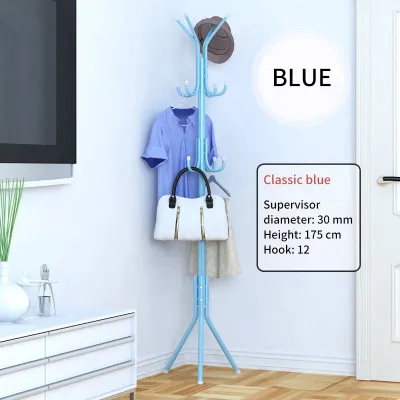

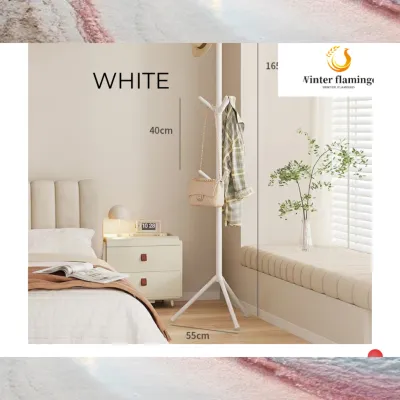
![[SG FREE ] Over the Door Hanger Coat Hat Clothes Bag Rack Wardrobe Wall Organizer 12 Hooks](https://img.lazcdn.com/g/p/969a4348aed19bcc09fb73e85d27e950.jpg_400x400q80.jpg_.webp)
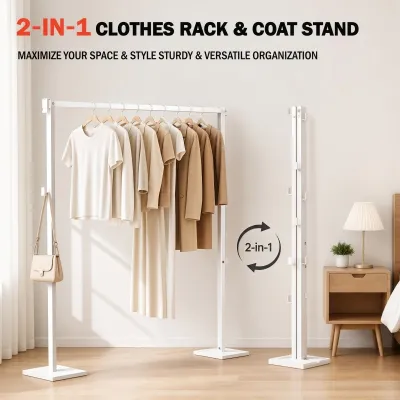
Prices are valid at publication and may change. Please refer to the product page for the latest price.
Estimating the total weight of the items you plan to hang is crucial for determining the necessary load capacity of your rack. A 12-hook rack can quickly accumulate a significant amount of weight when fully loaded with daily essentials. For example, a single laptop bag, a couple of heavy umbrellas, several jackets, and daily accessories can easily exceed 10 to 15 kilograms in total. If you intend to use the rack for heavy items, you must look for robust materials and stable designs that specify high weight limits. Lightweight decorative models may suffice for hats, scarves, and light keys, but they will quickly bend, sag, or tip over under the weight of heavier household gear.
Household dynamics play a vital role in selecting a safe and functional clothes rack. If your household includes young children or active pets, a freestanding rack can pose a serious tip-over hazard if it is pulled, bumped, or unevenly loaded. Children may attempt to climb the rack or pull down items hanging out of reach, which can lead to accidents. In these environments, prioritizing safety means choosing a freestanding model with an exceptionally wide, heavy base and a low center of gravity, or opting for a wall-mounted design installed at a safe height. Some freestanding models also come with wall-anchoring straps, which provide an extra layer of security against accidental tipping.
Comparing Common 12-Hook Rack Designs and Configurations
Tree-style clothes racks are a classic and popular choice, featuring a central vertical pole with staggered hooks branching out at various heights. When evaluating a 12-hook tree rack, the design of the base is the most critical factor determining its stability. Tripod bases, which feature three angled legs, offer a wide stance that provides excellent stability on flat surfaces, but they also occupy a larger floor footprint. Flat, circular bases made of heavy materials like solid marble or cast iron offer a sleeker, more compact look while keeping the center of gravity low. When choosing a tree-style rack, ensure the base diameter is proportional to the height and hook spread to prevent the unit from becoming top-heavy when fully loaded.

Wall-mounted rails and modular pegboard systems offer a highly stable alternative to freestanding designs. A 12-hook wall rail distributes the weight of hanging items horizontally across multiple mounting points, reducing the stress on any single section of the wall. Modular pegboards allow you to customize the placement of hooks, shelves, and baskets, providing excellent flexibility as your storage needs change. However, the stability of these systems depends entirely on wall material compatibility and the use of appropriate anchors. Mounting a heavy-duty rail on a solid concrete wall common in Singapore HDB flats provides immense load capacity, whereas mounting on a hollow drywall partition requires locating studs or using specialized heavy-duty hollow-wall anchors.
Multi-functional storage units combine a 12-hook rack with integrated features like shoe benches, storage shelves, or dedicated umbrella stands. These units, often referred to as hall trees, have a significantly larger footprint than simple pole or rail designs, but they offer unparalleled stability. The weight of the lower shelves, shoes, and the bench itself acts as a natural anchor, making these units virtually impossible to tip over during normal use. If you have sufficient entryway space, a multi-functional unit provides a comprehensive transition zone where you can sit down to put on shoes, store footwear, and hang coats and bags all in one centralized location.
Material and Finish Checklist for Long-Term Durability
Singapore’s high relative humidity, which often exceeds 80 percent, makes material selection and surface finishes critical factors for long-term durability. When browsing product specifications, do not assume that all metal or wood racks perform equally. Look for metal racks that explicitly specify a powder-coated or rust-resistant finish, as standard painted iron can easily chip and rust when exposed to damp umbrellas or humid air. For wooden racks, verify that the wood is fully sealed with a water-resistant polyurethane, lacquer, or protective oil finish. Unsealed wood can absorb moisture from the air, leading to warping, cracking, and the growth of mold or mildew over time.
The structural integrity of a 12-hook rack relies heavily on the quality of its joint connections and assembly hardware. Inspect product descriptions and assembly diagrams to see how the components connect. Avoid models that rely on cheap plastic connectors or simple press-fit joints at high-stress points, as these materials degrade and loosen over time. Instead, look for metal-to-metal screw connections, robust bolt-through hardware, or high-quality welded joints. For wooden racks, models that feature threaded metal inserts embedded within the wood poles are far superior to those where wood screws are driven directly into the timber, as direct wood screws can easily strip the wood fibers if the rack is disassembled or tightened repeatedly.
The base of a freestanding rack requires careful inspection to protect both the unit’s stability and your home’s flooring. Ensure the base is equipped with high-quality anti-slip pads, typically made of rubber, silicone, or dense felt. These pads serve two essential purposes: they prevent the rack from sliding or shifting when you hang or remove heavy items, and they protect delicate flooring materials like polished marble, vinyl, laminate, or hardwood from scratches and scuffs. Additionally, a stable, non-slip base helps absorb minor vibrations and impacts, reducing the likelihood of the rack wobbling or tipping over during daily use.
How to Measure and Plan Your Space for Installation
Before purchasing a 12-hook clothes rack, precise spatial planning is essential to ensure the unit fits comfortably without obstructing daily activities. Start by measuring the vertical and horizontal clearance of your intended installation area. A standard 12-hook freestanding rack typically stands between 170 and 185 centimeters tall. You must ensure there is enough vertical clearance so that long coats, dresses, or umbrellas hanging from the lower hooks do not drag on the floor. Additionally, measure the horizontal clearance to ensure that bulky items hanging from the hooks do not brush against adjacent walls, block light switches, or interfere with nearby furniture.
Traffic flow and door swing paths are critical considerations, especially in narrow entryways or hallways. Use a measuring tape to map out the exact footprint of the rack, including the extra space occupied by bulky bags or coats hanging from the hooks. Verify that the rack does not obstruct the swing path of your main entrance door, bedroom doors, or cabinet doors. In high-traffic walkways, maintain a clear passage width of at least 80 to 90 centimeters to avoid bottlenecks and prevent household members from accidentally bumping into the rack as they move through the home.
If you decide on a wall-mounted 12-hook rack, proper installation planning is key to safety and performance. Use a stud finder to locate the wooden or metal studs if you are mounting the rack on a drywall partition. If you are mounting directly onto a solid concrete or brick wall, which is common in many Singapore homes, ensure you have a hammer drill and the correct masonry drill bits. Never attempt to mount a heavy-duty 12-hook rail using standard adhesive strips or light-duty plastic wall plugs, as the cumulative weight of multiple loaded hooks will inevitably pull the anchors out of the wall, causing damage to your home and potential injury.
Building Your Shortlist: Where to Verify Specifications and Reviews
When building your shortlist of potential 12-hook clothes racks, cross-referencing manufacturer specifications on official product pages is the most reliable way to verify product claims. Look for detailed technical drawings that show the exact dimensions, base width, and hook spacing. Pay close attention to the specified load limits, checking both the maximum weight capacity per individual hook and the overall weight limit for the entire structure. If a product listing lacks clear weight specifications or material details, treat it with caution, as reputable manufacturers typically provide comprehensive technical data to back up their product quality.
Setting a realistic budget in S$ will help you narrow down your options while ensuring you get a durable product. Basic metal or plastic-connector racks can be found on online marketplaces for under S$30, but these models often compromise on stability and long-term durability. For a sturdy, high-quality rack made of powder-coated steel, solid wood, or featuring a heavy marble base, expect to invest between S$50 and S$150. When comparing prices, consider the value of structural warranties offered by the retailer or manufacturer, as a longer warranty period is a strong indicator of the product’s build quality and the manufacturer’s confidence in its durability.
Verified buyer reviews are an invaluable resource for uncovering real-world performance issues that may not be apparent from product photos. When reading reviews on online marketplaces or retailer websites, look for specific feedback regarding assembly difficulty, the alignment of pre-drilled holes, and the overall stability of the rack when fully loaded. Pay close attention to comments about the smoothness of the hooks; rough or poorly finished hooks can easily snag and damage delicate fabrics like silk, wool, or knitwear. Reviews that include photos or videos of the assembled rack in actual home environments can also provide a more accurate sense of the product’s scale, color, and overall aesthetic appeal.
Frequently Asked Questions (FAQ)
Can a freestanding 12-hook rack hold heavy winter coats without tipping?
Yes, a freestanding 12-hook rack can safely hold heavy winter coats, provided it is designed with a stable base and the weight is distributed correctly. When shopping, look for a rack that features a heavy base made of solid marble, cast iron, or thick steel, weighing at least 5 to 8 kilograms, or a wide tripod base with a diameter of at least 40 centimeters. Always check the manufacturer’s specified maximum weight capacity before purchasing. To maintain optimal balance and prevent tipping, place heavier winter coats on the lower hooks closer to the center pole, and distribute the items evenly around the rack rather than hanging all heavy items on one side.
Is it better to buy a wall-mounted or freestanding rack for small apartments?
For small apartments where floor space is limited, a wall-mounted 12-hook rack is generally the superior space-saving choice. By utilizing vertical wall space, a wall-mounted rail keeps the floor completely clear, making the room feel more open and significantly easier to clean. However, wall-mounted units require drilling and permanent installation, which may not be permitted in rental properties. If you are renting, a freestanding rack with a compact, heavy circular base offers excellent portability and flexibility, allowing you to move the unit easily without damaging the walls, though it will occupy a small portion of your floor space.
Community discussion
Share your experience or ask a question. Comments are reviewed before publication.