
Calculating the right shoe rack capacity for your household is a balancing act between your current footwear collection, your home’s physical layout, and your future lifestyle needs. A rack that is too small leads to cluttered entryways and tripped-over sneakers, while an oversized cabinet can overwhelm a narrow foyer and restrict movement. To find the ideal fit, you must systematically audit your shoes, account for future purchases, and measure your available space with precision.
Audit Your Current Shoe Collection and Usage
To establish an accurate baseline for your storage needs, begin by gathering every pair of shoes currently scattered throughout your home. Group them by user, such as adults and children, as this immediately highlights the different physical sizes and storage requirements within the household. Next, categorize the footwear by type: bulky sneakers, structured formal shoes, flat sandals, and high heels all occupy vastly different amounts of physical space. A single pair of men’s running shoes can take up twice the horizontal width of a pair of women’s ballet flats, making a simple “pair count” highly misleading.
Once categorized, separate your collection based on frequency of use. Everyday footwear—such as work shoes, school shoes, and daily trainers—requires immediate, easy-to-reach access near the main entrance. Conversely, seasonal items, formal dress shoes, or specialized sports gear can be relegated to higher shelves, secondary closets, or long-term storage boxes.
Products mentioned in this guide
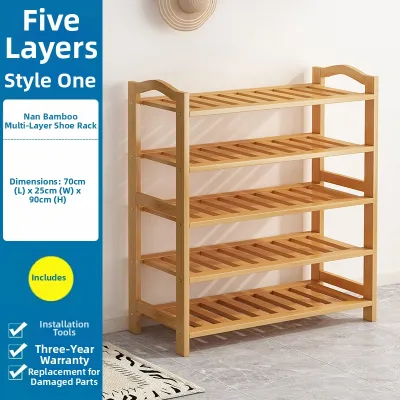
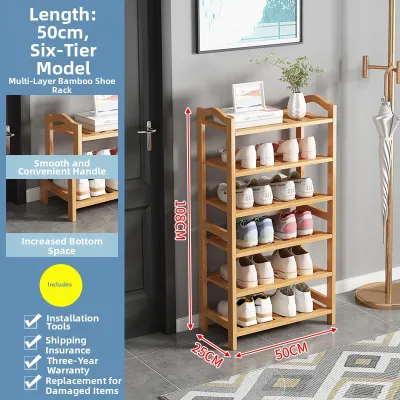
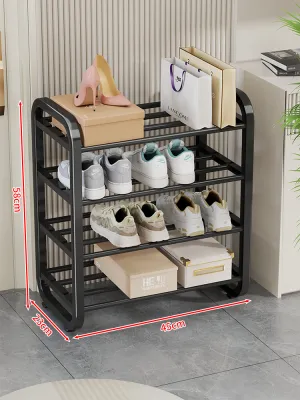
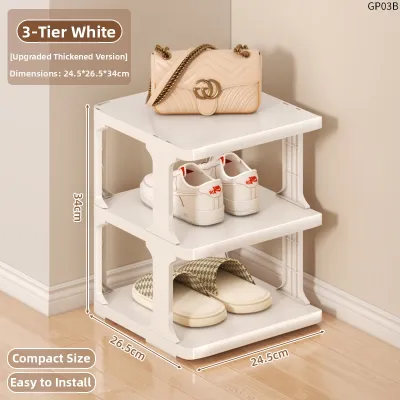
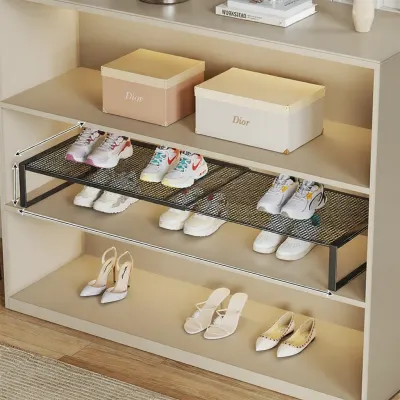
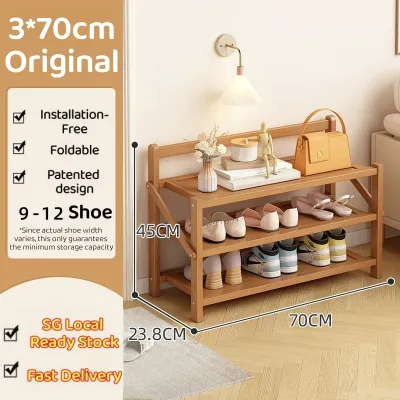
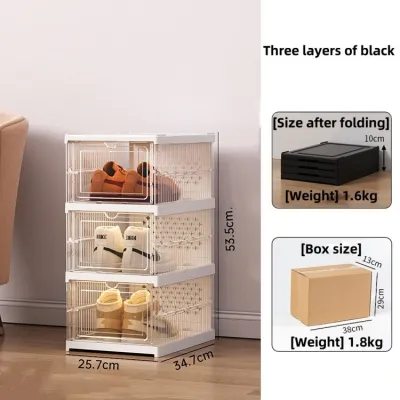
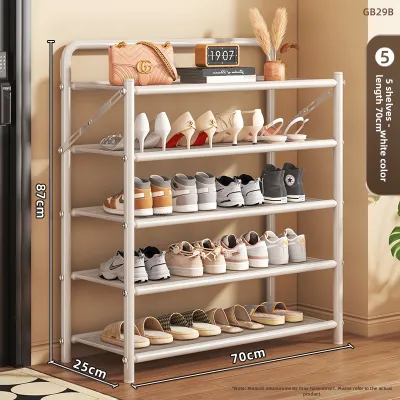
Prices are valid at publication and may change. Please refer to the product page for the latest price.
Do not forget to account for household guest slippers and indoor-only shoes. In many Singapore homes, removing outdoor footwear at the door is a standard cultural practice, meaning you will need dedicated, easily accessible slots for guest slippers. Allocating a specific lower tier or an open bottom clearance zone for these items ensures your entryway remains tidy even when hosting visitors.
Plan for Future Growth and Seasonal Storage
A common mistake when purchasing entryway furniture is buying only for the shoes you own today. To ensure your new storage solution lasts for years, evaluate the shopping habits and replacement frequency of everyone in your household. If family members regularly purchase new footwear without discarding older pairs, your collection will steadily expand, quickly rendering a tight-fitting rack obsolete.

Anticipating changes in your family structure is equally vital. Young children grow rapidly, and their tiny shoes will soon be replaced by adult-sized footwear that requires significantly more shelf depth and height. A rack that comfortably holds twelve pairs of toddler shoes might only accommodate six pairs of teenage sneakers in a few years’ time.
Additionally, allocate extra tiers or flexible compartments for seasonal gear and hobby-specific footwear. Whether you require space for bulky hiking boots, running shoes, or specialized travel footwear for colder climates, these items demand more physical volume than standard daily wear. Planning for an extra 15% to 20% capacity buffer during the initial calculation will save you from having to purchase secondary storage units later.
Measure Your Space and Check Clearance Limits
Before committing to a specific shoe rack design, you must verify that your calculated capacity physically fits within your home’s layout. Use a metal measuring tape to record the exact width, height, and depth of the intended placement area. Pay close attention to architectural details such as protruding baseboards, door frames, light switches, and electrical outlets, as these can prevent a cabinet from sitting flush against the wall or block access to essential utilities.
Equally important is checking the swing radius of nearby doors. Ensure that opening your main entryway door, adjacent closet doors, or nearby room doors will not result in them colliding with the shoe rack. In tight foyers or narrow corridors common in modern apartments, a cabinet that is too deep can restrict foot traffic, creating a hazardous bottleneck during busy morning rushes.
Finally, measure the physical height of your tallest everyday footwear to determine the necessary vertical clearance between shelves. High-top sneakers, mid-calf boots, and high heels cannot be crammed into standard low-clearance shelves without damaging their shape. Knowing these heights beforehand allows you to seek out configurations that accommodate your specific collection without wasting vertical space.
Translate Pair Counts into Shoe Rack Configurations
Once you have a target pair count and precise spatial measurements, you can translate these numbers into specific furniture configurations. Different shelf designs impact storage efficiency dramatically. Standard flat tiers offer straightforward visibility but require more depth. Slanted shelves, on the other hand, reduce the required depth of the unit by angling the shoes downward, making them excellent for narrow hallways, though they do require slightly more vertical clearance between tiers.
For maximum versatility, prioritize shoe racks with adjustable shelves or modular components. These designs allow you to customize the height of individual tiers, meaning you can create a tall compartment for boots and a series of short, tightly spaced shelves for flats and sandals. This adaptability prevents wasted vertical space and ensures every centimeter of the cabinet is utilized efficiently.
You must also weigh the spatial efficiency of freestanding racks against built-in or wall-mounted cabinets. Freestanding units are highly mobile and easy to assemble, but they often have a larger footprint. Wall-mounted cabinets or slim, tipping-bucket shoe cabinets utilize vertical wall space exceptionally well, making them the ideal choice for high-capacity needs in homes with limited floor area.
Common Capacity Mistakes to Avoid
One of the most frequent errors buyers make is relying solely on the manufacturer’s “pair count” label. These estimates are typically based on standard, slim-profile shoes in average sizes. If your household consists of individuals with larger shoe sizes or a preference for chunky sneakers and boots, you will find that the actual capacity of the rack is significantly lower than advertised. Always look at the physical width of the shelves and compare it to the average sole width of your shoes.
Another common oversight is forgetting to account for shoebox storage. If you prefer to keep high-end sneakers or formal shoes in their original boxes to protect them from dust and humidity, they will occupy nearly double the space of unboxed shoes. Standard open shelves rarely accommodate multiple shoeboxes efficiently, so you must plan for deeper, taller compartments if boxed storage is a priority.
Lastly, avoid the temptation to maximize storage capacity at the expense of entryway comfort. Squeezing a massive, floor-to-ceiling cabinet into a small foyer might solve your storage dilemma, but it can make your home’s entrance feel dark, cramped, and uninviting. Ensure there is still ample room to stand comfortably, bend down to tie laces, and move freely through the doorway.
Frequently Asked Questions (FAQ)
How much vertical space is needed between shelves?
While standard shoe racks typically offer a fixed shelf height of 15 to 20 centimeters, this may not accommodate your entire collection. To find your ideal vertical clearance, measure your tallest everyday shoes from the bottom of the sole to the highest point of the collar. Add a clearance margin of 2 to 3 centimeters to this measurement to allow your hands to slide the shoes in and out easily without scraping the shelf above. For households with a diverse mix of flats, sneakers, and boots, choosing a cabinet with adjustable shelving is the most practical way to avoid wasted vertical space.
Should I buy a shoe rack with extra capacity?
Yes, purchasing a shoe rack with roughly 10% to 20% more capacity than your current baseline is highly recommended. This extra space accommodates guest footwear, future purchases, and temporary storage needs without cluttering your floor. However, you must balance this future-proofing against the physical constraints of your entryway. If your space is limited, avoid buying an oversized, bulky unit; instead, opt for modular or stackable shoe racks that allow you to expand your storage capacity vertically as your collection grows.
How can I maximize capacity for bulky footwear?
To store bulky shoes like heavy boots or high-top sneakers without wasting valuable shelf space, consider alternative storage strategies. You can remove tall boots from the main entryway rack entirely, utilizing dedicated boot hangers, under-bed storage bins, or over-the-door organizers for off-season pairs. For the bulky shoes that must remain on the rack, try alternating their orientation—placing one shoe toe-forward and the other heel-forward—which often allows you to squeeze an extra pair onto a tight shelf by nesting their widest parts.
Community discussion
Share your experience or ask a question. Comments are reviewed before publication.