
To choose the perfect shoe rack cabinet, you must balance your household’s actual shoe collection with the physical limits of your entryway. Finding the right capacity is not just about counting your shoes; it requires translating those numbers into linear shelf space, factoring in shoe dimensions, and planning for future purchases. By taking a systematic approach to auditing your collection and measuring your space, you can select a cabinet that keeps your foyer organized and clutter-free.
Here is how to calculate the exact capacity your household needs and find a cabinet that fits your home perfectly.
Audit Your Current and Future Shoe Collection
Before browsing designs, you must conduct a thorough physical audit of your household’s footwear. Gather every pair of shoes from around your home and group them by household member. This process helps you see the true scale of your collection and identify which shoes are worn regularly versus those that are only kept for special occasions.
Products mentioned in this guide
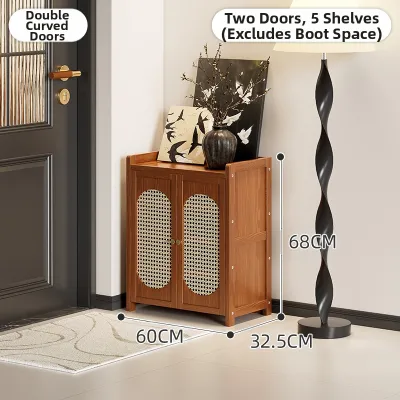
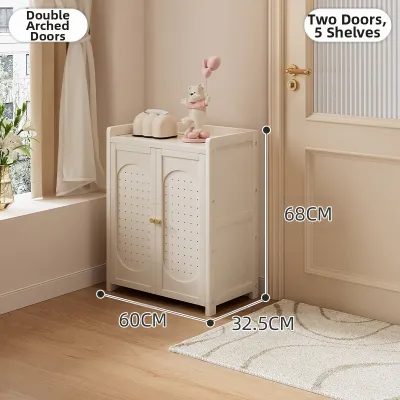
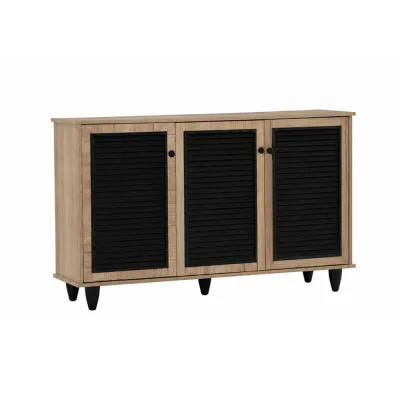
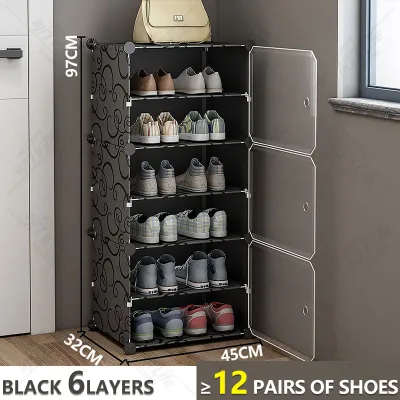
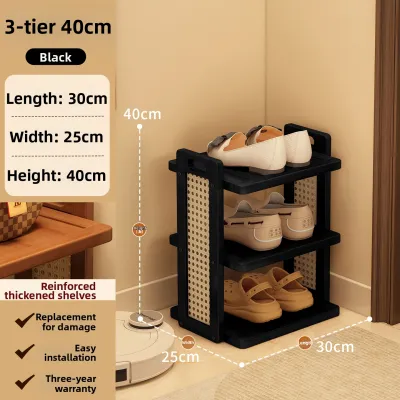
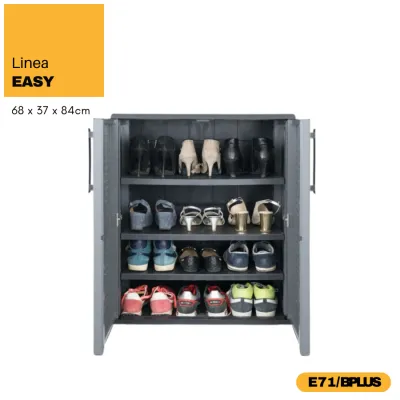
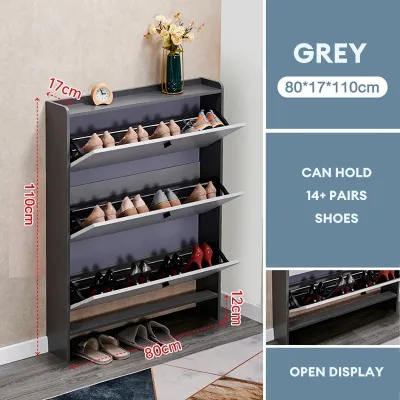
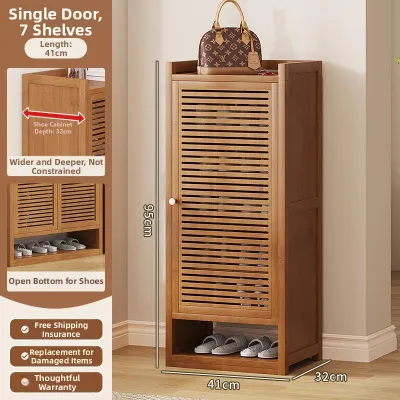
Prices are valid at publication and may change. Please refer to the product page for the latest price.
Next, categorize the shoes by their usage frequency. Group them into daily wear, occasional wear, and long-term storage. Daily wear includes the pairs you grab on your way out the door every day, while occasional wear covers formal dress shoes, sports shoes, or specific rain gear. Long-term storage is for shoes you rarely wear but still want to keep.
Your local climate plays a major role in the types of shoes you own. In Singapore’s warm, tropical weather, households typically accumulate a large number of lightweight shoes, such as sandals, slides, canvas sneakers, and breathable work shoes. Because you rarely need to store bulky winter boots, your vertical shelf requirements are generally lower, but the sheer volume of casual footwear can easily overwhelm a small entryway if not planned for correctly.
When calculating your final shoe count, always add a 10% to 20% buffer for future purchases or household growth. Children’s feet grow quickly, requiring larger shoe sizes over time, and personal styles change. Buying a cabinet that only accommodates your exact current inventory will inevitably lead to shoes piling up on the floor within a few months.
To keep your main entryway cabinet at a manageable size, separate your daily and weekly footwear from your long-term storage. Rare-use items, such as formal heels, heavy hiking boots, or out-of-season footwear, are best stored in bedroom wardrobes or secondary storage units. This keeps your primary shoe rack cabinet dedicated to the shoes you actually use regularly, preventing it from taking up too much precious floor space in your foyer.
Translate Shoe Counts into Physical Cabinet Dimensions
Do not rely solely on a manufacturer’s advertised pair capacity, as these numbers are often based on small, narrow shoes. Instead, measure the physical dimensions of the largest and widest shoes in your household, which are typically men’s sneakers, athletic shoes, or structured leather work shoes. These larger pairs will dictate the minimum shelf depth and width you need.

On average, a pair of men’s shoes requires about 22 to 25 centimetres of horizontal shelf width, while women’s shoes need about 18 to 22 centimetres. To calculate your required shelf length, multiply the number of pairs you want to store by these average widths. For example, if you need to store 20 pairs of shoes with an average width of 22 centimetres per pair, you will need a total of 440 centimetres of linear shelf space. If a cabinet has shelves that are 80 centimetres wide, you will need at least six shelves to fit your collection comfortably.
Adjustable shelving is an essential feature for maximizing internal cabinet space. Flat sandals and flip-flops only require about 10 centimetres of vertical clearance, whereas high-top sneakers, mid-cut boots, and high heels need 15 to 20 centimetres. Cabinets with adjustable shelf pegs allow you to customize the height of each tier, preventing wasted empty air space above low-profile shoes and allowing you to fit more shelves into the same cabinet height.
Always distinguish between the external dimensions of the cabinet and its internal usable space. External measurements include the thickness of the back panel, the front doors, and any internal hinges or shelf supports. Ensure the internal shelf depth is at least 30 to 35 centimetres so that larger shoes can sit straight on the shelf without forcing you to place them sideways or preventing the cabinet doors from closing fully.
Measure Your Entryway and Clearance Spaces
Once you know your required cabinet dimensions, you must measure the physical space where the cabinet will stand. Measure the available width, height, and depth of your indoor entryway or foyer. Additionally, check the dimensions of your home’s doorways, hallways, and lift access to ensure the delivery team can safely transport the cabinet into your home, especially if you are purchasing a fully assembled unit.
For residents in Singapore’s HDB flats or private condominiums, remember that shoe cabinets must be placed inside your home. Public corridors, lift lobbies, and common stairwells are strictly regulated by the Singapore Civil Defence Force (SCDF) for fire safety and emergency evacuation. Keeping your common corridors completely clear of furniture is essential for safety and compliance with local estate guidelines.
Identify any physical obstructions on the wall or floor where you plan to place the cabinet. Look out for electrical distribution boards (DB boxes), light switches, wall sockets, intercom screens, and skirting boards. A cabinet that blocks access to your DB box or covers a light switch will cause daily frustration, so ensure your measurements account for these fixtures.
Ensure there is adequate clearance space around the cabinet for comfortable movement. You need enough floor space to stand in front of the cabinet, open the doors fully, and bend down to retrieve your shoes without blocking the main entrance or hitting nearby walls. As a general rule, leave at least 90 to 100 centimetres of clear walkway space in front of the cabinet for comfortable passage.
Match Capacity to Cabinet Types and Configurations
Slim Tilt-Drawers vs. Standard Swing Doors
Slim tilt-drawer cabinets are designed specifically for narrow entryways, as they feature a shallow depth of often just 15 to 20 centimetres. Instead of flat shelves, these cabinets use tilting compartments where shoes are stored vertically. While they are highly space-efficient, they come with significant capacity limitations. They are generally unsuitable for high heels, chunky platform sneakers, or high-top boots, which can get crushed when the drawer is closed. They work best for households that primarily store flat sandals, slip-ons, and low-profile canvas shoes.
Standard swing-door cabinets require a deeper footprint of 32 to 38 centimetres but offer far greater storage versatility. The flat shelves can accommodate any shoe type, from heavy work boots to delicate high heels, without damaging their shape. Because the shelves are deep, you can also use shoe stackers or organizers to double your vertical capacity. The primary trade-off is that you must have enough frontal clearance space for the doors to swing open fully into the entryway.
Freestanding vs. Built-in or Wall-Mounted
Freestanding shoe cabinets offer excellent flexibility because they require no permanent wall drilling and can be easily moved or replaced. This makes them ideal for rental properties or for homeowners who like to rearrange their furniture. When choosing a tall freestanding cabinet, check its stability and ensure it can be safely anchored to the wall to prevent tip-over accidents, which is especially important in homes with young children or pets.
Built-in or wall-mounted cabinets are excellent for maximizing vertical space and creating a clean, modern look. Floating wall-mounted designs keep the floor underneath clear, making it easy to sweep, mop, or store everyday slippers. However, before mounting a heavy cabinet, you must verify the wall’s load-bearing capacity and ensure there are no hidden electrical wires or water pipes. If you live in a rented home, you must check your tenancy agreement regarding drilling restrictions before installing a wall-mounted unit.
Common Capacity Planning Mistakes to Avoid
One of the most common mistakes is relying solely on the manufacturer’s stated “pair capacity” without verifying the internal dimensions. These advertised capacities are typically calculated using small, narrow shoes packed tightly together. If your household wears larger shoe sizes, wide athletic sneakers, or structured leather shoes, the actual capacity of the cabinet could be up to 30% lower than the advertised number.
Another frequent oversight is forgetting to allocate space for non-shoe items that naturally accumulate at the entryway. A practical shoe rack cabinet should have a dedicated drawer, shelf, or top surface for storing shoe care kits, spare laces, umbrellas, keys, and mail. Without this designated space, these everyday items will end up cluttered on top of the cabinet, making your entryway look untidy.
Never ignore ventilation requirements, especially in Singapore’s hot and highly humid climate. Storing damp or sweaty shoes in a completely sealed wooden cabinet traps moisture, creating an ideal environment for mold, mildew, and unpleasant odours to develop. To prevent this, look for cabinets with louvered doors, perforated back panels, or breathable mesh materials that promote continuous airflow. Additionally, check the manufacturer’s care instructions for the cabinet material to ensure it can withstand occasional moisture from damp footwear.
Frequently Asked Questions (FAQ)
How many pairs of shoes can a standard 2-door shoe cabinet hold?
A standard two-door shoe cabinet with a width of 80 centimetres and four to five shelves typically holds between 12 to 18 pairs of adult shoes. However, the actual capacity depends heavily on the size and style of your footwear. If you are storing flat sandals and slippers, you can fit more pairs per shelf. If you are storing wide men’s sneakers or ankle boots, the capacity will be lower. Always measure the internal width and look for adjustable shelves to get an accurate estimate for your specific collection.
Should I leave extra space for guests' shoes?
It is generally impractical to permanently dedicate prime, internal cabinet space for guests’ shoes, as these shelves will remain empty and underutilized most of the time. Instead, keep a small, foldable, or stackable shoe rack stored away, or designate a neat floor mat area near the entrance for visitors. This keeps your primary shoe rack cabinet fully optimized for your household’s daily needs while still providing an organized and welcoming solution when hosting guests.
Community discussion
Share your experience or ask a question. Comments are reviewed before publication.