
Finding the perfect storage solution for your shoe collection starts with a clear mathematical approach rather than guesswork. In space-conscious living environments, such as Singapore’s HDB flats or condominiums, maximizing every square centimeter of your entryway or closet is essential. To calculate the right shoe box storage capacity, you must balance your current inventory, projected collection growth, and the physical constraints of your home. By systematically measuring your footwear and mapping out your available floor and vertical space, you can build a stable, accessible, and mold-free storage system that protects your investment.
Assess Your Current Footwear Inventory
Before purchasing any storage containers, establish a precise baseline of your collection. Gather all your footwear in one well-lit area to conduct a thorough inventory. Group your shoes into distinct categories based on their style and physical profile, such as low-profile flats, standard sneakers, high-top athletic shoes, heels, and boots. This categorization is crucial because different styles require varying physical volumes; a one-size-fits-all approach often wastes space or crushes shoes.
Next, record the length, width, and height of these outlier shoes as they would sit naturally inside a box. For instance, high heels require extra height clearance, while large-sized sneakers or basketball shoes often demand longer and wider boxes than standard dress shoes. This ensures you do not buy bulk containers that your favorite boots or high-tops cannot fit into.
Products mentioned in this guide
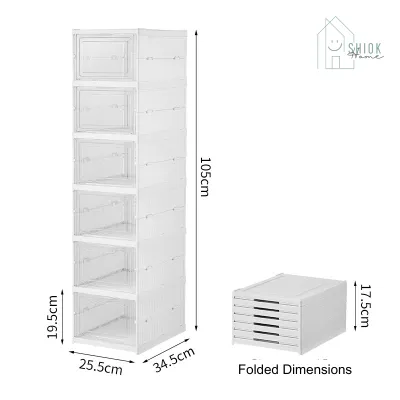
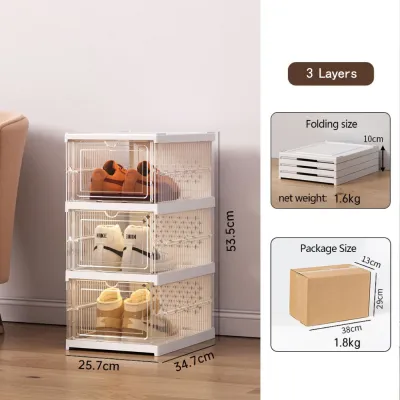
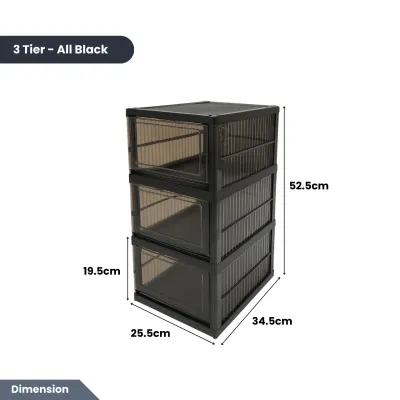
Prices are valid at publication and may change. Please refer to the product page for the latest price.
Finaly, count the total number of pairs within each category to establish your absolute minimum baseline capacity. For example, if you own twenty pairs of sneakers, five pairs of heels, and three pairs of boots, your plan must accommodate these quantities at a bare minimum. Write these numbers down in a simple spreadsheet or notebook, as this inventory list will serve as the foundation for all your subsequent spatial calculations.
Plan for Future Growth and Seasonal Rotation
A storage system that only fits your current collection quickly becomes obsolete. To prevent this, estimate a realistic annual growth rate for your collection based on your shopping habits and budget. If you buy several pairs annually without discarding old ones, factor in a ten to twenty percent expansion margin. Planning for this growth upfront saves you from the frustration of having mismatched, overflow boxes cluttering your floor later on.

In Singapore’s tropical climate, seasonal rotation remains highly relevant despite the lack of winter weather. You may have specialized travel footwear, heavy hiking boots, or formal dress shoes that you only wear occasionally. Consider whether these low-frequency pairs should be stored in less accessible, long-term storage areas—such as high closet shelves or a dedicated storeroom—to free up prime real estate in your main entryway.
Additionally, anticipate upcoming lifestyle changes that could influence your footwear needs. A new job, fitness routine, or growing family can rapidly alter the types and volume of shoes you need to store. By projecting these changes over the next twelve to twenty-four months, you can purchase a modular shoe box system that can easily expand or adapt to your evolving lifestyle without requiring a complete overhaul.
Calculate Your Total Shoe Box Storage Capacity
Now, translate your inventory and growth projections into concrete box quantities and total physical volume. Divide your projected collection into “standard” and “oversized” storage categories. Standard boxes accommodate low-profile shoes and sneakers, while oversized boxes fit high heels, boots, and larger sizes. Assigning each pair to its correct box type prevents you from buying excessively large boxes for small shoes, which wastes valuable storage volume.
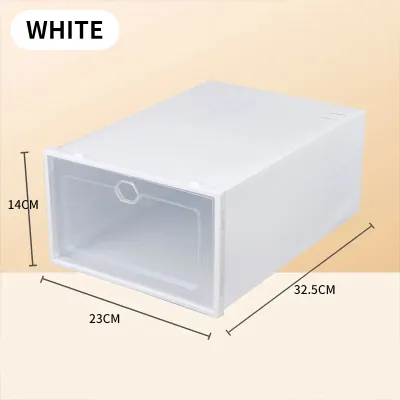
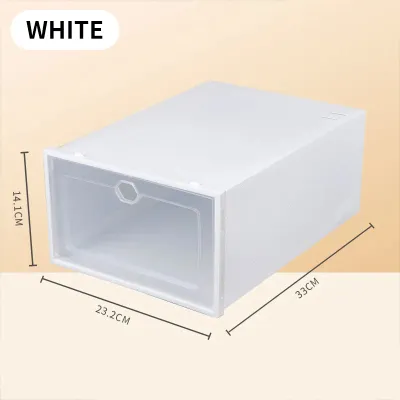
To calculate the total cubic volume, multiply the external dimensions of each box type by the quantity required. For example, if a standard box measures 34 by 23 by 14 centimeters, its volume is roughly 0.011 cubic meters. Storing twenty of these boxes requires approximately 0.22 cubic meters. Perform the same calculation for your oversized boxes and add the totals together to find the absolute physical volume your collection requires.
Add a buffer of ten to fifteen percent to your final calculation for easy access and essential ventilation. In humid climates, packing shoe boxes too tightly against walls or each other restricts airflow, creating a breeding ground for mold and mildew that can ruin leather and fabric. A generous buffer ensures you have room to organize your collection logically, leave breathing space between stacks, and easily retrieve a pair without destabilizing the entire arrangement.
Match Your Calculated Capacity to Available Space
Next, verify that this physical footprint fits safely within your home. Measure your designated storage area, such as an entryway alcove or bedroom closet, using a measuring tape. Account for functional clearances like door swings, walkways, and wall ventilation gaps of at least two to five centimeters.
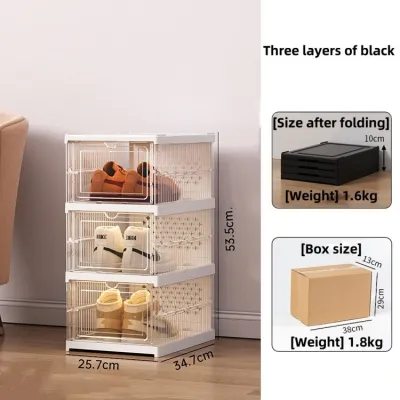
Compare the stacked dimensions of your boxes against these spatial limits. If stacking ten units high, multiply a single box’s height by ten and compare it to your ceiling height. Ensure the stack does not encroach on walkways or create a tripping hazard. If the physical footprint exceeds your available floor space, you will need to utilize vertical space more aggressively or consider purging underutilized shoes from your collection.
Stacking stability and weight distribution are critical safety factors for lightweight plastic boxes. Check the manufacturer’s guidelines for maximum stacking heights and load capacities to prevent the bottom boxes from buckling. Place heavy footwear like boots at the bottom to lower the center of gravity, and anchor tall stacks to the wall.
Avoid Common Sizing and Capacity Mistakes
A frequent mistake is assuming all shoe boxes are uniform and purchasing identical containers in bulk. This often results in high-tops bending out of shape, heels being forced sideways, or boots being left out entirely. Verify internal dimensions before buying to ensure they accommodate your largest pairs without deforming them.
Another error is calculating capacity based solely on floor area while ignoring vertical stacking limits. A narrow entryway can store dozens of pairs in a minimal footprint by utilizing a stable, vertical stack. Conversely, avoid stacking boxes so high that they become unstable or difficult to reach safely.
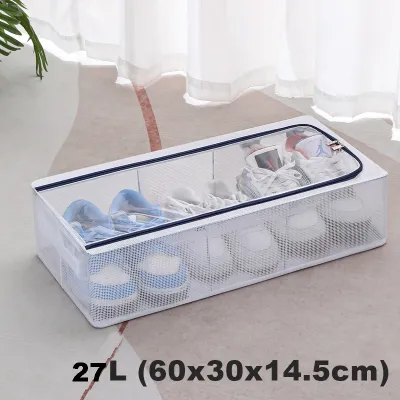
Finaly, never overlook the need for ventilation and access space. Airtight plastic boxes in humid environments trap moisture and accelerate material degradation. Opt for boxes with ventilation holes or drop-front doors that allow air circulation. Ensure you leave enough clearance to open doors and slide shoes out without dismantling the stack.
Frequently Asked Questions (FAQ)
How much extra space should I leave inside a shoe box?
You should aim for a minimal clearance of about one to two centimeters around the sides and top of your shoes inside the box. This small buffer prevents the shoes from shifting excessively and scuffing against the box walls when moved, while still allowing enough room for easy retrieval. Additionally, this extra space is essential if you use protective accessories like wooden shoe trees, tissue paper stuffing, or silica gel moisture-control packets to preserve the shape and material of your footwear.
Do I need different box sizes for boots and sneakers?
Yes, using different box sizes is highly recommended for an efficient and protective storage setup. Storing low-profile shoes, flats, or standard sneakers in oversized boot boxes is highly inefficient, as it wastes valuable vertical and horizontal space in your home. Conversely, attempting to force ankle boots, knee-high boots, or high-top athletic shoes into standard-sized boxes will crush the shafts, crease the leather, and ultimately damage the structural integrity of your footwear.
Community discussion
Share your experience or ask a question. Comments are reviewed before publication.