
Finding shoes scattered across your entryway can be frustrating, especially when dust and humidity threaten to ruin your favorite pairs. Investing in a dust proof shoe rack is an excellent way to keep your foyer organized while protecting your footwear from environmental damage. However, choosing a cabinet that is either too small or unnecessarily bulky can lead to wasted space and buyer’s remorse. To determine the perfect capacity, you must systematically analyze your household’s collection and map those physical items to the internal clearances of enclosed furniture.
Assessing Your Current and Future Shoe Collection
To establish a realistic baseline, begin by gathering every single pair of shoes currently owned by your household. It is easy to underestimate the size of your collection when shoes are scattered across different bedrooms, closets, or the front door. Laying them out in one space allows you to see the true scale of what you need to store.
Next, separate your footwear by usage frequency. Group your daily-wear items—like school shoes, work heels, or running sneakers—away from occasional, seasonal, or sports-specific gear. Your daily shoes will need to occupy the most accessible middle shelves, while formal shoes or hiking boots can be relegated to the very top or bottom levels of the cabinet.
Products mentioned in this guide
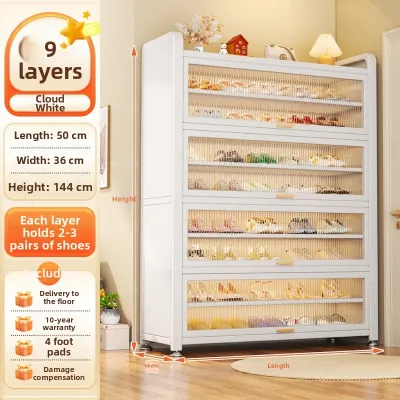
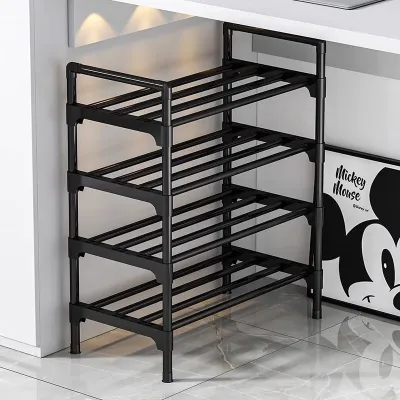
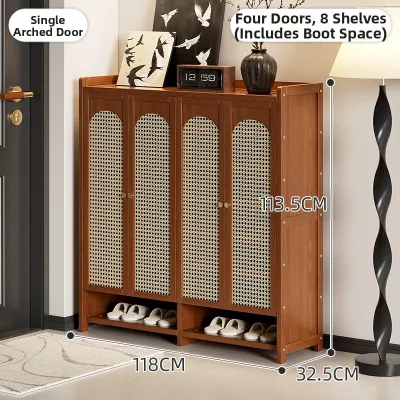
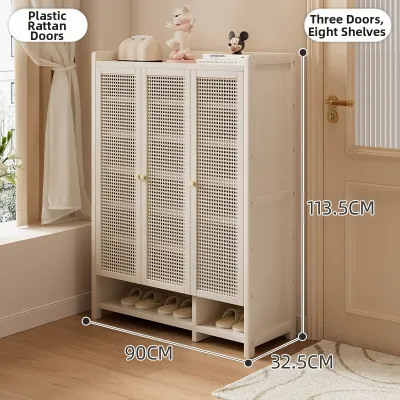
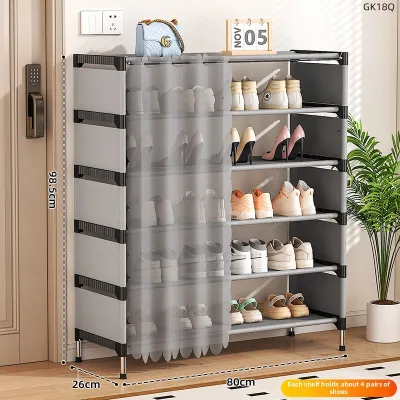
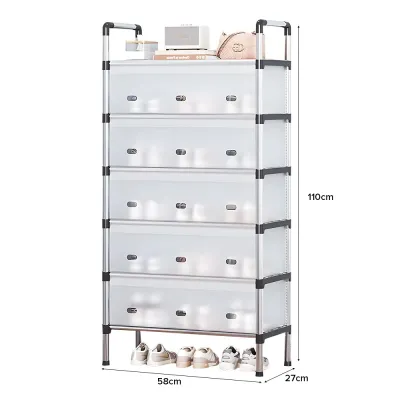
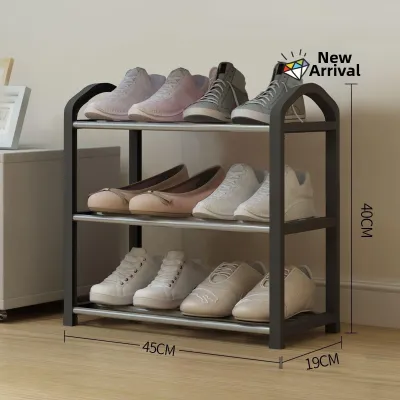
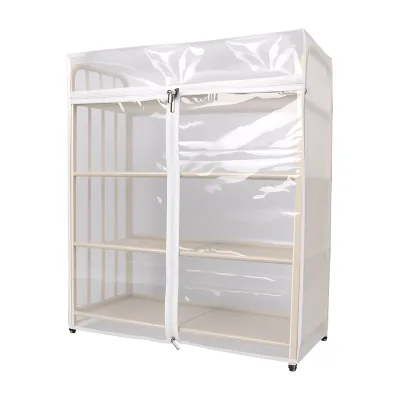
Prices are valid at publication and may change. Please refer to the product page for the latest price.
You must also categorize the collection by physical shape and height. Flat sandals, slippers, and loafers require minimal vertical clearance, typically around 10 to 12 centimeters. On the other hand, high-top sneakers, platform heels, and ankle boots require 15 to 20 centimeters of vertical space. Storing these diverse styles together on fixed shelves can result in crushed shoe uppers or significant wasted vertical space.
Finally, factor in future collection growth. If you have growing children, their shoe sizes and styles will change rapidly over the coming years. Even for adults, shoe collections are rarely static; lifestyle changes, new hobbies, or seasonal shopping will naturally expand your inventory. Planning for this growth now ensures your cabinet remains highly functional for years to come.
Translating Shoe Counts into Dust Proof Shoe Rack Capacity
Once you have a clear count, you can translate those physical pairs into actual shelf space. On average, a pair of women’s shoes requires about 18 to 22 centimeters of horizontal shelf width, while a pair of men’s shoes needs 22 to 26 centimeters. If a dust proof shoe rack has an internal shelf width of 80 centimeters, you can estimate it will comfortably hold three pairs of men’s shoes or up to four pairs of women’s flats.

However, you must account for the physical space lost to dust-proof design features. Unlike open-slat shelving, enclosed cabinets feature side panels, backboards, magnetic door closures, and hinge mechanisms that project into the interior. These structural components can easily reduce the usable internal width by 5 to 10 centimeters compared to the external dimensions. Always verify the manufacturer’s specified internal dimensions rather than relying solely on the overall external width.
To avoid overcrowding, it is highly recommended to apply a 15% to 20% capacity buffer. For example, if your household currently owns 20 pairs of shoes, you should target a cabinet rated for at least 23 to 24 pairs. Enclosed, dust-proof environments naturally restrict airflow, meaning that cramming shoes too tightly together can trap moisture and accelerate mold growth, particularly in humid climates.
This buffer also serves a practical purpose when hosting guests. In Singapore, where it is customary to remove shoes before entering a home, having a small amount of extra space in your entryway cabinet allows you to temporarily tuck away visitors’ footwear. This keeps your main corridor clear of unsightly piles and potential trip hazards during social gatherings.
Verifying Physical Dimensions Against Your Entryway Space
Before purchasing any furniture, carefully measure the physical footprint of your intended placement area. In typical Singapore apartments like HDB flats or condominiums, entryway space is highly optimized. Measure the maximum allowable width, height, and depth of the wall space, taking care to note any obstructions like light switches, electrical DB boxes, intercom units, or floor skirting boards.
The door mechanism of your dust proof shoe rack is a critical factor in determining spatial compatibility. Standard swing-out doors require ample clearance to open fully without blocking your main entrance or the hallway walkway. If your corridor is particularly narrow, sliding doors or vertical flip-down compartments are excellent alternatives that do not obstruct pedestrian traffic when opened.
You must also perform a strict depth check. The external depth of a shoe cabinet is often misleading. If a family member wears larger shoe sizes (such as US size 10 and above), their shoes can easily measure 30 centimeters or more in length. If the internal depth of the cabinet is only 28 centimeters, the dust-proof doors will not close completely, rendering the protective features useless. Ensure the internal depth accommodates your longest shoes with at least two centimeters of clearance.
While protecting shoes from dust is essential, completely sealing them in an airtight box can trap ambient moisture and cause musty odors. Look for cabinets that balance dust-proofing with subtle ventilation, such as louvered door panels, breathable backboards, or small rear ventilation grilles. This minimal airflow helps keep the interior dry without letting in significant amounts of dust.
Common Capacity and Sizing Mistakes to Avoid
One of the most frequent errors is purchasing a cabinet with fixed, non-adjustable shelves. This rigid setup assumes all your footwear is of uniform height, leading to massive pockets of wasted space above flat sandals and forcing you to bend or cram taller sneakers to make them fit. Prioritize cabinets with adjustable pegs that let you customize shelf heights as your collection evolves.
Another common pitfall is confusing external depth with internal depth. Buyers often see a cabinet listed with a 32-centimeter depth and assume it will easily fit their size 11 sneakers. In reality, the thickness of the front doors, the back panel, and the internal hinges can reduce the usable space to 28 centimeters or less, preventing the doors from latching shut over bulky footwear.
Finally, avoid the temptation to buy a cabinet that perfectly matches your current shoe count with zero room for error. A zero-margin purchase means that the moment you buy a new pair of running shoes or formal heels, your storage system breaks down. You will either be forced to discard an existing pair or resort to leaving excess shoes cluttered around the base of the cabinet, defeating the purpose of your organization efforts.
Frequently Asked Questions (FAQ)
How do I store tall boots in a standard dust-proof shoe rack?
To accommodate tall boots without damaging their structure, look for a dust proof shoe rack that features adjustable or fully removable shelves. By removing one or two shelves, you can easily create a high-clearance zone at the bottom of the cabinet to keep boots upright. If your cabinet has fixed shelves, you can use flexible boot shapers or gently fold the boot shafts to lay them horizontally across a wider shelf. Alternatively, store seasonal boots in their original boxes in a wardrobe, keeping your entryway cabinet dedicated to daily-wear shoes.
Is it better to buy two smaller dust-proof racks or one large cabinet?
The choice between modular smaller units and a single large cabinet depends on your home’s layout and flexibility needs. A single large cabinet offers a seamless, built-in look and maximizes vertical space, making it highly efficient if you have a dedicated foyer wall. However, if your entryway has awkward corners, narrow corridors, or wall obstacles, two smaller dust-proof racks can be highly advantageous. You can place one small unit near the front door for immediate daily-wear access and a second unit in a hallway or bedroom for long-term storage of occasional footwear.
Community discussion
Share your experience or ask a question. Comments are reviewed before publication.