
Assembling a modular metal storage rack is one of the most effective ways to maximize vertical space in utility rooms, kitchens, or home offices. These versatile shelving units offer a highly customizable storage solution that can adapt to changing household needs without requiring professional installation. By understanding the mechanics of the interlocking components and planning your layout carefully, you can build a stable, high-capacity storage system tailored precisely to your space.
Pre-Assembly Preparation and Space Planning
Before unboxing your new shelving unit, precise space planning is essential. Measure the designated floor area, taking note of any architectural features like skirting boards, electrical outlets, or low-hanging pipes. In many homes, especially compact apartments in Singapore, a few millimeters of clearance can make the difference between a rack fitting perfectly or blocking a doorway. Measure the ceiling height to ensure the vertical posts have sufficient clearance during assembly, particularly if you need to tilt the unit upright.
Next, clear a spacious, flat work area. Laying down a clean piece of cardboard or a protective mat prevents scratches on both your flooring and the powder-coated or galvanized finish of the metal components. Unpack all items and group them by type: vertical posts, horizontal shelf frames, wire or solid shelf inserts, and plastic tapered sleeves or clips. Cross-reference every item with the manufacturer’s parts list to confirm no components are missing before you begin.
Products mentioned in this guide
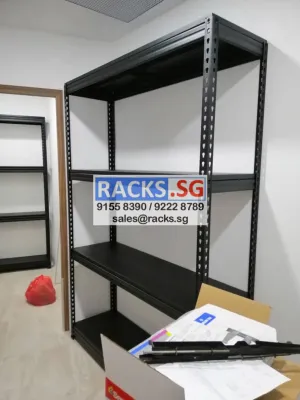
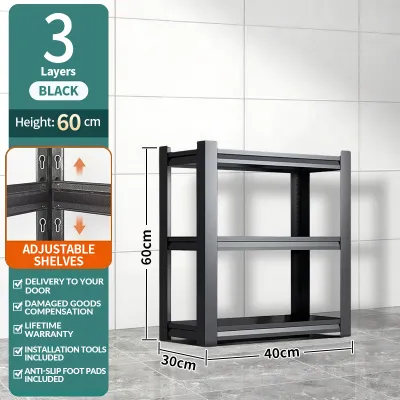
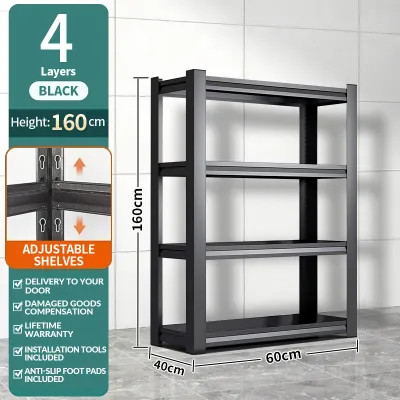
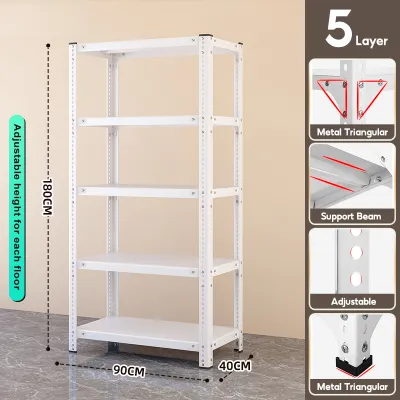
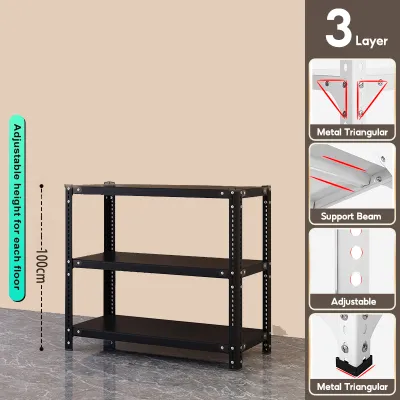
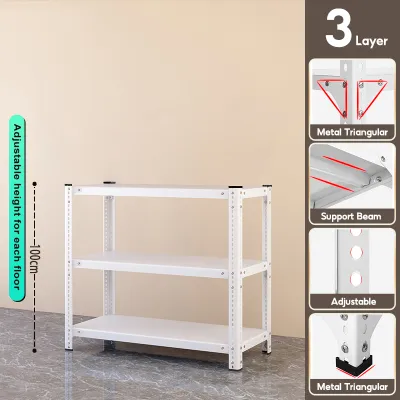
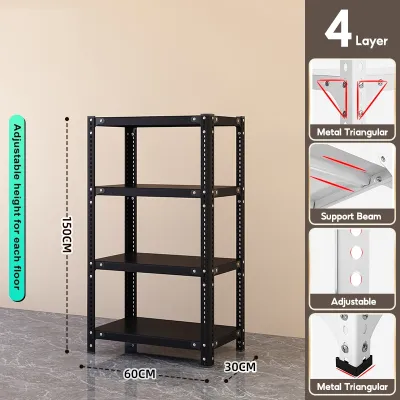
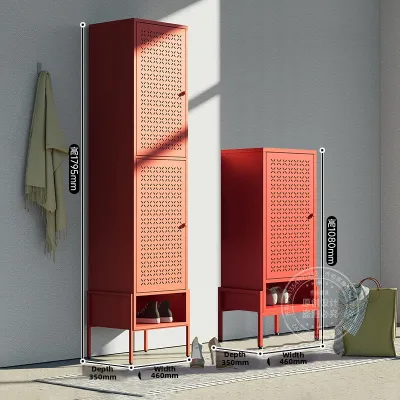
Prices are valid at publication and may change. Please refer to the product page for the latest price.
Gather the necessary tools. While many modular metal racks are designed for tool-free assembly, having a rubber mallet on hand is highly recommended. A standard metal hammer should be avoided, as it can dent the metal frame or chip the protective coating, leading to rust over time. A measuring tape and a spirit level are also crucial for ensuring the shelves are perfectly level and the entire structure remains plumb.
Step-by-Step Assembly Guide for Metal Storage Racks
Begin the assembly from the ground up by preparing the vertical posts. If your rack includes leveling feet or casters, thread them into the bottom of each post. Adjustable leveling feet are highly useful for compensating for uneven floors, which are common in utility areas or wet kitchens. Ensure all four feet are threaded to a similar depth initially, leaving room for fine adjustments once the rack is in its final position.

Identify the bottom shelf height and locate the corresponding grooves on the vertical posts. Modular metal racks typically use two-piece plastic tapered clips that snap together around the posts. Locate the “top” indicator on the clips—usually marked with an arrow or a small lip—and snap them into place at the same height on all four posts. You will hear a distinct click when the inner ridge of the clip seats securely into the post’s groove.
With the clips secured, slide the first shelf down from the top of the posts. Ensure the collar corners of the shelf are oriented correctly, with the wider opening facing downward to slide over the tapered clips. Lower the shelf evenly over all four posts until it rests firmly on the plastic sleeves.
Use a rubber mallet to tap the corners of the shelf gently but firmly. This action wedges the shelf collar over the tapered clips, creating a secure friction lock. Avoid striking the center of the shelf wire, as this can bend the support structure; focus your strikes solely on the reinforced corner collars.
Repeat this process for the remaining shelves, working your way from the bottom to the top. Installing the lowest shelf first is critical, as it stabilizes the base of the posts and makes handling the rest of the assembly much easier. Once all shelves are in place, place a spirit level across the frame in multiple directions. Adjust the leveling feet at the base until the bubble is perfectly centered, ensuring the entire structure is plumb and stable.
Customizing Shelf Heights and Configurations
One of the primary benefits of a modular metal storage rack is the ability to customize shelf heights to match your specific storage containers. Instead of spacing shelves evenly by default, measure the height of your tallest storage bins, kitchen appliances, or storage boxes. Plan your shelf intervals to leave a few centimeters of clearance above the tallest items, allowing you to slide them in and out without scraping the shelf above.
If you need to adjust the configuration later, the process is straightforward but requires care. Empty the shelf completely before attempting any adjustments. Position your rubber mallet underneath the corner collars of the shelf and tap upward gently to break the friction lock. Once loose, slide the shelf up and off the posts, adjust the plastic clips to the new desired height, and lower the shelf back into place, tapping it secure once more.
To further optimize your storage system, evaluate compatible add-on accessories. Many manufacturers offer optional components such as side hooks, hanging bars, shelf dividers, or clear plastic liners that prevent small items from falling through wire grates. Always verify compatibility by checking the manufacturer’s specifications for your exact post diameter and shelf dimensions before purchasing accessories.
Safety Checks, Stabilization, and Maintenance
Ensuring the long-term stability of your storage rack is vital for home safety. Tall, narrow racks are naturally more susceptible to tipping, especially when placed on uneven surfaces or in high-traffic areas. Assess the height-to-depth ratio of your unit; if the height is more than four times the depth, or if you live in an environment prone to vibrations, anchoring the rack to the wall is highly recommended.
Proper weight distribution is another key factor in preventing structural failure. Always place your heaviest items, such as bulk liquids, heavy tools, or large storage crates, on the bottom shelf. This lowers the overall center of gravity of the unit, making it significantly more stable. Distribute weight evenly across each shelf rather than concentrating heavy items in the center, which can cause the metal to bow over time.
Perform routine visual inspections every few months to maintain the integrity of your shelving system. Check that the plastic clips remain fully seated in their grooves and that the shelf collars have not slipped. Look for any signs of bending, structural deflection, or surface damage. Clean the metal surfaces using a soft, damp cloth and a mild detergent, avoiding abrasive cleaners that could strip away the protective rust-resistant coating.
Frequently Asked Questions (FAQ)
How much weight can a standard modular metal rack hold?
To determine the weight capacity of your specific unit, always refer to the manufacturer’s manual, product label, or official product listing. Weight limits vary significantly depending on the thickness of the metal, the overall dimensions of the shelves, and the design of the support beams.
It is important to understand that these ratings assume the load is evenly distributed across the entire surface of the shelf. Concentrating a heavy object in a single spot can cause localized bending even if the total weight is well below the rated limit. Additionally, static weight capacities do not apply if the rack is fitted with casters, as mobile units typically have lower overall weight limits than stationary ones.
Do I need to anchor my metal storage rack to the wall?
Wall anchoring is highly recommended for any storage rack that is tall, narrow, or loaded with heavy items near the top. It is also an essential safety measure in homes with active children or pets who might attempt to climb or pull on the shelving unit.
When installing wall anchors, consult the manufacturer’s safety guidelines and select hardware appropriate for your specific wall material. In Singapore, most interior walls are made of concrete, brick, or drywall, each requiring a different type of wall plug and drill bit. Secure the anchoring bracket to a solid wall stud or masonry surface rather than relying on simple drywall plugs for heavy loads.
Can I add extra shelves to my existing metal rack later?
Yes, most modular metal racks allow you to add extra shelves later, provided the vertical posts have available space and compatible slot intervals. This is an excellent way to adapt your storage system as your needs change over time.
Before purchasing additional shelves, verify that they match the exact dimensions and post diameter of your existing unit. Keep in mind that adding more shelves does not increase the overall weight capacity of the entire rack. The total weight of all stored items, plus the weight of the new shelves themselves, must remain within the manufacturer’s specified maximum limit for the entire structure.
Community discussion
Share your experience or ask a question. Comments are reviewed before publication.