
Planning a DIY shelving project requires understanding that a bracket’s weight capacity is not a single, guaranteed number. While manufacturers print weight ratings on packaging, the actual load your shelves can safely support depends on bracket design, wall composition, fastener choice, and installation execution. To prevent sagging shelves or wall damage, you must evaluate how these components work together as a complete structural system.
Shelf Bracket Types and Their Structural Roles
Different bracket designs manage physical forces in distinct ways, directly affecting how much weight they can handle. Traditional visible L-brackets are the most common choice for heavy-duty storage. These brackets feature a vertical arm that mounts to the wall and a horizontal arm that supports the shelf. When weight is placed on the shelf, the vertical arm transfers the downward force directly into the wall through the mounting screws, creating a highly stable support system.
Hidden or floating brackets rely on internal rods welded to a backplate that is anchored flat against the wall. Because there is no diagonal or vertical support underneath, the shelf experiences high torque (rotational force) at the wall joint. This design places immense stress on both the internal rods and the wall anchors, meaning floating brackets require deeper wall penetration and solid wall backing to remain stable under load.
Products mentioned in this guide
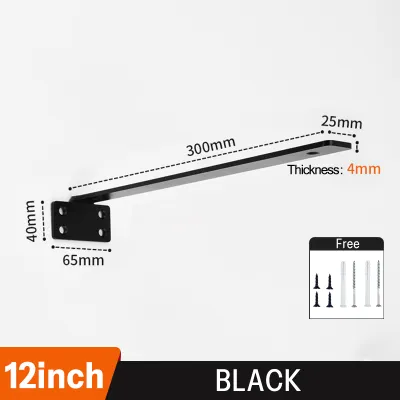
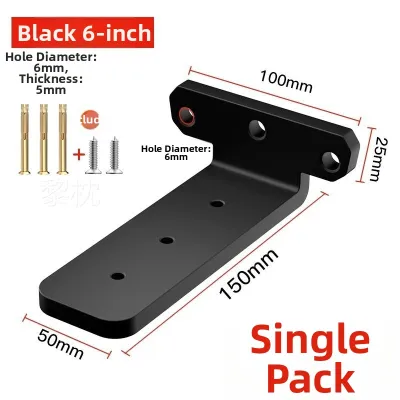
Prices are valid at publication and may change. Please refer to the product page for the latest price.
Triangular or gusseted brackets introduce a diagonal brace between the horizontal and vertical arms. This structural triangle significantly increases rigidity and prevents the horizontal arm from bending downward under heavy loads. Gusseted brackets are highly recommended for deeper shelves or heavy storage needs, as the diagonal brace effectively redirects outward leverage back toward the wall plate, minimizing the risk of bracket failure.
The Deciding Factors: Wall Material and Anchoring Hardware
Even the strongest industrial bracket will fail if the wall material or anchoring hardware cannot support the load. In Singapore, residential walls typically fall into two categories: solid concrete or brick walls (common in HDB flats) and hollow drywall partition walls. Solid walls offer exceptional holding power, allowing expansion anchors to grip tightly along their entire length. Hollow walls rely entirely on the thin face of the drywall for support, which drastically limits the maximum weight capacity.

To ensure safety, you must match your fasteners precisely to your wall type. For solid concrete walls, heavy-duty plastic expansion plugs or metal sleeve anchors are ideal because they expand outward to lock into the masonry. For hollow drywall, standard plastic plugs are insufficient; instead, you should use toggle bolts or heavy-duty hollow wall anchors that spread the load across a wider surface area behind the wall panel. Always check the manufacturer’s hardware specifications to confirm compatibility.
Ultimately, the connection between the wall and the anchor is almost always the weakest point in any shelving system. A bracket rated for heavy loads will pull out of the wall at a fraction of that weight if it is secured with incorrect anchors in soft drywall. When planning your DIY layout, always design your system around the limits of your wall material rather than the theoretical maximum capacity of the metal brackets.
How to Read and Verify Manufacturer Weight Specifications
When purchasing brackets, interpreting the manufacturer’s weight specifications correctly is vital for a safe installation. Many product labels list a maximum static load, which represents the absolute limit the bracket can hold under perfect laboratory conditions without bending. However, for daily use, you should look for the recommended safe working load. This lower figure accounts for real-world variables, such as minor installation imperfections, vibrations, and the dynamic forces of placing and removing items.
It is also important to identify the hidden test conditions behind a manufacturer’s weight rating. These ratings typically assume specific installation parameters, such as a maximum shelf depth, precise screw spacing, and installation into solid timber studs or concrete. If your shelf is deeper than the tested dimension, the leverage on the bracket increases, which significantly reduces the actual weight capacity.
Be cautious of generic or unbranded brackets that lack documented testing standards. High-quality manufacturers provide detailed specifications, including the exact wall types and fasteners required to achieve their rated capacities. If a product packaging only lists a high weight limit without specifying the installation conditions or anchor types used during testing, treat that rating with skepticism and plan for a much lower actual capacity.
Planning Shelf Layout and Load Distribution
A successful DIY shelving project relies on careful layout planning to distribute weight evenly and prevent structural failure. First, ensure the horizontal arm of the bracket matches the depth of your shelf. As a general rule, the bracket arm should extend across at least two-thirds of the shelf’s total depth. If the shelf overhangs too far past the end of the bracket, placing items near the front edge will create a lever effect, pulling the top wall anchors outward and causing the shelf to tip or sag.
Next, determine the optimal spacing between your brackets based on the shelf material and the expected load. Softwoods and thin manufactured boards (like particleboard or MDF) tend to sag under weight and require closer bracket spacing, typically every 40 to 60 centimeters. Hardwoods and thicker plywood panels can span wider distances, but adding an extra bracket in the center is always a smart precaution for long shelves carrying heavy books or kitchenware.
Finally, practice strategic item placement when organizing your shelves. Keep the heaviest objects, such as books, heavy pots, or storage boxes, closer to the wall where the bracket meets the vertical support. Distribute lighter items toward the front edge and the center of the spans. This simple habit minimizes torque on the brackets and reduces the bending stress on the shelf board, ensuring your modular shelving system remains safe and stable for years to come.
Frequently Asked Questions (FAQ)
Can I increase the weight capacity by adding more brackets?
Adding more brackets reduces the span between supports, which effectively prevents the shelf board from sagging or bending under weight. However, this does not automatically increase the total weight capacity of the entire system. If you are mounting shelves to hollow drywall, adding more anchors close together can actually weaken the wall structure by creating a line of perforations, potentially leading to a localized wall failure under heavy loads.
Do hidden floating brackets support less weight than visible L-brackets?
Yes, hidden floating brackets generally support less weight than visible L-brackets of a similar size. Because floating brackets lack vertical or diagonal support arms underneath, they experience much higher rotational leverage (torque) at the wall joint. To hold moderate loads safely, hidden brackets require deep wall penetration into solid concrete or timber studs, whereas L-brackets can distribute weight more efficiently even with standard mounting depths.
Community discussion
Share your experience or ask a question. Comments are reviewed before publication.