
To determine how many shoe rack slots your household actually needs, you must balance your current footwear inventory, future household changes, and the physical constraints of your entryway. As a general rule of thumb, a single adult requires about 6 to 8 slots for daily and seasonal shoes, while a family of four typically needs a minimum of 24 to 32 slots to keep their entryway organized and clear of clutter.
Choosing the wrong size can lead to two frustrating outcomes: an overflowing pile of shoes spilling onto your floor, or a massive, bulky cabinet that dominates your foyer and restricts movement. By taking a systematic approach to counting your collection, analyzing your daily habits, and measuring your space, you can select a shoe rack that fits both your footwear and your home perfectly.
Assess Your Current and Future Shoe Collection
Before browsing online marketplaces or visiting furniture showrooms, you need an accurate count of your household’s footwear. Start by gathering every pair of shoes currently scattered around your home, including those tucked away in bedroom closets, under beds, or near the front door. Group them by family member and category to establish a clear baseline.
Products mentioned in this guide
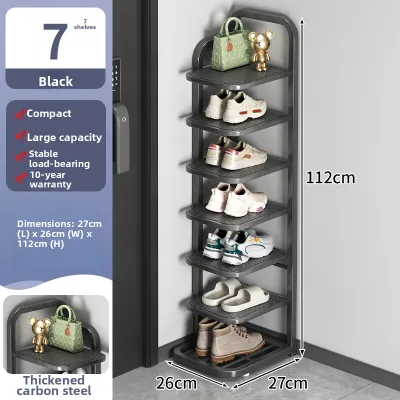
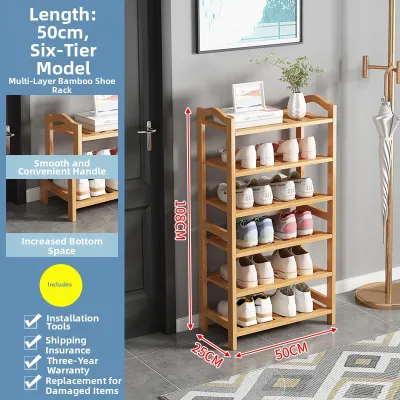
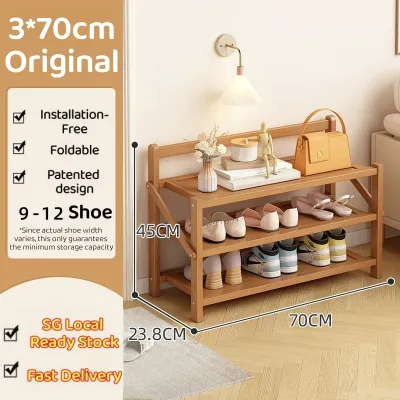
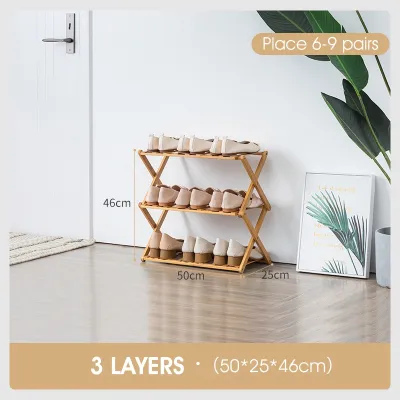
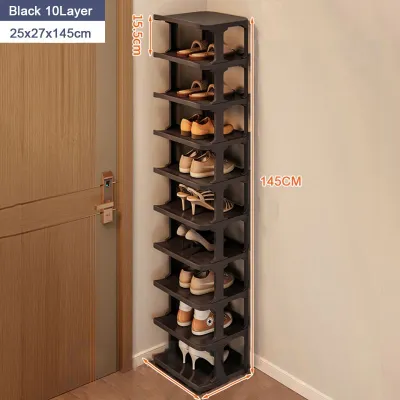
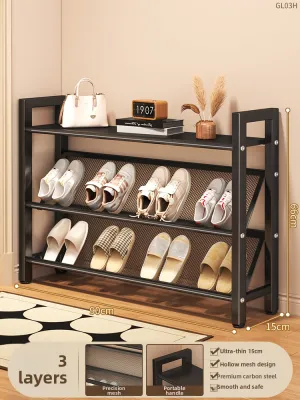
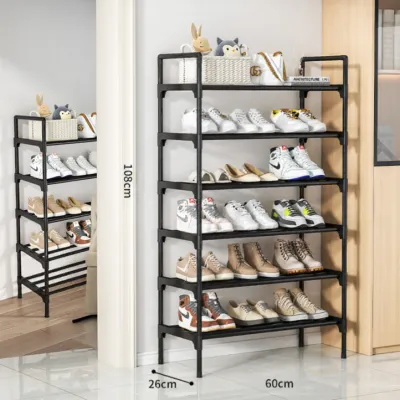
Prices are valid at publication and may change. Please refer to the product page for the latest price.
To make this process highly effective, perform a quick “keep, donate, discard” audit. Check each pair for wear and tear, and realistically assess how often they are worn. Discarding worn-out pairs or donating shoes that no longer fit ensures you only allocate valuable entryway space to active footwear, preventing you from buying an unnecessarily large cabinet.
When counting, divide your collection into three distinct categories:
- Daily essentials: The pairs worn multiple times a week, such as work shoes, school sneakers, or daily sandals.
- Occasional and specialty footwear: Formal dress shoes, high heels, running shoes, hiking boots, and seasonal footwear.
- Guest slippers: Indoor slippers kept near the entrance for visitors, which are essential for maintaining clean floors.
Once you have your baseline number, factor in future household changes. If you have young children, their shoe sizes and storage needs will grow rapidly over the next few years. Similarly, if you plan to welcome new household members, such as a live-in helper or elderly parents, you must allocate extra slots in advance to avoid outgrowing your furniture prematurely.
Finally, decide which shoes actually belong in your main entryway shoe rack. High-value, rarely worn designer heels or off-season boots do not need to occupy prime real estate at your front door. Consider storing these delicate items in their original boxes in bedroom wardrobes or dedicated storage rooms. This keeps your entryway rack focused entirely on active, frequently used pairs, reducing the overall slot capacity you need to purchase.
Factor in Household Habits and Shoe Types
Not all shoes are created equal, and assuming every pair fits into a standard-sized slot is a common purchasing mistake. A standard shoe rack slot is typically designed for low-profile footwear like flats, sandals, and standard sneakers. However, a diverse household collection often includes bulkier items that demand more physical space.

Consider the specific dimensions of your footwear:
- Chunky sneakers and high-tops: These require wider and taller openings than standard flats.
- High heels and platform shoes: These need extra vertical clearance to prevent the heels or straps from getting crushed.
- Boots and high-cut footwear: Ankle boots, mid-calf boots, or work boots require significantly higher vertical spacing, often needing double the height of a standard sneaker slot.
Your daily entryway routine also dictates the type of storage you need. If your family tends to kick off their shoes immediately upon entering the house, a closed cabinet with doors might lead to shoes being left on the floor out of sheer convenience. In this scenario, a shoe rack with an open bottom shelf or a floating design with a gap underneath serves as an excellent “drop zone” for quick access. This allows damp or dirty daily shoes to air out before they are put away.
Furthermore, consider how environmental factors affect your choice of materials. In tropical climates prone to high humidity and sudden downpours, storing damp shoes can introduce moisture to your furniture. While material names like engineered wood, MDF, or solid oak are common, they do not automatically guarantee moisture or mold resistance. Check the product’s finish and joint construction, and always follow the manufacturer’s care instructions to ensure the material can withstand dampness without warping or swelling.
If you plan to store non-footwear items, look for designs that incorporate small drawers or a top shelf. Many households use these zones for daily essentials like keys, mail, shoe care kits, and umbrellas. Having a dedicated, water-resistant tier or side attachment for wet umbrellas prevents water from dripping onto your clean shoes and damaging the interior shelves.
Measure Your Entryway and Available Space
Once you know how many slots you need, you must determine how much physical space your entryway can safely accommodate. Grab a measuring tape and record the maximum width, depth, and height of the designated placement area. Do not rely on visual estimates, as even a few centimeters of error can prevent a cabinet from fitting flush against the wall.
When measuring, pay close attention to structural details:
- Skirting boards and baseboards: These can prevent a flat-backed shoe cabinet from sitting flush against the wall, requiring you to account for a small gap or look for designs with baseboard cutouts.
- Door swings and walkways: Ensure there is ample clearance for your main entrance door, bedroom doors, or nearby closet doors to swing fully open without hitting the shoe rack.
- Power outlets and light switches: Avoid blocking access to essential electrical points or light switches that your family uses daily.
If you live in an apartment or a Housing & Development Board (HDB) flat, you must also consider communal space constraints and safety regulations. Local fire safety guidelines often dictate strict rules for common corridors, typically requiring a minimum clear escape path of 1.2 meters. If you plan to place a shoe rack outside your front door, ensure it complies with these dimensions to avoid safety hazards and potential fines. For indoor placement, verify that the finished dimensions of the furniture can easily clear your doorways, hallways, and lift access during delivery and assembly.
Additionally, consider the delivery and assembly conditions of the furniture itself. Many high-capacity tall cabinets are delivered fully assembled, which can pose a challenge if your building’s lift or doorways have tight height restrictions. Always verify the packaged dimensions with the retailer to ensure a smooth delivery process without unexpected handling fees.
Your spatial limits will help you decide between two primary configurations:
- Tall, narrow cabinets: These maximize vertical capacity, making them ideal for tight entryways or narrow foyers with limited floor space. However, tall units are more prone to tipping and must be securely anchored to the wall.
- Low, wide benches: These maximize horizontal capacity and provide a convenient seating surface for putting on shoes. While highly stable, they offer fewer total slots per square meter of floor space.
Translate Your Needs into Shoe Rack Specifications
With your shoe count and spatial measurements in hand, you can now translate these requirements into specific furniture features. To calculate your minimum required tiers, use this simple framework: divide your total target shoe count by the number of pairs that can comfortably fit on a single shelf. For example, if you need to store 24 pairs of shoes and your chosen rack width accommodates 4 pairs per shelf, you will need a minimum of 6 tiers.
To ensure your shoe rack remains highly functional as your collection changes, prioritize these design features:
- Adjustable or removable shelves: Look for cabinets with peg-and-hole systems. This allows you to adjust the height of individual shelves, preventing wasted vertical space above low flats and creating taller compartments for boots or high heels.
- Modular and stackable designs: If you anticipate your shoe collection growing, modular racks allow you to add extra tiers vertically or expand horizontally without needing to purchase an entirely new piece of furniture.
- Sturdy joint construction: Check the manufacturer's specifications for load capacity and joint stability. A full load of heavy leather shoes or boots can put significant stress on shelves, so robust support brackets are essential.
Safety is another critical factor when translating your needs into specifications. If you opt for a tall cabinet to maximize your slot count, verify the anchoring method recommended by the manufacturer. Tall units must be secured to the wall to prevent tip-over accidents. Before drilling, check whether your entryway wall is concrete or drywall, as this determines the correct wall plugs and mounting hardware required for a stable installation.
If your physical entryway space is simply too small to accommodate the number of slots your household requires, do not try to force an oversized cabinet into a tight space. Instead, adopt alternative storage strategies. Start by decluttering and donating pairs you no longer wear. Next, implement a seasonal rotation system: keep only the 2 to 3 most frequently worn pairs per person in the entryway rack, and store the remaining collection in bedroom closets, under-bed storage organizers, or dedicated storage boxes. You can also explore slim-profile tipping shoe cabinets, which store shoes vertically at an angle, reducing the cabinet’s depth to as little as 15 to 20 centimeters while still providing ample slot capacity.
Frequently Asked Questions (FAQ)
How much depth does a standard shoe rack need?
A standard shoe rack or cabinet typically requires a depth of 30 to 35 centimeters (approximately 12 to 14 inches). This depth comfortably accommodates average adult shoe sizes up to a US men’s size 12 without the heels or toes protruding. If members of your household wear larger shoe sizes, look for a cabinet with a depth of at least 38 centimeters. For extremely narrow corridors or tight foyers, consider a tipping-bucket shoe cabinet; these units store shoes vertically at an angle, allowing for an ultra-slim depth of 15 to 20 centimeters. Always check the finished product dimensions and account for the extra space needed to fully open cabinet doors or pull out drawers.
Should I choose a shoe rack with doors or open shelves?
The choice between open shelves and closed doors depends on your aesthetic preferences, entryway size, and household habits. Open shoe racks offer excellent ventilation, which helps damp shoes dry quickly and prevents odors from building up—a crucial benefit in humid tropical climates. They also provide instant visual access, making it easy to grab your shoes on the way out. However, open shelves display all your footwear clutter and allow dust to accumulate on rarely worn pairs. Closed shoe cabinets with doors offer a clean, tidy visual appearance and protect your shoes from dust and sunlight. If you choose a closed cabinet, ensure it features ventilation holes, mesh panels, or louvred doors to maintain airflow and prevent mold growth.
Community discussion
Share your experience or ask a question. Comments are reviewed before publication.