
When searching for an ergonomic office chair in Singapore, finding the right balance between long-term physical support and financial investment is a common challenge. Benel has established itself as a prominent option in the local market, primarily positioning its lineup within the budget-to-mid-range segment. This brand appeals to professionals seeking functional ergonomic adjustments without the premium price tags associated with high-end global manufacturers.
While Benel chairs deliver essential adjustability features—such as customizable seat heights, tilt locks, and adjustable armrests—at highly competitive price points, they exist in a different category than premium industry benchmarks. Established high-end brands typically justify their higher costs through proprietary weight-activated mechanisms, advanced engineering, and extensive local showroom support. Therefore, deciding whether to purchase a Benel chair should not rely on brand recognition alone. Instead, you must carefully evaluate how a specific model’s physical dimensions, material specifications, and warranty terms align with your unique physical stature and daily working habits.
Evaluating Build Quality and Materials
Frame and Base Construction
The base of the chair is the foundation of its stability and safety. Most entry-level and mid-range office chairs utilize nylon bases, which are lightweight and cost-effective. However, you should verify whether the nylon is glass-fiber reinforced, as this significantly increases the structural load capacity. In contrast, premium chairs often feature heavy-duty die-cast aluminum or steel bases. When comparing models, check the manufacturer’s technical specifications for the base material. Additionally, pay close attention to the casters. For the hard flooring common in Singapore’s HDB flats and condominiums—such as vinyl, parquet, or polished homogeneous tiles—you should seek out polyurethane (PU) casters. Standard hard nylon wheels can easily scratch or wear down these floor surfaces over time, whereas softer PU casters glide smoothly without leaving marks.
Products mentioned in this guide
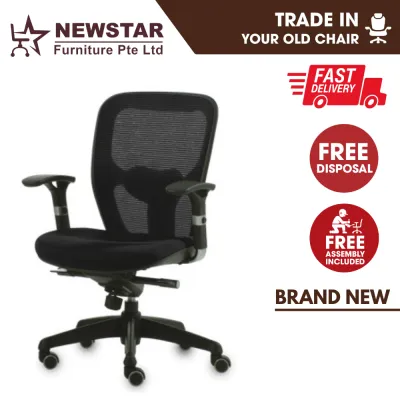
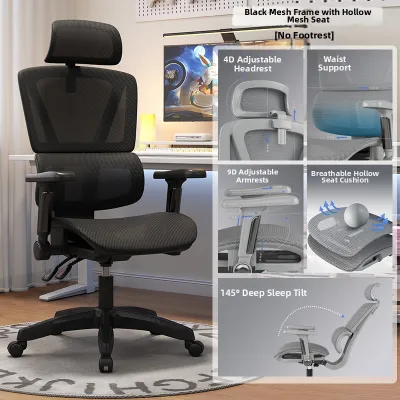
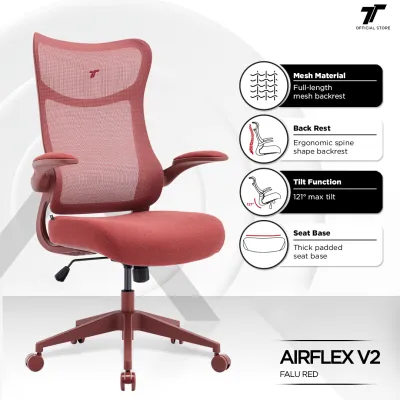
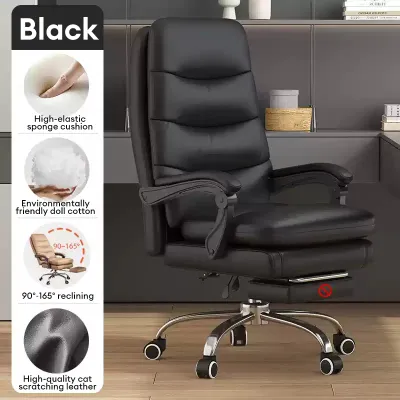
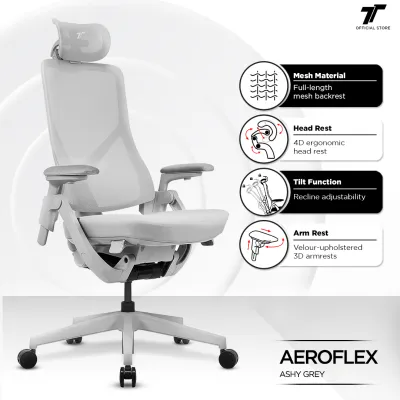
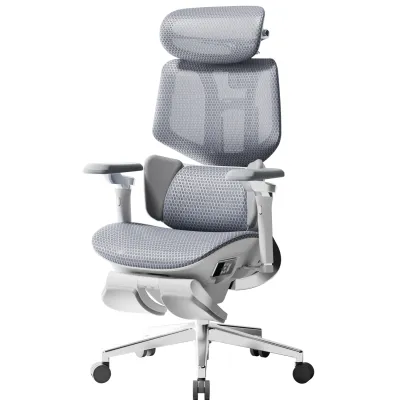
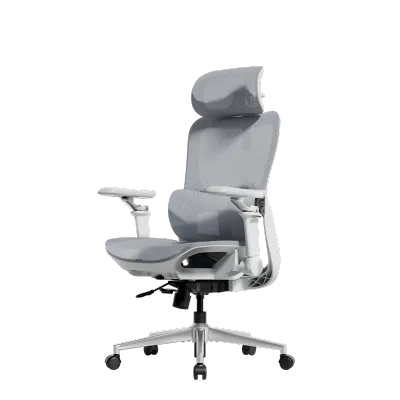
Prices are valid at publication and may change. Please refer to the product page for the latest price.
Seat and Backrest Materials
The choice of seat and backrest materials plays a crucial role in long-term comfort and durability, especially in Singapore’s tropical climate. Mesh backrests are highly popular due to their breathability, allowing heat to dissipate during long working hours. However, not all mesh is created equal. When evaluating a mesh chair, look for high-tensile elastomeric mesh that retains its shape. Lower-grade mesh tends to sag after a few months of continuous use, which destroys the chair’s ergonomic support. If you prefer a cushioned seat, check the foam density ratings. High-density molded foam (typically 50 kg/m³ or higher) offers superior pressure distribution and retains its thickness for years. Conversely, low-density cut foam quickly compresses and flattens, leading to discomfort and poor posture. Whenever possible, visit a local showroom to perform a physical touch-and-sit test to assess the tension of the mesh and the resilience of the seat foam.
Tilt Mechanism Quality
The tilt mechanism is the mechanical heart of any office chair, determining how smoothly you can recline and how well the chair supports your body’s natural movements. Basic office chairs often feature simple center-tilt or knee-tilt mechanisms, where the backrest and seat tilt back at the same angle. This can lift your feet off the floor and put pressure on the back of your thighs. Higher-quality ergonomic chairs, including several mid-range Benel models, utilize synchronous tilt mechanisms. A synchronous tilt allows the backrest to recline at a faster rate than the seat (typically a 2:1 ratio), keeping your feet flat on the ground and maintaining proper spinal alignment. Always verify the mechanism type in the product specification sheet before buying, as this component directly impacts the chair’s mechanical lifespan and overall comfort.
Ergonomics and Adjustability Features
Lumbar Support Systems
Ergonomic customization is the key to preventing chronic back pain and fatigue during long hours of desk work. Lumbar support is perhaps the most critical element of this customization. Many standard office chairs feature fixed lumbar curves built into the backrest frame, which assume a one-size-fits-all spinal shape. Because human bodies vary wildly in height and proportion, a fixed curve rarely provides adequate support for everyone. Look for chairs that offer adjustable lumbar pads, allowing you to customize both the height and the depth of the support to match your lower spine’s natural curve. While some premium brands feature dynamic, weight-activated lumbar systems that automatically adjust as you shift positions, manual adjustability remains a highly effective and reliable alternative, provided you take the time to set it up correctly.

Armrests and Headrests
Armrests and headrests are equally important for reducing strain on your shoulders, neck, and upper back. Armrests are categorized by their degrees of freedom, ranging from 1D (simple height adjustment) up to 4D (height, depth, width, and pivot angle adjustments). If you spend hours typing, 3D or 4D armrests allow you to position the pads to support your elbows closely, preventing your shoulders from hunching. Before finalizing a purchase, measure your desk height and compare it to the chair’s minimum and maximum armrest heights. You must ensure the armrests can clear the underside of your desk so you can pull your chair close enough to work comfortably without straining your arms. Furthermore, consider whether you need a headrest. Integrated headrests are excellent for tall individuals who recline frequently, but they can push the head forward uncomfortably for shorter users. Adjustable add-on headrests offer greater versatility but must be checked for stability and secure attachment.
Recline and Tilt Tension
Recline and tilt tension adjustments allow you to control how much resistance the chair offers when you lean back. If the tension is too loose, you may feel like you are falling backward; if it is too tight, you will struggle to recline at all. Look for chairs equipped with a visible tilt tension adjustment knob or an automatic tension-sensing mechanism. The product manual should outline the recline angle range, which typically spans from 90 degrees (upright tasking) to 135 degrees (relaxed resting). Verifying these features ensures that the chair can adapt to different tasks throughout the day, whether you are typing an email, participating in a video call, or taking a short break.
Value Proposition and Warranty Considerations
Price-to-Feature Ratio
When analyzing the value proposition of Benel compared to other brands in Singapore, you must look beyond the initial price tag and evaluate the price-to-feature ratio. Benel chairs generally occupy a sweet spot in the market, offering advanced adjustments—such as multi-directional armrests, seat slide depth adjustments, and synchronous tilt mechanisms—at a fraction of the cost of high-end designer chairs. This makes them an attractive option for home offices where budget is a primary constraint. However, you must carefully weigh whether the lower price point involves trade-offs in material refinement, aesthetic design, or the smoothness of the mechanical adjustments.
Warranty and After-Sales Support
Warranty terms and after-sales support are critical indicators of a manufacturer’s confidence in their product’s durability. It is common for office chair warranties to be split into different tiers. For example, a brand might offer a five-year warranty on the structural frame but only a two-year warranty on the gas lift, tilt mechanism, and casters, and perhaps only one year or no coverage at all for mesh or fabric wear. Before purchasing, read the warranty document thoroughly to understand what is covered and for how long. Additionally, verify if the seller provides local Singapore-based repair support. Having a local service center means that if a component fails, a technician can quickly assist you or send a replacement part. If a brand relies on international shipping for warranty claims, you could face high shipping fees and weeks of waiting without a functional chair.
Lifespan Expectations
The expected lifespan of an office chair is heavily influenced by the materials used and the environment in which it is kept. Singapore’s high relative humidity can accelerate the degradation of certain materials. For instance, cheap polyurethane (PU) synthetic leather is highly prone to peeling and cracking (hydrolysis) in humid conditions, whereas genuine leather or breathable mesh and high-quality fabrics tend to fare much better. When reviewing warranties, look for exclusions related to normal wear and tear or environmental damage. Investing in a chair with robust, humidity-resistant materials and a comprehensive local warranty will ultimately deliver better long-term value than buying a cheap, unbranded chair that needs to be replaced every couple of years.
Decision Framework: When to Choose Benel vs. Alternatives
Choose Benel if
You should consider choosing a Benel office chair if you are working with a moderate budget but still require essential ergonomic adjustments to maintain healthy posture. If you need features like adjustable lumbar support, a synchronous tilt mechanism, and adjustable armrests without spending thousands of dollars, Benel offers highly practical solutions. Furthermore, if you live in a compact HDB flat or condominium where space is limited, certain Benel models feature smaller footprints and highly adjustable dimensions that can easily fit into tight study alcoves or under compact desks.
Choose established premium brands if
On the other hand, you should look toward established premium brands if you are willing to make a significant financial investment in exchange for top-tier engineering and long-term peace of mind. Premium brands are ideal if you demand advanced proprietary mechanisms—such as automatic weight-sensing tilt systems that adjust resistance without manual knobs—or if you prioritize highly refined, sustainable materials backed by comprehensive 10-to-12-year warranties. Additionally, these high-end brands often provide extensive physical showroom environments where you can test multiple configurations under the guidance of ergonomic specialists before making a purchase.
Verify first if
If you are purchasing an office chair online without the opportunity to test it physically, you must perform several verification steps first. Measure your available floor space and compare it to the chair’s outer dimensions to ensure it will fit comfortably in your room. Check the doorway and lift access dimensions of your building to avoid delivery complications. Always verify the manufacturer’s certified maximum weight capacity and the exact seat depth range, as a seat that is too deep or too shallow can cause poor circulation and back strain. Finally, review the seller’s return and refund policy to see if they offer a comfort trial period, allowing you to return the chair if it does not feel right after a few days of use.
Frequently Asked Questions (FAQ)
Are Benel chairs suitable for long hours of working from home?
Yes, certain Benel models can be highly suitable for extended work-from-home shifts of eight hours or more, but this suitability depends entirely on the specific model’s features rather than the brand name alone. For long-term comfort, avoid basic task chairs that lack sufficient adjustability. Instead, prioritize models equipped with a synchronous tilt mechanism, adjustable seat depth (seat slide), and high-quality mesh or high-density molded foam. These features allow you to shift positions naturally, maintain healthy blood circulation, and reduce pressure on your thighs and spine throughout the day.
How do I verify the weight capacity and dimensions of a Benel chair?
To verify the weight capacity and physical dimensions of a Benel chair, you should consult the official manufacturer specification sheet or product manual, which is typically available on the brand’s website or through authorized local distributors. Look for certifications from recognized testing bodies, such as the Business and Institutional Furniture Manufacturers Association (BIFMA), which verify that the chair has undergone rigorous safety and load-bearing tests. Before purchasing, use a measuring tape to check your home office setup. Measure your desk’s height, the clearance under the desk drawer, and the available floor space. Compare these measurements against the chair’s specified seat height range, armrest height range, and base diameter to guarantee a perfect physical and spatial fit.

Community discussion
Share your experience or ask a question. Comments are reviewed before publication.