
Bringing the plush, sink-in comfort of a cloud sofa into a Singapore HDB flat is a highly desirable design goal, but it requires careful planning. The classic cloud aesthetic—defined by deep seats, low-slung profiles, and overstuffed cushions—traditionally demands a massive footprint that can easily overwhelm typical BTO (Built-To-Order) or resale living rooms. However, achieving this cozy look in a compact space is entirely possible if you shift your focus from massive, single-piece showroom models to highly adaptable modular configurations and compact-depth designs.
To successfully integrate a cloud sofa into your HDB layout, you must look past the visual styling of local showrooms and focus on precise spatial calculations. Because Singaporean living rooms often serve multiple functions—acting as transit pathways, dining areas, and entertainment zones—every centimeter of floor space counts. By understanding how to measure your room, evaluate modular components, and verify delivery clearances, you can enjoy the relaxed comfort of a cloud sofa without sacrificing the flow and functionality of your home.
Measuring Your HDB Living Room for a Cloud Sofa
Before browsing local furniture retailers or online catalogs, you must establish the exact physical boundaries of your living room. A common mistake is measuring only the empty wall space where the sofa will sit, without accounting for the surrounding environment. To prevent your living room from feeling cramped, you must calculate the total usable floor space while preserving comfortable walking paths.
Products mentioned in this guide
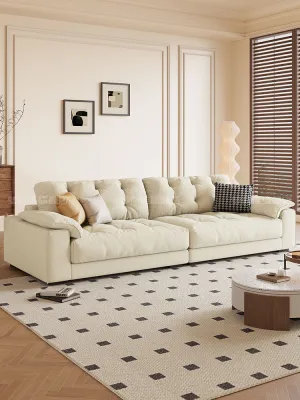
![[Local Stock🇸🇬] Nordic Cozy Cloud Sofa Cashmere Sofa Home Furniture Sofa Chair](https://img.lazcdn.com/g/ff/kf/S6ca1d01439f744cab92bc5c87670754dq.jpg_400x400q80.jpg_.webp)
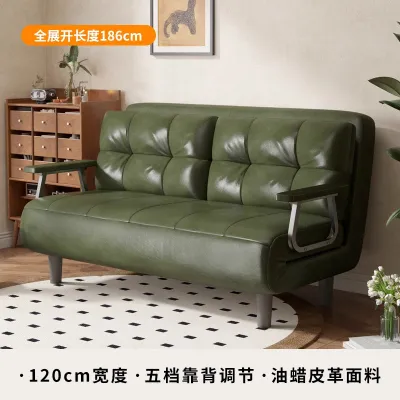
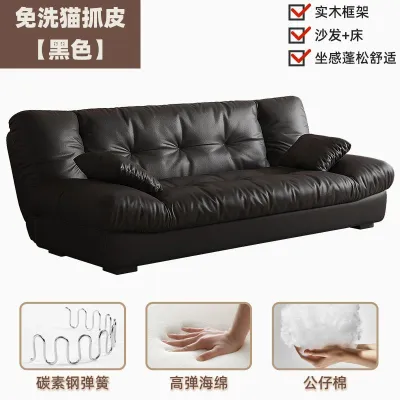
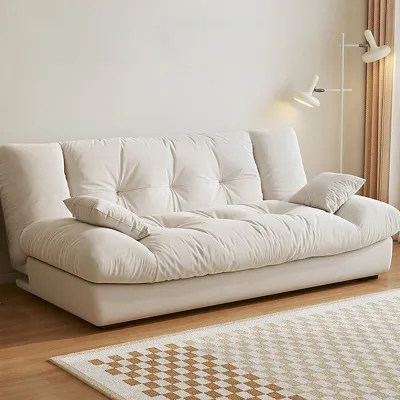
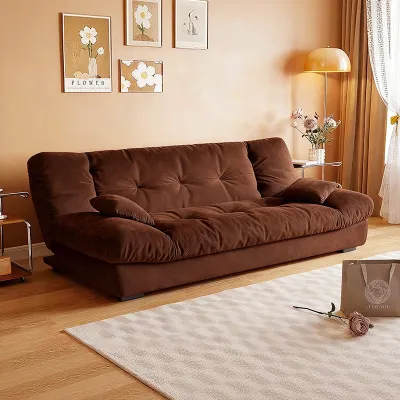
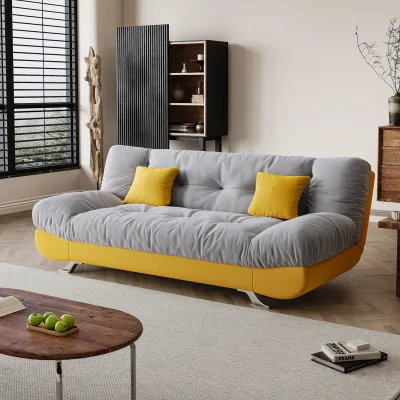
Prices are valid at publication and may change. Please refer to the product page for the latest price.
Calculating Walkway and Furniture Clearance
A functional living room requires a minimum clearance of 60 to 90 centimeters for primary walking paths. If your sofa is placed directly opposite a TV console, you must ensure that the distance between the edge of the sofa cushions and the console allows for comfortable legroom and passage. Additionally, if you plan to place a coffee table in front of the sofa, maintain a gap of at least 30 to 45 centimeters between the seat edge and the table. Because cloud sofas feature deep cushions that naturally invite a reclined seating posture, your legs will extend further forward, requiring a slightly larger clearance zone than a traditional upright sofa.
Assessing Visual Weight and Room Proportion
The physical dimensions of a sofa only tell half the story; its visual weight significantly impacts how spacious your room feels. Cloud sofas are notoriously low-profile, which can make your ceilings feel higher and create an airy, relaxed atmosphere. However, their extreme depth can create a heavy visual footprint on the floor. If your HDB flat has limited natural light or a narrow layout, a massive, dark-colored cloud sofa can make the entire room feel enclosed. To maintain open sightlines, consider lighter fabric tones and models with slightly lower backrests that do not block window views or light flow.
Identifying Structural and Built-In Constraints
HDB floor plans often feature structural elements that dictate where furniture can be placed. Scan your living room for structural pillars, built-in distribution board boxes, air-conditioner ledges, or low-hanging window sills. A deep cloud sofa placed against a wall with a protruding pillar will leave awkward, unusable gaps behind the frame. Similarly, ensure the sofa’s depth does not obstruct access to built-in cabinets, household shelters, or electrical outlets. Marking the proposed sofa footprint on your floor using masking tape is an excellent way to visualize these physical constraints before making a purchase.
Key Dimensions and Modular Configurations for HDB Layouts
When shopping for a cloud sofa in Singapore, understanding the relationship between overall depth, seat depth, and modular flexibility is key to finding a model that fits your HDB flat. Standard sofas typically feature an overall depth of 80 to 90 centimeters, whereas traditional cloud sofas often exceed 110 centimeters in depth. For most HDB layouts, finding a balance between these dimensions is crucial.

Balancing Overall Depth and Seat Depth
To accommodate HDB living rooms, many local retailers offer compact or slim variations of the classic cloud design. These models reduce the overall depth to a more manageable 90 to 95 centimeters while preserving the plush, multi-layered cushion construction that defines the cloud experience. When comparing models, pay close attention to the seat depth—the actual usable seating area from the front of the cushion to the backrest. A shallower overall frame depth with thinner back cushions can provide the same comfortable seating space as a deeper frame, without encroaching too far into your living room’s central walkway.
Leveraging Modular Configurations for Flexibility
One of the greatest advantages of modern cloud sofas is their modularity. Instead of purchasing a rigid, single-frame three-seater or a fixed L-shape sectional, look for brands that sell individual modular components. A typical modular system includes armless middle chairs, corner pieces, and standalone ottomans. This modularity allows you to customize the sofa’s footprint to match your specific HDB layout. For example, you can configure a compact two-seater for daily use and add a movable ottoman that serves as a chaise lounge, a coffee table support, or extra seating when hosting guests.
Evaluating Armrest Width and Backrest Height
The design of a sofa’s armrests and backrests plays a major role in its overall footprint. Classic cloud sofas often feature wide, heavily padded armrests that can add 20 to 30 centimeters to the sofa’s total width without providing any actual seating space. In a narrow BTO living room, this excess width can prevent you from fitting a comfortable three-seater. Selecting a model with slim, structured armrests—or an armless modular design—maximizes the usable seating area within a restricted width. Additionally, ensure the backrest height allows for comfortable head support without completely dominating the vertical space of the room.
How to Evaluate Cloud Sofa Brands and Models in Singapore
Finding the right cloud sofa requires a systematic evaluation of local retailers and their product specifications. Because showroom environments are designed with high ceilings, professional lighting, and vast open spaces, furniture always appears smaller in the store than it will in your home. To avoid buyer’s remorse, you must establish a strict verification process.
Establishing a Conditional Shortlist
Begin your search by filtering local Singapore furniture brands based on their technical specifications rather than their marketing imagery. Create a shortlist of models that fall within your maximum depth and width limits. Prioritize brands that offer detailed dimension diagrams for every individual module. If a retailer only provides overall dimensions for a pre-configured set, contact their customer service to request the exact measurements of each individual frame component. This ensures you can plan a configuration that fits your space precisely.
Verifying Specifications on Product Labels
Never rely solely on visual estimates or verbal assurances from showroom staff. When visiting a physical store, bring a measuring tape and verify the dimensions yourself. Measure the frame’s depth from the absolute furthest point of the backrest to the front edge, and check if the cushions overhang the frame. Overhanging cushions can add several centimeters to the actual footprint, potentially blocking a nearby doorway or walkway. Additionally, sit on the sofa to test how much the cushions compress; high-density foam cores wrapped in down or microfiber wraps offer the best balance of cloud-like softness and structural support, preventing the sofa from sagging over time.
Checking Fabric Durability and Maintenance Requirements
Singapore’s warm, humid climate and high-density living conditions demand practical fabric choices. Cloud sofas are designed for lounging, making them highly susceptible to spills, sweat, and dust mite accumulation. When evaluating fabric options, look for removable and machine-washable covers. Check the manufacturer’s care label to verify if the fabric is compatible with local dry cleaning or home washing machines. If you have pets or young children, prioritize high-performance fabrics with built-in stain resistance, but always verify these performance claims by checking the fabric’s rub count (Martindale rating) and care instructions rather than relying on generic easy-clean marketing labels.
Delivery and Placement Checks for HDB Flats
Even if a cloud sofa fits perfectly within your living room layout, it must first survive the journey from the delivery truck to your flat. The last mile of delivery is a common failure point for large, deep furniture in Singapore, where narrow corridors and tight lift cabins present significant physical obstacles.
Measuring Lift, Corridor, and Doorway Clearances
Before finalizing your purchase, you must measure every entry point along the delivery path. Start with the HDB lift: measure the door opening width, the internal cabin height, and the diagonal depth of the lift interior. Next, check your corridor width, paying close attention to any tight corners, ceiling pipes, or wall-mounted shoe cabinets that could restrict movement. Finally, measure your main entrance door and safety gate clearances. If your selected sofa is a single-piece frame exceeding 2 meters in length and 1 meter in depth, it may be physically impossible to maneuver it through a standard HDB doorway or lift.
Planning for Modular Delivery and Assembly
To mitigate delivery risks, opt for modular cloud sofas that are shipped in separate, flat-packed, or individually boxed components. Modular pieces are significantly easier for delivery teams to navigate through tight HDB corridors and lifts. When coordinating with the retailer, verify whether their delivery service includes in-home assembly and placement. Ensure the assembly team has sufficient space in your living room to unbox and connect the modules safely. If your building requires walking up stairs due to lift maintenance or layout constraints, confirm any additional stair-carrying fees with the retailer beforehand.
Reviewing Return Policies and Restocking Fees
Despite careful planning, unexpected spatial conflicts can occur during delivery. Before signing the purchase agreement, thoroughly review the retailer’s return, exchange, and cancellation policies. Verify if they offer a return window in the event of a delivery failure due to sizing constraints. Be aware that many local furniture retailers charge restocking fees—often ranging from 15% to 30% of the purchase price—or deduct delivery charges from your refund if a product must be returned because it cannot fit through your doorway or lift. Understanding these financial terms beforehand protects you from costly mistakes.
Frequently Asked Questions (FAQ)
Can a standard cloud sofa fit through a typical HDB lift?
A standard, single-frame three-seater cloud sofa often struggles to fit through a typical HDB lift due to its extreme depth and length. To ensure successful transport, you must measure the lift door’s clearance and the cabin’s internal diagonal space. The safest solution is to select a modular cloud sofa. Because modular models are delivered in separate, smaller boxes, each individual section can easily fit inside standard HDB lifts and narrow corridors, where they are then assembled directly inside your living room.
How do I prevent a deep cloud sofa from blocking the balcony door?
To prevent a deep cloud sofa from obstructing your balcony access, maintain a minimum clearance of 60 centimeters between the edge of the sofa and the sliding door track. Avoid placing a fixed L-shape chaise directly in front of the balcony opening. Instead, utilize a modular configuration with a movable ottoman. This allows you to position the chaise element on the opposite side of the room, keeping the pathway to your balcony completely clear and ensuring smooth traffic flow.

Community discussion
Share your experience or ask a question. Comments are reviewed before publication.