
Selecting a high-end ergonomic chair for a home office is a long-term investment in spinal health, daily productivity, and overall physical comfort. When working from home for eight or more hours a day, a standard dining chair or a basic office seat can quickly lead to lower back stiffness, shoulder tension, and poor circulation. The Haworth Very, Herman Miller Aeron, and Steelcase Gesture represent three distinct philosophies in premium seating design, each targeting different physical needs, movement habits, and spatial environments.
While all three models feature advanced engineering and extensive manufacturer warranties, they serve different types of users. The Haworth Very stands out as a highly customizable, visually lightweight solution that balances modern ergonomic support with a minimalist design that integrates easily into residential spaces. The Herman Miller Aeron is a highly structured, posture-enforcing icon designed for maximum breathability, whereas the Steelcase Gesture is a heavily cushioned, highly adaptable chair built to support dynamic posture changes and multi-device usage. Understanding how their specific adjustment mechanisms, seat designs, and structural footprints compare will help you choose the ideal model for your specific home setup.
Quick Verdict: Matching the Chair to Your Work Style
Finding the right chair requires matching its mechanical strengths to your daily sitting habits, physical proportions, and aesthetic preferences. Because no single chair can accommodate every body type or work style perfectly, you should evaluate how you naturally move throughout the workday before making a decision.
Products mentioned in this guide
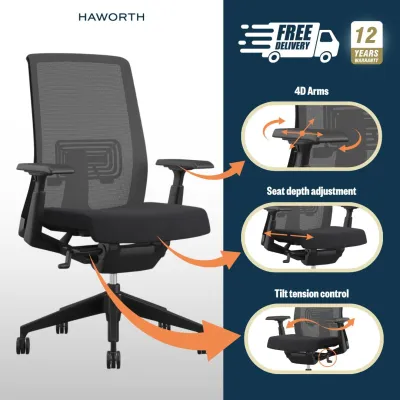
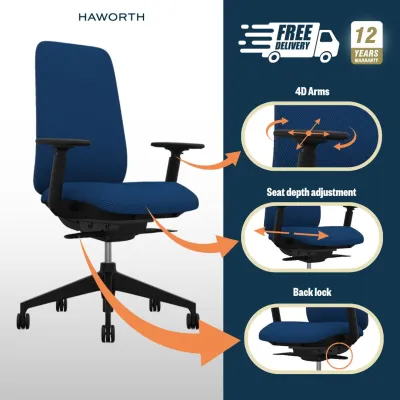
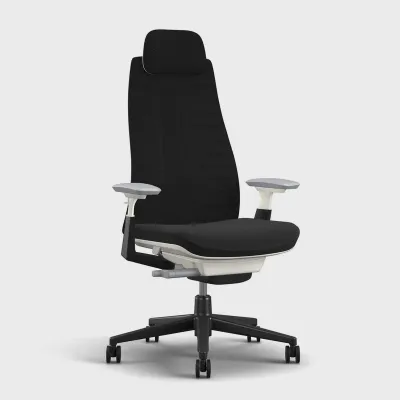
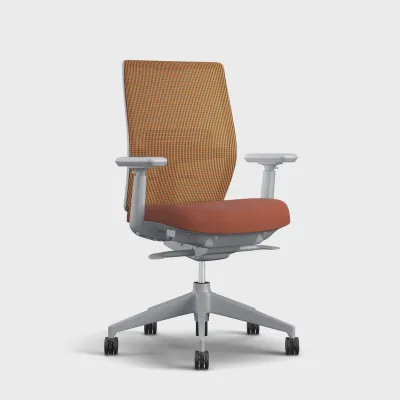
Prices are valid at publication and may change. Please refer to the product page for the latest price.
- Choose the Haworth Very if you want a balanced, lightweight chair with a slender visual profile that blends seamlessly into a home environment. It is an excellent choice for users who prefer a traditional padded seat cushion paired with a supportive, flexible mesh backrest. It offers highly effective, targeted lower back support without the rigid corporate aesthetic or bulky frame of larger industrial chairs.
- Choose the Herman Miller Aeron if you prioritize strict, upright posture correction and maximum airflow. Its suspended mesh seat and backrest are ideal for staying cool in warm climates, particularly if your home workspace lacks continuous air conditioning. The Aeron is best suited for focused tasks where you remain in a disciplined, forward-facing position for long periods.
- Choose the Steelcase Gesture if you constantly shift positions, cross your legs, or lean back while working. Its highly flexible backrest and exceptionally articulating armrests adapt to a wide variety of postures, making it the premier choice for creative professionals, programmers, and users who frequently alternate between typing on a keyboard, drawing on a tablet, or holding a mobile device.
Ergonomics and Adjustability for Long Work Sessions
To prevent chronic muscle fatigue and joint strain during extended work sessions, an ergonomic chair must support the natural curvature of your spine and allow you to adjust key contact points. The Haworth Very, Herman Miller Aeron, and Steelcase Gesture approach this challenge with distinct mechanical designs.

Lumbar Support Systems
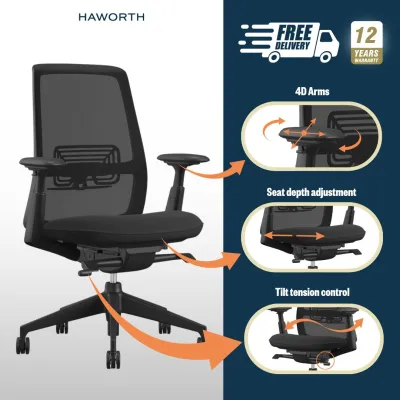
The Haworth Very utilizes an asymmetrical lumbar support system, which is one of its most compelling ergonomic features. This mechanism allows you to adjust the tension independently on the left and right sides of the lower back. If you have a slight spinal curvature, a history of asymmetrical back pain, or a habit of leaning slightly to one side, this independent adjustment helps you target support exactly where you need it most. The backrest itself is made of a flexible polymer weave that yields to your movements while maintaining consistent tension.
In contrast, the Herman Miller Aeron relies on its PostureFit SL system, which consists of two adjustable pads designed to stabilize the sacrum and support the lumbar region. This system pushes the pelvis slightly forward to maintain a natural S-curve in the spine. While highly effective at preventing slouching, it enforces a very specific, disciplined sitting posture. If you prefer to slouch occasionally or sit in a relaxed position, the Aeron’s structured frame can feel restrictive.
The Steelcase Gesture takes a more dynamic approach with its 3D LiveBack system. Rather than relying on manual dials for localized tension, the entire backrest is engineered to mimic the natural movement of the human spine. As you recline or shift your weight, the backrest flexes and contours to your back, providing continuous, automatic support without requiring constant manual adjustments. This makes the Gesture highly intuitive for users who do not want to spend time fine-tuning multiple levers throughout the day.
Armrest Articulation
Armrest adjustability is critical for reducing tension in the neck, shoulders, and upper back. The Steelcase Gesture is the clear leader in this category, featuring 360-degree articulating armrests. Inspired by the movement of the human arm, these supports can move deeply inward to support your elbows while holding a smartphone or tablet, or swing wide to accommodate a broad typing stance. The mechanism is controlled by a simple release lever, allowing for fluid, instantaneous repositioning.
The Haworth Very and Herman Miller Aeron offer highly functional 4D armrests (adjustable for height, width, depth, and pivot angle), but they operate on more traditional, linear tracks. While they provide excellent stability and support for standard keyboard and mouse work, they lack the extreme range of motion and effortless adjustment found on the Gesture. When configuring these chairs, always check the minimum and maximum armrest heights against your desk thickness to ensure they can slide underneath the tabletop when you are finished working.
Comfort and Seat Design for Daily Use
The materials and construction of a chair’s seat pan directly influence your daily comfort, pressure distribution, and thermal regulation. The choice between mesh suspension and traditional foam cushioning is often the most significant deciding factor for home office users.
Mesh Suspension vs. Padded Cushions
The Herman Miller Aeron features a full 8Z Pellicle mesh seat and backrest. This elastomeric suspension system eliminates traditional pressure points by distributing your weight evenly across the surface. Because there is no foam layer to trap body heat, the Aeron offers outstanding ventilation. In tropical or humid environments like Singapore, this level of breathability is highly advantageous for home offices that rely on natural ventilation or ceiling fans rather than constant air conditioning. However, the mesh is held in place by a rigid plastic frame; if the chair is too narrow for your hips, your thighs may press against this hard edge, causing discomfort over time.
Both the Haworth Very and Steelcase Gesture utilize padded seat cushions, which offer a more familiar, supportive feel. The Haworth Very features a slim, high-density foam seat pan that provides a firm yet comfortable base. This design is ideal for users who find full-mesh seats too firm or suspended. The Steelcase Gesture features a thicker, highly contoured foam seat with built-in air pockets that conform to your body shape. The cushion wraps slightly around the thighs, providing a plush, protective feel that accommodates various sitting positions, including tucking one leg under or sitting at an angle.
Seat Depth and Edge Design
Proper seat depth is essential for maintaining healthy circulation in your lower limbs. If a seat pan is too deep, it will press against the back of your knees, restricting blood flow; if it is too shallow, your thighs will lack adequate support. Both the Haworth Very and Steelcase Gesture feature adjustable sliding seat pans, allowing you to customize the depth to match your thigh length. They also feature flexible, sloping waterfall front edges that minimize pressure on the back of the knees.
The Herman Miller Aeron does not have an adjustable seat depth. Instead, Herman Miller manufactures the chair in three distinct, fixed sizes (A, B, and C). While this ensures that the frame proportions are perfectly scaled to your body size, it means you must choose the correct size from the start. If multiple people of different heights share the same home office chair, the Aeron’s lack of seat depth adjustability can make it difficult for everyone to find a comfortable fit.
Build Quality, Materials, and Home Office Aesthetics
Because a premium ergonomic chair is a prominent visual element in a residential space, its physical footprint, material options, and overall design style are just as important as its mechanical features.
Structural Materials and Durability
All three chairs are constructed using high-grade materials designed to withstand decades of daily use. The Herman Miller Aeron is built with a heavy die-cast aluminum frame and glass-reinforced nylon components, giving it a solid, industrial feel. The Steelcase Gesture features a robust steel-reinforced core and heavy-duty plastic housings, making it exceptionally durable but also quite heavy to move around. The Haworth Very utilizes a blend of cast aluminum for its structural base and high-performance polymers for its backrest frame, resulting in a lighter overall weight that is easier to maneuver across different flooring types.
When evaluating durability, look past marketing claims and verify the manufacturer’s official specifications and warranty terms. Premium chairs of this caliber typically support weight capacities ranging from 147 kg (for the Haworth Very) up to 159 kg or 181 kg (for the Aeron and Gesture, respectively). Ensure you review the specific terms of the manufacturer’s warranty under local distributor policies, as some coverages may vary for the gas cylinder, fabric upholstery, and mechanical components.
Visual Footprint and Residential Integration
In a home office, a chair with an overly aggressive corporate design can clash with your home decor. The Haworth Very is widely recognized for its clean, minimalist aesthetic. Its slim backrest, elegant lines, and wide array of mesh and fabric color options allow it to blend effortlessly into modern living rooms, bedrooms, or dedicated home studies. It has a compact visual footprint that does not dominate a room.
The Herman Miller Aeron has an iconic, highly technical look that immediately signals a professional office environment. While it is a beautiful piece of industrial design, its dark mesh and prominent frame can feel visually heavy in smaller residential spaces. The Steelcase Gesture has a modern, organic silhouette with a more substantial presence. While it looks highly sophisticated, its thicker cushions and robust frame make it appear larger and more imposing than the slender Haworth Very.
Side-by-Side Specification Comparison
To assist with your spatial planning and technical comparison, the following table outlines the key dimensions and mechanical features of each chair. All measurements represent standard manufacturer specifications and should be verified against your specific home office dimensions.
| Specification | Haworth Very | Herman Miller Aeron (Size B) | Steelcase Gesture |
|---|---|---|---|
| Seat Height Range | 406 mm – 533 mm | 406 mm – 528 mm | 406 mm – 533 mm |
| Seat Depth Adjustment | Yes (Sliding Seat Pan) | No (Fixed by Frame Size) | Yes (Sliding Seat Pan) |
| Seat Width | 508 mm | 514 mm | 508 mm |
| Backrest Material | Breathable Mesh or Polymer | 8Z Pellicle Mesh | Fully Upholstered Fabric |
| Armrest Adjustability | 4D (Height, Width, Depth, Pivot) | 4D (Height, Width, Depth, Pivot) | 360-Degree Articulating |
| Tilt & Recline Mechanism | Weight-activated or Balanced 3-point | Synchro-tilt with Tilt Limiter | Synchronized System with Core Equalizer |
| Base Options | Plastic or Polished Aluminum | Nylon or Polished Aluminum | Plastic or Polished Aluminum |
| Manufacturer Weight Capacity | Up to 147 kg | Up to 159 kg | Up to 181 kg |
Disclaimer: Before purchasing, buyers must verify these exact physical dimensions against their available floor space, under-desk clearance, and door or stairway access pathways to ensure a smooth delivery and installation process.
How to Verify Fit, Sizing, and Value Before Buying
Investing in a premium office chair requires careful verification to ensure the product fits both your body and your home environment. Taking a systematic approach to measurements and local market services will protect your investment and prevent the hassle of return shipping.
Sizing and Physical Fit Strategies
Because body proportions vary greatly, a chair that works perfectly for one person may cause discomfort for another. When evaluating the Herman Miller Aeron, pay close attention to the manufacturer’s official size chart, which uses your height and weight to recommend Size A, B, or C. If you fall on the boundary between two sizes, consider whether you prefer a snugger fit (smaller size) or more room to move (larger size).
For the Haworth Very and Steelcase Gesture, which use a “one-size-fits-most” design philosophy, the physical fit is determined by adjusting the seat depth, lumbar height, and armrests. When adjusting these chairs, sit with your feet flat on the floor and your knees bent at a 90-degree angle. Adjust the seat height so your thighs are parallel to the floor, and slide the seat pan so there is a small gap (about the width of two or three fingers) between the front edge of the seat and the back of your knees.
Singapore Home Spatial Planning Checklist
Before finalizing your purchase, perform a thorough spatial check of your home workspace. This is especially important in compact residential layouts where space is at a premium:
- Desk Height and Clearance: Measure the distance from your floor to the underside of your desk. Ensure the chair's armrests can be lowered sufficiently to slide under the desk, allowing you to tuck the chair away and save floor space when not in use.
- Floor Space Footprint: Mark out the base diameter of the chair (typically around 660 mm to 700 mm) on your floor using masking tape to ensure you have enough room to roll back and turn comfortably without hitting walls or storage units.
- Delivery Pathways: Measure the width of your apartment's entry doors, internal hallway corners, and lift doors. Premium chairs often ship fully assembled in large boxes; verifying these clearances beforehand prevents delivery complications.
Evaluating Long-Term Value
While the initial retail price of these chairs in Singapore can range from S$1,000 to over S$2,500 depending on the model and custom features, evaluating their value requires looking at the total cost of ownership over time. A high-quality chair backed by a 10-to-12-year manufacturer warranty costs significantly less per year than a cheap office chair that must be replaced every two to three years.
To ensure you receive full warranty support, always purchase through authorized dealers or official brand showrooms in Singapore. This guarantees that you receive genuine parts, professional assembly, and local customer service if a mechanical issue arises. Whenever possible, schedule a visit to a local showroom to test the chairs in person. Spend at least 15 to 20 minutes in each chair, testing all the adjustment levers and replicating your typical working postures to confirm which model feels most supportive for your body.
Community discussion
Share your experience or ask a question. Comments are reviewed before publication.