
Finding the right under-desk support can be a frustrating exercise in trial and error, especially when trying to alleviate lower back strain or leg fatigue during long hours of seated work. Choosing between a suspended hammock-style footrest and a solid platform adjustable foot rest depends primarily on whether you prioritize dynamic, swinging movement for active relaxation or a rigid, stable foundation for precise ergonomic alignment. Many professionals spend hours adjusting their office chairs only to find their feet dangling or their knees positioned at awkward angles, which can impede circulation and lead to discomfort over time. An adjustable foot rest addresses this issue by bringing the floor closer to your feet, but the mechanism of support matters immensely. While one option suspends your feet in a flexible sling that moves with your body, the other provides a stationary, tilting platform that anchors your posture. Understanding how these two distinct designs interact with your desk frame, your floor space, and your daily movement patterns is essential before making a purchase. By evaluating their structural differences, stability limits, and physical space requirements, you can select a setup that integrates seamlessly into your workspace without causing physical obstruction or ergonomic misalignment.
What are the fundamental design differences between hammock and solid footrests?
Hammock and solid footrests differ fundamentally in their structural support mechanisms, with hammocks utilizing suspended fabric tension and solid footrests relying on a rigid, floor-based platform. Hammocks hang directly from the desk frame, whereas solid models sit independently on the floor.
A hammock-style footrest consists of a flexible strip of fabric—often canvas, mesh, or reinforced nylon—suspended between two ropes or straps. These straps attach to the underside or sides of a desk using tension clamps, hooks, or screw-in brackets. Because the fabric hangs freely, it creates a suspended cradle that responds dynamically to the weight of your legs, allowing for a gentle swinging or swaying motion while you sit. This design relies entirely on the structural integrity of your desk to support the weight of your lower limbs.
Products mentioned in this guide
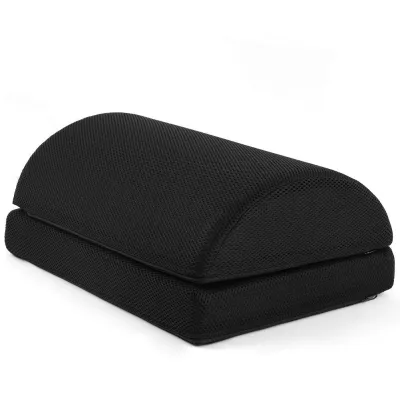
27 Lazada user ratings
No she says it was he going to show you tomorrow I hate this people the thing that you're strong but they want to bicep on me I will quit th…Read full reviewShow less
No she says it was he going to show you tomorrow I hate this people the thing that you're strong but they want to bicep on me I will quit them in my own
item received in good condition. Thanks seller for speedy action on my order as well as speedy delivery. Appreciated.
Delivery fast. Packaging looks okay. The footrest is nice and of quality. Feels comfortable when resting foot.
Item received in good condition, fast delivery, comfortable to use. Adjustable height is convenient
Perfect for office or home use, Adjustable height is convenient
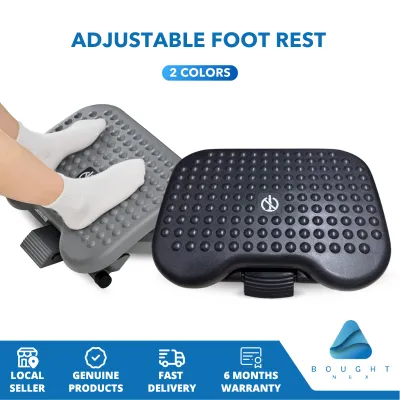
248 Lazada user ratings
Adjustability: 3 different heights adjustments available, freely rotates to different angles. Good price. The only issue is that it is a lit…Read full reviewShow less
Adjustability: 3 different heights adjustments available, freely rotates to different angles. Good price. The only issue is that it is a little wobbly when shifting from side to side as the support is in the middle.
fast delivery so far trying out. hope could reduce some stress for long hours sitting.
Quite happy with this purchase. Item came well packaged and quality!
Satisfied order delivered quickly and liked the grey color.
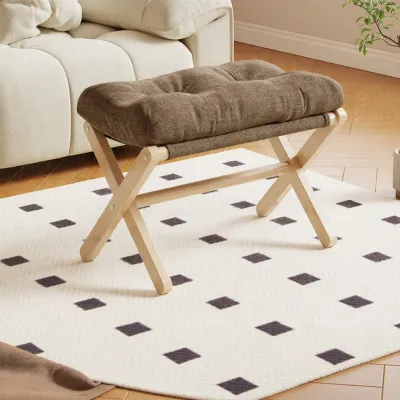
75 Lazada user ratings
It's pretty useful, sturdier than those that hang from the bottom of tables.
Pretty good, it's comfortable even though the woodwork is a bit rough.
The workmanship is really detailed, and the soft cushion is great!
I was relieved that there was no strange smell when I got it.
It's really comfortable to sit on, and it has good support.
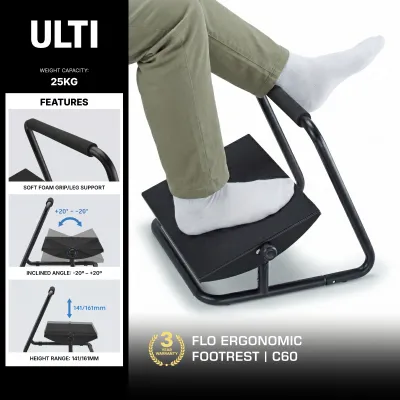
80 Lazada user ratings
Durability: sturdy and durable Comfort: like the movable paddle Anti-skid pads to protect surfaces and good weight to it on the felt of qual…Read full reviewShow less
Durability: sturdy and durable Comfort: like the movable paddle Anti-skid pads to protect surfaces and good weight to it on the felt of quality as well as practicability on not having it mobile sturdy on the floor.
Durability: excellent Comfort: excellent, just a bit warm on feet, but manageable Adjustability: excellent, can adjust height and tilt
comfortable and good leg rest that is not expensive - Maximum comfort for your feet, Non-slip surface for enhanced stability
Fast delivery. Solid and durable. Love the footrest. I think the products are decent. Will return to purchase more from them
Prices are valid at publication and may change. Please refer to the product page for the latest price.
In contrast, a solid platform adjustable foot rest is a freestanding unit constructed from rigid materials such as plastic, wood, or metal. It features a flat or slightly curved surface supported by a heavy base that rests directly on the floor. Most solid designs incorporate a tilting mechanism, allowing the platform to pivot forward and backward to match the natural angle of your ankles, or lock into a specific incline. The entire structure is self-contained and does not require any attachment to your desk or office chair.
The core mechanical distinction lies in how these systems handle gravity and movement. The hammock relies on dynamic suspension, meaning your feet and legs are constantly in a state of micro-adjustment as the fabric shifts beneath them. The solid platform provides static angled support, offering a fixed, unyielding surface that resists downward pressure and keeps your lower limbs in a highly predictable, structured position throughout the day.
How do stability and adjustability range compare for daily use?
Solid footrests offer high stability and precise angle retention for focused work, while hammock footrests provide a wider, more fluid range of motion that encourages active leg movement. Choosing between them requires balancing the need for a firm, unyielding anchor against the desire for dynamic, low-resistance stretching.

When you shift your weight or type actively at your desk, a solid platform remains firmly anchored to the floor, especially if it features rubberized feet or a weighted base. This stability allows you to press down with significant force, which can help you push back into your chair’s lumbar support. A hammock, conversely, shifts with every movement of your body. If you apply uneven pressure, the fabric swings or tilts, which can feel unstable if you prefer a grounded sensation while typing or performing high-focus tasks.
Adjusting a solid platform typically involves manual steps, such as clicking the platform into pre-set slots, turning adjustment knobs, or using a foot pedal to change the height and tilt angle. These adjustments are highly precise but are often limited to a specific range of inches above the floor. Hammocks offer a different kind of adjustability; by shortening or lengthening the suspension straps, you can raise the hammock close to the underside of your desk or let it hang near the floor. However, because the fabric is flexible, you cannot lock in a specific, rigid angle.
Making adjustments during the workday is generally quicker with a solid platform if it features a free-floating tilt mechanism that responds to gentle foot pressure. You can change your ankle angle instantly without leaving your chair. Adjusting a hammock mid-day usually requires leaning forward to adjust the strap buckles or repositioning the mounting clamps along the desk edge. This process can disrupt your workflow and may require you to clear items from your desk surface if the clamps are integrated with your primary workspace edges.
Which design fits your desk clearance and physical workspace constraints?
Your physical workspace layout dictates compatibility, as hammocks require specific desk edge profiles for mounting, while solid platforms demand sufficient floor space beneath the desk. Verifying these spatial constraints prevents purchasing a footrest that cannot be installed or limits your legroom.
Hammock-style footrests rely on secure attachment points, which usually mean clamping onto the left and right edges of your desk. If your desk has built-in drawers, a thick privacy panel, or a metal support frame running directly under the desktop edge, you may find it impossible to attach the mounting hardware. Additionally, desks with beveled or rounded edges might not provide enough grip for tension clamps, risking slippage during use.
Solid platforms sit directly on the floor, making them highly compatible with almost any desk style, including those with closed sides or under-desk storage. However, they do occupy a permanent footprint on your floor. In compact workspaces or shallow desks, a large solid footrest can restrict where you place your feet when standing up, or it can interfere with the casters of your office chair. It can also become a tripping hazard if it extends too far back into the room’s walking path.
For hot-desking or shared workspaces in Singapore, portability is a key consideration. Hammocks are lightweight, highly compressible, and can easily be folded into a laptop bag, though reinstalling them at a new desk takes time and requires compatible desk edges. Solid platforms are bulkier and heavier, making them less suitable for daily commuting, but they require zero installation time—you simply place them on the floor and begin working, making them highly practical for shared offices where multiple users might share the same desk over different shifts.
How should your sitting posture and work style dictate the final choice?
Your preferred sitting posture and daily work habits are the ultimate deciders for which footrest type will enhance your comfort. Active sitters who thrive on movement benefit from the hammock’s flexibility, while those who require rigid ergonomic alignment should opt for a solid platform.
If you find yourself constantly fidgeting, crossing your legs, or shifting positions while working, a hammock-style footrest can accommodate these habits. The suspended design allows you to gently swing your feet, stretch your calves, or rest your ankles in a variety of informal positions. This continuous micro-movement can help promote circulation and keep you feeling energized during long, repetitive tasks where rigid posture might feel restrictive or fatiguing.
For individuals managing specific ergonomic concerns, such as lower back pain or poor circulation, a solid platform adjustable foot rest is often the more appropriate choice. It allows you to maintain a classic ergonomic posture: knees bent at a 90-degree angle, thighs parallel to the floor, and feet flat on a stable surface. This grounded position helps distribute your body weight evenly across your hips and thighs, reducing pressure points and preventing you from slouching forward.
Consider the nature of your daily tasks. If your job requires intense focus, precise mouse movements, or constant typing, the stability of a solid platform ensures your upper body remains steady and aligned. On the other hand, if your workday involves a lot of reading, video calls, or creative brainstorming where you can lean back and relax, the casual, lounge-like comfort of a hammock can make your workspace feel significantly more inviting and less clinical.
What specific features must you verify before purchasing an adjustable foot rest?
Before purchasing any adjustable foot rest, you must verify your desk’s physical dimensions and the structural limits of the footrest itself. Conducting these checks ensures the product will function safely and comfortably within your specific setup.
If you are leaning toward a hammock-style footrest, measure your desk’s thickness and inspect the underside of the desktop. Ensure there are no structural metal bars or cables blocking the areas where the clamps must grip. Check the manufacturer’s specifications for the maximum desk width the suspension ropes can span, and confirm that the mounting hardware is compatible with your desk’s material—glass desktops, for instance, may crack under the concentrated pressure of tension clamps.
For a solid platform, check the maximum weight capacity to ensure it can support the pressure of your legs without bending or slipping. Look for models that feature a non-slip surface texture, such as rubberized ridges or massage bumps, which prevent your shoes or socks from sliding off the incline. Additionally, verify that the base has rubber padding or a high-grip bottom to prevent the entire unit from sliding forward on smooth flooring like laminate, vinyl, or polished tile.
Because ergonomics are highly subjective, always check the retailer’s return and exchange policies before finalizing your purchase. What feels comfortable for five minutes in a showroom or looks appealing in an online listing may cause discomfort after a full eight-hour workday. Securing a flexible return window allows you to perform real-world testing in your actual workspace, ensuring the footrest truly supports your posture and fits your desk setup comfortably.

Community discussion
Share your experience or ask a question. Comments are reviewed before publication.