
Choosing a new sofa is one of the most significant furniture decisions you will make for your home. In Singapore, where the tropical climate and apartment layouts influence our living spaces, selecting the right upholstery material is key to long-term satisfaction. The debate between a half leather and a full leather sofa often comes down to balancing your budget against your expectations for durability, comfort, and aesthetics. A half leather sofa offers a practical compromise by placing genuine leather on the areas you touch, while using synthetic alternatives on the back and sides. A full leather sofa, on the other hand, provides complete material consistency and uniform aging across the entire piece.
Understanding the Structural Differences
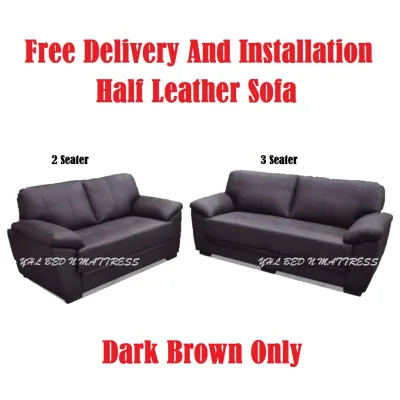
To make an informed purchase, it is essential to understand what these terms mean in furniture manufacturing. A half leather sofa—sometimes referred to as a leather match sofa—uses genuine leather on the contact areas. These contact zones typically include the seat cushions, backrests, and the tops of the armrests. The non-contact areas, such as the outer back, lower sides, and base, are upholstered in a color-matched synthetic material like polyurethane (PU), polyvinyl chloride (PVC), or split leather. This hybrid construction allows manufacturers to lower production costs while keeping the premium feel where it matters most.
Conversely, a full leather sofa features 100% genuine leather across every visible exterior surface. From the front cushions to the very back panel, the entire piece is wrapped in natural hide. Because of this, it is highly recommended to check the manufacturer’s material tags or specification sheets rather than relying solely on showroom marketing terms. Look for explicit material breakdowns to confirm exactly what percentage of the sofa is genuine leather and what materials are used on the non-contact panels.
Products mentioned in this guide
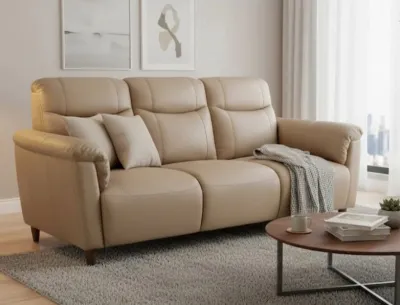
![[Free Assembly] Univonna Denise Recliner Sofa | Premium Half Leather & PU Leather Options | Manual Reclining Sofa | Custom Colors & Fast Delivery](https://img.lazcdn.com/g/p/8cc87ac88ff6b9995c7f05f6858c0792.jpg_400x400q80.jpg_.webp)
Prices are valid at publication and may change. Please refer to the product page for the latest price.
Key Factors to Compare Before You Buy
Before committing to either option, you must weigh the practical trade-offs across several critical dimensions. The right choice for your household depends heavily on your budget, how often the sofa will be used, and where it will be placed in your living room. By comparing upfront costs, long-term wear patterns, and daily comfort, you can determine which material configuration aligns with your lifestyle.

Upfront Cost and Long-Term Value
Price is often the primary differentiator between these two options. A half leather sofa serves as a budget-friendly alternative, allowing you to enjoy the luxury of genuine leather seating at a fraction of the cost of a full leather model. This makes it an attractive option for first-time homeowners or those looking to furnish a space without a massive upfront investment.
However, the lower initial price must be weighed against long-term value. The synthetic side and back panels on a half leather sofa do not age in the same way as genuine leather. Over several years, especially in Singapore’s humid environment, these synthetic materials may degrade, crack, or peel while the genuine leather seats remain intact. This uneven aging can shorten the overall lifespan of the sofa, potentially requiring a replacement sooner than a full leather counterpart. When shopping, always check the warranty terms to see if they cover material peeling or cracking on the non-contact synthetic areas, as many standard warranties only cover the internal frame or the genuine leather portions.
Durability, Wear, and Daily Maintenance
The way a sofa handles daily wear and tear is crucial for busy households. A full leather sofa ages uniformly over time. As the natural hide is exposed to light, air, and use, it develops a consistent patina that often enhances its character. Because the material is identical across the entire frame, you will not have to worry about different sections of the sofa wearing out at different rates.
In contrast, a half leather sofa carries the risk of a two-tone aging effect. The genuine leather contact areas will soften and change color slightly with use, while the synthetic back and sides will remain rigid or, conversely, begin to flake. Daily maintenance is relatively straightforward for both types, requiring regular dusting with a dry microfiber cloth and keeping the furniture away from direct sunlight to prevent fading. However, when it comes to deep cleaning, you must ensure that any cleaning products used are compatible with both genuine and synthetic materials. Applying a harsh chemical meant for vinyl to the genuine leather sections can cause permanent damage, while rich leather oils will not absorb into synthetic panels and will leave a sticky residue.
Comfort, Breathability, and Aesthetics
The tactile experience of your sofa is what makes your living room feel like home. Genuine leather is highly breathable and naturally regulates temperature, adapting to your body heat. In Singapore’s warm, humid climate, this breathability is a major advantage, preventing that sticky, uncomfortable feeling when sitting for extended periods. Because a half leather sofa uses genuine leather on all contact zones, it delivers the same level of seating comfort as a full leather model.
The difference lies primarily in aesthetics and visual consistency. If your sofa is placed against a wall, a half leather design is virtually indistinguishable from a full leather one. However, if you have an open-concept living room where the back and sides of the sofa are visible, a full leather sofa is highly recommended. Under bright indoor lighting, the subtle differences in sheen, grain texture, and color between the genuine leather and synthetic panels on a half leather sofa can become noticeable, disrupting the visual flow of your space.
How to Inspect and Verify Material Quality
When visiting furniture showrooms, you should actively inspect the construction quality of the sofas on display. Start by asking the sales representative for the manufacturer’s material tag or specification sheet. This document should clearly state the exact materials used, such as top-grain leather for contact areas and PVC for the backing.
Next, closely examine the transition seams where the genuine leather meets the synthetic panels. High-quality craftsmanship is indicated by tight, even stitching at these joints. Because genuine leather and synthetic materials expand and contract at different rates under temperature and humidity changes, these seams are under constant tension. Poorly stitched seams can pull apart or tear over time.
You should also physically feel the non-contact areas. Run your hands along the back and lower sides of the sofa to assess the quality of the synthetic or split leather used. High-grade synthetic matches should feel supple and closely mimic the texture of the genuine leather. If the backing feels paper-thin, stiff, or excessively plasticky, it is more likely to crack under Singapore’s humid conditions. Finally, do not forget to measure your living space, doorways, and lift clearance. Leather sofas often feature sturdy, non-removable frames, making delivery and installation a critical step that requires precise dimensions.
Making the Final Decision: Which Sofa Fits Your Lifestyle?
Choosing the right sofa ultimately comes down to a clear, conditional framework based on your household’s specific needs.
You should choose a half leather sofa if your budget is a primary constraint but you still want the premium feel of genuine leather where you sit. This option is highly suitable if the sofa will be positioned directly against a wall, hiding the synthetic panels from view, and if you are comfortable with the prospect of replacing or reupholstering the sofa slightly sooner due to uneven material wear.
You should choose a full leather sofa if you view your furniture as a long-term investment and want a piece that will age beautifully and uniformly over a decade or more. This is the ideal choice if your sofa will serve as a centerpiece in an open-plan living room, visible from all angles, and if your budget allows for a premium upfront investment.
Before making your final purchase, always verify your specific household conditions. If you have pets or young children, check the manufacturer’s care instructions regarding scratch resistance and stain removal. Ensure you have measured your home’s entryways and lift dimensions to guarantee a smooth delivery process.
Frequently Asked Questions (FAQ)
Does half leather peel faster than full leather?
Yes, the synthetic portions of a half leather sofa are more prone to peeling than genuine leather. While genuine leather is highly durable and does not peel, the synthetic backing—such as PU or PVC—can degrade over time. In Singapore’s humid climate, moisture in the air can trigger hydrolysis, causing the synthetic coating to break down, flake, and peel. To minimize this risk, check the specific type of synthetic material used and look for manufacturers that offer warranties covering the synthetic panels.
Can I use the same leather conditioner on a half leather sofa?
No, you should not apply standard genuine leather conditioner to the synthetic parts of a half leather sofa. Genuine leather conditioners are designed to penetrate porous natural hides to keep them supple. Synthetic materials are non-porous, meaning the conditioner will simply sit on the surface, creating a sticky, greasy film that attracts dust and dirt. For a half leather sofa, apply genuine leather conditioner strictly to the contact zones (seats, backrests, and armrests). For the synthetic back and sides, a simple wipe-down with a damp microfiber cloth is usually sufficient.

Community discussion
Share your experience or ask a question. Comments are reviewed before publication.