
Selecting a sofa for a Singapore home involves balancing comfort, durability, and budget. For many homeowners, a half leather sofa represents the ideal middle ground. It offers the luxurious feel and breathability of genuine leather where it matters most, while keeping the overall cost manageable by utilizing matching synthetic materials on the non-contact surfaces. Finding the best quality and value in Singapore’s diverse furniture market requires looking beyond brand names to evaluate leather grades, internal frame construction, and how well a design fits your specific living space.
Rather than a single brand winning the title of “best” for every household, the right choice depends on your specific living conditions. Homeowners and renters looking for durable, cost-effective leather seating must match their priorities—such as custom sizing for tight layouts versus premium imported aesthetics—to the appropriate brand category. By understanding the structural elements that dictate a sofa’s lifespan, you can make an informed investment that withstands Singapore’s unique tropical climate and high-density living environments.
Decoding "Half Leather": What You Are Actually Buying
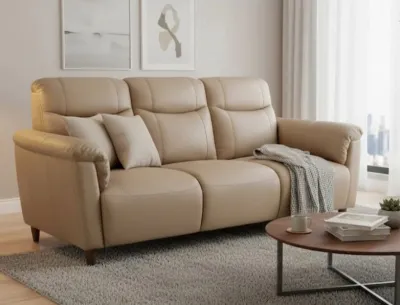
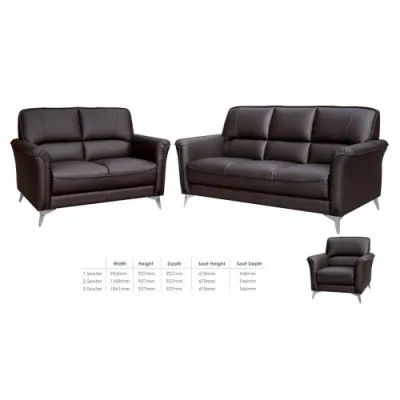
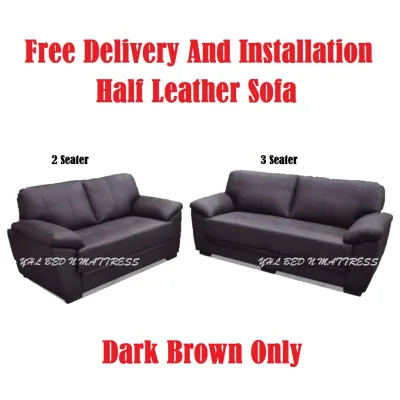
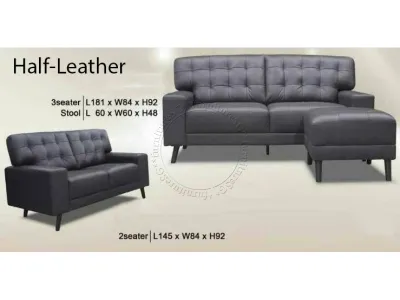
A half leather sofa—often referred to in the industry as a leather-match sofa—is a hybrid piece of furniture. It is strategically engineered to optimize material costs without sacrificing the tactile experience of sitting on genuine leather. The contact areas, which include the seat cushions, backrests, and the tops of the armrests, are upholstered in genuine animal hide. The non-contact areas, such as the outer sides, the lower front plinth, and the entire back panel, are covered in a color-matched synthetic material, typically polyurethane (PU) or polyvinyl chloride (PVC).
Products mentioned in this guide
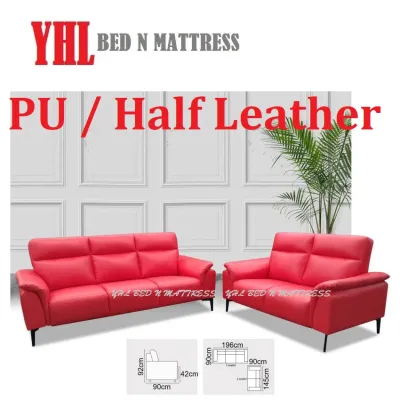
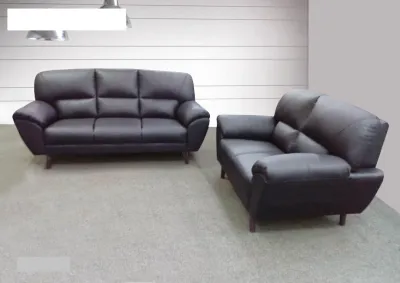
![[Free Assembly] Univonna Denise Recliner Sofa | Premium Half Leather & PU Leather Options | Manual Reclining Sofa | Custom Colors & Fast Delivery](https://img.lazcdn.com/g/p/8cc87ac88ff6b9995c7f05f6858c0792.jpg_400x400q80.jpg_.webp)
Prices are valid at publication and may change. Please refer to the product page for the latest price.
This configuration serves a dual purpose. First, it significantly lowers the retail price compared to a full leather sofa, which requires multiple complete hides. Second, it retains the breathability and natural temperature regulation of genuine leather where your body actually rests, which is highly beneficial in Singapore’s hot and humid climate. However, because two different materials are used, buyers must be vigilant. Synthetic materials age differently than genuine leather; they do not develop a patina and may peel or crack over time if exposed to direct sunlight or harsh cleaning chemicals.
When shopping, always ask the retailer for the exact specifications of both the genuine leather and the synthetic match. High-quality half leather sofas use advanced synthetic backings that closely mimic the elasticity, grain pattern, and sheen of the genuine leather contact areas. This prevents the unsightly stretching or tension differences along the seam lines where the two materials meet. Never rely on generic “leather sofa” marketing terms; check the product labels or specification sheets to verify the exact percentage of genuine leather used.
Key Comparison Dimensions for Singapore Brands
To identify which brands offer genuine value, you must evaluate them across three core dimensions: material quality, structural integrity, and spatial design. These factors directly influence how well the sofa performs over years of daily use.

Leather Grading and Surface Durability
The genuine leather used on the contact areas of a half leather sofa generally falls into two categories: top-grain and corrected-grain. Top-grain leather retains the natural outer layer of the hide, offering superior strength, softness, and breathability. Corrected-grain leather, on the other hand, has been buffed to remove natural imperfections and then embossed with a consistent grain pattern. While corrected-grain leather is often more affordable and highly resistant to minor scratches due to its protective topcoat, it can feel slightly stiffer and less breathable.
In Singapore’s humid environment, the surface treatment of the leather is critical. Pigmented or semi-aniline finishes are common on half leather sofas because they provide a protective barrier against moisture, sweat, and accidental spills. However, these coatings also reduce the natural breathability of the leather. When evaluating a brand, inspect the thickness of the leather—thicker hides (typically 1.2mm to 1.4mm) offer better resistance to stretching and tearing over years of daily use. Always check the manufacturer’s care instructions, as using the wrong cleaning agents can strip the protective finish and cause premature cracking.
Frame Construction and Longevity
The longevity of a half leather sofa is determined by what lies beneath the upholstery. A high-quality frame should be constructed from kiln-dried hardwood, such as Kapur, Nyatoh, or Birch. The kiln-drying process is essential because it removes moisture from the wood, preventing warping, bowing, or cracking in Singapore’s humid climate. Lower-end sofas may rely heavily on engineered woods like particle board or medium-density fibreboard (MDF) for structural components, which are highly susceptible to moisture absorption and structural failure over time.
Inquire about the joinery methods used by the brand. Quality frames are assembled using double-dowelled joints, corner blocks, and heavy-duty screws rather than simple staples and glue. For the suspension system, look for sinuous (no-sag) steel springs or pocketed coils in the seat deck, which provide robust, long-lasting support. Elastic webbing is acceptable for backrests but may sag prematurely if used as the primary support for seat cushions. Always check the manufacturer’s stated weight capacity and structural warranty terms; a warranty of 5 to 10 years on the frame is a strong indicator of structural confidence.
Design Aesthetics and Modular Options
Singapore’s residential landscape is dominated by high-density housing, from cozy HDB BTO flats to modern condominiums. Consequently, the physical footprint and visual weight of a sofa are critical design considerations. Brands catering to the local market often offer low-profile designs with slim armrests, which maximize the actual seating area without overwhelming a small living room.
Modular configurations and reversible chaises are highly valuable for local homes, allowing you to adapt the sofa layout if you move or reconfigure your living space. Additionally, pay attention to leg heights. Sofas with elevated legs (typically 10cm or higher) not only create a sense of spaciousness by exposing more floor area but also allow robotic vacuums to pass underneath easily. This elevation also improves air circulation under the sofa, reducing the risk of mold growth in humid conditions.
Evaluating Value: Price Tiers and Brand Categories
To navigate the Singapore market effectively, it helps to categorize brands into three distinct segments: Local Heritage/Craftsmanship, Modern Direct-to-Consumer (DTC), and Premium International Imports. Each category represents a different balance of material quality, customization, and cost.
Local Heritage and Craftsmanship
These are established local furniture retailers and custom upholstery workshops. They often prioritize sturdy, traditional construction, using thick corrected-grain leathers and solid hardwood frames. Their designs lean toward classic, robust silhouettes. They offer moderate customization in terms of dimensions and leather colors, making them excellent for homeowners with specific spatial requirements.
Modern Direct-to-Consumer (DTC) Labels
These online-first brands operate physical experience centers or showrooms. They streamline the supply chain to offer contemporary, Scandinavian, or minimalist designs at competitive mid-range prices. They typically use top-grain leather on contact areas paired with high-quality synthetic backs, offering a balanced mix of modern aesthetics, modular flexibility, and transparent online specifications.
Premium International Imports
These are high-end showrooms importing designer furniture, often from Europe or Italy. They feature exquisite top-grain or full-grain leathers, cutting-edge ergonomic designs, and superior craftsmanship. While they offer unparalleled luxury and design exclusivity, they come with premium price tags and longer delivery lead times.
| Brand Category | Typical Leather Grade | Frame Construction | Design Flexibility | Relative Price Tier |
|---|---|---|---|---|
| Local Heritage / Craftsmanship | Corrected-grain or thick top-grain | Kiln-dried hardwood, traditional joinery | Moderate customization of sizes and colors | Mid-range (S$1,800 – S$3,500) |
| Modern Direct-to-Consumer | Top-grain (pigmented or semi-aniline) | Kiln-dried hardwood & engineered wood | Modular configurations, fixed dimensions | Entry to Mid-range (S$1,200 – S$2,500) |
| Premium International Imports | Premium top-grain or full-grain | Solid wood or metal frames, premium suspension | High design exclusivity, limited physical alterations | Premium (S$4,500 – S$10,000+) |
When evaluating value, avoid focusing solely on the lowest price tag. An entry-level sofa that requires replacement after three years due to peeling synthetic backing or a sagging frame ultimately costs more than a mid-range sofa that lasts a decade. Verify current pricing, delivery fees, and assembly charges directly on the brand’s website or showroom, as these can vary based on seasonal promotions and customization options.
Decision Framework: Choosing the Right Brand for Your Home
To finalize your choice, align your household’s daily habits and space constraints with the strengths of each brand category.
- Choose Local Heritage Brands if: You prioritize long-term structural durability, classic aesthetics, and want the ability to customize the sofa's physical dimensions to fit a specific nook in your HDB flat. These brands are ideal for multi-generational households where the sofa experiences heavy, continuous daily use.
- Choose Modern Direct-to-Consumer Brands if: You live in a modern apartment, prefer minimalist or Scandinavian design, and value modularity. If you anticipate moving in the near future or like to rearrange your living room layout, the flexible configurations and lighter visual profiles of DTC brands offer excellent value.
- Choose Premium Imports if: You have a generous budget, appreciate designer aesthetics, and want the absolute highest quality of genuine leather on your seating surfaces. These sofas serve as statement pieces in spacious condominiums or landed properties where traffic is moderate and climate control is consistently maintained.
- Verify First if: You have domestic pets or young children. Claws can easily puncture both genuine leather and synthetic backing, while spills must be wiped immediately to prevent staining. If your living room receives direct afternoon sunlight through floor-to-ceiling windows, be aware that UV exposure accelerates the degradation of synthetic backing on half leather sofas, potentially causing it to peel much faster than the genuine leather contact areas. In such cases, consider window films or blinds to protect your investment.
Pre-Purchase Verification and Showroom Checklist
Before making a final payment, perform a thorough physical inspection and spatial verification to avoid costly delivery mistakes or buyer’s remorse.
- Measure Your Space and Access Routes: Do not rely on visual estimation. Measure the designated floor area in your living room, leaving at least 30cm of clearance around walkways. Crucially, measure your home's entry points. Verify the width and height of your front door, hallway corners, and the internal dimensions of your condominium or HDB lift. Many sofa deliveries in Singapore are complicated by tight lift doors or narrow stairwells, which may incur additional manual carrying fees or result in a rejected delivery.
- Conduct the Showroom Rigidity Test: When visiting the showroom, lift one front corner of the sofa about 15cm off the ground. The other front leg should also lift. If the frame twists or bows, the internal construction lacks the necessary rigidity and may warp over time.
- Assess Cushion Recovery and Seat Depth: Sit on the sofa for at least ten minutes. Pay attention to the seat depth; your thighs should be fully supported, and your feet should rest flat on the floor. When you stand up, the cushions should quickly recover their shape. High-density foam (at least 30kg/m³) or pocket spring inserts are essential for maintaining shape and preventing the "sinking" feeling over years of use.
- Review the Warranty and Care Documentation: Request a copy of the written warranty. Ensure you understand what is covered—specifically, distinguish between the warranty for the internal frame (which should be at least 5 years) and the warranty for the leather and synthetic upholstery (which is typically 1 to 2 years). Ask the sales representative for the recommended cleaning products, and confirm that using standard leather conditioners will not void the warranty on either the genuine leather or the synthetic match.
Community discussion
Share your experience or ask a question. Comments are reviewed before publication.