
Selecting the right office chair accessory is one of the most direct ways to improve your daily comfort, especially when sitting for eight or more hours at a time. If you experience lower back stiffness, tailbone pressure, or general discomfort during long work sessions, a high-quality seat cover or cushion can transform your seating experience. However, there is no single option that works perfectly for everyone; the ideal choice depends on your specific physical needs, your existing chair’s condition, and your working environment.
For those working in warm, humid climates—such as a home office in Singapore without constant air conditioning—mesh covers provide unparalleled airflow to prevent heat buildup and sweating. If your primary struggle is localized pain in your hips or tailbone, memory foam offers deep, contouring pressure relief by distributing your body weight evenly. Meanwhile, gel covers and cushions deliver firm, responsive support and a cool initial touch, making them excellent for users who prefer a structured feel over deep sinking. To make the right investment, you must evaluate how these materials perform across several practical dimensions.
Understanding the Materials: Covers vs. Cushions
Before comparing materials, it is essential to clarify a common point of confusion in product listings: the difference between a true seat cover and an add-on seat cushion or pad. Many online retailers use these terms interchangeably, but they serve different structural purposes and interact with your office chair in distinct ways.
Products mentioned in this guide
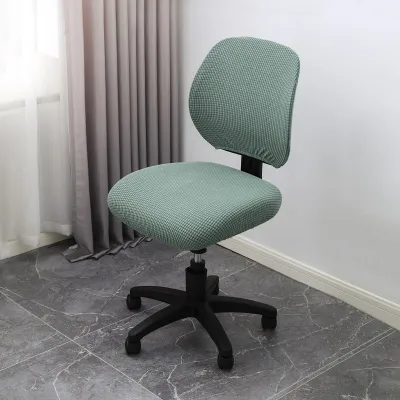
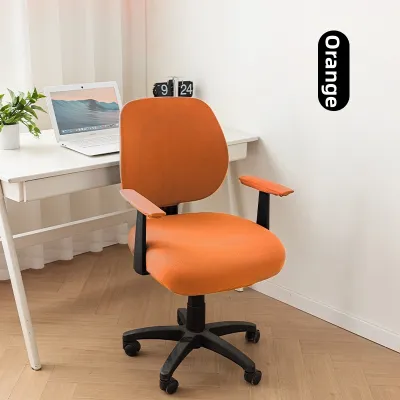
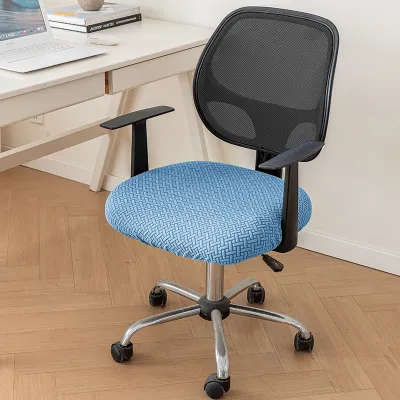
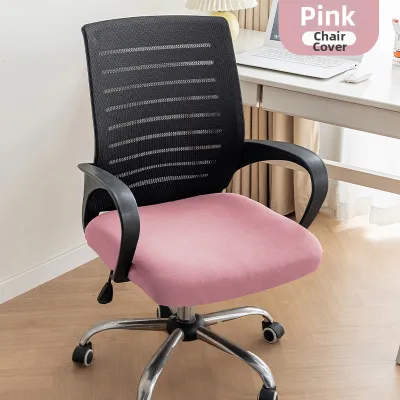
Prices are valid at publication and may change. Please refer to the product page for the latest price.
A true seat cover is typically a thin, fabric-based slipcover designed to wrap tightly around your existing chair seat. These are often made of mesh, polyester, or elastane blends. Their primary functions are to protect the original upholstery from wear, spills, and stains, or to provide a more breathable texture. A slipcover does not add significant padding or alter the underlying support structure of your chair. If your current seat is already hard, worn out, or bottomed out, a simple fabric cover will not resolve your discomfort.
Conversely, gel and memory foam options are usually sold as thick, structural seat cushions or padded inserts, which are often encased in their own removable fabric covers. These accessories are designed to sit directly on top of your chair’s seat pan. They add substantial height, alter the contour of the seat, and fundamentally change how your body weight is distributed. When shopping, always read the product specifications carefully to verify whether you are purchasing a thin protective cover or a thick, supportive cushion, as this choice directly impacts your ergonomic setup and chair adjustments.
Head-to-Head Comparison: Comfort, Support, and Breathability
To determine which material will support you best through back-to-back meetings and focused writing sessions, you must look closely at how they handle heat, distribute pressure, and hold up over months of continuous use.

Temperature Regulation and Breathability
Managing heat buildup is crucial for maintaining focus and preventing skin irritation during long working hours. Mesh is the undisputed champion in this category. Because of its open-weave suspension design, a mesh cover allows air to circulate freely beneath and around your pelvis. This continuous airflow prevents body heat and moisture from becoming trapped, making it an exceptional choice for fan-cooled rooms or tropical environments where humidity levels are consistently high.
Traditional memory foam, by contrast, is a dense viscoelastic polyurethane material that naturally retains heat. It relies on your body heat to soften and contour to your shape, which means it inherently traps warmth. Sitting on solid memory foam for several hours can lead to a warm, uncomfortable seating surface. To mitigate this, many manufacturers incorporate open-cell foam structures, ventilation holes, or cooling gel infusions. If you tend to run hot but still want the contouring benefits of foam, look for product labels that explicitly verify these cooling technologies or feature a breathable outer mesh cover.
Pure gel inserts offer a unique thermal profile. Gel has a high thermal mass, which gives it a distinctively cool feel when you first sit down. However, gel does not actually dissipate heat indefinitely; it slowly absorbs your body heat over time. After an hour or two of continuous sitting, a solid gel pad will reach thermal equilibrium with your body and may begin to feel warm. If temperature regulation is your top priority, a honeycomb-patterned gel cushion is preferable to a solid gel block, as the open channels allow for some passive air movement.
Pressure Relief and Ergonomic Support
Ergonomic support is about keeping your spine in neutral alignment and preventing high-pressure hotspots on your thighs and buttocks. Memory foam is highly regarded for its superior contouring abilities. As it responds to your weight and body heat, it molds precisely to your anatomy, distributing your weight across a larger surface area. This action significantly reduces pressure on your ischial tuberosities (sit bones) and tailbone, making it highly effective for users who experience localized pain or stiffness after sitting.
Gel cushions provide a firmer, more responsive type of support. Rather than sinking deeply into the material as you would with memory foam, you sit on top of a gel cushion. Many high-quality gel inserts utilize a column-buckling design, where the walls of a honeycomb pattern collapse under high-pressure areas while remaining upright and supportive elsewhere. This offers excellent shock absorption and a bouncy, responsive feel that makes it easy to shift positions. However, pure gel can feel somewhat rigid or heavy, which is why many premium options feature a hybrid design that layers a gel grid over a supportive foam base.
Mesh covers offer minimal independent pressure relief. They rely almost entirely on the tension of the mesh itself or the quality of the padding beneath them. On a high-end ergonomic chair, a tightly tensioned mesh seat distributes weight beautifully by suspending your body. However, if you add a thin mesh slipcover over a cheap or degraded foam seat, it will do nothing to alleviate pressure points. A mesh cover is best used to restore breathability or protect an existing chair that already has comfortable, supportive padding.
Durability, Maintenance, and Fit
An office chair accessory is a daily-use item, meaning ease of cleaning and long-term durability are key practical considerations. Mesh covers are highly durable and resilient against spills. They do not absorb moisture or odors, and most slipcover variants can be easily removed and tossed into a standard washing machine. However, over years of heavy use, lower-quality mesh can begin to sag or lose its tension, and the fabric can occasionally snag on sharp objects like keys, belt buckles, or clothing zippers.
Memory foam requires more careful maintenance. The foam core itself cannot be washed; exposing memory foam to water can break down its cellular structure, causing it to lose its rebound properties and crumble. Additionally, foam can easily absorb sweat and spills, which can lead to lingering odors over time. If you choose memory foam, it is vital to select a product with a removable, water-resistant, or machine-washable outer cover. You should also check the manufacturer’s weight limit specifications, as lower-density foam can flatten permanently under heavy loads.
Gel is incredibly resilient and virtually immune to permanent flattening or deformation. A high-quality thermoplastic elastomer (TPE) gel cushion will return to its original shape instantly, even after years of daily use. It does not absorb liquids or odors, making the core itself highly hygienic. However, gel cushions are significantly heavier than foam or mesh, making them less convenient to transport if you split your time between a home office and a corporate workplace. They also require a removable fabric cover because raw gel can attract dust and hair, and can slide around on smooth wooden or plastic chair seats.
Quick Comparison Matrix
| Material | Primary Benefit | Best Use Case | Heat Retention Profile | Support Level | Maintenance Routine |
|---|---|---|---|---|---|
| Mesh | Maximum airflow and breathability | Warm, humid environments; protecting existing good padding | Extremely low; allows continuous ventilation | Minimal; relies on underlying seat structure | Easy; machine-washable slipcover or simple wipe-down |
| Memory Foam | Deep contouring and pressure relief | Tailbone, hip, or lower back discomfort; reviving flat seats | High; traps heat unless modified with cooling features | Deep, body-conforming support | Moderate; wash outer cover only; protect foam from moisture |
| Gel | Firm, responsive support and durability | Users who dislike sinking; heavy daily use | Moderate; cool initial feel, slowly warms over time | Firm, springy, and highly responsive | Easy to moderate; wash outer cover; wipe down gel core |
Decision Framework: How to Choose the Right Option for Your Setup
To make your final decision, evaluate your current work environment, your physical comfort priorities, and the physical state of your existing chair.
Choose a Mesh Cover if:
- You work in a warm, non-air-conditioned room or live in a humid tropical climate where sweating is a constant concern.
- Your current office chair already has comfortable, supportive padding, and you simply want to protect the fabric or add a cooler, more breathable texture to the seat.
- You want a lightweight, low-profile solution that will not alter your seating height or interfere with your chair's built-in ergonomic adjustments.
Choose a Memory Foam Cushion if:
- You suffer from deep, aching pain in your tailbone, hips, or lower back during long working hours, and you need maximum pressure redistribution.
- Your existing office chair has permanently flattened out, and you need a thick, contouring layer to restore comfort without buying an entirely new chair.
- You work in a climate-controlled, air-conditioned environment where the heat-retaining properties of foam are less likely to cause discomfort.
Choose a Gel Cushion (or Gel-Foam Hybrid) if:
- You prefer a firm, supportive seating surface that allows you to sit "on" the chair rather than sinking deeply "into" it.
- You want an exceptionally durable accessory that will not pack down, flatten, or lose its shape over years of continuous, heavy daily use.
- You appreciate a cool touch when you first sit down and do not mind a heavier, highly stable cushion that stays firmly in place.
Before making any purchase, verify these critical dimensions:
- Seat Pan Width and Depth: Measure your chair's seat pan accurately. Ensure the cushion or cover matches these dimensions; an oversized cushion will overhang and cause instability, while an undersized one will create uncomfortable ridges.
- Armrest Clearance: Check the space between your armrests. A thick cushion can push your thighs outward or rub against the armrest supports, restricting your movement or damaging the cushion fabric.
- Weight Capacity: Review the manufacturer's product specifications to ensure the cushion is rated for your body weight, which prevents premature flattening and ensures proper support.
Installation and Fit: What to Check Before You Buy
Integrating a new seat cover or cushion into your workspace requires a quick ergonomic audit. Adding a thick accessory—particularly a 5cm to 8cm memory foam or gel cushion—will significantly raise your sitting height. If you do not adjust your workstation accordingly, this height change can lead to secondary strain in your shoulders, neck, and wrists.
Once you place the cushion on your chair, sit down and check your posture. Your knees should be bent at a 90-degree angle with your feet resting flat on the floor. If your feet are dangling or your thighs are pressed uncomfortably against the underside of your desk, lower your chair’s gas cylinder. If your desk is not height-adjustable and lowering your chair leaves your elbows below desk height, you may need to add a footrest to maintain proper alignment. Additionally, ensure your monitor is adjusted so the top third of the screen is at eye level, preventing neck strain.
For thin mesh slipcovers or fabric covers, secure fitment is the primary concern. Look for products that feature robust elastic borders, adjustable buckle straps, or a high-friction silicone grip pattern on the underside. A cover that constantly slips, slides, or bunches up during the workday is not just annoying; it creates uneven pressure points that can worsen back pain. When installing, pull the cover taut and secure all straps tightly, ensuring it does not block access to your chair’s adjustment levers or tension knobs.
Frequently Asked Questions (FAQ)
Can I use a memory foam cushion on a mesh office chair?
Yes, you can use a memory foam cushion on a mesh office chair, but you must check two things first. Ensure the cushion features a highly effective non-slip rubber or silicone bottom, as smooth mesh surfaces offer very little friction, which can cause the cushion to slide forward. Additionally, keep in mind that placing a thick, solid foam cushion on top of a mesh seat will completely block the chair’s natural airflow, eliminating the breathability benefits of the mesh suspension.
How often should I replace my office chair seat cover or cushion?
Rather than following a strict calendar timeline, you should replace your accessory based on observable material degradation. For memory foam, replace the cushion when it no longer rebounds to its original shape or feels permanently compressed in the areas under your sit bones. For mesh covers, look for signs of wear such as sagging, frayed edges, broken elastic bands, or loss of tension. If the cover no longer stays taut or slips frequently during use, it is time for a replacement.
Community discussion
Share your experience or ask a question. Comments are reviewed before publication.