
When a refrigerator stand needs new wheels, choosing the wrong replacement can lead to a collapsed stand, scratched kitchen tiles, or an appliance that refuses to budge. Finding the correct fridge stand wheel requires looking past basic aesthetics and analyzing precise mechanical specifications. Matching the exact load capacity, attachment style, wheel diameter, and material ensures your refrigerator remains stable, mobile, and safe to operate.
A refrigerator is one of the heaviest and most expensive appliances in a home. Placing it on an unstable base or using subpar replacement casters risks structural failure, potential tipping, and costly floor repairs. By understanding the core specifications, you can confidently source a set of wheels that will support your appliance for years, making routine maintenance and cleaning much easier.
Before attempting to disassemble your stand or replace its wheels, always consult the manufacturer’s instructions for both your refrigerator and the stand to protect your warranty and ensure safe handling. If instructions conflict or are unavailable, consult a qualified professional before proceeding.
Products mentioned in this guide
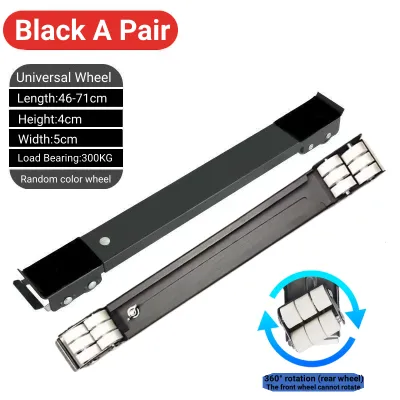
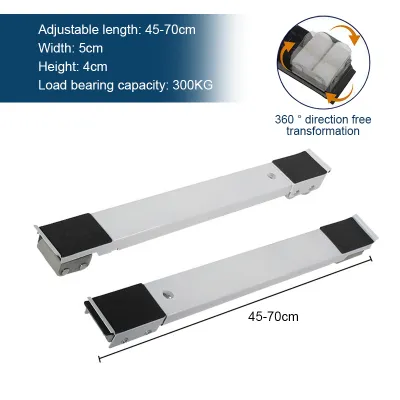
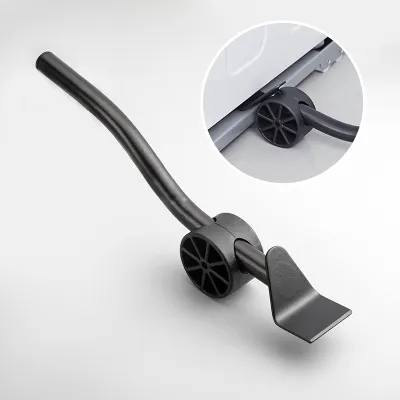
![🇸🇬 [READY STOCK] Fridge Stand Washing Machine Base Furniture Mover Adjustable Refrigerator Raised Base Mobile Roller Universal Bracket Wheel Pulley Holder](https://img.lazcdn.com/g/p/f35fd6fb0a15bfdabe4565d8b1487c98.jpg_400x400q80.jpg_.webp)
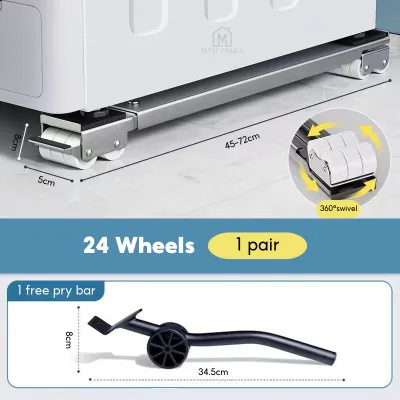
![[SG] 2PCS Fridge Stand Rack Washing Machine Base With 360° Wheels Movable Base Wheel Bracket Fridge Roller Holder](https://img.lazcdn.com/g/p/718318473473a21b71d070212955617e.jpg_400x400q80.jpg_.webp)
Prices are valid at publication and may change. Please refer to the product page for the latest price.
Selecting the Right Fridge Stand Wheel: The 4 Critical Specs
To find a compatible replacement, four non-negotiable specifications must guide your search: the mounting type and stem size, the load capacity, the wheel diameter, and the brake configuration. Skipping even one of these details often results in a wheel that cannot be installed, or worse, a stand that buckles under the weight of a fully loaded refrigerator.
Relying on visual similarity is a common mistake when browsing online marketplaces. Two wheels might look identical in product photos, but a difference of just one millimeter in stem diameter or a slight variation in tread material can make the replacement entirely useless. A mismatch can also cause the stand to sit unevenly, placing undue stress on the frame and risking damage to delicate vinyl or tiled floors.
This guide decodes each of these four parameters step-by-step. By learning how to measure your existing components and calculate your appliance’s physical requirements, you can make an informed, safe purchase that protects both your kitchen floor and your appliance investment.
Load Capacity: Calculating Safe Weight Limits
Determining the correct load capacity is the most critical safety step when choosing a replacement wheel. To begin, you must establish the actual weight of your refrigerator. This information is typically found on the manufacturer’s rating plate—a sticker usually located inside the refrigerator compartment or on the rear panel—or by looking up your specific model number online.

Once you have the net (empty) weight, you must account for the weight of food, beverages, and shelving, which can easily add another 50 to 100 kilograms. To calculate the required capacity per wheel, add the refrigerator’s net weight to the estimated weight of its contents, divide this total by four, and then apply a 20% to 30% safety margin. This buffer is essential because weight is rarely distributed perfectly evenly across all four corners, especially when doors are opened or when the appliance is actively being rolled.
For example, if your refrigerator weighs 100 kg empty and holds 50 kg of contents, the total static weight is 150 kg. Dividing this by four gives a baseline of 37.5 kg per wheel. Adding a 30% safety margin brings the required rating to approximately 49 kg per wheel. Selecting a caster rated for at least 50 kg ensures the stand can handle dynamic loads—the sudden shifts in force that occur when pushing the appliance over floor joints or thresholds.
While under-specifying leads to immediate structural failure, over-specifying can introduce different issues. Heavy-duty industrial casters designed for factories often utilize extremely hard, unyielding materials like cast iron or hard phenolic resins to support massive loads. Using these on residential floors can easily dent or scratch tiles, wood, or luxury vinyl planks. Aim for a balanced rating that comfortably exceeds your calculated limit without stepping into industrial-grade hardness.
Stem Size and Mount Type: Ensuring Physical Compatibility
Before looking at wheel materials, you must identify how the wheel attaches to the stand. Casters generally fall into two categories: stem casters, which insert directly into a socket or threaded hole, and plate-mount casters, which screw flat against the underside of the stand. For fridge stands, stem casters are the most common, appearing as grip ring stems, threaded stems, or plain stems.
To measure a stem caster accurately, you should ideally use a digital caliper, though a standard metric ruler can work if used carefully. Measure the stem’s diameter at its widest point and its overall length from the base of the stem to the tip. Even a tiny 1 mm discrepancy will prevent a threaded stem from screwing in, or cause a grip ring stem to wobble loosely inside its socket, compromising the stability of the entire refrigerator.
Common standard sizes for domestic appliance stands often include M8 or M10 threaded stems, or 11 mm diameter grip ring stems. However, because manufacturer standards vary globally, never assume your stand uses a standard size without measuring it first. If you are replacing a threaded stem, you must also verify the thread pitch (the distance between thread ridges) to ensure it matches the receiving socket perfectly.
If the existing mounting socket on your stand is stripped, cracked, or otherwise damaged, installing a standard replacement wheel may not be possible. In these situations, look for specialized adapter sleeves that can snug a slightly smaller stem into a larger socket. Alternatively, if the design of the stand’s frame allows, you might consider converting to a plate-mount caster, which distributes the load across a wider surface area and can be secured with self-tapping metal screws or bolts.
In Singapore, high-quality replacement sets generally fall into a modest budget tier of under S$50, making them a highly cost-effective alternative to replacing the entire stand, provided you select the correct dimensions.
Wheel Diameter and Material: Floor Protection and Clearance
The physical size of the wheel and the material of its tread directly influence how easily the refrigerator rolls and whether your kitchen flooring remains undamaged. Larger wheel diameters naturally offer lower rolling resistance. A wheel with a larger diameter can easily glide over grout lines, floor transitions, and minor debris, whereas a small wheel is more likely to get stuck, requiring excessive pushing force that could tip the appliance.
Tread material is equally vital for protecting residential surfaces. For hard floors common in Singapore homes, such as ceramic tiles, vinyl, or laminate, polyurethane (PU) or soft thermoplastic rubber (TPR) wheels are highly recommended. These materials offer excellent shock absorption, reduce vibration noise when the refrigerator compressor runs, and will not leave scuff marks or scratches on delicate surfaces.
Conversely, hard nylon or solid plastic wheels should generally be avoided for heavy appliances on hard residential floors. Under the immense weight of a fully loaded refrigerator, these hard materials concentrate pressure onto a very small contact patch, which can easily crack ceramic tiles or deeply score vinyl planks when the stand is moved. Save nylon wheels for smooth, sealed concrete garage floors where surface scratching is not a concern.
Finally, before finalizing your wheel diameter, measure the clearance around your fridge stand. Ensure that a larger wheel will not raise the stand to a height that interferes with overhead cabinetry, ceiling clearance, or changes the center of gravity enough to make the appliance top-heavy. You must also verify that the spinning radius of the caster wheel does not hit the stand’s structural crossbars or block the refrigerator’s bottom door from swinging open fully.
Brake Mechanisms: When Locking Features Actually Matter
Brake mechanisms on appliance wheels are crucial for keeping your refrigerator stationary, especially during daily use when doors are repeatedly pulled open and pushed shut. However, not all brakes function the same way. It is important to distinguish between single-lock brakes, which only stop the wheel from rolling while allowing it to swivel, and double-lock brakes, which simultaneously lock both the wheel rotation and the swivel mechanism.
For heavy, vibrating appliances like refrigerators, double-lock brakes are highly recommended. The constant, subtle vibration of the compressor can cause a stand with unlocked swivels to slowly “creep” or shift across smooth tile floors over time. A double-lock mechanism ensures the stand remains completely rigid, preventing unnecessary stress on water line connections or power cords.
There are select scenarios where non-braking wheels are acceptable, such as when the refrigerator stand is pushed flush into a tight, recessed alcove where physical walls prevent any forward or lateral movement. In these setups, non-braking wheels can simplify the design, as the appliance can only move when pulled straight out for cleaning or maintenance.
It is critical to remember that wheel brakes are safety locks, not leveling devices. You should never rely on locking a wheel to compensate for a sloped or uneven kitchen floor. If your floor is uneven, the stand itself must be leveled using adjustable leveling feet or shims before locking the wheels, as parking a heavy appliance on a slope puts continuous, uneven lateral force on the caster stems, risking sudden failure.
Frequently Asked Questions (FAQ)
Can I use regular furniture casters for a fridge stand?
No, standard lightweight furniture casters are generally unsuitable for supporting a refrigerator. These casters are designed for light loads like office chairs or small side tables and typically lack the heavy-duty bearings, reinforced steel stems, and durable tread materials required to hold hundreds of kilograms. Using them can result in bent stems, collapsed wheels, and severe damage to your kitchen floor. Always verify that the wheels you purchase are explicitly rated for heavy appliances.
How do I remove a stuck grip ring stem from the stand?
To remove a stubborn grip ring stem, slide the flat head of a sturdy screwdriver or a specialized pry bar between the caster’s metal collar and the socket of the stand. Gently apply upward leverage, working your way around the collar to lift it evenly. If the stem is seized due to rust or debris, apply a small amount of penetrating lubricant directly into the joint and let it sit for ten minutes before attempting to pry it again. Avoid using excessive force or hammering the wheel, as this can easily crack the stand’s plastic or metal socket.
Community discussion
Share your experience or ask a question. Comments are reviewed before publication.