
When organizing a compact bedroom, entryway, or walk-in wardrobe, corners are often underutilized. A corner clothes rack is an excellent way to reclaim this dead space, but choosing between a freestanding and a wall-mounted model requires careful consideration. Freestanding corner clothes racks offer immediate setup, mobility, and zero wall damage, making them ideal for renters or those who like to rearrange their rooms. Wall-mounted corner clothes racks, on the other hand, float above the floor to maximize vertical space, keeping your floor area completely clear and providing a highly stable storage solution. Choosing between them depends on your room layout, tenancy status, wall construction, and how much weight you need to hang. By understanding the primary trade-offs between floor flexibility and vertical space maximization, you can select the installation style that best aligns with your home’s layout and your daily storage needs.
Space and Layout Requirements
Evaluating your corner dimensions and available floor space is the first step in determining which rack type is physically feasible for your room. A freestanding corner clothes rack typically features a triangular or L-shaped base that sits directly on the floor. This base requires a dedicated footprint, often extending 30 to 50 centimeters along each wall from the corner point. Before choosing this style, you must ensure this floor area is entirely clear of floor vents, electrical outlets, or low-profile items.
In contrast, a wall-mounted corner clothes rack leaves the floor completely open but demands significant vertical wall clearance. You must check the wall surfaces for light switches, wall-mounted air conditioning units, or decorative moldings that might block the installation path. Additionally, you must factor in the “hanging depth” of your clothes. Standard clothes hangers extend about 40 to 45 centimeters from the wall or rail. This means that even if a wall-mounted rail itself is slim, the hanging garments will project outward, potentially obstructing nearby pathways or doors.
Products mentioned in this guide
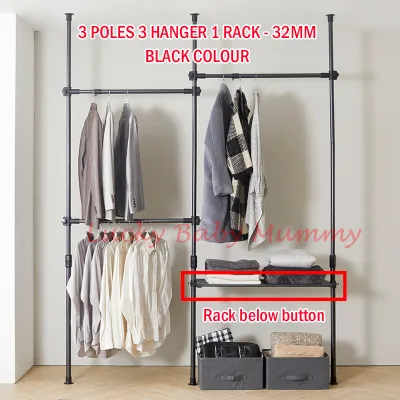
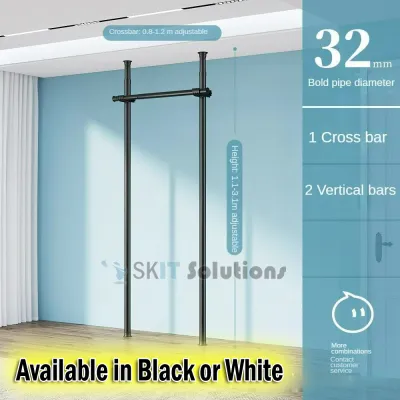
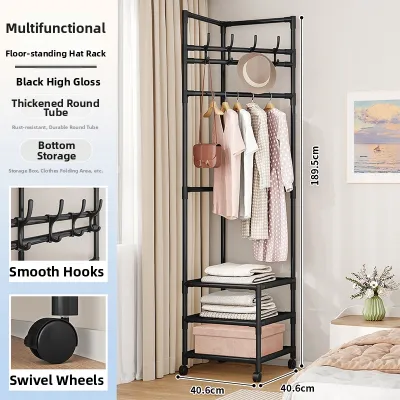
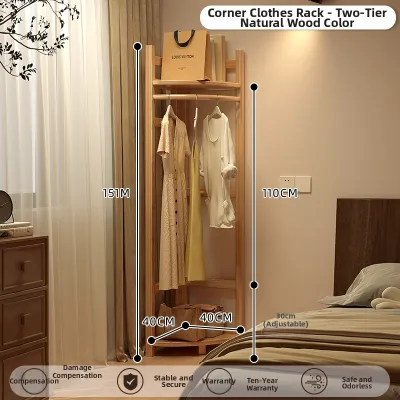
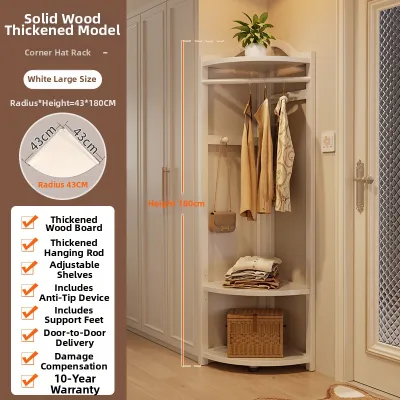
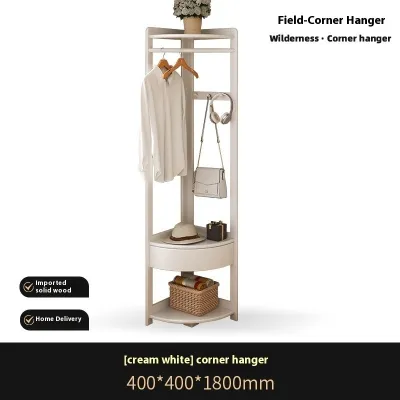
![[V.Home] Adjustable Clothes Drying Hanger Rack / Corner Rack / Floor to Ceiling / Laundry Hanger / no Drill no Nail](https://img.lazcdn.com/g/p/3a0535906c7584947ba128b9ae18bdf6.jpg_400x400q80.jpg_.webp)
Prices are valid at publication and may change. Please refer to the product page for the latest price.
To ensure a flush fit, measure your corner angle and baseboards. While most corners are intended to be a perfect 90 degrees, structural settling can cause slight deviations. Use a corner square or a cardboard template to check the angle before purchasing a rigid rack. Furthermore, measure baseboard depth. Thick baseboards can prevent a freestanding rack from sitting flush against the wall, creating an awkward gap. Some freestanding models feature recessed back legs to accommodate baseboards, so check product specifications for these details.
Finally, identify necessary clearance zones for nearby doors, drawers, and primary walkways. Open any adjacent doors or wardrobe drawers fully to ensure they do not collide with the rack or the clothes hanging on it. If the corner is located in a high-traffic hallway or entryway, a wall-mounted rack installed at shoulder height can keep the floor clear for walking, whereas a freestanding rack might narrow the passage and create a tripping hazard.
Installation, Stability, and Weight Limits
Before committing to a specific corner clothes rack, perform essential structural and safety checks. Wall-mounted racks rely entirely on the structural integrity of your walls. In Singapore, internal walls are often made of solid concrete, brick, or drywall. Concrete and brick walls provide excellent support but require masonry drill bits, wall plugs, and robust screws. Drywall installations are more complex; you must locate the timber or metal studs using a stud finder to safely support a loaded rack. Mounting a heavy clothes rack directly into hollow drywall without securing it to studs or using specialized heavy-duty hollow-wall anchors can lead to wall damage and structural failure.

Freestanding corner clothes racks do not require wall drilling, but their stability depends on their base design, center of gravity, and flooring. A narrow base or a top-heavy load can make the rack prone to tipping, especially on thick carpets or uneven tiles. When evaluating freestanding models, look for designs with a wide, weighted base or adjustable leveling feet. If you have young children or pets, even a freestanding rack should be anchored to the wall with a safety strap to prevent accidental tip-overs.
Always verify the manufacturer’s specified weight limits and load distribution guidelines directly on product labels or specification sheets before loading the rack. A wall-mounted rack’s actual capacity is heavily limited by the quality of the installation and the wall material. For example, a rack mounted into solid concrete will support significantly more weight than the same rack mounted into drywall.
To maintain stability and prevent damage, distribute weight evenly across the rack. Place heavier items like winter coats, heavy jackets, or bags closer to the vertical supports, wall brackets, or the corner joint. Reserve the outer ends of the rails or the middle of long spans for lighter garments like shirts, t-shirts, and summer wear. This practice prevents the hanging rails from bending and reduces uneven stress on the mounting brackets or the freestanding frame.
Storage Capacity and Organization Features
Comparing how each installation style handles different clothing volumes, garment lengths, and accessory storage needs will help you choose the right configuration for your wardrobe. Hanging rail configurations differ significantly between the two styles. Freestanding corner racks often feature multi-tier setups, combining a hanging rail with built-in shelves. However, the corner joint itself can sometimes limit continuous hanger sliding. Look for designs where the hanging rail curves smoothly around the corner if you want uninterrupted access to your garments.
Wall-mounted units offer excellent modular flexibility. You can install a single high rail for long dresses, coats, and jumpsuits, or stack two rails vertically to double your hanging capacity for shorter items like shirts, skirts, and folded trousers. Because you can choose the exact height at which you mount the rails, you can customize the vertical spacing to match your specific wardrobe profile.
Add-on features enhance organization and maximize the utility of your corner space. Freestanding models frequently incorporate lower shelves that serve as shoe racks, or top shelves for storage boxes and folded items. Side hooks are also common on freestanding frames, providing quick-access storage for bags, hats, umbrellas, or scarves. While wall-mounted systems can be paired with floating shelves installed above or below the hanging rail, each additional element requires separate wall mounting, alignment, and drilling, which increases the installation effort.
Consider your wardrobe profile when choosing between these styles. If you need to store heavy outerwear, thick denim, or heavy bags, a properly anchored wall-mounted rack or a heavy-duty metal freestanding rack with a wide, stable base is necessary. Lightweight daily wear, activewear, or summer clothing can be easily accommodated by lighter bamboo or thin-profile metal freestanding racks, which offer sufficient support without the need for heavy-duty wall anchoring.
Aesthetics, Cleaning, and Room Flow
The visual impact, light obstruction, and daily maintenance of your corner clothes rack play a significant role in how comfortable and functional your living space feels. Visual bulk is a key consideration. Freestanding corner racks, with their solid bases, vertical frames, and multiple shelves, can make a small room feel more crowded by breaking up the floor line and blocking sightlines. In contrast, floating wall-mounted designs preserve the continuous line of the floor, creating an illusion of more open space and allowing natural light to flow freely across the room.
Floor cleaning access is another major differentiator. Because there are no legs or base plates touching the floor, wall-mounted racks allow you to easily sweep, vacuum, or mop directly underneath the hanging clothes. This is particularly beneficial in dusty environments or high-traffic entryways. Freestanding racks require you to clean around the legs, and dust bunnies often accumulate in the tight corner space behind the base, requiring you to periodically move the entire rack to clean thoroughly.
Material finishes and frame styles should integrate seamlessly with your existing room decor and lighting conditions. Matte black metal frames offer an industrial or modern minimalist look, while warm bamboo or natural wood finishes suit Scandinavian, Japandi, or traditional aesthetics. Consider how the rack’s frame might block light from nearby windows or light fixtures; a bulky freestanding unit in a dark corner can cast heavy shadows, whereas a minimalist wall-mounted rail keeps the area bright and airy.
Decision Framework: Choosing Your Corner Rack
To help you make the final choice, use this practical decision framework based on your living situation, tenancy status, and space constraints:
Opt for a freestanding corner clothes rack if:
- You live in a rented property where drilling holes into walls is restricted or requires costly repairs upon moving out.
- You enjoy rearranging your furniture layout periodically or plan to move homes in the near future.
- Your walls are made of materials that are difficult to drill into safely, or you do not own the necessary tools for wall installation.
- You want an all-in-one storage solution that includes built-in shoe shelves and accessory hooks without extra installation steps.
Opt for a wall-mounted corner clothes rack if:
- You have a compact room where floor space is highly limited and preserving floor area is a priority.
- You own your home or have explicit permission from your landlord to make permanent wall modifications.
- Your walls are structurally sound (such as solid concrete or have accessible timber studs) and can support heavy, concentrated loads.
- You prefer a minimalist, floating aesthetic that makes the room feel larger and allows for easier floor cleaning.
Before purchasing either type, perform these essential checks:
- Verify the exact wall material and thickness if you are leaning toward a wall-mounted model.
- Measure your corner angle and baseboard height to ensure the rack will fit flush against both walls.
- Check the manufacturer's weight capacity specifications to ensure the rack can safely hold your intended wardrobe items.
Frequently Asked Questions (FAQ)
Can I install a wall-mounted rack in a rented apartment?
Most standard tenancy agreements restrict tenants from drilling holes into walls, especially for heavy load-bearing installations like clothes racks. If you drill without permission, you may forfeit your security deposit or be required to professionally patch, sand, and repaint the walls before handing back the keys. Always review your tenancy agreement or consult your landlord first. If drilling is prohibited, a sturdy freestanding corner clothes rack is a highly practical alternative, offering excellent storage capacity without risking your deposit.
How do I measure an awkward or non-standard corner?
To measure a corner that is not a perfect 90-degree angle, start by placing a large piece of paper or cardboard flat on the floor in the corner. Trace the angle of the walls onto the paper to create a template, which you can then measure with a protractor or compare against product dimensions. Next, measure the height and depth of your baseboards, as thick baseboards can prevent both freestanding and wall-mounted racks from sitting flush. Finally, check for wall bulges, uneven plaster, or sloping ceilings by taking measurements at multiple heights—near the floor, at waist height, and near the ceiling—to ensure the rack has sufficient clearance throughout its entire height.
Community discussion
Share your experience or ask a question. Comments are reviewed before publication.