
Managing daily laundry, coats, and frequently worn outfits in a small apartment often feels like a constant battle against limited square footage. Choosing between a freestanding and a wall-mounted clothes rack depends on whether you prioritize the flexible mobility of a floor unit or the floor-clearing efficiency of a fixed wall installation. While freestanding racks offer immediate setup and easy relocation, wall-mounted racks excel at reclaiming unused vertical space, provided your walls can support the structural load and your tenancy agreement permits drilling.
How much floor space does each clothes rack type actually save?
Wall-mounted clothes racks save the most physical floor space by completely clearing the ground, whereas freestanding racks require a dedicated footprint that must accommodate both the base of the unit and the clearance zone for hanging garments. In a compact room, every square centimeter of floor space is premium real estate. A freestanding rack typically demands a clear rectangular footprint of at least 40 to 60 centimeters in depth and 80 to 120 centimeters in width. Beyond the physical frame, you must also account for the “swing clearance”—the extra space needed so that hanging coats or wide hangers do not constantly brush against nearby walls, doors, or passing residents.
Wall-mounted racks, by contrast, utilize vertical space that is otherwise left empty. By mounting a hanging rail directly to the wall, you reclaim the dead space above low furniture, behind doors, or inside narrow alcoves. This configuration allows you to place other items, such as shoe cabinets, laundry hampers, or storage bins, directly underneath the hanging clothes, effectively doubling the utility of a single vertical plane.
Products mentioned in this guide
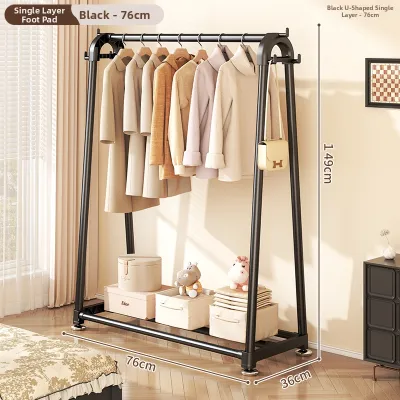
43 Lazada user ratings
received the goods but have nt fix yet. hope last long.
quality is decent, a bit shaky after installation.
👌Ease of Use: yea Space Efficiency: yes
Poor quality
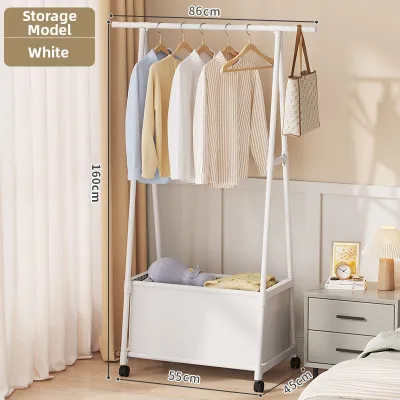
62 Lazada user ratings
price is good 🛠️Durability:metal fixture is solid and have weight to stablize the stand 🎨Design:like the design and colour. the wheels are ad…Read full reviewShow less
price is good 🛠️Durability:metal fixture is solid and have weight to stablize the stand 🎨Design:like the design and colour. the wheels are additional bonus. easy to maneuver
Good storage capacity, Nice and clean look, Nordic style design, Sturdy iron construction, Great for small spaces,
Paid 12sgd. Quality ok. Very slow delivery due to shipping from China. Took about 12days to arrive.
The quality of the clothes hanger is really good, it's sturdy and easy to put together.
It's a nice perch for the birds, but it might be a bit small for hanging clothes.
Prices are valid at publication and may change. Please refer to the product page for the latest price.
Beyond physical measurements, the choice of rack significantly impacts the visual volume of a room. Interior design principles suggest that keeping more of the floor line visible tricks the human brain into perceiving a room as larger and more open. A freestanding rack, even one with a minimalist metal frame, acts as a physical barrier that breaks up the floor plan and can make a tight hallway or bedroom feel cramped. A wall-mounted rail keeps the floor line continuous and unobstructed, which reduces visual clutter and helps maintain an airy, spacious feel in tight quarters.
What are the installation requirements and rental restrictions for wall-mounted racks?
Wall-mounted racks require secure anchoring into compatible wall materials like solid concrete or brick, making them highly dependent on structural integrity and landlord approval. Before purchasing a wall-mounted unit, you must identify what lies behind your plaster or paint. In many modern apartments, walls are a mix of solid concrete structural columns and hollow drywall partition walls. Mounting a heavy-duty clothes rail directly into drywall without locating the underlying wooden or metal studs is a recipe for structural failure, as standard drywall cannot support the downward pull of a fully loaded rack.

For solid concrete or brick walls, installation requires a hammer drill, masonry drill bits, and heavy-duty wall plugs. If you are renting your apartment, this level of installation often presents a significant hurdle. Most standard tenancy agreements strictly prohibit drilling deep holes into walls, or require you to professionally patch, sand, and repaint the damage before moving out. Failing to do so can result in deductions from your security deposit, making permanent wall installations a risky choice for short-term tenants.
No-drill alternatives, such as vertical tension poles or heavy-duty adhesive hanging systems, are sometimes marketed as renter-friendly compromises. While tension poles that wedge securely between the floor and ceiling can support moderate weight, they still occupy floor space and require regular checks to ensure the tension has not slipped. Adhesive hooks or lightweight hanging rails should be avoided for primary clothing storage; their weight limits are typically restricted to a few kilograms, which is easily exceeded by just two or three heavy winter coats or damp garments.
Which rack type offers better stability for heavy winter coats or wet laundry?
A properly installed wall-mounted rack anchored into solid concrete generally offers superior load-bearing stability for heavy items, whereas a freestanding rack’s stability depends entirely on its base design, center of gravity, and even weight distribution. When you hang heavy winter coats or damp, freshly washed laundry, you introduce significant weight that tests the structural limits of your storage solution. A wall-mounted rack distributes this weight horizontally across its mounting brackets, converting the downward pull into shear force against the wall anchors. If anchored correctly into solid masonry, a wall-mounted rail can easily support dozens of kilograms without bending or swaying.
Freestanding racks, however, are susceptible to tipping if they are top-heavy or unevenly loaded. Because their stability relies on a self-supporting base, a high center of gravity poses a constant risk. If you hang several heavy jackets on one end of a freestanding rack while leaving the other side empty, the unit can easily wobble or tip over. This risk increases with lightweight plastic or thin-walled aluminum frames, which lack the bottom-heavy ballast needed to anchor the unit to the floor.
To ensure safety and prevent damage to your garments or flooring, always check the manufacturer’s specified maximum load capacity before loading either type of rack. For freestanding models, look for designs with wide, stable bases—such as an A-frame or an H-frame—and check that the joints are secured with robust metal screws rather than push-fit plastic connectors. If you choose a freestanding model with caster wheels for mobility, ensure at least two of the wheels feature reliable locking mechanisms to prevent the rack from rolling or shifting under a heavy load.
How do freestanding and wall-mounted racks compare in daily accessibility and flexibility?
Freestanding racks provide unmatched flexibility because you can move, fold, or reposition them instantly, while wall-mounted racks offer a highly accessible, permanent storage solution that requires careful initial height planning. The mobility of a freestanding rack is a major advantage for dynamic households. If you need to clear space for guests, clean the floors, or catch the morning sunlight to dry damp clothes, you can simply wheel or carry the rack to another room. Many freestanding models are also designed to fold flat, allowing you to store them under a bed or inside a closet when they are not in use.
Wall-mounted racks are entirely static once installed. This lack of flexibility means you must get the installation height right the first time. Ergonomics play a crucial role here: if you mount the rail too high, reaching for daily items becomes a chore; if you mount it too low, longer garments like dresses or trench coats will drag on the floor or bunch up over furniture. You must also consider the reach of everyone in the household, ensuring the height is comfortable for daily use.
To bridge these functional gaps, manufacturers offer multi-functional designs for both categories. Many freestanding racks now feature integrated bottom shelves for shoes, side hooks for bags, or built-in storage baskets, turning them into complete entryway organizers. Conversely, wall-mounted options include innovative fold-down or retractable drying racks that hug the wall when empty and swing out only when you need to hang clothes, offering a smart compromise between fixed utility and space-saving flexibility.
Which clothes rack should you choose based on your apartment layout and lifestyle?
Choose a freestanding clothes rack if you rent, move frequently, or need a flexible organizer that can adapt to different rooms; select a wall-mounted rack if you have a permanent home, solid walls, and a critical need to keep your floor space completely unobstructed. Your final decision should align with your housing status, the physical constraints of your rooms, and how you manage your daily wardrobe.
If you are a tenant facing strict drilling bans, a freestanding rack is the most practical path forward. It bypasses the risk of losing your rental deposit and can easily travel with you to your next home. It is also the ideal choice for multi-purpose rooms where furniture layouts change frequently. However, if you own your apartment or have explicit permission to drill, a wall-mounted rack is highly effective for tight entryways, narrow hallways, or small bedrooms where floor space is too precious to give up.
Before making a purchase, take a few minutes to run through this practical pre-purchase checklist to avoid buyer’s remorse:
- Measure the available space: For freestanding racks, measure the floor footprint and ensure there is enough clearance for doorways, wardrobe doors, and walking paths. If you live in a high-rise apartment, verify that fully assembled or long-box flat-pack units can fit inside your building's lift and entry doors.
- Verify your wall type: Tap your walls or use a stud finder to determine if you are dealing with solid concrete, brick, or drywall. This will dictate whether a wall-mounted rack is structurally viable and what hardware you need to buy.
- Estimate your daily garment weight: Consider what you plan to hang. If you are organizing heavy winter coats or wet laundry, prioritize heavy-duty metal frames or professionally anchored wall rails. If you are only hanging lightweight shirts, a lighter frame will suffice.
- Budget for quality hardware: Many wall-mounted racks come with generic wall plugs that may not suit your specific wall type. Budget an extra S$10 to S$30 to purchase high-quality, specialized anchors from a local hardware store to ensure a secure, long-lasting installation.
Community discussion
Share your experience or ask a question. Comments are reviewed before publication.