
Choosing the right bag hanger rack depends on your living arrangements, available square footage, and whether you can drill into your walls. If you have limited floor space, live in a permanent home, or need to keep walkways clear in a compact entryway, a wall-mounted bag hanger rack is generally the most efficient choice. Conversely, if you rent your home, prefer the flexibility to rearrange your furniture, or have ample floor space near your entrance, a freestanding bag hanger rack offers immediate utility without the need for drilling. Balancing your home’s layout, wall construction, and the size of your bag collection will guide you to the most practical option.
Evaluating Your Space and Defining the Comparison
Before purchasing any entryway furniture, measuring your physical space is the most critical step. A freestanding bag hanger rack requires a dedicated footprint on your floor, typically demanding a circular or triangular clearance of 30 to 50 centimeters in diameter. If your entryway is narrow or serves as a primary high-traffic thoroughfare, a freestanding unit can easily become an obstacle, catching on clothing or restricting movement. You must also account for the swing radius of nearby doors to ensure that neither the door nor the rack sustains damage during daily use.
Wall-mounted racks, by contrast, preserve your floor space entirely, making them highly suitable for tight corridors and compact foyers. However, they require a dedicated, flat section of wall that is free from light switches, electrical outlets, and decorative trim. When planning for a wall-mounted option, you must measure not only the width of the rack itself but also the depth of the bags when hung. Bulky backpacks or wide tote bags protruding from a wall-mounted rack can narrow a hallway significantly, potentially violating local building safety guidelines for minimum walkway widths.
Products mentioned in this guide
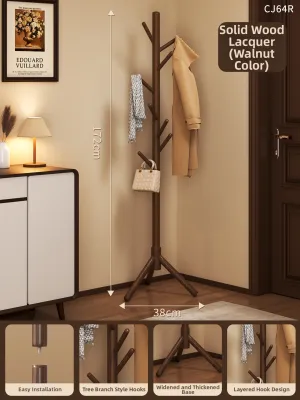
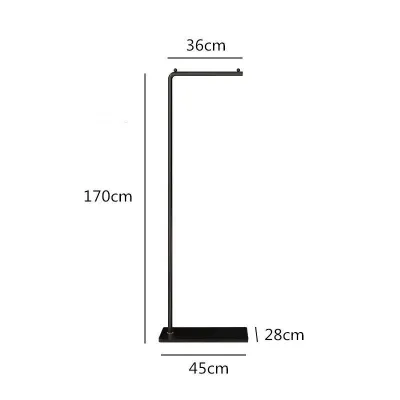
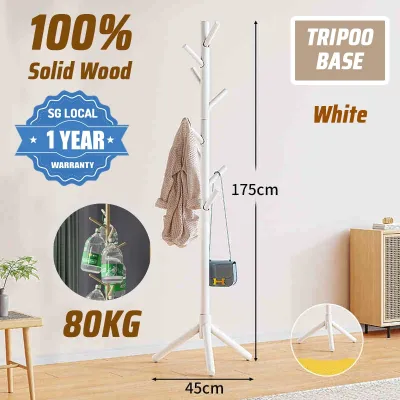
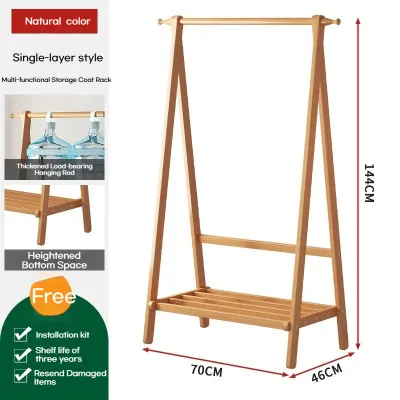
Prices are valid at publication and may change. Please refer to the product page for the latest price.
Walkway clearance is especially important in high-density housing layouts, such as apartments and condominiums, where entryways often double as transition zones. A standard residential corridor should ideally maintain a clear path of at least 90 centimeters to allow comfortable passage for individuals carrying groceries or moving small items. If a freestanding rack or a heavily loaded wall rack reduces this clearance, it can make the space feel cramped and inconvenient. Additionally, if you select a pre-assembled freestanding model, verify that your building’s lift doors, stairwells, and main entryway doors provide sufficient clearance for delivery.
Matching Storage Capacity to Your Bag Collection
Your choice of rack should directly reflect the types of bags you use daily. Large work totes, laptop backpacks, and heavy gym bags require robust hooks with wide spacing to prevent them from overlapping and creating a cluttered appearance. If the hooks are positioned too close together, retrieving one bag can easily cause adjacent bags to slip off. For smaller items like clutches, small shoulder bags, or reusable shopping bags, a rack with multiple smaller hooks or tiered vertical levels is highly efficient.

Many modern bag hanger racks incorporate multi-purpose features that maximize their utility in a compact home. For instance, in tropical climates where sudden downpours are common, a freestanding rack that includes an integrated umbrella stand with a drip tray is exceptionally practical. Other models may feature lower shelves for shoes, small drawers for keys, or dedicated hooks for hats and light jackets. Wall-mounted units often combine a row of hooks with a flat top shelf, providing a convenient landing pad for mail, sunglasses, and small decorative items.
When evaluating capacity, it is wise to plan for your current inventory while leaving room for future additions or guest use. Overloading any rack beyond its intended capacity leads to clutter and increases the risk of structural failure or tipping. If you have a large household with multiple bags per person, a single rack may not suffice. In such cases, combining a small wall-mounted rack for daily-use items with a dedicated wardrobe storage solution for seasonal or rarely used bags is often the most organized approach.
Stability, Weight Limits, and Installation Checks
Safety and structural integrity are paramount when installing or positioning storage furniture. For wall-mounted racks, the overall weight capacity is determined almost entirely by the wall material and the anchoring hardware used. Solid concrete or masonry walls, which are standard in many modern apartment constructions, offer excellent load-bearing capacity but require a hammer drill, masonry drill bits, and high-quality wall plugs for installation. If you are mounting onto drywall or partition walls, you must locate the wooden studs or use specialized hollow-wall anchors, as standard screws will quickly pull out under the weight of heavy bags.
Freestanding racks rely on a low center of gravity and a balanced base to remain stable. When browsing options, look for models with a heavy, weighted base made of solid wood, metal, or stone. To protect your flooring from scratches and scuffs, ensure the base is equipped with felt or rubber protection pads, particularly if you have polished tiles, vinyl, or hardwood floors. If you have young children or pets in the home, a freestanding rack presents a potential tip-over hazard; always check if the manufacturer includes anti-tip wall straps to secure the unit to the wall.
Property rules and tenancy agreements are another crucial factor in your decision. If you are renting your home, your lease agreement may strictly prohibit drilling holes into concrete walls or making permanent structural alterations. Violating these terms can result in security deposit deductions or the hassle of patching and painting before moving out. In such scenarios, a freestanding rack is the clear choice, as it requires zero installation and can be packed up easily when your lease ends.
Freestanding vs Wall-Mounted: Quick Comparison
To help streamline your decision, the table below outlines the key practical differences between these two storage styles. Use these points as a checklist against your specific home layout and household needs.
| Feature | Freestanding Bag Hanger Racks | Wall-Mounted Bag Hanger Racks |
|---|---|---|
| Floor Space Required | Requires a dedicated floor footprint (30 to 50 cm diameter) | Zero floor footprint; leaves walkways completely clear |
| Installation Effort | Minimal; typically requires basic manual assembly of parts | Moderate to high; requires drilling, leveling, and wall anchors |
| Mobility | High; easily moved between rooms or to a new home | Low; permanent placement unless uninstalled and patched |
| Weight Capacity | Limited by base stability; check manufacturer limits | Limited by wall type and anchor quality; check manual |
| Ideal Use Cases | Rental properties, spacious entryways, flexible layouts | Narrow hallways, permanent homes, minimalist spaces |
How to Make Your Final Decision
To finalize your choice, begin by assessing your housing status and wall construction. If you are renting and want to avoid the hassle of repairing wall damage, or if your walls are made of material that is difficult to drill into, a freestanding rack is the most practical path forward. It offers immediate out-of-the-box utility and can be repositioned whenever you decide to rearrange your entryway or move to a new property.
If floor space is your primary constraint, a wall-mounted rack is almost always the superior layout solution. It keeps your entryway looking open, airy, and organized while allowing you to sweep or vacuum the floor underneath without moving heavy furniture. This option is ideal for homeowners who want a permanent, streamlined storage solution that integrates seamlessly into their interior design.
Before making any purchase, always verify the manufacturer’s specifications for weight limits and dimensions. If you own exceptionally heavy designer bags or leather backpacks, weigh them using a simple luggage scale to ensure your chosen rack can support the load. By taking precise measurements of your entryway and understanding your wall type, you can confidently select a bag hanger rack that keeps your home organized and your walkways safe.
Frequently Asked Questions (FAQ)
Can I install a wall-mounted rack in a rented apartment?
Whether you can install a wall-mounted rack depends entirely on the terms of your tenancy agreement. Many landlords permit minor drilling provided that you professionally patch, sand, and repaint the holes to match the original wall color before handing back the keys. Always obtain written permission from your landlord or property manager before starting any drilling work to avoid disputes over your security deposit.
If drilling is strictly prohibited, you might consider light-duty adhesive hooks as a temporary alternative, though they have very strict weight limits and may peel paint off the wall upon removal. For a safer, damage-free alternative that still saves floor space, look for over-the-door bag organizers that hang over standard room doors without requiring screws or adhesives.
How do I prevent a freestanding rack from tipping over?
Preventing a freestanding rack from tipping requires careful weight distribution and mindful daily use. Always distribute the weight of your bags evenly around the entire circumference of the rack rather than hanging all your items on one side. If one side becomes significantly heavier than the others, the center of gravity shifts, making the unit highly unstable.
Additionally, place your heaviest bags on the lowest hooks to keep the center of gravity as close to the floor as possible. Avoid hanging heavy backpacks by their top loops on the very highest hooks. Finally, check the product manual to see if the manufacturer provides or recommends an anti-tip wall strap, which anchors the top of the freestanding post to the wall for added safety.
Community discussion
Share your experience or ask a question. Comments are reviewed before publication.