
Choosing the right firmness for a foldable sleeping mat is critical to waking up without back stiffness. Because these mats sit directly on the floor, their support dynamics differ fundamentally from standard bed mattresses. The ideal firmness depends on your primary sleeping position, which dictates where your body needs pressure relief and where it requires firm resistance to maintain spinal alignment. By matching the mat’s density and thickness to your sleep style, you can prevent joint pain and ensure a restful night.
Understanding Firmness and the "Bottoming Out" Risk
Foldable sleeping mats are engineered for portability, typically consisting of three or four hinged foam panels that fold into a compact block. This multi-panel construction introduces unique structural challenges. Because these mats are significantly thinner than standard beds—usually ranging from 5 to 15 centimeters—they have a small margin of error when supporting body weight. When you lie down, the mattress must compress to cushion your joints while retaining enough upward resistance to keep your body from pressing all the way through to the hard floor.
This failure to support weight is known as “bottoming out.” When a foldable sleeping mat is too soft or lacks sufficient density, the heaviest parts of your body—specifically your hips and shoulders—sink completely through the foam until they make contact with the unyielding floor. This creates severe pressure points, disrupts spinal alignment, and leads to morning aches. Unlike thick traditional mattresses that rely on deep spring systems, a foldable sleeping mat relies almost entirely on its core material density to provide structural support. A high-density foam mat resists bottoming out even at a modest thickness, whereas a low-density foam mat of the same thickness will quickly collapse under load.
Products mentioned in this guide
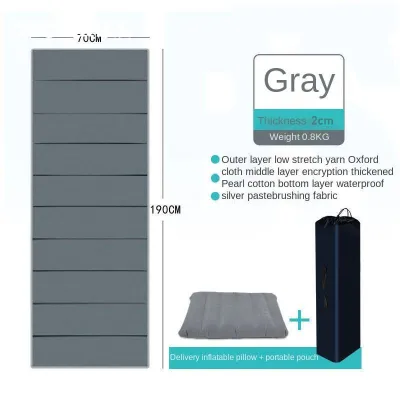
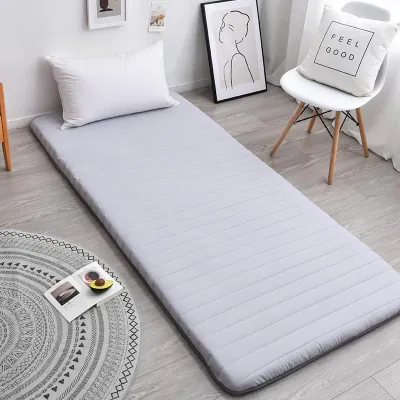
Prices are valid at publication and may change. Please refer to the product page for the latest price.
Diagnosing Your Sleep Position and Spinal Needs
Before selecting a firmness level, you must accurately diagnose your sleep style and understand how your body interacts with a sleeping surface. Waking up with stiffness in specific areas is often the clearest indicator of how you actually spend the night. Pay close attention to your posture during the first few moments after waking up, as this reveals the biomechanical stress your spine endured while you slept.

Back and Stomach Sleepers
For those who sleep on their back or stomach, the primary goal is to prevent the midsection and pelvis from sinking too deeply into the mat. The human body concentrates a significant portion of its weight in the pelvic region. If a foldable sleeping mat is too soft, the hips sink, causing the lower spine to bow downward. For back sleepers, this hyperextends the lumbar region, leading to dull aches across the lower back. For stomach sleepers, a soft mat forces the spine into an exaggerated swayback position, placing intense pressure on the lumbar vertebrae and neck. To maintain a neutral, straight spine, back and stomach sleepers require a surface that offers robust upward resistance, keeping the pelvis level with the shoulders.
Side Sleepers
Side sleepers face the opposite challenge, requiring a surface that actively accommodates the prominent curves of the shoulders and hips. When you lie on your side, your body weight is concentrated over a much smaller surface area, creating high-pressure zones at the shoulder joint and the pelvic bone. If the foldable sleeping mat is too firm, these joints cannot sink into the material, forcing the spine to curve sideways. This lack of contouring causes spinal misalignment and restricts blood circulation, leading to shoulder numbness and frequent tossing and turning. Side sleepers need a mat that allows the shoulders and hips to sink just enough to keep the spine horizontally straight from the neck to the tailbone.
Combination Sleepers
If you frequently rotate between your back, side, and stomach throughout the night, you are a combination sleeper. Your primary need is a balanced, responsive surface that facilitates easy movement. A mat that is too soft will create a deep pocket around your body, trapping you in one position and requiring significant physical effort to roll over, which can disrupt your sleep cycle. Conversely, a mat that is too firm will cause discomfort whenever you transition onto your side. Combination sleepers require a medium-firm surface with excellent elasticity, allowing the body to glide smoothly from one posture to another without sacrificing support for any single position.
Matching Firmness Levels to Your Sleep Profile
Once you have identified your sleep position, you can map it to a specific firmness profile, keeping in mind that your body weight acts as a critical modifier. Foldable mats are generally categorized into soft, medium, medium-firm, and firm profiles. Selecting the correct category requires balancing your posture needs with the physical force your body exerts on the foam.
For back and stomach sleepers, a medium-firm to firm foldable sleeping mat is recommended. This range provides the necessary structural integrity to support the pelvis and prevent lumbar sagging. However, if you are a stomach sleeper under 60 kilograms, a true medium mat may suffice. Conversely, back and stomach sleepers weighing over 80 kilograms should opt for a strictly firm mat to guarantee that the spine remains in a neutral plane.
Side sleepers should target a medium to medium-soft profile to relieve pressure on the shoulder and hip joints. However, because foldable mats are thin, a medium-soft mat with low density can cause your hips to bottom out against the floor. Look for mats with a dual-layer design: a softer, contouring comfort layer on top, backed by a high-density support core underneath.
Your body weight is the ultimate deciding factor. Heavier individuals (above 85 kilograms) compress foam deeply and must select firmer, higher-density mats across all positions to avoid bottoming out. Lighter individuals (under 55 kilograms) do not compress foam easily and will find firm mats unyielding; they should choose softer profiles to achieve adequate contouring.
When evaluating these options, check the manufacturer’s foam density specifications, measured in kilograms per cubic meter (kg/m³), rather than relying on generic marketing terms. High-density foam (typically 30 kg/m³ or higher) offers consistent, long-lasting support and resists sagging. Low-density foams (under 24 kg/m³) soften rapidly, losing their rated firmness and failing to protect your spine.
Practical Checks Before You Buy
Selecting the right firmness involves more than just reading a product description; you must carefully analyze how the mat’s physical dimensions and construction details interact with your sleeping environment. Before committing to a foldable sleeping mat, perform a few practical checks to ensure the product will perform well in your home.
First, assess the relationship between thickness and density. Do not assume that a thicker mat is automatically more supportive. A 5-centimeter mat made from high-density polyurethane foam can offer vastly superior spinal support and prevent bottoming out much better than a cheap, 10-centimeter low-density polyester fiber mat. If space and storage are limited, prioritizing high density allows you to choose a thinner, more compact mat without sacrificing sleep quality.
Next, inspect the design of the folding mechanism and the panel joints. Foldable mats rely on fabric hinges to connect the foam panels. When the mat is fully unfolded, these joints can sometimes create gaps or uneven tension points. Lie down on the mat or check user feedback to ensure that your hips or shoulders do not rest directly over a joint, as this can cause the foam to spread apart, leading to localized bottoming out and discomfort. Seamless tri-fold designs with tight-fitting fabric covers are generally the most reliable for maintaining a continuous sleeping surface.
Additionally, verify the retailer’s return policy or trial period. Because firmness is highly subjective and depends on your unique body shape, a mat that feels perfect in a showroom or looks promising online may feel entirely different after a full night of sleep. If physical testing is not possible, prioritize brands that offer a risk-free trial period or a flexible exchange policy.
Finally, consider your local environment. In Singapore’s hot and humid tropical climate, sleeping close to the floor can trap body heat and moisture, leading to discomfort and mold growth. Check the care labels to ensure the outer cover is removable and machine-washable. Look for mats with breathable knitted covers or bamboo-derived fabrics, and ensure the foam core features open-cell structures or ventilation channels. Regularly propping the mat upright in a well-ventilated area or under indirect sunlight will preserve its structural integrity and prevent moisture from degrading the foam’s firmness over time.
Adjusting Your Current Mat for Better Support
If you already own a foldable sleeping mat and find that its firmness level is causing discomfort, you do not necessarily have to replace it immediately. There are several low-risk, practical adjustments you can make to alter its feel and improve your sleep quality.
If your mat is too firm and is causing shoulder or hip pain for side sleeping, you can add a plush mattress topper, a thick quilted mattress protector, or a folded cotton duvet on top of the mat. This adds a localized comfort layer that allows your joints to sink gently before they meet the firm support of the mat underneath. This is an excellent, cost-effective way to convert a firm guest mat into a comfortable side-sleeping surface.
If your mat is slightly too soft and you are experiencing mild bottoming out, the surface beneath the mat can make a substantial difference. Placing the mat directly on cold, hard ceramic tiles can make any bottoming out feel incredibly harsh. Instead, try placing the mat on top of a low-pile area rug, a carpeted floor, or a set of interlocking EVA foam play tiles. This secondary layer acts as an extra shock absorber, dampening the impact of your weight and providing a subtle buffer that prevents your joints from hitting the solid floor.
However, you must recognize the limits of these adjustments. If your foldable sleeping mat exhibits visible permanent sagging in the center panels, if the foam has begun to crumble, or if the fabric hinges have torn apart, no amount of layering will restore proper spinal support. If you continue to wake up with persistent joint stiffness or lower back pain despite making these adjustments, it is a clear signal to stop using the mat and invest in a high-density replacement to protect your long-term spinal health.
Frequently Asked Questions (FAQ)
Can I use a foldable sleeping mat every night instead of a regular mattress?
A foldable sleeping mat is not recommended as a permanent, everyday replacement for a standard bed mattress. While high-density mats offer excellent temporary support, their thin profiles and multi-panel joint systems are not designed to withstand continuous, long-term daily wear without accelerating spinal fatigue. Additionally, placing a mattress directly on the floor every night restricts airflow beneath the bed, creating a breeding ground for dust mites, moisture buildup, and mold, especially in humid climates. Save foldable mats for overnight guests, temporary living arrangements, or afternoon naps to preserve both your spinal health and the mat’s lifespan.
Does a thicker foldable mat always mean it is softer?
No, thickness and softness are entirely independent physical properties. A mat’s thickness refers to its physical height, while its firmness is determined by the density and chemical formulation of the foam. For example, a 10-centimeter mat made from low-density foam can feel incredibly soft and compress completely under your weight, leading to bottoming out. Conversely, a 5-centimeter mat made from high-density orthopedic foam can feel exceptionally firm and rigid, providing uncompromising support without compressing much at all. Always evaluate density (kg/m³) alongside thickness to understand how a mat will actually feel.
Community discussion
Share your experience or ask a question. Comments are reviewed before publication.