
Maximizing storage in a compact HDB bedroom requires a smart approach to spatial planning. With standard bedroom footprints becoming increasingly streamlined, traditional bulky wardrobes and fixed shelving units often leave awkward, underutilized gaps. Foldable narrow shelves offer an elegant, non-permanent solution to reclaim these tight spaces—such as the sliver of floor between your bed and the wardrobe, or the unused corner behind a bedroom door. Because these units do not require drilling or permanent wall mounting, they are highly versatile, making them particularly suitable for tenants, temporary room setups, or homeowners who prefer to keep their layout options open.
When searching for a narrow shelf, the goal is to find a unit that balances a minimal footprint with reliable vertical capacity. Unlike standard furniture, foldable designs must be evaluated not just for their static dimensions, but also for their structural integrity at the pivot points and their ease of deployment. By focusing on precise spatial measurements, mechanical stability, and material suitability for Singapore’s humid climate, you can easily identify a high-performing storage solution that keeps your bedroom organized without cluttering your living space.
Defining Your Space: Measurements and Clearance Checks
Before browsing online marketplaces, taking precise physical measurements of your targeted bedroom gap is the most critical step. A narrow shelf can range anywhere from 15 centimeters to 40 centimeters in width, and even a minor calculation error can render a new purchase unusable. Begin by measuring the width of the gap at three distinct heights: near the floor, at the midpoint, and near the top. HDB walls, particularly in older flats or near structural columns, can have slight plastering variances or alignment deviations that make a gap narrower at the top than at the bottom.
Products mentioned in this guide
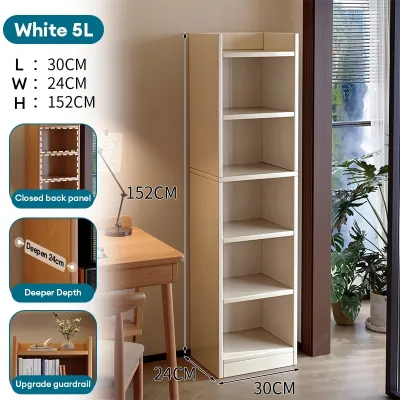
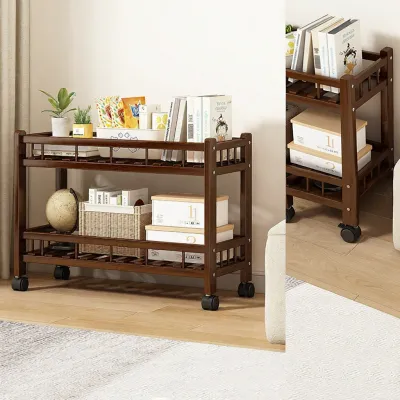
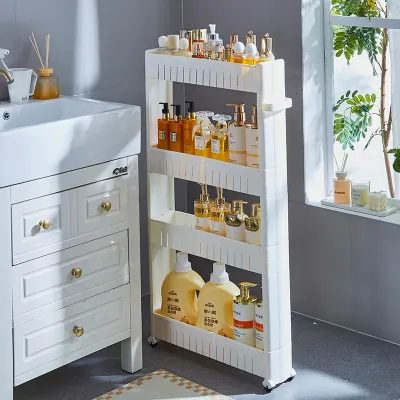
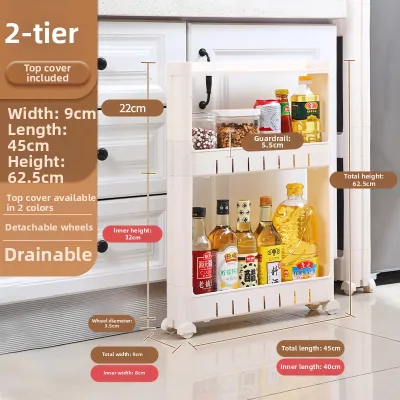
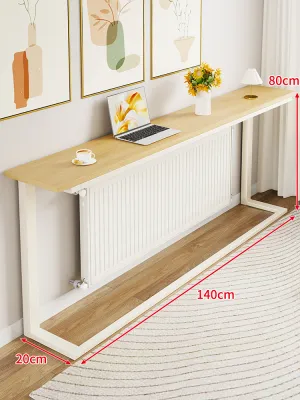
Prices are valid at publication and may change. Please refer to the product page for the latest price.
Next, account for hidden physical obstructions that standard tape measurements might overlook. Floor skirting boards, which typically project 1.5 to 2 centimeters from the wall, can prevent a freestanding shelf from sitting completely flush. If your gap is tight, a skirting board can easily reduce your usable width. Additionally, locate any low-lying power outlets, light switches, or internet ports. Placing a shelf directly in front of an active outlet can pinch electrical cords, creating safety hazards and forcing the shelf forward into walkways.
Depth and vertical clearance are equally vital. Measure how far the shelf can protrude before it interferes with the swing of wardrobe doors, bedroom doors, or window panels. For vertical clearance, check for wall-mounted air-conditioning units, curtains, or decorative wall moldings. Finally, consider the operational clearance. Foldable shelves require physical space to expand and lock into place. If you plan to fold the unit away when guests visit or during routine cleaning, ensure you have enough floor space nearby to comfortably perform the folding mechanism without hitting other furniture.
Lastly, estimate your load requirements before committing to a specific shelf width. A very narrow shelf (under 20 centimeters) naturally has a smaller base, which inherently reduces its stability under heavy loads. If you intend to store lightweight items like skincare bottles, folded clothing, or tissue boxes, an ultra-slim profile is perfectly adequate. However, if you plan to stack heavier items like humidifiers, books, or ceramic organizers, you will need to prioritize a slightly wider base or a design that allows for secure, non-permanent anchoring.
Evaluating Foldable Mechanisms and Structural Stability
The mechanical design of a foldable shelf determines both its daily usability and its long-term safety. Unlike fixed shelving, foldable units rely on joints, hinges, and pivot points to maintain their shape under load. The most common design is the hinged-panel mechanism, where the side frames fold inward and the individual shelves swing down to rest on support brackets. This design is highly popular because it can be deployed in seconds without tools. However, you must inspect the quality of the hinges; loose rivets or thin metal brackets can warp over time, causing the shelves to tilt.

Another prevalent option is the collapsible X-frame, or scissor-style shelf. This structure distributes weight across diagonal support bars, offering excellent lateral stability. While X-frames are highly portable and fold down to an incredibly thin profile, they often have more moving parts, which increases the risk of joint wear. For ultra-tight vertical spaces, tension-based vertical poles with folding trays offer an alternative. These units use a spring-loaded internal mechanism to wedge a single pole between the floor and ceiling, with individual shelves that fold up or swing out of the way. While they save maximum floor space, they require highly secure contact points to prevent slipping.
To ensure safety in a busy bedroom, prioritize units equipped with dedicated locking mechanisms or safety latches. A high-quality foldable shelf should feature a physical lock—such as a tension buckle, a drop-down pin, or a snap-on bracket—that prevents the frame from accidentally folding if it is bumped or nudged. This is especially important for narrow units, which are naturally more prone to lateral movement.
Stability also depends heavily on how the shelf contacts the floor. Look for units that feature adjustable leveling feet or non-slip rubber pads. HDB floors, whether finished with vinyl, laminate, or ceramic tiles, can have minor level variations. Adjustable feet allow you to compensate for these imperfections, eliminating wobbles that could cause items to slide off. If the shelf includes caster wheels for mobility, ensure that at least two of the wheels feature robust, independent locking brakes to keep the unit firmly in place during daily use.
Comparing Materials and Finishes for Bedroom Environments
Selecting the right material for your foldable shelf involves balancing structural strength, aesthetic appeal, and resistance to environmental factors. In Singapore’s tropical climate, indoor humidity levels can fluctuate significantly, particularly in bedrooms that alternate between air-conditioning and natural ventilation. This constant shift in moisture levels makes material selection and surface finishes critical to the longevity of your furniture.
Powder-coated carbon steel or iron is highly recommended for the main frame of narrow shelves. Metal frames provide the necessary rigidity to prevent bowing under load while keeping the overall profile slim. However, the quality of the finish is paramount. Ensure the metal is fully powder-coated or treated with a rust-resistant paint. Uncoated joints, scratches, or exposed metal edges can quickly develop rust when exposed to humid air or damp cleaning cloths.
If you prefer the warmth of wood, you will frequently encounter engineered woods like Medium-Density Fiberboard (MDF) or particle board in online listings. While budget-friendly, these materials are highly sensitive to moisture. Check that all edges are completely sealed with thick PVC edge banding. Unsealed edges can absorb ambient moisture or water from floor mopping, causing the wood fibers to swell, warp, and eventually crumble. For wet areas or high-humidity corners near windows, high-grade plastics like ABS or polypropylene (PP) are excellent alternatives. They are completely impervious to water and rust, though they should be reserved for lighter storage needs as they tend to flex under heavy weight.
In addition to material durability, pay close attention to the physical finishing of the shelf. In a compact HDB bedroom, tight walkways mean you are highly likely to brush past or bump into the shelf. Inspect product photos and specifications for rounded corners, smooth edge profiles, and recessed assembly screws. Sharp metal edges or rough wooden corners can snag delicate bedding, damage clothing, or cause minor scratches to skin. Finally, choose materials that align with simple maintenance routines; a quick wipe with a dry or slightly damp microfiber cloth should be all that is required to keep the unit dust-free.
Building Your Shortlist: Pre-Purchase Verification Checklist
With thousands of space-saving organizers available on local ecommerce platforms, filtering out low-quality products requires a systematic approach. Before adding a foldable narrow shelf to your digital cart, use this pre-purchase verification checklist to ensure the product meets your expectations and room constraints:
- Verify Assembly Tolerances: Always allow a safety margin of 1 to 2 centimeters when comparing the manufacturer's stated dimensions with your measured gap. Factory measurements can sometimes exclude protruding screw heads, hinge joints, or the flare of the base feet.
- Analyze User Reviews Critically: Do not rely solely on star ratings. Filter reviews to look for feedback from local buyers who mention "wobble," "shaky," "stiff hinges," or "difficult assembly." Pay close attention to user-uploaded photos, which offer a realistic view of the product's finish, color, and scale in actual home environments.
- Check the Return and Refund Policy: Because narrow shelves must fit precise dimensions to be useful, ensure the retailer offers a straightforward return policy in case the unit does not fit your space or arrives with manufacturing defects.
- Confirm Assembly Requirements: Clarify whether the shelf arrives fully assembled or requires manual setup. Many high-quality foldable shelves are designed to unfold straight out of the box, requiring you only to screw on the optional caster wheels. If assembly is required, verify that the necessary hex keys or tools are included in the package.
- Review Mobility Features: If you plan to move the shelf frequently to clean behind it, prioritize models with high-quality caster wheels. Ensure the wheels are made of non-marking materials like polyurethane (PU) or rubber to avoid scratching sensitive vinyl or laminate bedroom flooring.
Frequently Asked Questions (FAQ)
Can foldable narrow shelves safely hold heavy books?
Foldable narrow shelves can hold books, but they are generally not designed to support dense, wall-to-wall book collections. Because foldable frames rely on moving joints and hinges rather than solid, welded, or heavily bolted connections, their overall weight capacity is lower than that of fixed, wall-anchored bookshelves.
To use a narrow folding shelf for books safely, always check the manufacturer’s specified maximum load limit per tier, which typically ranges from 5 to 15 kilograms depending on the material. Always place your heaviest books on the bottom shelf to lower the unit’s center of gravity. This simple distribution of weight significantly reduces the risk of the shelf tipping forward or wobbling when you retrieve a book.
Are tension-mounted foldable shelves safe for HDB walls and ceilings?
Tension-mounted shelves can be highly safe and effective, but their stability depends entirely on the surfaces they are pressed against. These systems rely on continuous vertical friction to stay upright, meaning they must only be installed between solid, structurally sound surfaces.
In HDB flats, you must avoid installing tension poles against false ceilings, plasterboard partitions, or L-box lighting features commonly added during renovations. The upward pressure exerted by a secure tension pole can easily crack, warp, or puncture these hollow structures. Only install tension-mounted shelves between solid concrete floors (or sturdy tiles) and structural concrete ceilings. Additionally, check the tension mechanism every few months, as changes in indoor temperature and humidity can cause materials to expand or contract slightly, potentially loosening the grip over time.

Community discussion
Share your experience or ask a question. Comments are reviewed before publication.