
Choosing the right king koil super single mattress firmness is one of the most critical decisions you can make for your sleep health. Sleep is an active period of physical recovery during which your spine, muscles, and ligaments must remain in an ergonomically neutral position. When your mattress fails to support your body correctly, your muscles are forced to remain tense throughout the night to prevent spinal misalignment, leading to chronic morning aches and daytime fatigue.
To make an informed decision, it is essential to understand that mattress firmness is a subjective measure of comfort, whereas support is an objective structural property. The firmness of a mattress is determined primarily by its top comfort layers, which are typically composed of materials like latex, memory foam, or fiber quilting. These layers dictate the initial sensation of softness or rigidity when you first lie down. Structural support, on the other hand, is provided by the mattress core, which usually consists of pocketed spring coils or heavy-duty support foam. A high-quality mattress must offer a balanced combination of both: a comfort layer that relieves pressure points and a core that keeps your skeleton properly aligned.
If you frequently wake up with morning stiffness, joint pain, or a dull ache in your lower back, your body is sending a clear signal that your current mattress lacks the appropriate ergonomic alignment. By assessing these physical symptoms as a baseline, you can begin the process of diagnosing your ideal firmness level. Rather than relying on complex mechanical measurements, the mattress industry categorizes comfort levels using standard terms: Soft, Medium-Soft, Medium, Medium-Firm, Firm, and Extra-Firm. Understanding where you fall on this spectrum is the first step toward achieving restorative sleep.
Products mentioned in this guide
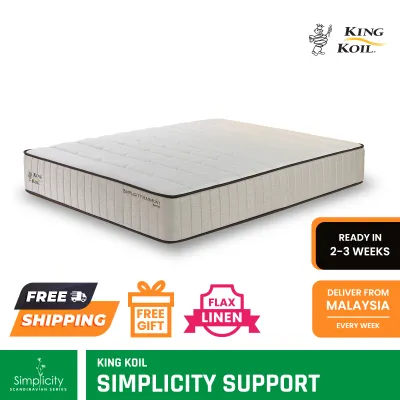
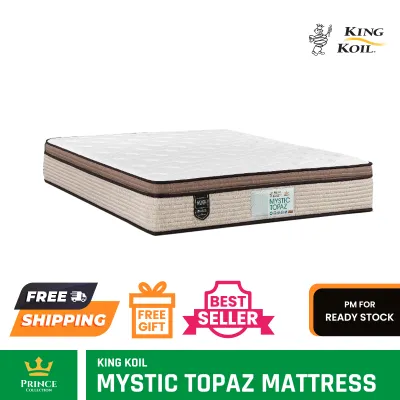
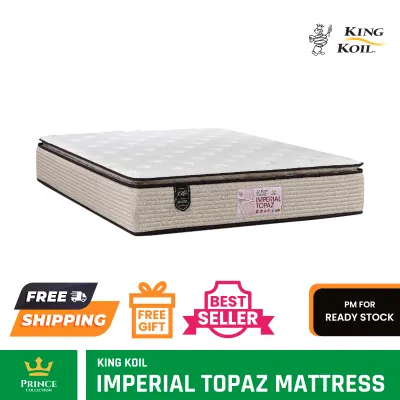
![[ASTAR] King Koil Kids Spinal Guard 6 Inch Innerspring Mattress Children in Single / Super Single 6inch [SG STOCKS]](https://img.lazcdn.com/g/p/dc8e5551ec87a7ffacc3ad1af9533260.jpg_400x400q80.jpg_.webp)
Prices are valid at publication and may change. Please refer to the product page for the latest price.
Diagnosing Your Ideal Firmness by Sleeping Position
Your dominant sleeping posture is the primary factor that dictates how your body weight is distributed across the mattress surface. During sleep, gravity pulls your body downward, and if the mattress does not provide targeted resistance, your spine will sag or arch unnaturally. To prevent joint strain and back pain, you must select a firmness level that matches the specific mechanical demands of your preferred sleep position.
Side Sleepers
Side sleeping is the most common posture, but it places highly concentrated pressure on the narrowest and most prominent parts of your skeletal frame: the shoulders and the hips. Because your body weight is focused on these specific areas, side sleepers generally require a Medium-Soft to Medium firmness level to remain comfortable.
When you lie on your side, a slightly softer comfort layer allows your shoulder and hip to sink into the mattress just enough to keep your spine in a straight, horizontal line. If the mattress is too firm, it behaves like a rigid board, pushing back against your joints and forcing your spine to curve upward. This lack of pressure relief restricts blood circulation, leading to shoulder numbness, hip soreness, and frequent tossing and turning throughout the night.
Back Sleepers
Back sleepers require a precise balance of contouring comfort and firm underlying support. For those who sleep primarily on their backs, a Medium to Medium-Firm mattress is highly recommended to maintain the natural, healthy curvature of the spine.
The primary ergonomic hazard for back sleepers is “hammocking,” which occurs when the mattress is too soft. When the heavier pelvic region sinks too deeply into the bed, the lower spine is pulled downward, flattening the lumbar curve and straining the surrounding muscles. Conversely, a mattress that is too firm will leave an empty gap beneath your lower back, leaving the lumbar spine completely unsupported. A Medium to Medium-Firm mattress solves this by contouring to the lumbar gap while providing enough resistance to keep the pelvis level.
Stomach Sleepers
Stomach sleeping is widely considered the most challenging posture for spinal health because gravity naturally pulls the midsection downward. To prevent severe lower back hyperextension, stomach sleepers must opt for a Firm to Extra-Firm mattress.
If a stomach sleeper uses a soft mattress, their pelvis will sink deeply into the comfort layers while their head and feet remain elevated. This posture forces the lower back into an unnatural, exaggerated arch, placing immense pressure on the lumbar vertebrae and facet joints. By choosing a firm surface, you ensure that your pelvis remains on the same horizontal plane as your shoulders and chest, keeping your spine in a neutral position and reducing the risk of waking up with acute lower back strain.
Combination Sleepers
If you frequently change positions throughout the night, transitioning from your back to your side or stomach, you are a combination sleeper. This dynamic movement requires a versatile compromise, making a Medium to Medium-Firm mattress the most practical choice.
A medium-range mattress offers a universal feel that accommodates multiple positions. It provides enough surface cushioning to protect your shoulders when you roll onto your side, yet offers sufficient structural resistance to support your lower back when you turn onto your back. Furthermore, a Medium to Medium-Firm mattress prevents the feeling of being “stuck” in the bed, allowing you to transition between positions effortlessly without disrupting your sleep cycle.
Adjusting for Body Weight and Physical Build
While your sleeping position provides the foundational blueprint for your mattress choice, your physical build and body weight act as crucial modifiers. The terms “Soft,” “Medium,” and “Firm” are relative; how a mattress actually feels to you depends entirely on the amount of force your body exerts on its comfort and support layers.

Lighter individuals, typically weighing under 60 kg, exert relatively little gravitational force on a mattress. On a standard “Firm” mattress, a lighter sleeper will not compress the comfort layers enough to activate them, making the bed feel exceptionally hard and offering virtually no pressure relief. Consequently, lighter sleepers often need to select a mattress that is one step softer than the standard recommendation for their sleep position to achieve the desired level of comfort.
Conversely, heavier individuals, typically weighing over 90 kg, compress comfort layers deeply. A mattress labeled “Medium” may feel excessively soft to a heavier individual, causing them to sink straight through the comfort layers and bottom out against the rigid support core. To maintain proper spinal alignment, heavier sleepers generally require a firmer mattress or one constructed with high-density transition foams and reinforced pocketed coils.
Average weight individuals, falling between 60 kg and 90 kg, will find that mattresses perform very close to their designated manufacturer firmness ratings. When choosing your mattress, always cross-reference your weight category with your dominant sleep position to fine-tune your selection. Additionally, it is highly recommended to check the manufacturer’s specified weight capacity and structural guidelines for any specific King Koil model to ensure long-term durability and support.
Navigating King Koil Super Single Specifications and Sizing
When shopping for a king koil super single mattress, translating your theoretical firmness needs into a physical purchase requires a clear understanding of product specifications and local market standards.
First, you must verify the physical dimensions of the mattress to ensure a proper fit. In Singapore, a standard super single mattress measures exactly 107 cm in width and 190 cm in length. This size is highly advantageous, offering an additional 16 cm of width compared to a standard single mattress (91 cm x 190 cm). It is an ideal option for single adults who require more room to move, as well as for compact bedrooms where a queen-size bed would restrict floor space or block wardrobe doors. Before finalizing your purchase, carefully measure your bed frame’s internal dimensions, and ensure your home’s doorways and lift access can accommodate the mattress during delivery.
Next, you must learn to decode King Koil’s proprietary comfort labels. Manufacturers rarely use simple numbers to describe firmness; instead, they use terms that map directly to the standard scale:
- Plush or Ultra Plush: These models correspond to the Soft to Medium-Soft range, featuring thick, contouring comfort layers designed for maximum pressure relief.
- Cushion Firm or Luxury Firm: These models represent the Medium to Medium-Firm category, offering a balanced, versatile feel suitable for back and combination sleepers.
- Orthopedic, Chiro, or Extra Firm: These models are engineered to sit firmly in the Firm to Extra-Firm range, prioritizing skeletal alignment and pelvic support.
Because Singapore’s tropical climate is characterized by high heat and humidity, the materials inside these comfort layers deserve close attention. Deeply contouring mattresses can trap body heat, leading to uncomfortable night sweats. To stay cool, check if your preferred King Koil model incorporates breathable materials such as open-cell natural latex, gel-infused memory foam, or specialized cooling ticking fabrics that promote continuous airflow.
Finally, because mattress comfort is deeply personal, you should always verify the retailer’s specific warranty and sleep trial conditions. A brief test in a showroom cannot replicate the weeks of continuous sleep required for your muscles to adjust to a new surface. An in-home sleep trial serves as the ultimate diagnostic tool, allowing you to return or exchange the mattress if the firmness level does not deliver the expected ergonomic relief.
Signs Your Current Mattress Firmness Is Wrong
If you are undecided about whether to replace your mattress, your body’s physical symptoms can help validate your decision. Waking up with persistent discomfort is a clear sign of an ergonomic mismatch.
- Shoulder or Hip Pain: If you feel sharp soreness or a bruised sensation on your outer shoulder or hip, your mattress is too firm. The surface is failing to yield to your body's natural curves, forcing these joints to bear concentrated pressure.
- Lower Back Aching: A dull, persistent ache in your lower back upon waking indicates that your mattress is too soft or has lost its structural support. Your pelvis is sinking too deeply, placing your lumbar spine under constant tension.
- Numbness and Tingling: Waking up with a limb that has "fallen asleep" suggests that the comfort layer is too thin or rigid, compressing superficial nerves and restricting blood flow.
If these symptoms persist despite using an ergonomic pillow, your mattress is likely the primary cause. While a high-quality mattress topper can serve as a temporary solution to soften an overly firm bed, it cannot fix a mattress that is sagging or too soft. In those cases, a full mattress replacement is the only reliable way to restore proper sleep ergonomics.
Frequently Asked Questions (FAQ)
Can I change the firmness of my King Koil mattress after buying it?
While you cannot alter the internal support core of a mattress after purchase, you can adjust its surface feel. If your mattress is too firm, adding a high-quality mattress topper made of memory foam or latex can provide a softer comfort layer, reducing pressure points. However, a topper cannot fix a mattress that is sagging or too soft, as the topper will simply sink into the existing depressions.
Is a super single mattress wide enough for a single adult who moves a lot?
Yes, a super single mattress is highly suitable for active sleepers. Measuring 107 cm wide, it provides 16 cm of additional lateral space compared to a standard single mattress. This extra width gives combination sleepers ample room to transition between side, back, and stomach positions without feeling restricted or rolling near the edge, thereby supporting healthy sleep ergonomics.
Community discussion
Share your experience or ask a question. Comments are reviewed before publication.