
Finding the right air mattress firmness is the key to waking up refreshed rather than stiff and sore. Unlike traditional beds with fixed comfort levels, an air mattress offers the unique advantage of adjustable inflation. However, finding your personal sweet spot requires balancing your primary sleeping position with your body weight.
When these two factors are aligned, the mattress supports your spine’s natural curve while cushioning your pressure points. If the mattress is too firm, your shoulders and hips will bear the brunt of the impact; if it is too soft, your midsection will sink, leading to morning backaches.
Quick Guide: The Basics of Air Mattress Firmness
To find the right balance, it helps to understand how sleep posture and body weight interact on an air-supported surface. Air mattresses rely on internal air chambers—often supported by coils or beams—to distribute your weight. Because air is highly displaceable, concentrated pressure in one area forces air to move to another, changing the overall support profile.
Products mentioned in this guide
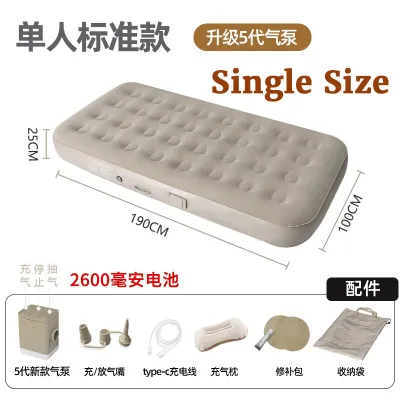
![[SG SELLER] INTEX Inflatable Airbed / Mattress for Single or Double Foldable](https://img.lazcdn.com/g/p/af47126cfe6c007748f7592a37ed90e3.png_400x400q80.png_.webp)

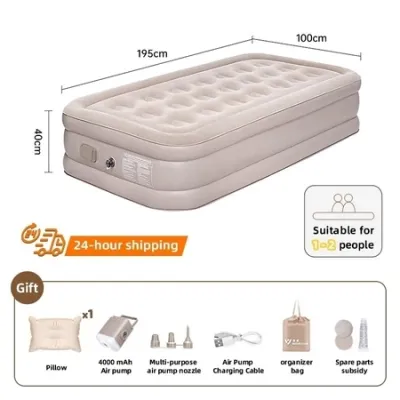
![[SG Stock] Inflatable Air Bed Mattress Built In Integrated Cordless Pump Thick Camping Super Single Queen](https://img.lazcdn.com/g/p/a2417ca73a6fa5bee00bede7cb5250c7.jpg_400x400q80.jpg_.webp)

Prices are valid at publication and may change. Please refer to the product page for the latest price.
As a general baseline, side sleepers and lighter individuals require a softer setting to allow the mattress to contour around their shoulders and hips. Conversely, back sleepers, stomach sleepers, and heavier individuals need a firmer setting to maintain structural alignment and prevent the mattress from sagging under their center of gravity. In Singapore’s compact living spaces, where air mattresses are frequently used for guests or temporary setups in HDB flats, getting this setting right ensures a comfortable night’s sleep.
Matching Firmness to Your Primary Sleep Position
Your sleeping position dictates where your body exerts the most pressure on the mattress surface. To prevent morning stiffness, the mattress must yield at these high-pressure zones while remaining firm enough to keep your spine in a neutral, straight line.

Side Sleepers Side sleeping concentrates your entire body weight onto a relatively small surface area at the shoulders and hips. If the air mattress is inflated to maximum capacity, these joints cannot sink in, forcing your spine to curve awkwardly upward and causing localized joint pain. Side sleepers should aim for a medium-to-soft firmness level. This allows the wider parts of your body to sink just enough to keep your neck, spine, and hips aligned.
Back Sleepers Back sleepers require a balanced, medium-firm surface. Your main pressure points are your shoulder blades and your tailbone, while your lower back requires active upward support. If the mattress is too soft, your pelvis will sink deeper than your shoulders, creating a hammock effect that strains the lumbar muscles. A medium-firm setting provides enough give for the buttocks while keeping the lower spine stable.
Stomach Sleepers Stomach sleeping puts the greatest amount of natural strain on the lower back. When you lie on your stomach, your hips and abdomen naturally carry the majority of your weight. If the air mattress is soft, your midsection will sink deep into the bed, hyperextending your lower spine. Keeping the mattress highly inflated ensures your hips remain level with your shoulders, protecting your lower back from overnight strain.
Combination Sleepers If you switch positions throughout the night, a true medium setting is the safest starting point. It offers enough surface give to cushion your shoulders when you roll onto your side, yet retains enough structural tension to support your hips when you turn onto your back or stomach.
Factoring in Body Weight and Weight Distribution
While your sleeping position provides a baseline, your body weight determines how much air pressure is actually required to achieve that desired firmness level. The same air volume will feel completely different to two people of different weights.
Heavier Body Types Individuals with heavier body types exert more downward force on the mattress. On an air bed, this extra weight can easily cause the material to stretch and the air to displace, leading to a sagging sensation or even bottoming out—where your body sinks all the way to the floor. To counteract this, heavier sleepers need to inflate the mattress to a higher pressure. This extra air volume creates the necessary upward tension to support the body and keep the spine aligned.
Lighter Body Types Lighter individuals do not exert enough force to compress a highly inflated air mattress. If a light sleeper lies on a fully inflated bed, they will float on top of the surface without any contouring, creating painful pressure points on the shoulders and hips. Lighter sleepers should inflate the mattress to a lower pressure, allowing the surface to yield under their lighter frame and provide a comfortable, cradling effect.
Weight Distribution and Air Displacement Your frame’s weight distribution also affects firmness. Broad shoulders or wider hips concentrate weight in specific zones, pushing air to the outer edges and causing the middle to sag. Understanding this displacement helps you realize that a firmer setting is often necessary to keep the entire surface stable under concentrated loads.
How to Test and Fine-Tune Your Mattress at Home
You do not need precise pressure gauges to find your ideal setting. Instead, you can use a simple, observable process to dial in your comfort over a few nights.
The Initial Inflation and Stretch When you first unpack a new air mattress, the material (usually PVC or TPU) needs to stretch. Fully inflate the mattress and let it sit for a few hours without sleeping on it. It may feel like it is losing air during the first few uses, but this is actually the material expanding. Once this initial stretching phase is complete, you can begin testing for comfort.
The Visual and Hand Test Lie down in your preferred position. Your spine should look straight from the side, and you should be able to slide your hand under your lower back with only light, snug contact. If your spine curves downward or your hand slides through with a massive gap, the mattress is too soft. Conversely, if your spine curves upward and you feel intense pressure on your shoulder or hip, the mattress is too firm. Additionally, if your elbow, hip, or knee touches the floor when you sit up or roll over, the air pressure is too low and needs immediate adjustment.
Making Incremental Adjustments Do not make drastic changes. If the mattress feels too firm, release air in short, two-second bursts using the manual valve or the built-in pump. Lie back down and let your body settle for a minute before deciding if you need to release more. If you are adjusting the bed over several nights, keep in mind that minor adjustments are always better than completely deflating and starting over.
Signs Your Current Firmness or Mattress Is Failing
Even with careful adjustment, an air mattress may eventually fail to provide the support you need. Recognizing these signs helps you decide whether to adjust, modify, or replace your bed.
Physical Symptoms If you consistently wake up with localized joint stiffness, lower back aches, or a tingling sensation in your arms, your mattress is not maintaining proper spinal alignment. This is a clear sign that the current firmness level is incorrect, or that the mattress’s internal support structure has degraded.
Structural Sagging and Air Loss All air mattresses lose a small amount of air overnight due to temperature drops and material stretching. However, if you wake up in a deep valley or find yourself sinking to the floor every morning, the mattress has a slow leak or a ruptured internal baffle. Once the internal seams or baffles pop, the mattress will balloon in some areas and sag in others, making proper alignment impossible.
Using a Mattress Topper If your air mattress is structurally sound but feels too firm, adding a memory foam or latex mattress topper can provide excellent pressure relief. This is a cost-effective way to upgrade your sleep setup, with quality toppers typically ranging from S$100 to S$200, without compromising the firm air support underneath.
Transitioning to a Permanent Bed While air mattresses are excellent for guests or temporary living situations, they are rarely designed for daily, long-term use. If you find yourself constantly struggling with air pressure, temperature fluctuations, or back pain, it may be time to transition to a traditional pocketed spring or high-density foam mattress that offers permanent, reliable support.
Frequently Asked Questions (FAQ)
Does room temperature affect air mattress firmness?
Yes, air density changes with temperature. In Singapore’s warm climate, many households run air conditioning in the bedroom overnight. As the room cools down, the air inside the mattress contracts, making the bed feel softer and saggy by morning. Conversely, during a hot afternoon, the air will expand, making the mattress feel firmer. To manage this, inflate the mattress slightly firmer than usual if you plan to run the air conditioner all night.
Can I use a mattress topper to fix a firmness issue?
Yes, but only if the mattress is too firm. A mattress topper is designed to add cushioning and pressure relief to a surface that is structurally sound but uncomfortable. It cannot fix a sagging or leaking air mattress. If the base bed is deflating or dipping in the center, adding a topper will only cause the topper to sink into the same hollow, failing to provide any spinal support.
Community discussion
Share your experience or ask a question. Comments are reviewed before publication.