
Finding the right mattress in Singapore’s crowded bedding market can feel overwhelming, especially when trying to narrow down the top Mattress Boutique picks for your specific sleep posture and comfort preferences. To secure the ideal mattress from a specialty retailer like The Mattress Boutique, you must match your sleep position and body weight to the correct material composition—whether that is a contouring pocketed spring hybrid, a dense natural latex model, or a pressure-relieving memory foam bed—while verifying physical showroom performance and delivery logistics. By focusing on observable material specifications and structural checks rather than marketing buzzwords, you can confidently build a shortlist that ensures long-term spinal alignment and restorative sleep.
Which mattress types suit different sleep positions and body weights?
Matching your mattress selection to your specific sleep position and body weight is the most critical step in preventing chronic morning aches and ensuring long-term comfort. Different mattress constructions distribute body weight and support the spine in highly distinct ways, meaning a model that feels excellent for one person may cause discomfort for another.
Side sleepers require a mattress that offers deep pressure relief, particularly at the shoulders and hips where the body’s widest points press deepest into the comfort layers. Without adequate cushioning, these high-pressure zones can experience restricted blood flow, leading to numbness and frequent tossing and turning. For this profile, memory foam mattresses or plush hybrid models featuring thick comfort layers are highly suitable. These materials contour closely to the body’s natural curves, allowing the shoulders and hips to sink just enough to keep the spine in a straight, horizontal line.
Products mentioned in this guide
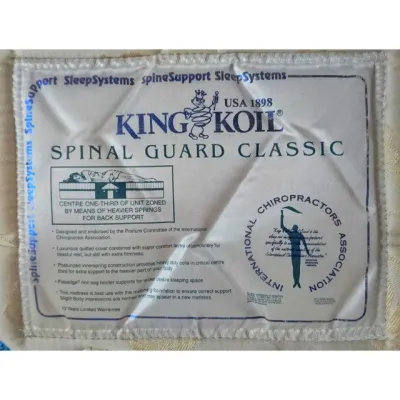
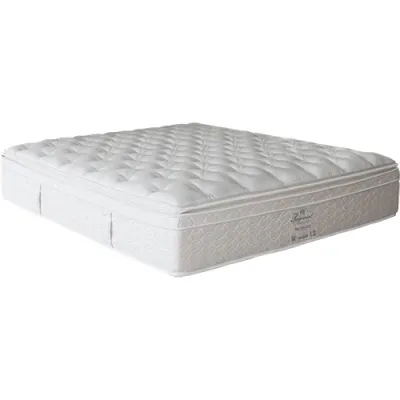
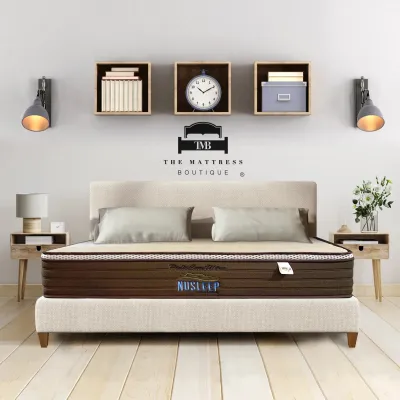
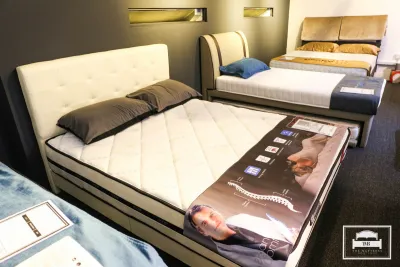
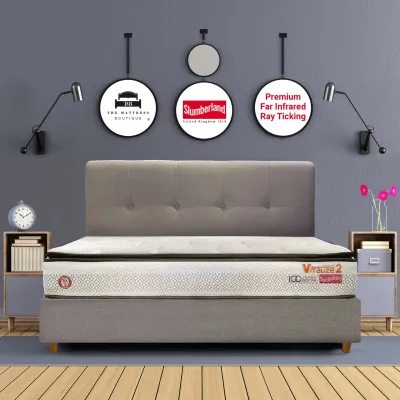
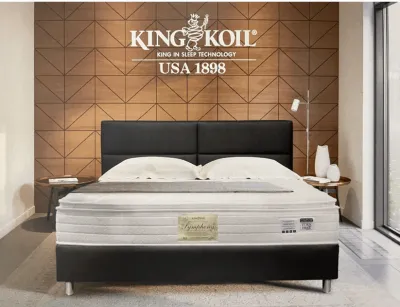
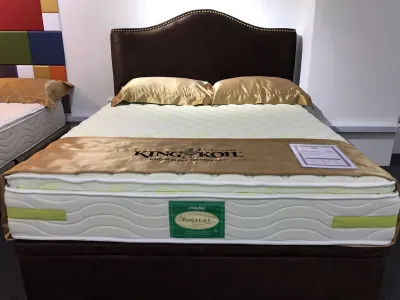
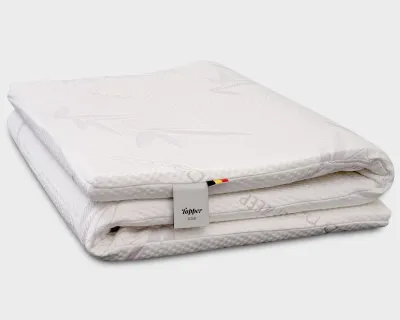
Prices are valid at publication and may change. Please refer to the product page for the latest price.
Back and stomach sleepers have entirely different structural needs, requiring a surface that actively resists deep sinkage to maintain healthy spinal alignment. When a stomach sleeper rests on a mattress that is too soft, the pelvis sinks excessively, arching the lower back unnaturally and placing severe strain on the lumbar spine. Back sleepers similarly need a firm, supportive base to prevent the hips from dropping below the level of the shoulders. Dense natural latex models or firm pocketed innerspring mattresses are ideal here. These constructions offer high upward resistance and push back against the heaviest parts of the body, keeping the musculoskeletal system properly aligned throughout the night.
Natural latex is harvested from rubber tree sap and processed into either Dunlop or Talalay latex. Dunlop latex is typically denser and firmer at the bottom, making it an excellent choice for back and stomach sleepers who require robust support. Talalay latex, on the other hand, undergoes an additional vacuum and freezing stage, resulting in a lighter, more uniform cell structure that offers a springier, more contouring feel ideal for side or combination sleepers.
Combination sleepers, who rotate through multiple positions during the night, benefit most from responsive transition layers and ease of movement. If a mattress contours too slowly—as some traditional, high-density memory foams do—the sleeper can feel “stuck” in a groove, requiring extra physical effort to turn over, which disrupts deep sleep cycles. Medium-firm hybrids, which combine the contouring of foam or latex with the immediate bounce of pocketed coils, provide a balanced middle ground. They offer enough surface cushion for side sleeping while maintaining the rapid responsiveness needed to support quick, effortless transitions.
Body weight significantly alters how firm or soft a mattress actually feels, making weight-based adjustments essential when evaluating Mattress Boutique picks. Lighter individuals (typically under 60 kg) exert less downward force and often find that standard medium-firm mattresses feel excessively hard, preventing them from sinking enough to experience pressure relief; they generally benefit from softer comfort layers. Conversely, heavier individuals (typically over 90 kg) exert substantial force and will compress comfort layers completely, bottoming out onto the stiff support core. For heavier frames, a thicker mattress with high-density foam layers and robust, thicker-gauge pocketed coils is necessary to prevent premature sagging and ensure deep down support.
When evaluating pocketed spring systems, look for zoned support configurations. These systems use thicker-gauge coils in the middle third of the mattress to support the heavy pelvic region, while using thinner, more flexible coils under the shoulders and legs to allow for gentle contouring.
How can you effectively test mattresses during a showroom visit?
Testing mattresses in person at a showroom is a reliable way to assess how a bed’s materials interact with your body before making a financial commitment. To make the most of your visit, you must move past brief, superficial touch tests and follow a structured evaluation process that mimics your actual sleeping habits.

Begin by spending at least 10 to 15 minutes resting quietly on each candidate mattress in your primary sleep position, rather than simply sitting on the edge or lying down for a few seconds. It takes time for your body heat to interact with foam layers and for your muscles to fully relax, allowing you to feel the true support profile of the mattress. If you sleep with a partner, both of you should lie on the mattress simultaneously to see how the support holds up under combined weight.
Do not feel self-conscious about lying down for an extended period; showroom staff at reputable retailers expect serious buyers to take their time. Close your eyes and focus on your breathing to help your muscles relax. If you feel your muscles actively tensing to keep your body balanced, the mattress is not providing adequate passive support.
Always test the mattress using a pillow height that matches what you use at home, as an incorrect pillow can throw off your entire spinal alignment and skew your perception of the bed’s comfort. While lying on your back, perform a physical gap check by sliding your hand under the small of your back; if there is a large gap, the mattress may be too firm, whereas if it is incredibly difficult to slide your hand through, the mattress may be too soft and causing your hips to sag. For side sleeping, have your partner or a showroom consultant observe whether your ears, shoulders, and hips form a straight, neutral line.
Evaluate the mattress’s edge support by sitting directly on the perimeter and lying close to the very edge of the bed. High-quality mattresses often feature reinforced foam encasements or thicker-gauge coils around the border to prevent a rolling-off sensation and to make getting in and out of bed easier. If the edge compresses completely under moderate pressure, the usable sleeping surface of the mattress is effectively reduced, which is a critical drawback for couples sharing a smaller bed size.
Assess motion isolation by having your partner toss, turn, and get in and out of bed on the opposite side while you keep your eyes closed. In a high-quality pocketed spring or memory foam mattress, the movement should feel isolated to that specific zone, with minimal kinetic energy transferring across the surface. If you feel a significant bounce or sway when your partner moves, the mattress’s transition and support layers may not be sufficiently dampening motion, which could lead to sleep disruptions at home.
When testing motion isolation, pay attention to the bed frame as well. Sometimes, a squeak or wobble is caused by an unstable showroom frame rather than the mattress itself. Gently shake the headboard or frame to isolate mattress motion from structural frame instability.
What key specifications and policies must you verify before purchasing?
Before finalizing your purchase, you must look beyond aesthetic covers and promotional slogans to verify the technical specifications of the mattress and the retailer’s transactional terms. This diligence protects you from structural failures, compatibility issues, and unexpected costs if the mattress does not perform as expected in your home.
First, request the exact material specifications from the product tag or technical datasheet, focusing on foam density, coil type, and material origin. For memory foam or polyurethane foam layers, look for high-density ratings (ideally 50 kg/m³ or higher for memory foam) to ensure the material resists permanent body impressions over time. If you are looking at pocketed spring models, verify the coil count and whether the springs are individually pocketed to ensure targeted support and motion isolation. Do not rely on vague marketing terms like “orthopaedic” or “luxury”; instead, check the physical composition and certification labels (such as CertiPUR-US or OEKO-TEX) to confirm material safety and structural integrity.
Next, carefully review the sleep trial conditions, return fees, and exchange policies offered by the retailer. Many premium mattress purchases include a trial period, but these often come with strict conditions, such as a mandatory 30-day break-in period to allow your body to adjust to the new support structure before a return can be initiated. Verify if a return or exchange incurs restocking fees, transportation charges, or if you are only eligible for store credit rather than a full refund.
Confirm the specific terms of the manufacturer’s warranty, paying close attention to the exact depth threshold required to claim a warranty replacement for sagging. A standard warranty might only cover visible indentations that exceed 2.5 to 3.8 centimetres when no weight is applied to the mattress. Additionally, check the specific bed base requirements; using an unsupportive, sagging, or widely slatted bed frame (slats spaced more than 5 to 7 centimetres apart) can void your warranty entirely, as it fails to provide the flat, rigid foundation the mattress needs to maintain its shape.
Regarding warranties, keep in mind that they only cover manufacturing defects, not gradual softening or comfort preferences. If you find the mattress too firm after a few weeks, this is not considered a warranty defect. This is why verifying the sleep trial policy is so critical, as it provides a safety net for comfort adjustments.
Finally, measure your bedroom space and the entire delivery path within your building to prevent a logistical nightmare on delivery day. In Singapore, tight HDB corridors, low lift ceilings, and narrow apartment door frames frequently present obstacles for delivering larger mattress sizes like Queen or King. Measure the finished dimensions of your doorways, stairwells, and lift interiors, and compare them against the packaged dimensions of the mattress. If the mattress is a non-bendable, heavy pocketed spring model, ensure the delivery team has clear, unobstructed access, or verify if additional manual lifting fees apply if the item cannot fit into the lift.
When measuring your delivery path, do not forget to account for light fixtures, handrails, and tight corners in stairwells. If you live in a high-rise apartment or HDB flat, measure the lift door width, lift depth, and lift height. A King-size mattress can measure up to 183 centimetres in width and 191 centimetres in length, which often requires a diagonal tilt to fit inside standard passenger lifts. If the mattress cannot fit into the lift, delivery teams may have to carry it up the stairs, which frequently incurs a staircase delivery fee per floor.
When should you consider adjustable bases or specialized sleep accessories?
Standard flat bed bases are highly effective for many sleepers, but certain physical conditions and comfort preferences make adjustable bases or specialized accessories a highly beneficial investment. Upgrading your sleep system can address specific health concerns and allow you to customize your sleep environment more precisely.
Consider an adjustable base if you suffer from chronic snoring, obstructive sleep apnea, acid reflux, or lower back pain. Elevating the head slightly keeps the airways open and uses gravity to prevent stomach acid from traveling up the esophagus, while elevating the legs into a “zero-gravity” position relieves pressure on the lumbar spine and improves circulation. Before purchasing, you must check the flexibility and structural guidelines of your chosen mattress; high-density memory foam and natural latex mattresses are highly compatible with adjustable bases, whereas traditional, stiff innerspring mattresses with thick border wires can be damaged by bending and are generally unsuitable.
Adjustable bases also offer a “wall-hugger” feature in premium models, which slides the base back toward the wall as the head is elevated, keeping your bedside table within easy reach. If you plan to use an adjustable base, ensure the mattress manufacturer explicitly states that the model is compatible, as bending a non-compatible mattress can cause the internal coils to overlap, bend permanently, or puncture the comfort layers.
Evaluate whether specialized pillows or mattress toppers are necessary to fine-tune the overall feel of your bed without replacing the entire mattress. If you purchase a highly supportive, firm mattress to maintain spinal alignment but find the surface slightly too rigid for your shoulders, adding a 5-centimetre natural latex or gel-infused memory foam topper can provide the necessary surface plushness. Similarly, matching your mattress with a contouring pillow that supports the specific gap between your neck and the mattress surface ensures your entire spine—from the cervical region down to the lumbar—remains perfectly aligned throughout the night.
For accessories, consider the material of your mattress protector. A waterproof protector is essential for preserving your warranty, as any liquid stains can void the warranty entirely. However, some cheap plastic protectors trap heat, neutralizing the cooling properties of a high-end gel-infused mattress. Look for breathable, membrane-backed protectors made from Tencel or bamboo fibers to maintain airflow.

Community discussion
Share your experience or ask a question. Comments are reviewed before publication.