
Selecting a foldable mattress in Singapore requires balancing portability with the physical demands of your sleeping posture. While many brands market their products as universally comfortable, a mattress that is too soft can cause spinal misalignment, while one that is too firm can create painful pressure points. Because comfort is highly subjective and brand specifications change frequently, finding the right option involves looking past generic marketing terms and evaluating the physical construction, foam density, and structural design of the mattress.
To make an informed decision, you must understand how your sleeping position interacts with different firmness levels and how the unique build of a foldable mattress affects its support over time. By focusing on verifiable material specifications and practical home checks, you can select a space-saving mattress that supports your body properly without sacrificing sleep quality.
Matching Firmness to Your Sleeping Position
Your primary sleeping position determines how your body weight is distributed across the mattress surface and where you need the most support. Achieving proper spinal alignment means your spine should remain in a neutral position, similar to how it looks when you are standing straight. A mattress that fails to support your specific posture will force your muscles and ligaments to work throughout the night, leading to stiffness and aches in the morning.
Products mentioned in this guide
![[1-2 day delivery] Foldable Foam Mattress 3-Fold Mattress](https://img.lazcdn.com/g/ff/kf/Se38f308a460b4ba3aef73a3da6703c621.jpg_400x400q80.jpg_.webp)
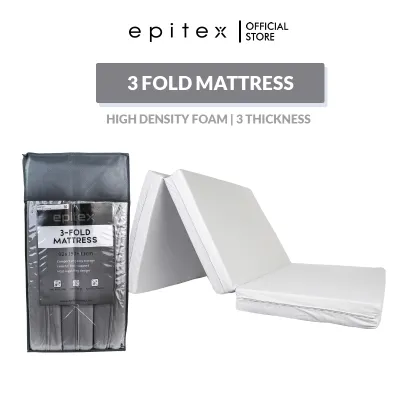
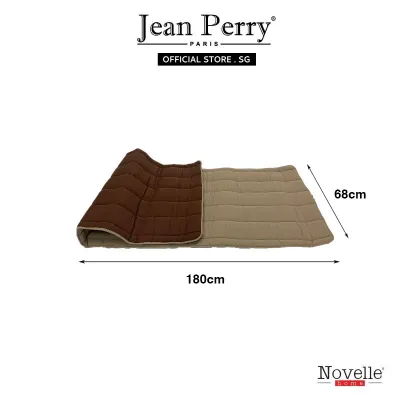
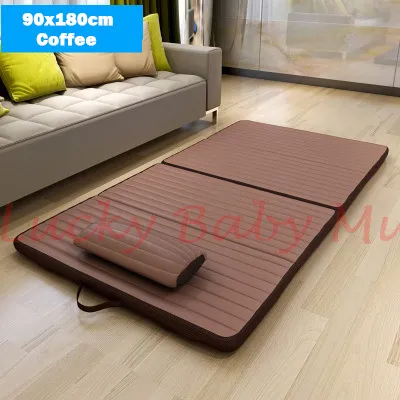
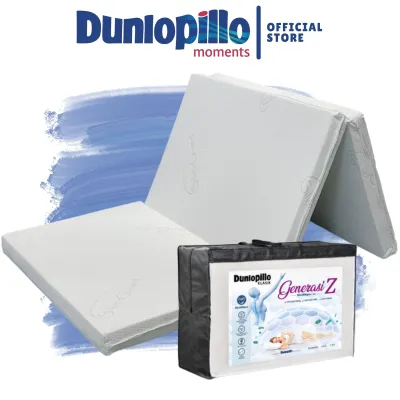
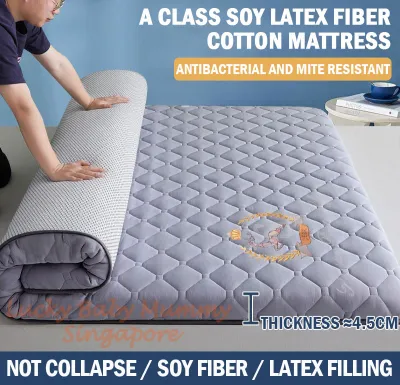
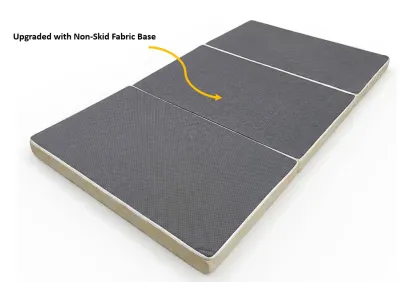
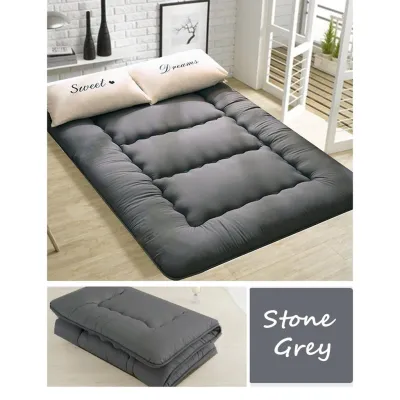
Prices are valid at publication and may change. Please refer to the product page for the latest price.
Side sleepers require a mattress that offers significant contouring and pressure relief, typically falling into the medium-soft to medium-firm range. When you sleep on your side, your shoulders and hips bear the brunt of your body weight, acting as high-pressure pivot points. If the mattress surface is too firm, these areas cannot sink in sufficiently, forcing your spine to curve laterally and restricting blood circulation, which often causes numbness. A suitable foldable mattress for side sleeping must have a sufficiently thick comfort layer—ideally made of memory foam or natural latex—to cushion these joints while keeping the spine straight.
Back sleepers need a balanced surface that provides both contouring and firm upward resistance, usually rated as medium-firm. In this position, the mattress must support the natural “S” curve of your spine, particularly the lumbar region. If the mattress is too soft, your hips and pelvis will sink too deeply, flattening the lumbar curve and straining the lower back muscles. Conversely, an overly firm mattress will leave a gap between your lower back and the bed, leaving the lumbar spine unsupported. A successful back-sleeping setup combines a resilient support core with a thin, conforming top layer to fill the lower back gap.
Stomach sleepers require the firmest surface of all three positions to prevent spinal hyperextension. When sleeping on your stomach, the heaviest part of your body—the pelvis and abdomen—tends to pull your midsection downward. If the mattress surface yields too easily, your pelvis sinks, creating an exaggerated arch in your lower back that compresses the spinal discs. To maintain a neutral alignment, stomach sleepers need a firm to extra-firm foldable mattress that keeps the hips level with the chest and shoulders, minimizing sinkage across the entire body.
How Foldable Designs Impact Firmness and Support
Foldable mattresses differ significantly from standard mattresses in their construction, which directly affects how they feel and how long they retain their firmness. Because these mattresses must fold for storage, they rely on specific materials and joint designs that alter their structural integrity under daily weight.

To evaluate the firmness and durability of a foldable mattress, you must look at the foam types and densities listed on the manufacturer’s label. High-quality foldable models typically use polyurethane (PU) foam, memory foam, or natural latex. Foam density, measured in kilograms per cubic meter ($kg/m^3$), is the most reliable indicator of support and longevity. High-density foams (above $30 kg/m^3$) offer robust upward support and resist sagging, making them suitable for daily use. Low-density foams (below $24 kg/m^3$) feel soft initially but compress quickly under weight, losing their supportive properties within a few months. Always check if the mattress features a multi-layer design, where a high-density base foam supports a softer comfort layer on top.
The folding mechanism itself plays a major role in support consistency. Most foldable mattresses are designed as bi-folds (two panels with one seam) or tri-folds (three panels with two seams). Every seam represents a gap in the support surface. If a seam aligns directly under a heavy part of your body, such as your hips, you may experience a localized drop in support, causing your body to sink into the gap. Tri-fold designs are highly popular for their compact storage size, but you must ensure the panels fit tightly together when unfolded to prevent the joints from spreading apart and creating uncomfortable ridges under your back.
Thickness limitations also restrict the support capacity of foldable models. While traditional mattresses are often 25 to 35 cm thick, foldable mattresses generally range from 5 to 15 cm. A thinner mattress has a much lower “bottom-out” threshold, meaning heavier individuals are highly likely to compress the foam completely and feel the hard floor underneath. For adults and daily sleepers, a minimum thickness of 10 to 12 cm is highly recommended to ensure the support core has enough physical depth to absorb body weight without bottoming out.
How to Evaluate Brands and Products in Singapore
Navigating the mattress market in Singapore requires a systematic approach to verify product claims and protect your purchase. Because comfort cannot be fully determined from a product description, you should use a structured checklist to evaluate local brands and retailers.
First, verify the technical specifications of the mattress rather than relying on subjective marketing terms like “orthopaedic” or “luxury firm.” Look for brands that openly disclose their material densities, layer thicknesses, and safety certifications (such as CertiPUR-US or OEKO-TEX). If a brand’s product page or tag only lists “high-density foam” without providing numerical density values or specific material breakdowns, contact their customer service to request these details. A transparent brand that provides exact specifications is generally more reliable than one relying solely on lifestyle marketing.
Second, carefully review the trial and return policies, which can vary widely between brands in Singapore. While some companies offer 100-night sleep trials, these promotions often exclude foldable models or guest mattresses. Read the fine print to check for restocking fees, return transportation charges (which can range from S$50 to S$100), and hygiene requirements. Many brands require the mattress to be returned in its original, unopened plastic packaging to qualify for a refund, which prevents you from actually testing the firmness at home. Look for brands that offer clear, low-risk return terms for their foldable range.
Third, choose your retail channel carefully to ensure warranty validity and reliable after-sales support. Purchasing directly from a brand’s official website or an authorized physical showroom is the safest way to secure a genuine warranty. Showrooms, often located in industrial estates like Ubi, Tai Seng, or Toh Guan, allow you to physically lie on the mattress to assess its firmness before buying. If you choose to purchase through general online marketplaces, verify that the seller is the official brand store or an authorized distributor, as parallel imports or third-party listings may not carry local warranty coverage.
Space, Weight, and Climate Checks Before Buying
Before finalizing your purchase, you must ensure the foldable mattress is compatible with your physical living space, body weight, and the local climate conditions in Singapore.
Begin by measuring your floor space and storage areas. Measure the exact floor area where the mattress will be unfolded, ensuring there is sufficient clearance to open wardrobe doors, bedroom doors, and walk around the bed. Next, measure your designated storage space—such as a closet, utility room, or the gap under a bed frame—and compare it to the mattress’s folded dimensions. Do not forget to check the clearance of your home’s doorways, narrow corridors, and lift access to ensure you can easily transport the mattress when folded.
Weight capacity is another critical factor that affects both comfort and mattress lifespan. Foldable mattresses have lower weight thresholds than standard beds due to their thinner profiles and segmented designs. Check the manufacturer’s specifications for the maximum weight limit per sleeper. Exceeding this limit will cause the foam to degrade prematurely, leading to permanent sagging and a rapid loss of firmness. If you plan to use the mattress for couples or heavier guests, prioritize models with a thicker, high-density support core.
Singapore’s tropical climate, characterized by high humidity and warm temperatures, requires careful attention to mattress breathability and moisture management. Foam mattresses placed directly on the floor can trap body heat and sweat, creating a damp environment underneath that encourages mold growth and dust mites. Look for mattresses with removable, washable covers made from breathable fibers like bamboo, Tencel, or organic cotton. Avoid solid synthetic covers that trap heat, and check the care label for clear washing instructions to maintain hygiene.
Finally, consider the base requirements of your setup. Placing a foldable mattress directly on a polished tile or vinyl floor can cause it to slide when you toss and turn. A mattress with a non-slip bottom surface or rubberized grip dots is highly beneficial. To prevent moisture buildup between the cold floor and the warm mattress, consider placing a thin, breathable underlayment, such as a tatami mat or a moisture-resistant barrier, beneath the mattress, especially if it will remain unfolded on the floor for extended periods.
Frequently Asked Questions (FAQ)
Is a foldable mattress suitable for long-term daily sleeping?
While a high-quality foldable mattress can provide adequate support for temporary use, guest rooms, or studio apartments, most models are not designed for long-term daily sleeping over several years. The constant folding and unfolding puts mechanical stress on the seams and hinges, while daily weight concentrated on the same areas accelerates foam fatigue. Over time, this leads to permanent sagging and a reduction in spinal support. If you must use a foldable mattress daily, look for premium models with a thickness of at least 10 to 12 cm, high-density foam cores (above $30 kg/m^3$), and robust manufacturer warranties that specifically cover daily wear.
How should I store and maintain a foldable mattress to prevent mold?
To prevent mold and mildew in Singapore’s humid climate, never fold and store a mattress immediately after sleeping on it. Allow the mattress to air out for at least 30 minutes to let body heat and moisture dissipate. Store the mattress in a cool, dry place, preferably inside a breathable storage bag that protects it from dust while allowing air circulation; avoid airtight plastic bags, which can trap residual moisture. Regularly vacuum the mattress surface using an upholstery attachment to remove dust mites and dead skin cells. For cleaning, follow the manufacturer’s care label; most removable covers can be machine washed on a gentle cycle, while the inner foam should only be spot-cleaned with a damp cloth and mild detergent, ensuring it dries completely in a well-ventilated indoor area away from direct sunlight.
Community discussion
Share your experience or ask a question. Comments are reviewed before publication.