
Finding a firm queen size mattress in Singapore requires balancing personal comfort preferences with the practical realities of local housing and climate. While many sleepers associate firmness with better spinal support, the term “firm” is highly subjective and varies significantly between manufacturers. Selecting the right mattress involves understanding how different internal structures provide support, measuring your bedroom and delivery pathways, and evaluating retail terms like warranties and trial periods. This guide provides a structured framework to help you navigate the local market and shortlist the most suitable options for your home.
Defining "Firm" and Queen Size Dimensions for Your Space
Firmness is typically rated on a scale from 1 to 10, with 1 being cloud-soft and 10 being as rigid as a wooden floor. Most mattresses labeled “firm” fall between a 7 and a 9 on this scale. However, a mattress’s perceived firmness is highly subjective. A heavier individual may compress the comfort layers more deeply, perceiving a mattress as medium-firm, while a lighter sleeper might find the exact same mattress feels extra-firm because they do not sink into the comfort layers at all.
In Singapore, standard queen size mattress dimensions are 152 cm wide by 190 cm long. It is crucial to verify these dimensions against your existing bed frame, especially if you imported your frame or purchased a European size (which often measures 160 cm by 200 cm). A mismatch can lead to overhang or gaps that compromise the structural integrity of the mattress edge.
Products mentioned in this guide
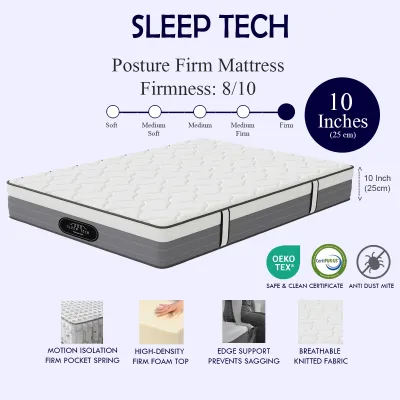
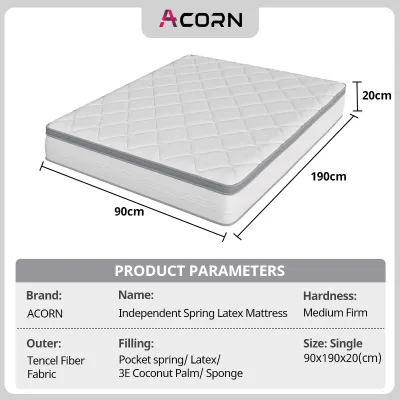
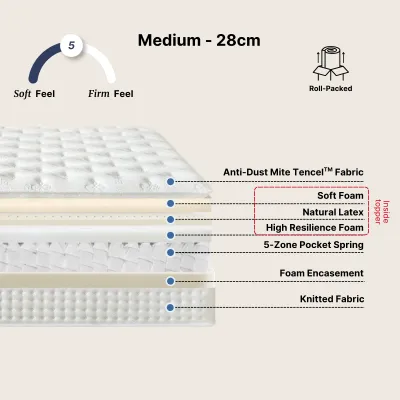
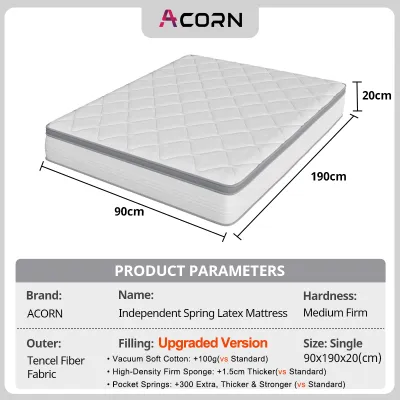
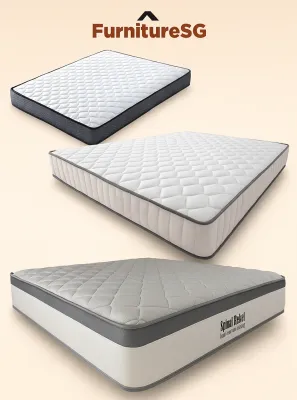
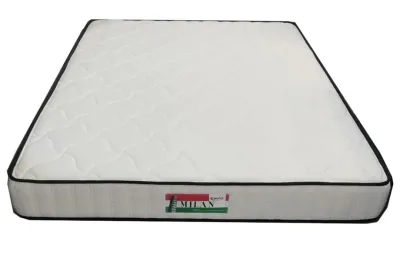
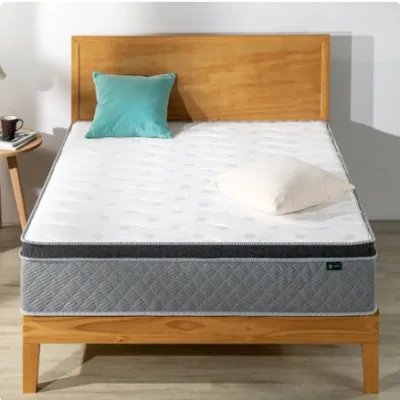
Prices are valid at publication and may change. Please refer to the product page for the latest price.
Beyond the frame, consider the physical layout of your bedroom. To maintain comfortable movement, aim for a minimum clearance of 60 cm to 70 cm around the three open sides of the bed. This space ensures you can easily make the bed, open wardrobe doors, and walk through the room without squeezing past furniture.
Delivery logistics are another critical factor for firm queen mattresses. Unlike softer foam models that can be compressed or rolled into a compact box, traditional firm mattresses—especially those with thick pocketed springs or high-density foam cores—are highly rigid and must be transported flat. Measure your home’s entryways, hallway corners, and doorway widths. If you live in an HDB flat or a condominium, check the lift door height and internal depth to ensure the delivery team can safely transport the mattress to your floor without bending the frame.
Comparing Construction Types for Firm Support
The internal construction of a mattress determines its overall support profile and durability. Innerspring mattresses, often utilizing interconnected Bonnell coils, offer a traditional, highly rigid feel with significant bounce. While they provide excellent airflow and a firm sleeping surface, they tend to transfer motion across the bed, which may disturb partners when one person moves.

Pocketed spring mattresses feature individually wrapped coils that compress independently. This design allows the mattress to contour to the body’s natural curves while maintaining a firm foundation. Pocketed springs are highly effective at isolating motion, making them a practical choice for shared beds. When evaluating pocketed springs, look for the coil gauge; a lower gauge number (such as 12 or 13) indicates thicker, stiffer wire that provides a firmer feel than higher gauge numbers (such as 15 or 16).
High-density foam mattresses rely on solid polyurethane or specialty foam cores to provide support. Unlike low-density foams that sag quickly, high-density foam (typically 40 kg/m³ or higher) offers a solid, contouring support system without the springy bounce of coils. These mattresses distribute body weight evenly and are highly durable, though they can sometimes retain more body heat if not designed with open-cell structures or cooling channels.
The comfort layer on top of the support core heavily influences the initial feel of the mattress. Tight top mattresses have a flat, taut surface stitched directly over the support core, offering the most direct access to the mattress’s underlying firmness. In contrast, pillow tops and euro tops add an extra layer of cushioning stitched to the top. For a truly firm feel, a tight top or a very thin, high-density foam comfort layer is generally preferred, as it prevents excessive sinking.
To avoid falling for marketing jargon, always request the manufacturer’s technical specification sheet. Verify the actual foam density and coil count rather than relying on terms like “orthopedic” or “ultra-supportive,” which are not standardized industry terms.
Building Your Shortlist: Evaluation Criteria
A structured checklist is essential for narrowing down your options before making a purchase. First, evaluate the trial period terms offered by the retailer. Because it takes the body several weeks to adjust to a new mattress, look for brands that offer a home trial of at least 100 nights. Read the terms carefully: verify if there are return pickup fees, restocking charges, or if you are required to purchase a specific mattress protector to keep the trial valid.
Warranty terms vary widely and require close inspection. A standard mattress warranty in Singapore typically ranges from 10 to 15 years, but the coverage details are what matter. Check the specific depth of indentation required to trigger a warranty claim. Some warranties only cover sagging if the visible indentation is deeper than 4 cm, while others cover sag starting at 2.5 cm. Ensure the warranty covers structural defects like broken coils or split foam cores under normal use conditions.
Material certifications provide objective proof of safety and environmental standards. Look for independent labels such as CertiPUR-US, which certifies that the polyurethane foam is made without harmful ozone depleters, heavy metals, or formaldehyde, and has low volatile organic compound (VOC) emissions. For textiles, the OEKO-TEX Standard 100 certification ensures the mattress cover is free from harmful levels of toxic substances.
Edge support is a critical performance indicator, particularly for couples or individuals who sit on the side of the bed to get dressed. Mattresses with poor edge support can feel as though they are sloping downward near the perimeter, reducing the usable sleeping surface. Look for models that feature a reinforced foam encasement around the border or thicker gauge coils along the outer edges to maintain a flat, stable surface across the entire mattress.
Navigating the Purchase and Delivery Process in Singapore
When testing mattresses in a showroom, avoid the temptation to simply sit on the edge or lie down for a few seconds. Spend at least 10 to 15 minutes lying on each shortlisted mattress in your typical sleeping posture. If you sleep on your side, pay attention to whether your shoulder and hip sink just enough to keep your spine straight; if you sleep on your back, ensure your lower back does not arch away from the mattress surface.
To make the showroom test more realistic, bring your own bed pillow. The height and firmness of your pillow directly affect your neck alignment and overall comfort, so testing a mattress with a showroom pillow that is too high or too low can distort your perception of the mattress’s firmness.
Compare purchase channels carefully. Direct-to-consumer online brands often offer lower prices and longer trial periods because they bypass showroom overhead costs. However, established local furniture retailers and physical showrooms allow you to physically test the mattress before buying and may offer bundled deals that include bed frames, pillows, or mattress protectors.
Before finalizing your purchase, verify the delivery logistics with the retailer. Confirm whether the delivery fee is included in the purchase price or if there are additional charges for specific delivery windows. If your building does not have lift access or if the mattress cannot fit into the lift, retailers typically charge a staircase fee per floor (often ranging from S$10 to S$20 per floor). Additionally, ask if they offer old mattress disposal services, as disposing of a bulky queen mattress independently in Singapore can be logistically challenging and may require coordination with your town council or private waste collectors.
Frequently Asked Questions (FAQ)
Can a firm mattress help with back pain?
A firm mattress can help maintain proper spinal alignment for back and stomach sleepers by preventing the hips from sinking too deeply into the support core. However, a mattress that is excessively firm can create pressure points on the shoulders and hips, particularly for side sleepers, leading to discomfort. It is important to note that a mattress is not a medical treatment; if you experience chronic or severe back pain, you should consult a qualified healthcare professional for a personalized diagnosis and treatment plan rather than relying solely on a change in bedding.
Do I need a specific bed frame for a firm queen mattress?
Yes, a firm queen mattress requires a highly stable and supportive foundation to prevent premature sagging and maintain its structural integrity. Check the mattress manufacturer’s warranty guidelines, as many require specific frame types, such as solid platform bases or slatted frames with slat spacing of no more than 5 to 7 cm. Using an unsupportive or sagging bed frame can void your mattress warranty and cause the support core to break down unevenly over time.
How long should I test a mattress in a showroom?
You should spend at least 10 to 15 minutes lying on the mattress in your primary sleeping position during a showroom visit. This duration allows your muscles to relax and gives you a more accurate sense of how the support core and comfort layers interact with your body weight. Avoid testing mattresses when you are physically exhausted, as almost any surface will feel comfortable when you are tired, which can lead to an inaccurate assessment of the mattress’s long-term support.
Community discussion
Share your experience or ask a question. Comments are reviewed before publication.