
Finding the perfect fabric sofa bed for a compact Housing & Development Board (HDB) flat in Singapore requires balancing daily living comfort with smart space optimization. In a typical three-room, four-room, or Build-To-Order (BTO) flat, every square meter counts. The living room often serves multiple roles—a relaxation hub, a home office, and occasionally, a guest bedroom. A fabric sofa bed is an excellent dual-purpose solution, but choosing the wrong model can lead to a cramped layout, awkward transitions, or uncomfortable nights. To make an informed decision, you must look beyond aesthetics and evaluate precise dimensions, folding mechanisms, fabric performance in high humidity, and structural support. This guide provides a comprehensive framework to help you measure your space, compare configurations, and select a durable, comfortable fabric sofa bed tailored to your HDB home.
Measuring Your HDB Living Room for a Sofa Bed
Before browsing local showrooms or online catalogs, you must establish the exact spatial limits of your living room. A common mistake is measuring only the space available for the sofa in its seated position. You must map out the fully extended footprint of the bed mode to ensure it does not collide with television consoles, coffee tables, or dining sets. Use masking tape on your floor to visualize the extended bed outline, keeping in mind that you need a clear path to navigate around the room even when the bed is fully deployed.
Walkway clearance is a critical safety and comfort factor in compact HDB layouts. Aim for a minimum clearance of 50 to 60 centimeters around the sides and foot of the extended bed. This space allows you and your guests to move freely without climbing over the mattress or squeezing against walls. If your living room layout includes built-in storage, wardrobes, or household shelter doors, verify that the extended sofa bed does not block access to these essential features.
Products mentioned in this guide
![[Bulky] [SG SELLER] Quality Sofa Bed in Luxury Fabric + Free Bean Bag. Fabric Luxury Sofabed Grey (3 Seater) | High Quality | Bedroom | Compact | Living Room | High-End | Comfortable | Durable | Designer | Luxury | HomeAndStyle | Home And Style](https://img.lazcdn.com/g/p/96d1e6f369487ec9cf1fc2119d83d217.jpg_400x400q80.jpg_.webp)
![[SG] High Quality Fabric Sofabed | High Quality | Bedroom | Compact | Living Room | Fabric Sofa Bed | High-End | Comfortable | 3 Seater [SG OPEN BOX SALE]](https://img.lazcdn.com/g/p/5486a3bc39ec2ea9f6d992dfb470c94a.jpg_400x400q80.jpg_.webp)
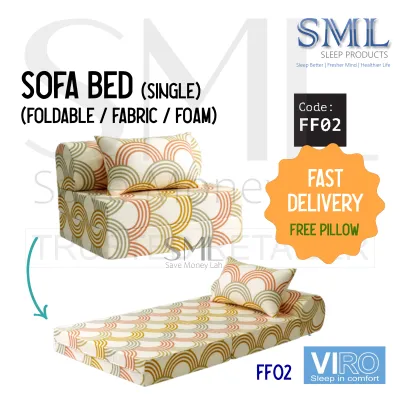
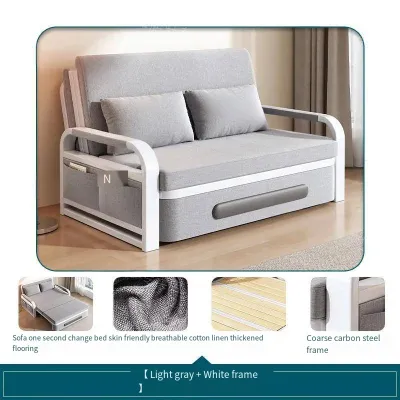
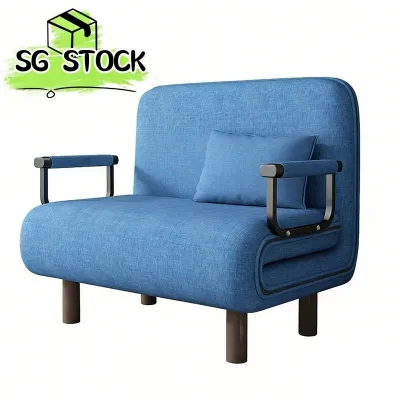
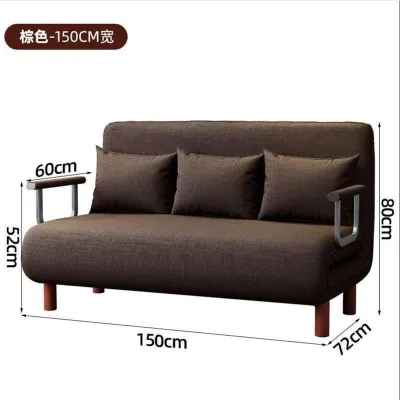
Prices are valid at publication and may change. Please refer to the product page for the latest price.
Beyond the living room floor plan, you must plan for the delivery process. Many high-rise homeowners overlook the physical constraints of HDB passenger lifts, narrow corridors, and main door frames. Measure the height, width, and diagonal clearance of your entryways and compare them against the packaged shipping dimensions provided by the retailer. If a sofa bed is delivered as a single, fully assembled unit, it may not clear tight stairwell turns or standard door frames, potentially resulting in costly return fees or delivery failures.
Comparing Folding Mechanisms for Compact Spaces
The folding mechanism determines how easily you can transition your furniture from a stylish seat to a supportive bed. Different mechanisms require varying amounts of physical effort and clearance space, making some styles significantly better suited for tight HDB layouts than others.

Click-clack mechanisms are highly popular for their simplicity and budget-friendly designs. To operate a click-clack sofa, you lift the seat portion until the hinge clicks, then lay it flat. While easy to operate, most click-clack models require a gap between the back of the sofa and the wall. If you plan to place your sofa flush against a wall, you will need to slide the entire frame forward every time you convert it, which can be physically demanding and inconvenient for daily use.
Pull-out or trundle mechanisms feature a hidden bed frame stored beneath the main seat cushion. You pull the lower frame forward and lift the mattress section to align with the seat. This design is highly space-efficient because the backrest remains stationary, allowing you to place the sofa directly against the wall. However, pull-out models require substantial clearance in front of the sofa, making them ideal for narrow but deep living rooms where forward space is readily available.
Fold-down or A-frame mechanisms fold forward from the seat cushion, often utilizing the backrest as part of the sleeping surface. These frames generally require minimal physical effort to deploy but can be heavy depending on the internal metalwork. When evaluating any moving mechanism, inspect the contact points where the frame meets your floor. Heavy metal joints and rolling wheels can easily scratch vinyl, laminate, or parquet flooring common in modern HDB flats. Plan to use protective felt pads or place a low-pile rug beneath the sofa bed to safeguard your floors from friction damage.
Choosing the Right Fabric for a Tropical Climate
Singapore’s tropical climate, characterized by high humidity and warm temperatures, demands careful consideration of upholstery materials. A fabric that feels cozy in a temperate climate can quickly become hot, sticky, and prone to moisture retention in a local apartment.
Prioritize breathability and moisture-wicking properties when testing fabric blends in local showrooms. Natural fibers like linen and cotton blends offer excellent airflow, keeping the seating surface cool during warm afternoons. However, pure natural fibers can be susceptible to staining and wear. A high-quality synthetic blend, such as a polyester-linen mix, often strikes the best balance, offering the breathability of natural fibers alongside the durability and stain resistance of synthetic materials.
Removable and machine-washable covers are highly advantageous for managing dust mites, sweat, and accidental spills. In a humid environment, dust accumulation and moisture can lead to musty odors if the fabric cannot be thoroughly cleaned. If the sofa bed you select does not feature fully removable covers, ensure the fabric is treated with a water-resistant or stain-repellent finish that allows for easy spot cleaning.
Always review the manufacturer care label and specific cleaning codes rather than relying on generic material descriptions. Look for standard cleaning codes such as “W” (water-based cleaning agents allowed), “S” (solvent-based cleaners only), or “W/S” (both allowed). Avoid fabrics labeled with an “X” code, which indicates the material can only be vacuumed or brushed, as these are incredibly difficult to maintain in a busy household where the sofa bed serves as a primary piece of furniture.
Balancing Seating Comfort and Sleeping Support
Because a sofa bed must perform two distinct functions, its internal construction involves inherent design trade-offs. A comfortable sofa requires supportive, high-density foam that keeps you upright, whereas a comfortable bed requires pressure relief and contouring support. Understanding how these layers are built will help you find a model that does not compromise on either function.
Consider the thickness and density of the internal mattress. Thin foam mattresses, typically under 10 centimeters thick, allow the sofa to fold into a highly compact shape, but they offer minimal support for sleeping, often causing guests to feel the rigid frame underneath. Conversely, thicker mattresses of 12 to 15 centimeters provide superior sleeping comfort but result in a bulkier sofa profile and a higher seat height. Look for high-density polyurethane foam or pocket spring systems that distribute body weight evenly without bottoming out.
Evaluate the support system beneath the mattress. Flexible wooden slats offer excellent contouring support and promote airflow, which is vital in Singapore for preventing moisture buildup and mold growth beneath the mattress. Solid wooden or metal platforms provide a very firm sleeping surface but can trap humidity and accelerate mattress wear. If you prefer a firmer feel, ensure the platform has ventilation holes to allow air circulation.
During your showroom visits, perform a thorough physical evaluation of the frame and joints. Sit on the edge of the sofa bed to check for sagging, and lie down in the center to assess support. Shake the frame gently to test for stability, and listen closely for any squeaking or creaking joints. A squeaky frame indicates loose connections or low-quality hardware, which will likely worsen over time with frequent folding and unfolding.
Building Your Shortlist: Pre-Purchase Verification Checklist
Before finalizing your purchase and scheduling delivery, use this checklist to verify that your shortlisted fabric sofa bed meets all practical requirements:
- Confirm Extended Dimensions: Double-check that the fully extended bed length and width fit comfortably within your taped floor plan, leaving at least 50 centimeters of walkway clearance.
- Verify Delivery Access: Measure your HDB lift door, cabin depth, main entrance, and any tight hallway corners to ensure the packaged box can pass through safely.
- Inquire About Delivery and Assembly Services: Ask the retailer if assembly is included in the delivery fee, as complex folding mechanisms can be difficult and time-consuming to assemble yourself.
- Check Old Furniture Disposal Options: If you are replacing an existing couch, clarify whether the delivery team offers disposal services and if additional fees apply.
- Review Warranty Coverage: Read the warranty terms carefully, ensuring coverage extends to the folding mechanism, frame joints, and fabric seams, rather than just the foam cushions.
Frequently Asked Questions (FAQ)
Can a sofa bed fit through standard HDB doors and elevators?
Yes, most modern sofa beds are designed to fit through standard HDB doors and passenger lifts, but you must verify the dimensions before purchasing. Standard HDB main doors typically have a clear opening width of 80 to 90 centimeters, while passenger lift doors generally measure around 80 centimeters wide. If the sofa bed is delivered fully assembled, compare its shortest dimension (usually the depth or height) against these entry widths. If the clearances are tight, ask the retailer if the legs, armrests, or backrest can be detached for delivery, or request a pre-delivery site assessment from the delivery team to avoid unexpected access issues.
How do I prevent mold on a fabric sofa bed in a humid climate?
To prevent mold and mildew growth on a fabric sofa bed in Singapore’s humid climate, prioritize consistent air circulation and moisture control. Position your sofa bed at least 5 to 10 centimeters away from walls to allow air to flow behind the frame. On humid or rainy days, keep windows closed and run a dehumidifier or air conditioner to maintain indoor humidity levels below 60 percent. If the sofa bed is placed near a window, ensure it is protected from direct rain spray. Regularly vacuum the fabric using a brush attachment to remove dust and organic matter, which can act as food sources for mold spores, and ensure any damp spots from cleaning are dried completely using a fan or hair dryer on a cool setting.

Community discussion
Share your experience or ask a question. Comments are reviewed before publication.