
Finding the right compressed sofa for a Singapore HDB flat requires looking beyond aesthetic appeal to focus on box dimensions, modularity, and material resilience. Because standard HDB corridors and lifts present tight physical constraints, a compressed sofa—delivered in vacuum-packed boxes or flat-pack modules—offers an elegant solution to transport bottlenecks. To find the best option for your home, you must verify that the packaged dimensions fit your specific lift and doorway, while ensuring the internal materials can withstand Singapore’s humid climate.
Understanding Compressed Sofas and HDB Access Constraints
A compressed sofa is a modern furniture category designed to simplify shipping and handling. Unlike traditional fully assembled sofas that arrive as a single, bulky unit, these products are vacuum-sealed to compress the foam cushions or designed as modular flat-pack systems shipped in individual, manageable boxes. This packaging method drastically reduces the physical footprint of the furniture during transit, making it highly suitable for urban environments.
In Singapore, navigating the logistics of older HDB estates built before the 1990s often presents significant challenges. These blocks frequently feature narrower lift doors, smaller lift cars, and tight right-angle turns in common corridors. Standard passenger lifts in older estates may have door widths of only 80 cm and internal depths of 140 cm, which severely limits the size of fully assembled furniture that can be transported. Even in newer Build-To-Order (BTO) flats, the main door width and the distance between the door and the opposite corridor wall can make maneuvering a standard three-seater sofa incredibly difficult.
Products mentioned in this guide
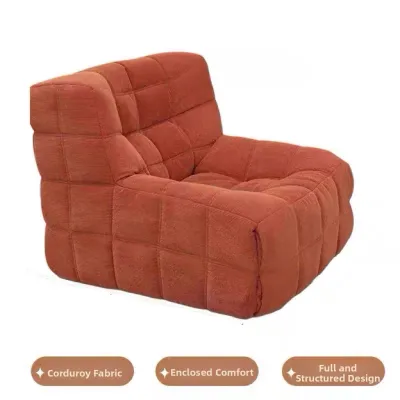
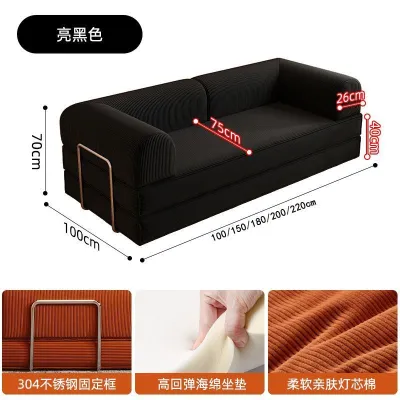
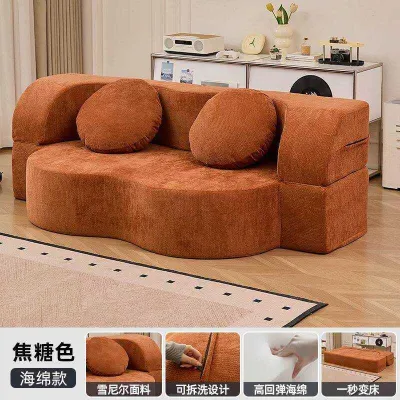
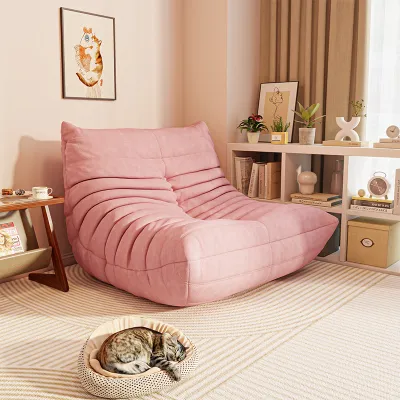
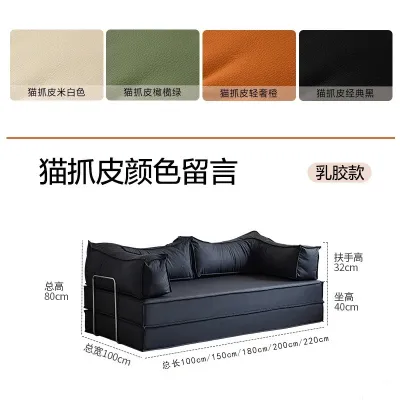
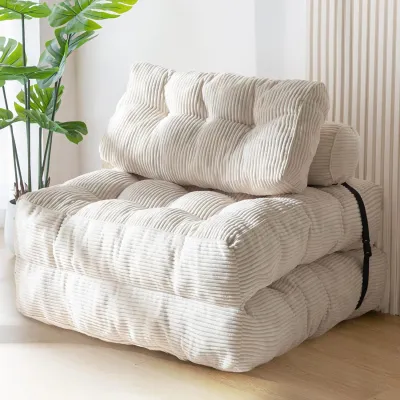
Prices are valid at publication and may change. Please refer to the product page for the latest price.
Modular or vacuum-packed designs solve these access issues by breaking the sofa down into individual boxes. Delivery teams can easily transport these boxes using standard passenger lifts, eliminating the need for expensive crane hoisting or manual stair-carrying services. This modularity also means you can move the sofa through your unit’s main gate and doorway without risking damage to your walls or the sofa frame itself.
Key Dimensions to Check Before Buying
To ensure a seamless delivery, you must measure your specific access route before placing an order. Start at the ground floor lift lobby and measure the lift door clearance, noting both the height and width. Step inside the lift and measure the internal depth, width, and height of the car to ensure the boxes can stand upright or lie flat without blocking the doors.

Next, assess the path from the lift to your front door. Pay close attention to any narrow corridor turns, low-hanging pipes, or wall-mounted utility boxes that could obstruct a delivery person carrying large packages. Finally, measure the clear opening width of your HDB unit’s metal gate and main wooden door when fully opened, as well as the immediate entryway space inside your home. Standard HDB main doors typically range from 85 cm to 100 cm in width, but the presence of a metal gate can reduce the effective clearance.
Once you have these measurements, compare them against the sofa’s shipping box dimensions rather than just its final assembled size. A three-seater sofa might assemble to a length of 220 cm, but if it is shipped in three separate boxes of 80 cm x 80 cm x 50 cm, it will easily clear any standard HDB entryway. Ensure that every single box in the shipment has at least 5 to 10 cm of clearance on all sides relative to your narrowest access point.
Inside your living room, consider how the assembled sofa will interact with your daily layout. Measure the seating depth to ensure there is at least 60 cm of clearance between the edge of the sofa and your coffee table or TV console to allow for comfortable foot traffic. If you are opting for a modular stacking design, verify that the height of the backrest does not block low-hanging wall fixtures, light switches, or air conditioning units.
Assessing Fabric and Frame Quality for Long-Term Use
Singapore’s high humidity demands breathable, durable fabrics that can resist moisture buildup and wear. When browsing product specifications, look for fabric composition tags indicating polyester blends, linen-look synthetics, or performance fabrics treated for stain resistance. These materials are generally easier to clean and less prone to trapping moisture than heavy, tightly woven natural fibers like 100% cotton or linen, which can attract mold in humid environments.
To evaluate durability, check the product page for independent abrasion test ratings, such as the Martindale rub count. For regular household use in a quiet home, a rating of 15,000 to 20,000 rubs is acceptable. However, for homes with high traffic, pets, or children, aim for a heavy-duty rating of 30,000 rubs or higher to ensure the fabric does not thin or pill prematurely.
The internal frame provides the essential structural support for your sofa. Look for frames constructed from kiln-dried hardwood or high-grade engineered wood certified for structural integrity. Kiln-drying removes moisture from the wood, preventing it from warping, cracking, or developing mold in Singapore’s tropical climate. Ensure the joints are reinforced with corner blocks and heavy-duty screws rather than simple staples.
The comfort and longevity of a compressed sofa depend heavily on its foam density and suspension system. High-density polyurethane foam, typically rated at 30 kg/m³ or higher, offers the best balance of support and sag resistance. Look for multi-layered foam structures that combine a high-density base layer for support with a softer memory foam or fiber-fill top layer for pressure relief. This should be paired with pocket springs or high-tensile serpentine springs rather than simple elastic webbing, which tends to stretch out and sag over time.
Assembly, Delivery, and Return Conditions
Most compressed sofas require self-assembly upon delivery. Before purchasing, verify whether the package includes all necessary tools, such as Allen keys or specialized wrenches, or if you will need to provide your own standard tools. Check the estimated setup time provided by the manufacturer; while some modular designs can be slotted together in 15 minutes, others might require an hour of careful alignment and bolt tightening.
Read the shipping policy carefully to identify potential hidden costs. While many retailers offer free delivery to lift-accessible floors, you may encounter additional charges if your HDB block requires walking up stairs due to split-level lift landings. These stair-carrying fees typically range from S$10 to S$20 per floor per item, which can quickly add up if you live on a high floor with limited lift access.
Additionally, consider the disposal of your old furniture. Many delivery services do not automatically include disposal of old sofas due to HDB town council regulations. You may need to coordinate with your local Town Council for free bulky item removal or pay an additional fee of S$50 to S$100 to the delivery team to handle the disposal for you.
Return policies require extra scrutiny when dealing with compressed furniture. Once a vacuum-sealed foam cushion is unpacked, it expands to its full size and cannot be re-compressed into its original box. Check if the retailer’s return policy allows returns of expanded foam or assembled frames, and be aware of potential restocking fees, which can range from 10% to 30% of the purchase price, or the requirement that you arrange your own return transport.
Evaluating Compressed Sofa Brands: A Verification Checklist
Do not take “HDB-friendly” marketing claims at face value. Create a structured checklist to verify these claims against your actual living conditions. Compare the published box dimensions against your measured lift and doorway clearances. If a brand claims its sofa fits standard lifts, verify if that applies to a standard 8-passenger lift or requires a larger cargo lift.
A robust warranty is a strong indicator of quality. Look for warranties that explicitly cover frame defects, joint failures, and abnormal foam degradation, such as sagging greater than 2.5 cm, for at least 3 to 5 years. Be cautious of warranties that exclude modular connection mechanisms or fabric seams, as these are the areas most prone to wear in a modular setup.
Verify if the materials used carry independent safety and environmental certifications. For example, look for CertiPUR-US or OEKO-TEX Standard 100 certifications on the product page. These certifications ensure that the foam and fabric are free from harmful chemicals, formaldehyde, and heavy metals, which is particularly important in enclosed, air-conditioned HDB living rooms.
When browsing customer feedback, use search filters or keywords like “lift,” “delivery,” “assembly,” “smell,” and “sag.” Look for reviews from verified buyers in Singapore who mention navigating HDB corridors or how long the foam took to fully expand in local humidity conditions. Pay attention to comments regarding customer service responsiveness when handling damaged boxes or missing assembly hardware.
Frequently Asked Questions (FAQ)
Do compressed sofas lose their shape after unpacking?
Vacuum-packed foam cushions require time to regain their original shape and density. Typically, full expansion takes between 24 to 72 hours. During this period, the foam may feel unusually firm or appear slightly wrinkled. Singapore’s warm, humid climate actually assists in this process, as warmth helps the polyurethane cells expand more rapidly. If a cushion remains flat or misshapen after 72 hours, it may indicate a manufacturing defect or prolonged storage in a compressed state, and you should contact the seller immediately.
Can I repackage a compressed sofa if I move to another HDB?
It is practically impossible to re-compress a sofa to its original factory-sealed size without industrial vacuum machinery. However, you can easily relocate a modular compressed sofa by disassembling the frame into its individual components. To protect the foam cushions and fabric during a move, wrap them tightly in heavy-duty moving stretch wrap or place them in large mattress bags. This keeps them clean, dry, and manageable for transport through your new HDB’s lift and corridors.

Community discussion
Share your experience or ask a question. Comments are reviewed before publication.