
Transitioning your child from a toddler cot to a larger bed is a major milestone, and choosing a super single bed (typically 107 cm x 190 cm in Singapore) offers a practical, long-term sleeping solution that accommodates growth well into the teenage years. However, because children use their beds not just for sleeping but also for active play, structural integrity and chemical safety must be your primary considerations.
In Singapore, several reputable children’s furniture brands offer super single beds (or equivalent European wide-format frames) backed by verifiable safety certifications. Leading options include Piccolo House, which designs modular solid wood beds complying with European safety standards, Flexa, a renowned Danish brand offering highly adaptable modular systems certified by TÜV/GS, and Kuhl Home, the local distributor for LIFETIME Kidsrooms, featuring premium, handcrafted Danish beds with stringent safety credentials. By focusing on these certified brands, parents can ensure their child’s sleeping environment is free from structural hazards and toxic chemical off-gassing.
Why Verified Safety Standards Are Non-Negotiable for Kids' Beds
When upgrading to a super single bed, parents often overlook the unique structural demands that a wider mattress frame places on furniture joinery. A standard Singapore single bed is 91 cm wide, whereas a super single bed extends to 107 cm. This additional 16 cm of width increases the span of the wooden slats and the surface area of the bed base. Without robust joinery, premium timber, and engineered weight distribution, a wider frame is highly susceptible to sagging, creaking, and joint fatigue over time. Children naturally subject their beds to dynamic forces—such as jumping or leaning heavily against the frame—which can cause sub-standard joints to loosen or collapse.
Products mentioned in this guide
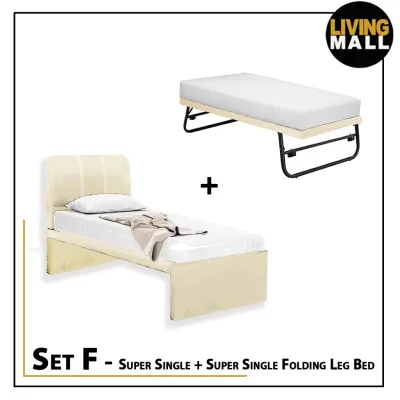
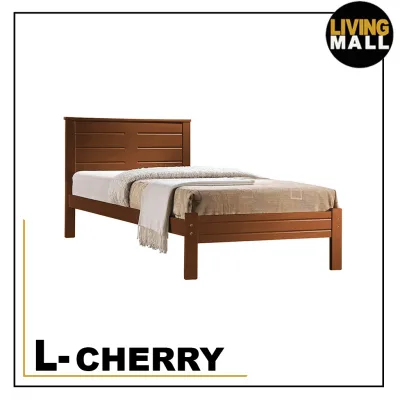
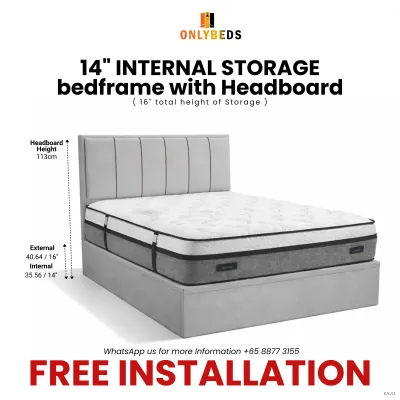
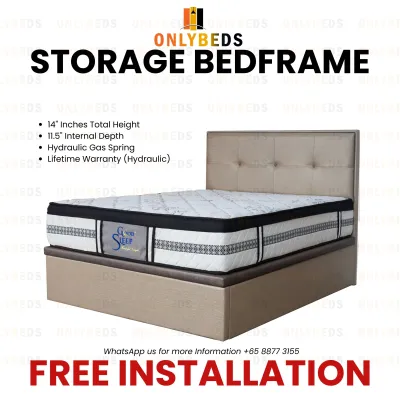
![[FREE INSTALLATION] KENZZO: Wooden single bed frame with headboard/ super single bed frame/Pull out bed/storage bed](https://img.lazcdn.com/g/p/65cc7d8f5cc2ffd4eb58378d3a1b8960.jpg_400x400q80.jpg_.webp)
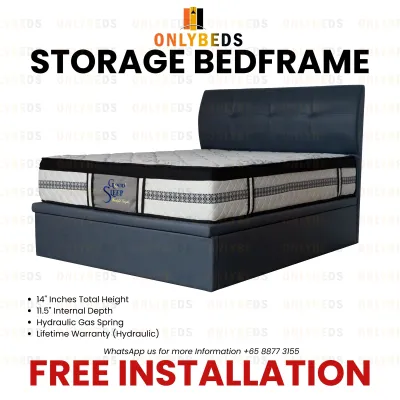
Prices are valid at publication and may change. Please refer to the product page for the latest price.
Fall prevention is another critical safety dimension that requires careful evaluation, particularly during the transition phase from a cot. Because a super single bed offers a more generous sleeping surface, parents sometimes assume the extra space inherently reduces the risk of a child rolling off the edge. This assumption can lead to a dangerous complacency regarding the use of guardrails. In reality, young children transitioning to a larger bed still lack the spatial awareness that prevents adults from falling out of bed during deep sleep cycles. Whether you choose a standard low-profile bed frame, a mid-sleeper, or a bunk bed, having integrated, safety-certified guardrails remains essential to prevent high-impact falls.
Material safety is equally critical, especially within the context of typical Singaporean residential spaces. Many children’s bedrooms in HDB flats and condominiums are compact and kept closed at night with air-conditioning running. This environment creates a confined airspace where volatile organic compounds (VOCs) and other airborne toxins can rapidly concentrate. Cheap furniture made from low-grade engineered woods, such as standard medium-density fibreboard (MDF) or particleboard, often utilizes adhesives containing formaldehyde, which slowly off-gasses into the room. Furthermore, cheap lacquers, varnishes, and paints can contain toxic heavy metals. Over time, exposure to these chemicals can trigger respiratory issues, allergies, and other health complications in growing children.
Ultimately, a brand’s marketing claims or a high price tag do not guarantee that a bed is safe for your child. Terms like “child-safe,” “eco-friendly,” or “organic” are frequently used as generic marketing buzzwords without any standardized legal definitions. The only way to verify that a super single bed is truly safe is through independent, third-party testing documentation. Legitimate certifications prove that a bed frame has undergone rigorous mechanical stress tests and chemical analyses to meet established international safety standards, ensuring that the product you bring into your home is structurally sound and chemically inert.
How to Verify Safety Claims and Read Certification Labels
To move from blind trust to informed verification, parents must learn how to audit safety claims when visiting local showrooms or browsing online product pages. When evaluating structural safety, look for recognized international standards rather than generic retail labels. The gold standard for children’s high beds, mid-sleepers, and bunk beds is the European standard EN 747 (or its equivalent American standard, ASTM F1427). These standards dictate strict requirements for structural stability, load-bearing capacity, and the strength of joints. Another highly respected mark is the GS (Geprüfte Sicherheit) mark, a voluntary certification indicating that the product has been tested by an independent, state-approved body like TÜV Rheinland or SGS to comply with German and European safety regulations.

In addition to looking for certification marks, parents should perform a physical inspection of the bed’s design to identify potential entrapment hazards. Children are naturally curious and can easily get their heads, limbs, or torsos trapped in poorly designed gaps. According to safety standards like EN 747, any gap within the bed frame—such as the spaces between guardrail slats, the opening for the ladder, or the gap between the mattress and the frame—must be strictly controlled. Gaps must either be smaller than 25 mm to prevent fingers and limbs from getting caught, or between 60 mm and 75 mm to prevent a child’s head from slipping through while their body remains trapped. Any gap falling between 25 mm and 60 mm, or exceeding 75 mm in critical safety zones, represents a major structural hazard.
Chemical safety verification requires a similar level of scrutiny. When assessing the finishes, paints, and lacquers applied to a solid wood or engineered wood bed frame, look for compliance with EN 71-3 (Safety of Toys – Part 3: Migration of certain elements). This standard ensures that if a child bites or licks the bed frame, no harmful quantities of toxic heavy metals—such as lead, antimony, arsenic, or barium—will be absorbed into their body. For engineered wood components, ask the retailer for test reports confirming low formaldehyde emissions, such as compliance with CARB Phase 2 (California Air Resources Board) or E1/E0 European emission standards. Certifications like GREENGUARD Gold provide further assurance that the entire product meets strict chemical emission limits for indoor air quality.
When auditing these claims, parents should be alert to several common red flags. A major warning sign is a retailer’s refusal or inability to share the actual physical test certificates or test reports when requested. If a brand claims their beds are “certified safe” but cannot produce a document from an accredited testing laboratory (such as TÜV, SGS, or Intertek), the claim should be treated with skepticism. Another common tactic is presenting a certification that applies only to one component of the bed—such as an OEKO-TEX certificate for the mattress fabric—and using it to imply that the entire wooden bed frame is chemically safe. Always ensure that the structural certifications apply specifically to the bed frame model you are purchasing, and that the test reports are current and have not expired.
Fitting a Super Single Bed in Singapore HDBs and Condos
Before committing to a super single bed, it is vital to analyze how its physical footprint will affect the spatial dynamics of your child’s bedroom. In Singapore, a standard single bed measures 91 cm in width and 190 cm in length. A super single bed measures 107 cm in width and 190 cm in length. While an extra 16 cm of width may seem minor on paper, it represents a nearly 18% increase in the bed’s overall footprint. In typical HDB Build-To-Order (BTO) flats or newer condominium units, where common bedrooms often range from a compact 9 to 11 square meters, this extra width can drastically reduce the remaining floor space. This can make it challenging to accommodate other essential bedroom furniture, such as a study desk, a wardrobe, and storage shelving, while maintaining a comfortable walking path.
To ensure a successful fit, parents should follow a systematic measuring guide before making a purchase:
- Room Layout: Measure the overall room dimensions, mapping out the bed placement while accounting for door swings (both the bedroom door and built-in wardrobe doors).
- Clearance: Ensure there is at least 60 cm of clearance for walking paths and bed-making.
- Window and Curtain Clearance: Check window heights and curtain clearances, especially if opting for a loft or bunk super single bed.
Delivery and installation logistics present another set of spatial constraints that must be planned for in advance. Many high-quality super single beds are delivered flat-packed, but some components—such as long side rails, solid headboards, or one-piece guardrails—can still be highly bulky. Parents must measure the entry points of their home, including the lift cabin’s height, width, and depth, to ensure the components can be transported to their floor. Additionally, measure the turning radiuses of any tight stairwells (if lift access is restricted) and the widths of all internal corridors and bedroom doors. Ensuring that the delivery team has a clear, unobstructed path to the assembly room prevents accidental damage to both your newly purchased furniture and your home’s walls.
Finally, if you are considering a space-saving system, such as a loft bed, a mid-sleeper, or a raised platform bed with a super single mattress on top, you must evaluate the structural load limits of the setup. High beds and loft systems place concentrated loads on specific contact points on the floor. Verify that your bedroom floor or platform is perfectly level and structurally capable of supporting the combined weight of the heavy timber frame, the mattress, the child, and an adult who may sit on the bed for bedtime stories. For lofted systems, always check the vertical clearance between the top of the mattress and the ceiling; there should be at least 80 to 90 cm of headroom so the child can sit up straight without bumping their head.
Evaluating Local Brands for Certified Super Single Beds
Selecting a trustworthy brand in Singapore requires a balanced evaluation matrix that prioritizes transparency, structural stability, and reliable after-sales support. First, evaluate the brand’s transparency: reputable companies make their safety certifications readily accessible and are eager to explain the engineering behind their products. Second, prioritize brands that maintain physical showrooms in Singapore. A physical visit allows you to personally test the bed’s stability—you can shake the frame to check for wobbles, inspect the thickness of the timber, examine the quality of the joinery, and feel the smoothness of the finish. Third, check the clarity and comprehensiveness of the warranty terms; a solid structural warranty of at least 2 to 5 years indicates the manufacturer’s confidence in the bed’s durability.
Local after-sales support is another critical factor that separates premium brands from cheap online imports. Children’s furniture is subjected to heavy daily wear and tear, and over the years, you may need replacement parts, such as a broken wooden slat, a replacement ladder step, or additional guardrail brackets. Choosing a brand with an established local presence ensures that you can easily source genuine replacement parts. Furthermore, professional assembly services provided by the brand’s own trained technicians are highly recommended. These professionals understand the specific torque requirements for the structural bolts and ensure that all safety brackets, wall anchors, and stabilization bars are installed exactly as specified by the engineers.
To help you narrow down your search, here are three highly reputable brands available in Singapore that offer safety-certified super single beds (or equivalent wide-format frames) and maintain physical showrooms for hands-on evaluation:
Piccolo House
- Brand Overview & Showroom: Piccolo House is a well-established local specialist in children's furniture, with a physical showroom located in Ubi. They are highly regarded for designing stylish, functional, and exceptionally safe furniture tailored to Singaporean homes.
- Super Single Offerings: They offer several dedicated Singapore-standard super single beds (107 cm x 190 cm), including the Casper Modular Super Single Bed and various loft and bunk configurations.
- Safety Features & Certifications: Piccolo House beds are engineered to comply with stringent European safety standards (EN 747 for high beds). Their frames are crafted from premium solid wood, such as birch and pine, and finished with water-based, non-toxic paints and lacquers that are fully certified under EN 71-3. This ensures that the frames are completely free from harmful heavy metals and have extremely low VOC emissions.
- Ideal User Profile: Excellent for children of all ages. The low-profile single and super single frames with removable guardrails are ideal for toddlers transitioning from cots, while their modular loft systems are perfect for older children and teenagers who need integrated study desks or play areas underneath.
- Limitations: Due to their popularity, certain custom configurations or out-of-stock models can have delivery lead times ranging from 6 to 12 weeks. Additionally, their guardrail-equipped models have strict maximum mattress thickness limits (typically 15 cm to 18 cm) to ensure the safety barrier remains effective.
Flexa
- Brand Overview & Showroom: Flexa is a world-renowned Danish children's furniture brand with dedicated showrooms in Singapore, including a prominent location at Forum The Shopping Mall. They are famous for their highly modular, Scandinavian-designed furniture systems that grow alongside your child.
- Super Single Offerings: Flexa's wider bed frames—found in their Classic, White, and Popsicle collections—typically utilize European sizing (120 cm x 200 cm). This is slightly wider and longer than a standard Singapore super single (107 cm x 190 cm), offering an exceptionally spacious sleeping area.
- Safety Features & Certifications: All Flexa beds are certified according to the highest international safety standards, including EN 747 and the prestigious German GS safety mark. Their wood is sourced from sustainable, FSC-certified forests, and all lacquers, varnishes, and textiles are certified under OEKO-TEX Standard 100, ensuring absolute safety from harmful chemicals and allergens.
- Ideal User Profile: Perfect for families seeking a premium, long-term investment. The modular nature of Flexa beds means a single or wide-format bed purchased for a toddler can be rebuilt into a mid-sleeper, high-sleeper, or bunk bed as the child's needs change over the years.
- Limitations: Flexa products carry a premium price tag, representing a significant financial investment. Furthermore, because they use European dimensions (120 cm x 200 cm), standard Singapore-sized super single mattresses will not fit their frames properly. Buyers must purchase Flexa's proprietary European-sized mattresses or source custom-sized bedding.
Kuhl Home (LIFETIME Kidsrooms)
- Brand Overview & Showroom: Distributed exclusively by Kuhl Home with a showroom in Pasir Panjang, LIFETIME Kidsrooms is a premium Danish brand that handcrafts high-end children's furniture in Denmark, utilizing wind energy and sustainable practices.
- Super Single Offerings: Similar to Flexa, their wide-format beds are built to European small double/super single dimensions (120 cm x 200 cm), integrated into highly customizable modular bed systems.
- Safety Features & Certifications: LIFETIME Kidsrooms beds are tested to the absolute limit. They are certified by TÜV Rheinland according to the EN 747 safety standard. The frames are constructed from slow-growing solid pine from sustainable European forests, which is exceptionally dense and durable. The wood is treated with non-toxic, water-based stains and lacquers that comply strictly with EN 71-3 chemical safety regulations.
- Ideal User Profile: Designed for parents who demand top-tier European craftsmanship, maximum customization options (including themed play huts, slides, and integrated storage), and uncompromising structural and environmental safety.
- Limitations: This brand sits at the highest end of the price spectrum. Similar to other European brands, they require specialized 120 cm x 200 cm mattresses, and custom configurations ordered directly from Denmark can involve lead times of several months.
Your Pre-Purchase and Post-Assembly Safety Checklist
To ensure your child’s super single bed remains a safe, structurally sound sanctuary for years to come, it is essential to follow a strict protocol before, during, and after the assembly process. Your safety checklist should begin before the bed even arrives at your home. When placing your order, double-check that the invoice specifies the exact model, size, and color you selected. Confirm that all necessary safety hardware—such as specialized structural joint bolts, metal reinforcement brackets, and wall-anchoring kits (which are mandatory for high beds and lofts to prevent tip-over accidents)—are included in the delivery package. Finally, request that the retailer send you digital copies of the manufacturer’s safety and chemical emission certificates for your home records.
When it comes to assembly, professional installation is always the safest path. Trained technicians have the specialized tools and experience required to assemble the bed frame precisely according to the manufacturer’s engineering specifications. They understand the correct torque limits for structural bolts; over-tightening can split solid wood, while under-tightening can cause the frame to wobble and weaken over time. If you choose to assemble the bed yourself, you must follow the manufacturer’s manual step-by-step without deviation. Never substitute missing hardware with standard screws from a hardware store, and never skip steps, such as omitting wooden dowels or reinforcement brackets, as these components are critical to the bed’s overall structural integrity.
Once the assembly is complete, perform a thorough physical inspection before allowing your child to use the bed. Use this quick post-assembly checklist to verify the bed’s safety:
- Stability Check: Physically grasp the headboard and footboard and shake the frame firmly. There should be absolutely no wobbling, swaying, or creaking.
- Hardware Inspection: Run your hand along the joints to ensure all bolts are flush with the wood surface and no sharp metal edges or screw threads are exposed.
- Surface Check: Carefully inspect all wooden surfaces, edges, and corners for any splinters, cracks, or rough finishes that could cause scratches.
- Guardrail Security: Apply firm outward pressure to all guardrails to ensure they are securely locked in place and do not flex or detach under load.
- Ladder Check: If the bed has a ladder, ensure it is securely bolted to the frame and that each step is perfectly level and slip-resistant.
- Maintenance Routine: Set a calendar reminder to inspect the bed frame and re-tighten all structural bolts after the first week of use, and repeat this check every six months.
Proper mattress pairing is the final, crucial step in securing your child’s sleeping environment. Many parents make the mistake of buying a thick, plush mattress for their child’s bed, thinking it will provide superior comfort. However, on beds equipped with guardrails—such as mid-sleepers, bunk beds, or standard frames with safety barriers—using a mattress that is too thick can dangerously compromise safety. According to international safety standards, the top surface of the mattress must sit at least 16 cm below the top edge of the guardrail to prevent a child from accidentally rolling over the barrier during sleep. Always consult the bed manufacturer’s specifications to determine the maximum allowable mattress thickness (typically between 12 cm and 18 cm) before purchasing a mattress for a certified bed frame.
Frequently Asked Questions (FAQ)
At what age or height is a super single bed appropriate for a child?
The transition to a super single bed is determined more by a child’s individual mobility, sleep habits, and physical growth than by a strict chronological age. Generally, most children are ready to transition from a toddler cot to a larger bed between the ages of 2 and 4, once they can easily climb in and out of bed on their own. Opting directly for a super single bed is highly beneficial for children who are active sleepers and roll around frequently, as the extra 16 cm of width compared to a standard single bed provides a safer buffer. For younger children (under the age of 6) transitioning to a super single bed, it is highly recommended to use a low-profile frame equipped with sturdy, integrated guardrails to prevent accidental falls during deep sleep.
Can I add aftermarket guardrails to a super single bed if it doesn't come with them?
Adding universal or aftermarket guardrails to a bed frame that was not specifically designed for them carries significant safety risks and is generally not recommended. Aftermarket guardrails often rely on the weight of the mattress to hold them in place, which can create dangerous, unstable gaps between the guardrail and the mattress side. A child can easily slide into these gaps during the night, leading to a serious risk of entrapment or suffocation. Additionally, installing third-party hardware on a certified bed frame can compromise the structural integrity of the frame and will almost certainly void the manufacturer’s warranty. If your chosen super single bed does not come with integrated guardrails, always consult the original brand to purchase compatible, safety-tested add-on rails designed specifically for that model.
Do safety certifications cover the mattress as well as the bed frame?
It is important to understand that safety certifications for the bed frame and the mattress are entirely separate and are conducted by different testing bodies. Bed frame certifications (such as EN 747 or GS marks) focus primarily on structural safety, stability, weight capacity, and joint durability. In contrast, mattress certifications focus on chemical safety, textile purity, and fire retardancy. For example, a high-quality mattress may carry certifications like OEKO-TEX Standard 100 (verifying the fabric is free from harmful levels of toxic substances) or CertiPUR-US (certifying the polyurethane foam meets strict emission and durability standards). To ensure a completely safe sleeping environment, parents must independently verify that both the bed frame and the mattress carry their own respective, valid safety certifications.
Community discussion
Share your experience or ask a question. Comments are reviewed before publication.