
Finding a reliable closet stand in Singapore requires balancing spatial efficiency, structural integrity, and resistance to a highly humid climate. Whether you need a temporary wardrobe solution for a rental unit, an entryway rack for daily-use items, or a heavy-duty system to support an expanding fashion collection, the market offers various options ranging from global flat-pack giants to local custom modular specialists. Identifying the right brand involves looking past aesthetic appeal to evaluate weight capacities, base stability, and material finishes.
Choosing the incorrect system can lead to sagging rails, tipped-over racks, or mold-damaged clothing. By understanding the specific material requirements and structural designs that suit local housing conditions, you can make an informed investment that keeps your wardrobe organized and safe for years to come.
What Makes a Closet Stand Reliable in Singapore?
Singapore’s tropical climate presents unique challenges for indoor furniture. With relative humidity levels frequently hovering above 80 percent, low-quality metal components are highly susceptible to oxidation and rust, while untreated wood or medium-density fibreboard (MDF) can absorb moisture, leading to warping, structural sagging, and mold growth. A reliable closet stand must feature robust protective barriers, such as multi-layer powder coating on steel frames or water-resistant polyurethane lacquers on solid timber and bamboo.
Products mentioned in this guide
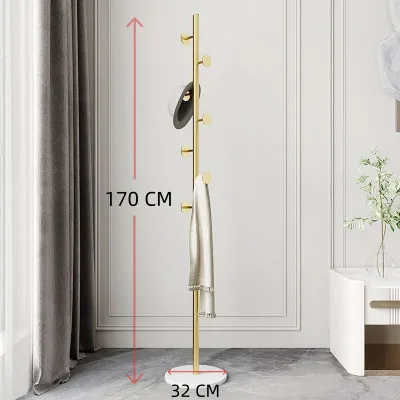
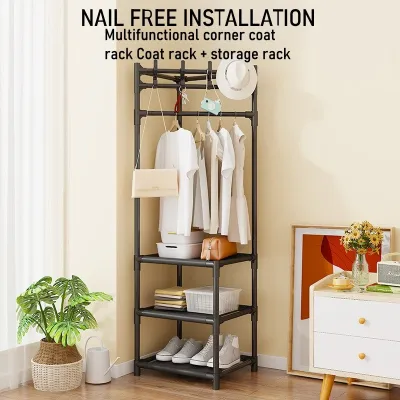
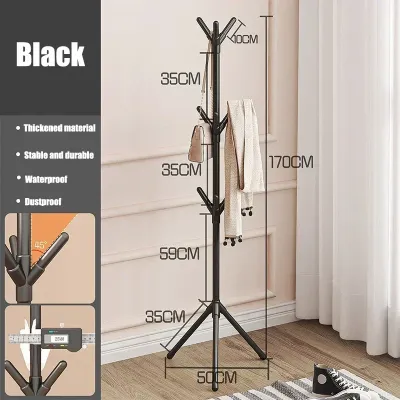
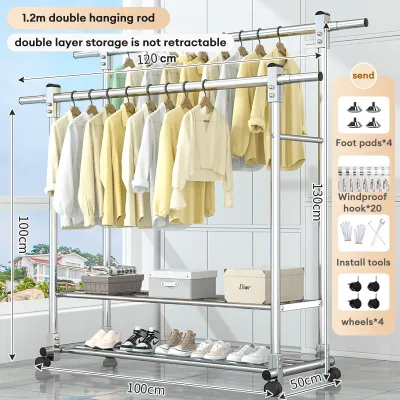
Prices are valid at publication and may change. Please refer to the product page for the latest price.
Inspecting the joints and weld points is crucial, as these are the areas where protective coatings are most likely to chip or thin out during assembly or use, exposing the raw material underneath to ambient moisture. When shopping, prioritize brands that explicitly state their rust-prevention treatments or use inherently corrosion-resistant materials like high-grade stainless steel or aluminum.
Beyond environmental resistance, spatial constraints in typical Housing & Development Board (HDB) flats and condominiums demand an exceptionally efficient physical footprint. Living spaces in modern BTO flats require furniture that maximizes vertical space without overwhelming the room’s floor area. A reliable stand must balance a compact footprint with a low center of gravity. If a closet stand has a narrow base but stands over 1.8 meters tall, it risks tipping over when loaded with heavy winter coats or unevenly distributed bags.
High-quality brands address this by engineering weighted bases, utilizing splayed leg designs, or providing dedicated wall-anchoring hardware to secure the unit safely. This stability is essential not only for the longevity of the furniture but also for the safety of everyone in the household.
Ultimately, reliability is defined by how well a closet stand maintains its structural integrity under load over several years. Standard residential models are often rated for specific weight limits, which must be clearly communicated by the manufacturer. A reliable unit will not bow or lean when filled to its stated capacity. It should feature reinforced connections—such as double-bolt joints or heavy-duty locking collars—rather than simple friction-fit plastic connectors that degrade under continuous pressure and temperature fluctuations.
Choose the Right Closet Stand Type for Your Space
Selecting a closet stand requires identifying how the unit will fit into your daily routine and home layout. Because the term encompasses everything from minimalist single-pole racks to expansive multi-bay wardrobe frames, matching the category to your specific storage volume is the first step toward a successful purchase.

Freestanding Coat Racks and Valet Stands
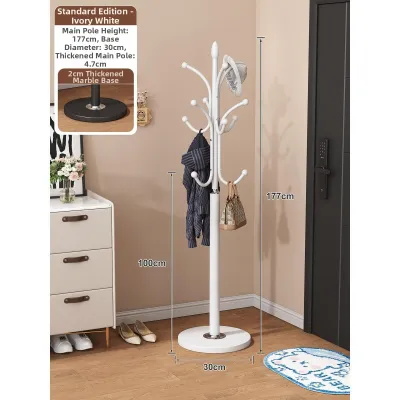
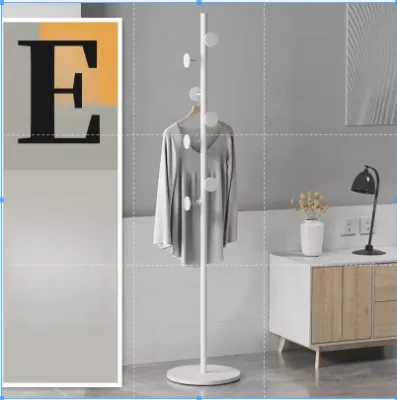
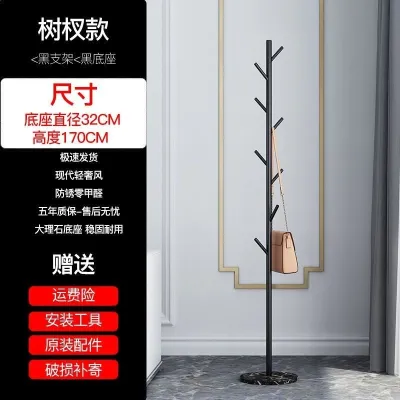
Freestanding coat racks and valet stands serve as highly accessible, transitional storage zones, typically positioned in entryways, foyers, or bedroom corners. These compact units are designed to hold active-wear items, hats, umbrellas, and bags that are used daily, keeping them off chairs and floor surfaces. Because they rely on a single central pillar, their structural stability is entirely dependent on the design of the base.
When evaluating these stands, look for models that feature a heavy marble, cast iron, or wide tripod base. A base that is too light will cause the stand to wobble or tip the moment a heavy backpack or damp trench coat is hung on one side. These stands are ideal for maintaining an organized entryway but are not designed to handle bulk clothing storage; overloading them with multiple layers of garments defeats their spatial purpose and compromises safety.
Portable Clothing Racks and Open Wardrobes
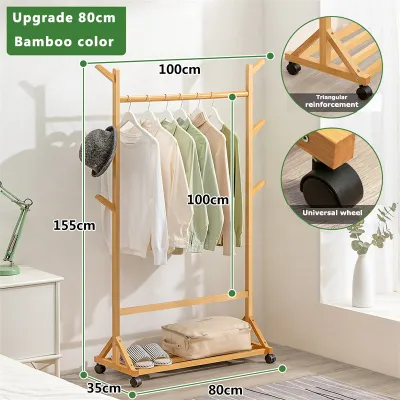
Portable clothing racks and open wardrobes offer a flexible, semi-permanent storage alternative for bedrooms lacking built-in cabinetry or for guest rooms requiring temporary hanging space. These units typically feature one or two horizontal hanging rails supported by a rectangular frame, often accompanied by lower shelves for shoe or storage box placement.
A key decision point when choosing a portable rack is deciding between rolling casters and fixed feet. Rolling racks provide excellent mobility, allowing you to move your wardrobe easily for cleaning or room rearranging, but they must feature high-quality, lockable wheels to prevent unwanted movement on smooth vinyl or tiled floors. Fixed-frame open wardrobes, on the other hand, offer superior overall stability and are often preferred for long-term placement. Some models come with fabric, canvas, or non-woven covers, which are highly beneficial in Singapore for protecting clothing from airborne dust and indirect sunlight exposure that can fade fabrics over time.
Heavy-Duty Garment Racks
For collectors with extensive wardrobes, heavy-duty garment racks provide the high-load capacity necessary to prevent structural failure. Unlike standard decorative stands, these commercial-grade racks are constructed from thicker gauge steel tubes, often featuring industrial-grade welding and boltless or heavy-bolt assembly mechanisms.
Before purchasing, it is critical to verify the manufacturer’s exact weight capacity ratings, which are typically split into static load limits (when the rack is stationary) and dynamic load limits (when the rack is being moved). Standard residential racks may only support 15 to 20 kilograms, whereas heavy-duty options can easily hold 50 to over 100 kilograms without bending. Avoid the temptation to overload lightweight, decorative metal racks with heavy winter wear or dense denim collections; doing so can cause the horizontal bars to bow permanently or cause the vertical supports to buckle at the joint connections.
Where to Find Trustworthy Closet Stand Brands
Singapore’s retail landscape offers several pathways to source reliable closet stands, depending on whether your priority is standardized global design, high-capacity industrial utility, or custom-fit modularity. Knowing where to shop and what to look for within each retail tier ensures you find a brand that stands behind its product quality.
Global Furniture and Lifestyle Retailers
For most homeowners, global furniture and lifestyle brands represent the most accessible starting point. These international retailers excel at producing standardized, design-cohesive closet stands that integrate seamlessly into modern Scandinavian, minimalist, or industrial interior themes. Brands like IKEA and MUJI are prominent examples in this category, offering highly recognizable designs that focus on simplicity and space-saving efficiency.
The primary advantage of sourcing from these established brands is the predictability of their product specifications. They provide clear, downloadable assembly instructions, exact dimensions, and transparent material compositions. Furthermore, their large-scale operations mean they offer reliable return policies and easily accessible customer service if a component is missing from your flat-pack box. To ensure the piece fits your space and matches your expectations, you can visit their local showrooms in Singapore to inspect the physical build quality, test the stability of the display models, and verify current stock availability before making a purchase.
Specialized Storage and Hardware Brands
If your storage needs lean toward maximum weight capacity, modular adaptability, or utility-room organization, specialized storage and hardware brands are the superior choice. These manufacturers focus exclusively on shelving, boltless racking, and heavy-duty storage systems, often utilizing industrial-grade materials such as galvanized steel, high-tensile carbon steel, or chrome-plated metal.
Specialized brands often design modular systems, allowing you to add extra hanging rods, wire baskets, or adjustable shelves as your storage needs evolve. Their locking mechanisms—often featuring interlocking keyhole or rivet designs—distribute weight much more evenly than standard screw-together models. When purchasing from these brands, look for companies that maintain dedicated physical showrooms or work through authorized local distributors in Singapore. This ensures that you receive genuine products, have access to compatible add-on accessories in the future, and can easily process warranty claims or obtain replacement parts if needed.
Local Custom and Modular Solutions
Off-the-shelf closet stands may not always fit the specific architectural quirks of Singaporean homes, such as narrow HDB hallway alcoves, bomb shelter entryways, or awkward bedroom corners. In these scenarios, engaging local carpentry firms or specialized modular wardrobe providers offers a tailored solution that maximizes every millimeter of available space.
Modular wardrobe specialists design semi-freestanding or floor-to-ceiling systems that mimic the look of built-in cabinetry but offer the flexibility of adjustable internal configurations. While this route requires a higher financial investment than freestanding retail models, it allows you to customize the materials, finishes, and dimensions to perfectly match your home’s aesthetic. When working with local custom providers, always verify their credentials, ask for detailed material safety specifications (such as low-formaldehyde boards), and clarify the terms of their installation safety standards and structural warranties.
What to Verify Before Buying a Closet Stand
To avoid the frustration of returning a bulky piece of furniture, perform a thorough verification process before finalizing your purchase.
Begin by taking precise measurements of the designated installation area. Do not rely on visual estimation; use a physical measuring tape to record the available floor width, depth, and total ceiling height. Ensure there is adequate clearance for nearby doors, wardrobe panels, and walkways to open fully without striking the closet stand. Additionally, check the path from your building’s unloading bay to your front door—including lift door dimensions, elevator ceiling heights, and narrow corridor corners—to guarantee that the packaged box or pre-assembled unit can be safely transported into your home.
Next, evaluate the assembly requirements of the selected model. Many online-ordered closet stands arrive flat-packed and require self-assembly. Check the product description to see if the necessary tools, such as Allen keys or specialized wrenches, are included in the package, or if you will need your own screwdriver, hammer, or level. If you are uncomfortable with DIY assembly or lack the physical strength to handle heavy metal frames, verify whether the retailer offers professional on-site assembly services in Singapore and factor any associated service fees into your overall budget.
Finally, prioritize safety, particularly if the stand is tall, narrow, or intended to hold a significant volume of clothing. Look for models that include anti-tip kits or wall-anchoring brackets, which allow you to secure the top of the frame directly to your wall’s concrete or drywall studs. Always compare the total estimated weight of your clothing collection against the manufacturer’s stated maximum load capacity. When loading the stand, place heavier items like shoes, storage boxes, and heavy denim on the bottom shelves to lower the overall center of gravity, and distribute hanging garments evenly across the rail to prevent lateral stress on the joints.
Additionally, consider the floor surface of your home. Heavy metal feet can scratch soft wood floors, such as parquet or engineered timber, if they are not fitted with protective rubber or felt pads. Verify whether the closet stand includes protective floor caps, or purchase compatible aftermarket floor protectors to safeguard your flooring from permanent indentations and scratches.
Frequently Asked Questions (FAQ)
How do I prevent my metal closet stand from rusting in Singapore's humidity?
To protect your metal closet stand from rust, place it in a well-ventilated area of your home, away from direct sources of moisture such as bathroom doors, open windows during rainstorms, or air conditioning units that might drip condensation. Avoid hanging damp clothes, wet towels, or wet umbrellas directly on the metal frame. Establish a regular maintenance routine by wiping down the metal surfaces with a dry, soft microfiber cloth to remove accumulated dust and ambient moisture.
Always consult the manufacturer’s care instructions before applying any cleaning agents; avoid harsh chemical solvents, bleach, or abrasive scrubbing pads, as these can scratch or degrade the protective powder-coated or chrome finish, leaving the underlying steel vulnerable to oxidation.
Are freestanding closet stands safe for homes with young children or pets?
Freestanding closet stands can pose a significant tipping hazard in households with active children or pets who might climb, pull, or bump into the furniture. To minimize this risk, select models designed with a low center of gravity, featuring a wide, heavily weighted base or a broad A-frame structure. Avoid tall, top-heavy single-pole designs in high-traffic areas.
The most reliable safety measure is to secure the stand to the wall using an anti-tip kit or wall-anchoring straps, following the manufacturer’s safety guidelines precisely. Supervise young children around open clothing racks, and teach them not to hang on the rails or pull on stored items.
Community discussion
Share your experience or ask a question. Comments are reviewed before publication.