
Choosing between a faux marble table and a real marble dining table for your Singapore home comes down to balancing aesthetic prestige with daily practicality, delivery logistics, and budget. While genuine marble offers unparalleled natural beauty, modern faux marble alternatives provide exceptional durability and easier maintenance, making them highly suitable for busy households and high-rise apartments.
Real vs. Faux Marble: Comparing the Essentials
To make an accurate comparison, it is essential to understand what these materials are and how they are constructed. Genuine marble is a natural metamorphic rock formed over millions of years under intense heat and pressure. This organic process results in a highly porous stone characterized by its distinctive veining, subtle color variations, and natural imperfections. Because no two slabs of natural marble are identical, owning a real marble table means possessing a completely unique piece of functional art.
In contrast, faux marble is a broad category encompassing several engineered materials designed to replicate the appearance of natural stone. Sintered stone and porcelain are created by subjecting natural minerals and clay to extreme heat and pressure, mimicking the earth’s natural metamorphic process in a matter of hours. Engineered quartz combines crushed natural quartz crystals with polymer resins and pigments to form a dense, non-porous slab. High-pressure laminates (HPL) utilize a composite wood core topped with a high-resolution printed photographic layer of marble veining, sealed under a protective wear layer.
Products mentioned in this guide
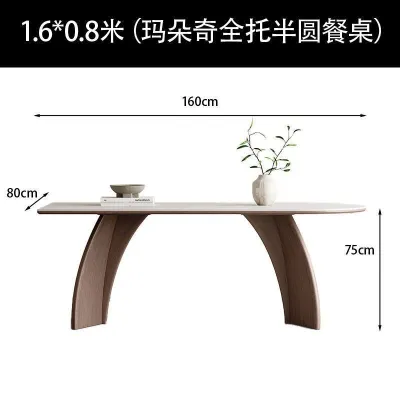
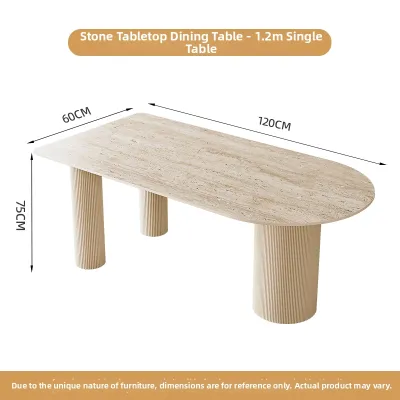
2 Lazada user ratings
🛏️Comfort:Very nice to sit in. it does come in three different packages. I honestly thought I got scammed when I only received the three tabl…Read full reviewShow less
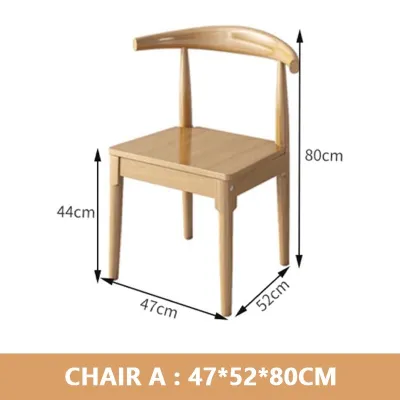
🛏️Comfort:Very nice to sit in. it does come in three different packages. I honestly thought I got scammed when I only received the three table legs 😅 🔧Durability:the chairs do rock but I don't think that's the manufacturing problem. 🎨Design:I like
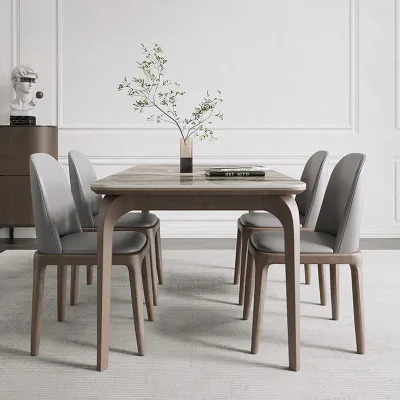
Looks beautiful. It matches perfectly! ❤️❤️❤️❤️
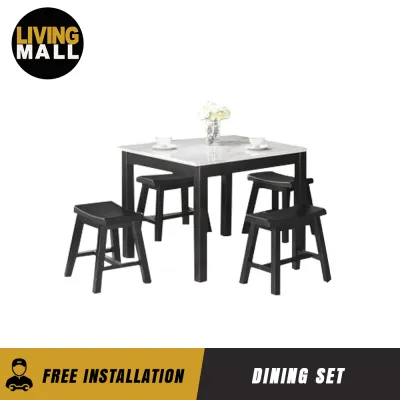
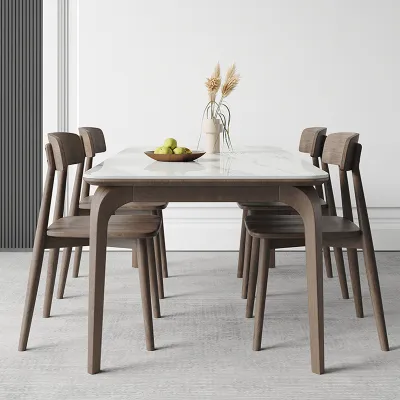
1 Lazada user ratings
Overall very happy with the purchase, the table took nearly a month to arrive but the seller was very responsive at all times to keep me up …Read full reviewShow less
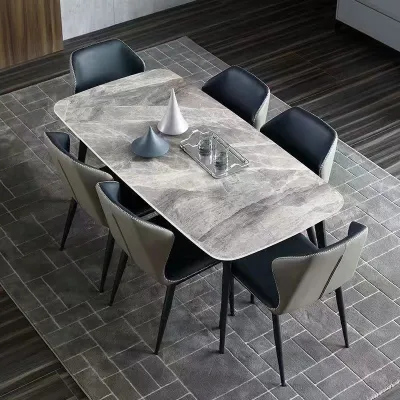
Overall very happy with the purchase, the table took nearly a month to arrive but the seller was very responsive at all times to keep me up to date on the state of the shipment. Assembly was simple, there were no written instructions in the package but the seller provided step-by-step videos. The sintered stone top looks beautiful, and the chairs are comfortable, recommended!
Prices are valid at publication and may change. Please refer to the product page for the latest price.
When visiting a furniture showroom in Singapore, you can easily verify the differences between these materials through visual and tactile checks. Real marble has a distinct depth of texture, and its veining runs completely through the thickness of the slab. If you look at the edge profile of a genuine marble table, you will see the pattern continue seamlessly. Many lower-cost faux marble options, particularly printed laminates or some basic porcelains, only feature the pattern on the top surface, leaving a solid or mismatched edge. Additionally, real marble has high thermal mass, meaning it feels consistently cool to the touch, whereas laminates and resin-heavy quartz tend to adjust more quickly to the ambient room temperature.
Price and Long-Term Value in Singapore
Budget is a primary consideration for most homeowners, and the price gap between natural and engineered materials can be substantial. In Singapore, a genuine marble dining table is considered a premium luxury purchase. Prices for a standard six-seater real marble table typically start around S$1,500 and can easily exceed S$5,000 or more. The final cost is heavily influenced by the rarity of the stone—such as premium Italian Carrara or Calacatta marble—the thickness of the slab, and the complexity of the supporting base structure, which must be exceptionally robust to hold the weight.

Faux marble dining tables offer a much wider range of price points, making them highly accessible for various budgets. A high-quality laminate or standard porcelain-topped table can range from S$400 to S$1,200, offering an attractive aesthetic at a fraction of the cost. However, premium sintered stone tables, which utilize advanced manufacturing techniques to achieve realistic through-body veining and extreme durability, can sometimes approach the price of entry-level natural marble, often retailing between S$1,200 and S$2,500.
When evaluating long-term value, you must look beyond the initial purchase price and consider maintenance and restoration costs. Real marble tables require periodic professional resealing—typically every one to two years—to maintain their barrier against liquids, which adds a recurring maintenance cost. If a natural marble surface becomes heavily etched, stained, or scratched, restoring its original luster requires professional grinding and polishing services. Faux marble alternatives, particularly sintered stone and quartz, require no sealing or specialized long-term maintenance, offering excellent cost-efficiency over their lifespan. However, it is worth noting that while deep scratches or chips in natural marble can be professionally polished out, severe damage to a printed faux marble surface is often permanent and cannot be easily repaired.
Weight Constraints for HDB and Condo Deliveries
The physical weight of your dining table is a critical factor that is often overlooked until the day of delivery. This is especially true in Singapore, where the vast majority of residents live in high-rise HDB flats or condominium apartments. A solid natural marble dining table is incredibly heavy; a standard 1.8-meter table slab can easily weigh between 120kg and 180kg, excluding the heavy metal or wooden base required to support it safely.
Moving such a heavy, rigid object into a high-rise home presents significant logistical challenges. Standard passenger lifts in HDB blocks and older condominiums have strict weight limits and tight interior dimensions. Before purchasing a real marble table, you must measure the lift door width, interior height, and diagonal depth to ensure the slab can physically fit inside. If the table cannot fit into the lift, delivery teams must carry the massive slab up the stairwell. This process involves navigating tight turning radiuses, low ceilings, and multiple flights of stairs, which can pose safety risks to the handlers and potential damage to the stone.
Because of the physical labor involved, delivery companies in Singapore almost always charge steep manual handling surcharges for stairwell deliveries, often calculated per floor. These fees can quickly add hundreds of dollars to your overall purchase price. In extreme cases, where a massive slab cannot navigate the stairwell or the lift, specialized crane or rigging services may be required to hoist the table through a balcony, which is exceptionally costly and requires prior management approval. Faux marble tables, particularly those made with slim sintered stone or lightweight laminate tops, are significantly lighter and easier to maneuver, minimizing delivery risks, reducing labor costs, and eliminating the need for structural floor reinforcement.
Daily Upkeep and Stain Resistance
The reality of daily life around the dining table involves spills, hot dishes, and occasional rough handling. Natural marble is a highly porous material composed primarily of calcium carbonate, making it chemically sensitive to acids. Common household ingredients such as lemon juice, vinegar, tomato sauce, coffee, and red wine can cause immediate and permanent damage. If these acidic liquids are left on an unsealed or poorly sealed marble surface for even a few minutes, they will chemically react with the stone, etching the surface and leaving dull, cloudy marks that cannot be simply wiped away.
Faux marble alternatives offer excellent resistance to the hazards of daily dining. Sintered stone and high-quality porcelain are virtually non-porous, meaning they do not absorb liquids and are highly resistant to staining, even from dark sauces or red wine. They are also incredibly hard surfaces, making them highly resistant to scratches from cutlery or keys. Engineered quartz is similarly stain-resistant and highly durable, though it can be sensitive to highly alkaline or acidic commercial cleaning chemicals.
Heat resistance is another area where material differences dictate how you use your table. Sintered stone and porcelain are manufactured at temperatures exceeding 1,200 degrees Celsius, giving them exceptional thermal stability. However, other faux marble options, such as engineered quartz (which contains polymer resins) and high-pressure laminates, can suffer permanent discoloration, cracking, or warping if subjected to extreme heat. Real marble can also suffer from thermal shock, which can cause micro-cracks in the stone. Regardless of the material you choose, the safest practice is to always use trivets, heat pads, or placemats under hot pots and pans to protect the surface finish.
Routine cleaning practices differ significantly between the two categories. To maintain a real marble table, you must use only pH-neutral stone cleaners or a mild, diluted dish soap mixed with warm water, followed immediately by drying the surface with a soft microfiber cloth. Standard household glass cleaners, multi-purpose sprays, or abrasive scrubbing pads will strip away the protective sealant and damage the stone. Faux marble tables are far more forgiving; a simple wipe down with a damp cloth and standard mild household detergent is usually all that is required to keep the surface clean and hygienic.
Decision Framework: Choosing the Right Table for Your Home
To finalize your decision, it is helpful to evaluate your household’s specific priorities, living arrangements, and lifestyle habits against the characteristics of each material.
You should choose a real marble dining table if:
- Your budget comfortably accommodates a premium initial purchase price and potential long-term maintenance or restoration costs.
- You have verified that your building's passenger lift or service lift can safely accommodate the dimensions and weight of a solid stone slab.
- You highly value natural, organic materials and appreciate the unique, evolving patina that natural stone develops over years of use.
- Your household is mindful of maintenance, willing to use specialized cleaning products, and committed to wiping up spills immediately.
You should choose a faux marble dining table if:
- You live in a high-floor HDB or condominium apartment with tight lift access and want to avoid complex delivery logistics or stairwell surcharges.
- You have young children, pets, or a busy household where spills, dropped utensils, and messy craft projects are common occurrences.
- You prefer a low-maintenance, "wipe-and-forget" surface that does not require periodic sealing or specialized cleaning solutions.
- You want the elegant look of marble but prefer to allocate your home renovation budget across multiple areas.
Before making any final purchase, always measure your dining area carefully, ensuring there is at least 90 centimeters of clearance between the table edge and the nearest wall or furniture piece to allow for comfortable seating and movement. Additionally, consult your building’s management office regarding delivery guidelines, weight restrictions, and any required security deposits or permits to ensure a smooth delivery day.
Frequently Asked Questions (FAQ)
Can I place hot pots directly on a faux marble table?
Whether you can place hot cookware directly on a faux marble table depends entirely on the specific material used for the tabletop. Sintered stone and high-grade porcelain have exceptional heat tolerance and can withstand direct contact with hot pots without scorching or cracking. However, engineered quartz contains resin binders that can melt or discolor under high heat, and high-pressure laminates can warp or blister. To prevent thermal shock or surface damage, it is highly recommended to use trivets or heat-resistant mats as a standard precaution for all tabletop materials.
Does faux marble look cheap compared to the real thing?
Modern manufacturing advancements have significantly closed the aesthetic gap between natural stone and engineered alternatives. High-end sintered stone and porcelain tables utilize ultra-high-definition digital printing and advanced surface texturing to replicate the depth, color variation, and veining of natural marble. To ensure you are buying a high-quality faux marble table, inspect the piece in person. Look for realistic veining that matches the surface texture, check whether the pattern continues naturally around the edges, and avoid repeating patterns that can make the table look artificial.

Community discussion
Share your experience or ask a question. Comments are reviewed before publication.