
Choosing a fabric electric sofa bed for a compact HDB living room requires a systematic approach to spatial planning and mechanical verification. Because HDB flats often feature tight entryways and limited living room square footage, a successful purchase depends on matching the sofa’s physical footprint with your home’s actual layout. By focusing on precise clearance measurements, fabric durability ratings, and motor specifications, you can find a multi-functional piece that provides comfortable seating without obstructing daily foot traffic.
Unlike traditional manual click-clack sofa beds, electric models utilize motorized mechanisms to transition from a seated position to a flat sleeping surface. This automation adds convenience but also introduces electrical components, extra weight, and specific clearance needs that must be carefully managed. Evaluating these factors before visiting a showroom ensures you select a model that is both highly functional and durable enough to withstand daily use in Singapore’s warm, humid climate.
Key Selection Criteria for Compact Layouts
When shopping for an electric sofa bed for a compact HDB living room, the physical proportions and visual weight of the piece are your first considerations. Large, overstuffed sofas with wide, rolled armrests can quickly overwhelm a small room, making the entire space feel cramped and restricted. To maintain an open, airy aesthetic, look for models with slim, structured armrests or even armless designs that maximize the actual seating area while keeping the overall width to a minimum. Raised legs that elevate the base of the sofa off the floor can also create the illusion of more space by allowing light to pass underneath.
Products mentioned in this guide
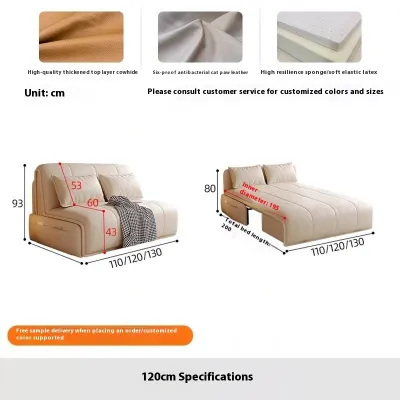
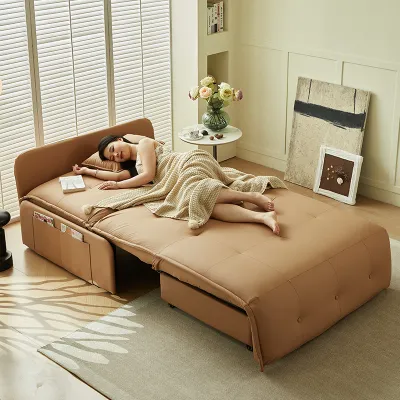
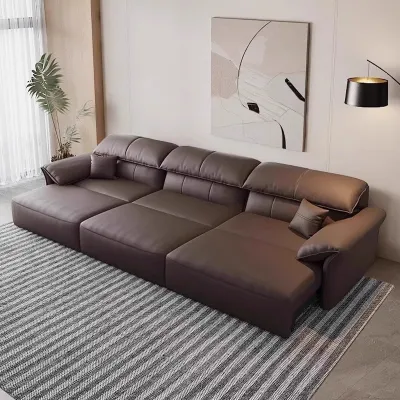

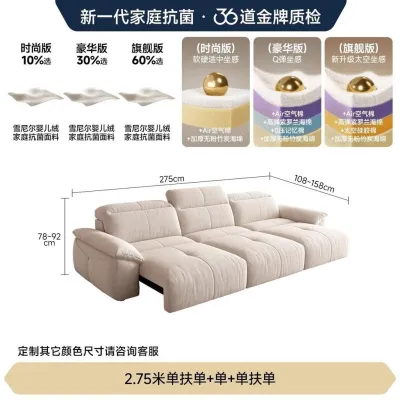
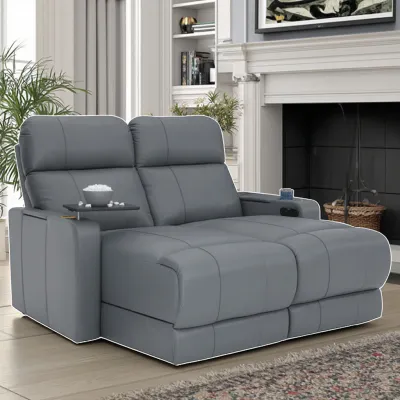
Prices are valid at publication and may change. Please refer to the product page for the latest price.
Another critical factor is the functional frequency of the sofa bed, which determines whether you should prioritize seating comfort or sleeping support. If the unit will serve primarily as your main living room sofa and only occasionally host overnight guests, focus on cushion density, back support, and reclining angles that suit daily lounging. Conversely, if the sofa bed is intended for nightly use, you must prioritize a mechanism that supports a high-quality, high-density foam or pocket spring mattress to prevent back discomfort over time. Balancing these two functions requires a realistic assessment of your household’s daily routines.
Wall and front clearance are perhaps the most vital spatial constraints for electric reclining mechanisms. Many standard electric sofas require significant space behind the backrest to recline fully, which means they cannot be pushed flush against the wall. For tight HDB layouts, look specifically for “zero-wall” or “wall-hugging” mechanisms; these specialized designs slide the seat forward as the backrest reclines, requiring only a few centimeters of clearance from the wall. Additionally, you must measure the front clearance to ensure that when the footrest or bed is fully extended, it does not block access to essential areas like the balcony, kitchen entrance, or main corridor.
Evaluating Fabric Specifications and Electric Mechanisms
The durability of your electric sofa bed depends heavily on the quality of its upholstery fabric and the engineering of its motorized parts. Singapore’s high humidity levels can accelerate wear and trap moisture in fabrics, making material selection a key priority. Rather than relying on generic terms like “synthetic blend” or “performance fabric,” check the manufacturer’s specifications for the Martindale or Wyzenbeek abrasion rating. For a standard household, a rating of 15,000 to 20,000 rubs is recommended for durability, while homes with pets or young children should look for heavy-duty fabrics rated at 30,000 rubs or higher.

Stain resistance and cleanability are equally important for maintaining the appearance of a fabric sofa over time. Review the care label attached to the sofa to identify its cleaning code, which dictates how spills should be treated. A code of “W” means the fabric can be cleaned with water-based cleaning agents, while “S” requires mild, water-free dry-cleaning solvents. Many modern performance fabrics feature liquid-repellent coatings that cause spills to bead up on the surface rather than soaking into the fibers, allowing for easy cleanup with a dry cloth.
The electric mechanism itself requires close inspection to ensure long-term reliability and safety. Check the product specifications for the motor’s operating noise level, which should ideally remain below 50 decibels for quiet, smooth transitions. Verify the maximum weight capacity of the motorized mechanism, ensuring it can safely support multiple seated adults or the weight of sleepers when fully deployed. It is also wise to check if the system includes a manual override or a built-in backup battery compartment, which allows you to operate the sofa bed manually or via battery power during an electrical outage.
Finally, examine the internal frame and joint construction, as these components bear the physical stress of both the users and the motor’s torque. High-quality electric sofas typically feature frames constructed from kiln-dried hardwood or reinforced steel, which resist warping in humid environments. Check that the connection points where the motorized mechanism attaches to the frame are reinforced with heavy-duty bolts and metal brackets rather than simple wood screws or staples. A sturdy frame prevents the mechanism from shifting out of alignment, which can cause the motor to strain or fail prematurely.
Space Planning and Delivery Clearance Checks
Accurate space planning is the most effective way to avoid delivery day disappointments and layout mistakes. Before making a purchase, obtain the exact dimensions of the sofa bed in both its fully closed (sofa) and fully deployed (bed) states. Use masking tape or newspaper to lay out these dimensions on your living room floor, leaving the template in place for a few days. This physical representation allows you to walk around the space and experience how the furniture affects the flow of your room before committing to a purchase.
Circulation pathways must remain clear even when the sofa bed is fully extended for sleeping. As a general rule, aim to maintain a minimum pathway of 60cm to 75cm around the sides and foot of the bed to allow for safe, comfortable movement at night. If your living room layout includes a coffee table or a TV console, verify that these items do not need to be completely removed from the room to accommodate the extended bed. Opting for lightweight, mobile coffee tables or nesting tables can make it much easier to clear the necessary floor space when transitioning the sofa.
Delivery access is another critical hurdle that is frequently overlooked by buyers in high-rise HDB estates. Electric sofa beds are significantly heavier and less flexible than standard sofas due to their internal steel mechanisms and motors, meaning they cannot be easily squeezed through tight spaces. Measure the height, width, and diagonal depth of your building’s lift car, as well as the clear opening of the lift doors, to ensure the packaged sofa can fit inside. Additionally, measure the width of your HDB unit’s main door, the clearance of the metal safety gate, and any tight turns in your entry corridor to guarantee a smooth delivery process.
Assessing Value, Warranty, and Retailer Support
Investing in an electric sofa bed involves evaluating not just the upfront purchase price, but also the long-term value and protection offered by the retailer. Because these pieces combine upholstery, structural framing, and electrical components, warranties are typically segmented into different coverage periods. A reputable retailer should offer a clear breakdown: a longer warranty (often 5 to 10 years) for the structural frame, a moderate warranty (typically 1 to 3 years) for the electric motor and mechanical parts, and a shorter warranty (usually 1 year) for the fabric and foam cushioning. Be sure to read the terms to understand what constitutes normal wear and tear versus a manufacturing defect.
When calculating the total cost of ownership, clarify all delivery, assembly, and disposal fees with the retailer before finalizing your order. Electric sofa beds are complex to assemble, and improper installation can lead to misaligned tracks or damaged wiring. It is highly recommended to opt for professional assembly services, which may be included in the price or offered as an additional service fee ranging from S$50 to S$150. If you need to dispose of an existing sofa, check if the retailer offers a disposal service and confirm the associated S$ fees, as HDB town councils have specific regulations regarding bulky waste disposal.
Finally, always conduct an in-person showroom test before making your final decision. Sit on the sofa to evaluate the firmness of the cushions and the height of the seat, ensuring it provides comfortable support for your daily activities. Operate the electric mechanism multiple times to check for smooth, continuous movement without any jerking, stuttering, or unusual mechanical noises. Lie down on the extended bed to ensure that the transition joints between the cushions are well-padded and do not create uncomfortable pressure points against your back or shoulders.
Frequently Asked Questions (FAQ)
Do electric sofa beds require a dedicated power outlet? (FAQ)
Electric sofa beds require access to a standard electrical outlet to power the motor and reclining mechanisms. While they do not typically require a dedicated circuit, they should be positioned close enough to an outlet so that the power cord can be routed safely without stretching. Avoid running power cords across main walking paths where they can create a tripping hazard or become damaged by foot traffic. If your HDB layout places the sofa away from a wall outlet, consider using low-profile cord covers or consulting an electrician to install a floor outlet for a cleaner, safer setup.
How should I maintain the fabric and moving parts? (FAQ)
To keep your fabric electric sofa bed in optimal condition, establish a regular maintenance routine based on the manufacturer’s guidelines. Vacuum the fabric weekly using a soft brush attachment to remove dust, pet dander, and grit that can abrade the fibers over time. For the mechanical components, periodically inspect the metal tracks and hinges to ensure they are free of dust, lint, or stray threads that could strain the motor. Do not apply household lubricants or oils to the mechanism unless the user manual explicitly instructs you to do so, as these substances can attract dirt and cause the moving parts to clog or malfunction.

Community discussion
Share your experience or ask a question. Comments are reviewed before publication.