
Selecting a 10-inch queen mattress requires balancing physical comfort with structural support. While many brands offer this highly sought-after profile, the ideal choice depends on how a brand’s specific material construction, firmness scale, and trial policies align with your individual sleep profile. A 10-inch (approximately 25 cm) thickness represents a practical sweet spot for many households, offering sufficient depth for advanced comfort layers without the excessive weight or height of thicker profile beds.
To make an informed decision, you must look past marketing buzzwords and evaluate the physical specifications of the mattress. This guide breaks down the essential dimensions, firmness mechanics, material properties, and logistical considerations to help you identify the right mattress for your home.
Understanding 10-Inch Queen Mattress Dimensions and Support
When planning your bedroom layout, understanding the exact physical footprint of a queen-size mattress is the first step. In Singapore, a standard queen mattress typically measures 152 cm in width by 190 cm in length. This differs slightly from international standards, such as those in the United States or Europe, which often measure 152 cm by 203 cm. Ensuring your bed frame matches the specific regional dimensions of your chosen mattress brand is critical to prevent overhang or gaps.
Products mentioned in this guide
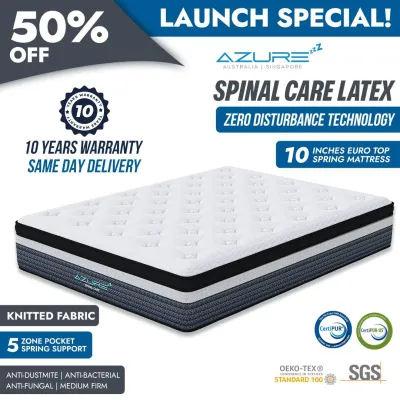

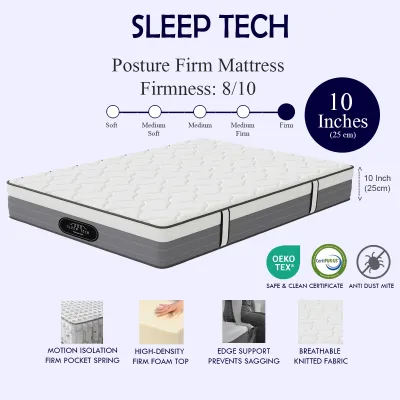
![[Same day delivery] SleepLab Comfort / Individual Pocketed Spring EuroTop Memory Foam /10inch Mattress](https://img.lazcdn.com/g/p/547488493bece027983951d3a6f5ac66.png_400x400q80.png_.webp)
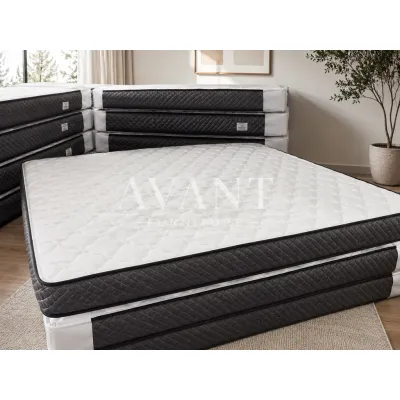
Prices are valid at publication and may change. Please refer to the product page for the latest price.
Spatial clearance around the bed is equally important for maintaining a functional bedroom. For comfortable movement, daily bed-making, and access to wardrobes, you should maintain a minimum of 60 cm to 75 cm of open space on the three open sides of the queen frame. If your bedroom is compact, a 10-inch profile helps keep the visual plane of the room lower, creating an illusion of more open space compared to bulky 12-inch or 14-inch models.
The 10-inch profile is highly regarded because of how it balances comfort and support. In a well-engineered mattress, this thickness is divided into a supportive base layer (typically 6 to 7 inches of high-density foam or pocketed coils) and a comfort layer (3 to 4 inches of memory foam, latex, or transition foam). This ratio provides enough deep compression support for average-weight sleepers while ensuring the comfort layers adequately cushion pressure points.
Before purchasing, you must verify the compatibility of your existing bed frame. A 10-inch mattress is compatible with most standard setups, including platform beds, slatted frames, and divans. However, you must check the height of your headboard; a mattress that is too thin or too thick can obscure the headboard design or leave an awkward gap where pillows can slip through. Additionally, ensure the frame is rated to support both the weight of a 10-inch mattress and its occupants.
How to Determine Your Ideal Firmness Level
Your primary sleeping position is the most critical factor in determining your ideal firmness level. Side sleepers require a mattress that allows the shoulders and hips to sink sufficiently to keep the spine aligned. This typically requires a soft to medium-soft feel (3 to 5 on a standard 10-point scale). Without this pressure relief, side sleepers often experience morning stiffness or numbness in their arms due to restricted circulation.

Back sleepers need a more balanced surface that supports the natural curve of the lower lumbar region. A medium to medium-firm mattress (6 to 7 on the scale) is generally ideal, as it prevents the hips from sagging too deeply while still cushioning the upper back and shoulders. Stomach sleepers, on the other hand, require a firm to extra-firm surface (7.5 to 9 on the scale) to keep their pelvis aligned with their shoulders, preventing lower back hyperextension.
Body weight distribution significantly alters how you perceive a mattress’s firmness. A lighter individual (under 60 kg) does not compress the comfort layers deeply and will likely perceive a mattress as firmer than its official rating. Conversely, a heavier individual (over 90 kg) will sink through the comfort layers and interact directly with the stiffer support core, perceiving the mattress as much softer. Heavier sleepers should look for firmer ratings or hybrid constructions to prevent bottoming out.
It is important to recognize that firmness scales are highly subjective and vary between brands. A “medium-firm” label from one manufacturer might feel like a true firm from another. To navigate this discrepancy, cross-reference user reviews with a focus on the reviewer’s self-reported body weight and sleeping position. Look for patterns in feedback regarding whether the mattress softened significantly after a few weeks of use.
Key Features to Evaluate When Comparing Mattress Brands
When comparing different mattress brands, the internal construction dictates how the bed will perform over time. The three primary core support systems behave differently:
- Pocket Spring Systems: These consist of individually wrapped coils that move independently. They offer excellent contouring, superior motion isolation for couples, and high breathability, which is highly beneficial in warm, humid climates.
- All-Foam Systems: Typically utilizing a high-density polyurethane foam base topped with memory foam or latex. These excel at pressure relief and motion isolation but can retain body heat if they lack open-cell structures or cooling gel infusions.
- Hybrid Systems: Combining pocket springs with thick foam or latex comfort layers. Hybrids offer the responsive bounce and airflow of springs alongside the deep contouring of foam, making them a highly versatile choice.
Brand policies are just as crucial as the physical mattress construction. Because it takes the body up to 30 nights to adjust to a new sleeping surface, prioritize brands that offer a risk-free sleep trial of at least 90 to 100 nights. Read the fine print of these trials carefully: verify if the brand charges a return pickup fee, if you must retain the original plastic packaging, and how returned mattresses are disposed of or donated.
Warranty coverage provides a strong indication of a brand’s confidence in its product’s durability. A standard mattress warranty should span 10 years, but you must check what specific defects are covered. Pay close attention to the allowable depth of permanent sagging; reputable brands will cover sagging or indentations that exceed 2.5 cm, whereas less reliable warranties may only trigger if the sag exceeds 3.8 cm.
Finally, examine the manufacturer’s technical specifications for material density and edge support. For memory foam layers, a density of 48 kg/m³ or higher indicates good durability and resistance to premature softening. Edge support is another critical factor, especially for a 10-inch queen mattress shared by two people. Look for brands that incorporate reinforced foam perimeters or thicker gauge coils around the edges to prevent the sensation of rolling off the bed.
Condition-Based Shortlist: Matching Firmness to Sleep Profiles
To simplify your search, you can categorize your options based on specific firmness profiles and material constructions. This allows you to match your physical needs directly to the engineering of the mattress.
Soft to Medium-Soft (3 to 5 on the Firmness Scale)
This profile is engineered primarily for side sleepers, lighter individuals, and those who prefer a plush, cloud-like sleeping sensation. To achieve this feel in a 10-inch profile, brands typically use thick, low-density memory foam or plush natural latex comfort layers over a flexible pocket spring base. The goal is to maximize surface contouring. When verifying these models, check that the transition layer is supportive enough to prevent your hips from contacting the rigid support core beneath.
Medium to Medium-Firm (6 to 7 on the Firmness Scale)
Often referred to as the “universal comfort” range, this profile is highly recommended for combination sleepers, couples with differing firmness preferences, and guest bedrooms. A typical construction features a balanced hybrid design: a 2-inch comfort layer of responsive latex or gel-infused memory foam, a 1-inch transition foam, and a 7-inch pocketed coil base. This configuration provides initial pressure relief followed quickly by upward support. Verify that the pocket springs are zoned, meaning they are firmer in the center third of the mattress to support the lumbar spine.
Firm to Extra-Firm (8 to 10 on the Firmness Scale)
Designed for stomach sleepers, back sleepers who require rigid spinal support, and heavier individuals. These mattresses utilize high-density support foam bases or low-gauge (thicker wire) coil systems with very thin, high-density comfort padding on top. The surface has very little give, ensuring the body remains flat on top of the mattress rather than sinking into it. To verify the quality of an extra-firm model, ensure the top foam layers have a high density rating so they do not soften rapidly under heavy use.
Before finalizing your choice, perform a specifications check. Request a detailed layer breakdown from the brand’s customer service if it is not listed on their website. Ensure that any claims of “cooling” or “orthopaedic support” are backed by physical design features, such as open-cell foam structures, natural latex layers, or zoned spring arrangements, rather than just marketing terminology.
Pre-Purchase Checks for Delivery and Home Setup
Before placing your order, you must plan for the physical delivery and installation of your new queen mattress. If you live in a high-rise apartment or condominium, measure the interior dimensions of your building’s elevator, as well as stairwell clearances and tight corners in your corridors. Even though many modern 10-inch mattresses are shipped compressed in a box, the box itself is bulky, often exceeding 1.6 meters in height, and can be difficult to maneuver.
Once the mattress arrives, understand the setup requirements for compressed beds. A bed-in-a-box mattress must be unboxed within a specific timeframe recommended by the manufacturer to prevent structural damage to the coils or foam. Upon opening, the mattress will begin to expand immediately, but it typically takes 24 to 72 hours to reach its full 10-inch height and structural firmness. During this expansion period, keep the room well-ventilated to allow any manufacturing odors (off-gassing) to dissipate.
Finally, clarify all delivery logistics and associated fees directly with the retailer or brand official store. Some brands offer free standard delivery but charge additional fees for walk-up apartments without lift access, weekend deliveries, or specific time slots. If you need assistance moving your old bed, confirm whether the brand offers a disposal service. In Singapore, many condominium managements and town councils have strict rules regarding bulky waste disposal, so coordinating this service through the mattress retailer can save significant time and effort.
Frequently Asked Questions (FAQ)
Can I adjust the firmness of a 10-inch mattress after purchase?
Yes, you can modify the surface feel of a 10-inch mattress after purchase, though your options are primarily limited to making a firm mattress feel softer. Adding a mattress topper made of memory foam, gel foam, or natural latex can introduce a plush comfort layer to a bed that feels too rigid. Toppers typically range from 2 to 3 inches in thickness; however, adding a thick topper will increase the overall height of your sleeping surface, which may require deep-pocket fitted sheets.
Making a soft mattress firmer is significantly more challenging. While a high-density, firm foam topper can add a slight layer of surface tension, it cannot fix a mattress that is sagging due to a weak support core. Before purchasing, check if the brand offers a flippable design with different firmness levels on each side, or a modular zipper cover that allows you to rearrange the internal foam layers. Attempting to modify the internal layers of a sealed mattress yourself will void the manufacturer’s warranty.
Does a 10-inch mattress require a specific bed frame or foundation?
To maintain structural integrity and preserve your warranty, a 10-inch queen mattress must be paired with a compatible, supportive foundation. If you are using a slatted bed frame, the gaps between the slats should not exceed 7.5 cm (3 inches). Slats that are spaced too far apart allow the mattress materials to pocket downward under weight, leading to premature sagging, uneven wear, and a loss of support.
For queen-sized frames, a center support rail with at least one support leg extending to the floor is absolutely essential. Without center support, the frame will bow in the middle, causing the mattress to sag inward. Platform beds, solid divan bases, and adjustable bases are generally excellent options for modern 10-inch foam and hybrid mattresses. Avoid using traditional, flexible box springs designed for older innerspring models, as they do not provide the rigid, flat foundation required by modern foam and pocket spring constructions.
Community discussion
Share your experience or ask a question. Comments are reviewed before publication.