
To ensure a super single loft bed is safe for your child, you must verify four critical safety pillars: continuous guardrails with secure locking mechanisms, a permanently anchored ladder with wide slip-resistant rungs, a structurally reinforced frame with verified weight capacities, and a precise mattress fit that eliminates entrapment gaps. Elevating a child’s sleeping area introduces unique physical risks that require careful planning and rigorous inspection before purchase.
In Singapore, where maximizing floor space in HDB flats and condominiums is a common priority, a super single loft bed is an excellent space-saving solution. The extra width of a super single mattress (typically 107 cm by 190 cm) compared to a standard single mattress (91 cm by 190 cm) provides comfortable sleeping space for a growing child while freeing up floor area underneath for a study desk or play zone. However, this added width and height also mean that structural stability and safety features must be evaluated with extra care.
Before committing to a purchase, parents must look beyond aesthetics and focus on how the bed’s design, materials, and assembly methods actively mitigate fall, collapse, and entrapment hazards. This guide outlines the essential safety features you must inspect and the practical verification steps to take to ensure the bed meets rigorous safety standards.
Products mentioned in this guide
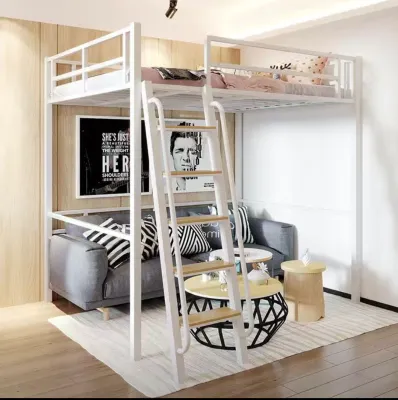
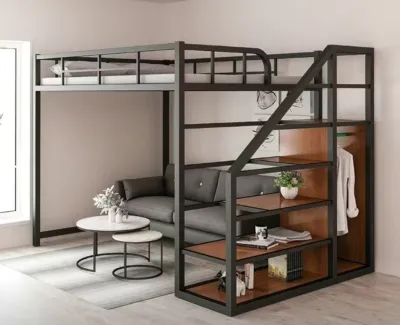
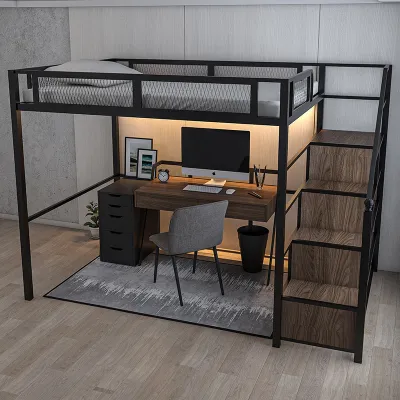
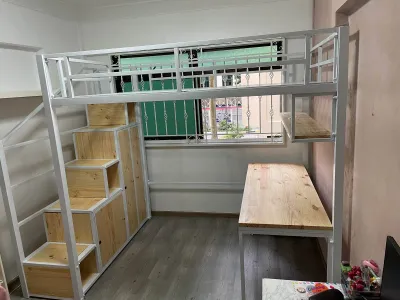
Prices are valid at publication and may change. Please refer to the product page for the latest price.
Guardrail and Fall Prevention Standards
Guardrails are the primary defense against falls, which are the most common accidents associated with elevated beds. A safe super single loft bed must feature continuous guardrails on all four sides of the top bunk. Even if you plan to position the bed flush against a bedroom wall, a guardrail is still required on the wall-facing side. Walls are rarely completely straight, and mattresses can shift, creating a hidden gap where a child could slip through and become trapped.
The height of the guardrail relative to the top of the mattress is a critical safety dimension. You must verify the manufacturer’s specifications for the maximum allowable mattress thickness. The guardrail must extend significantly above the top surface of the mattress—typically at least 127 to 160 millimetres above the mattress surface, depending on the safety standards applied. If you install a mattress that is too thick, the effective height of the guardrail is compromised, making it easier for a child to roll over the edge during sleep.
Inspect the gaps between the individual vertical slats of the guardrail, as well as the gap between the bottom rail and the bed frame. These openings must be narrow enough to prevent a child’s head, torso, or limbs from slipping through. A reliable guideline is to ensure that no gap exceeds 75 millimetres. Additionally, look for secure locking mechanisms or heavy-duty bolting systems that prevent the guardrails from being accidentally removed or dislodged by a child during play.
Ladder Stability and Access Safety
The ladder is the only pathway to and from the elevated sleeping area, making its stability and design paramount for daily safety. A safe loft bed ladder must be permanently attached or securely bolted to the bed frame. Avoid models that rely on simple hook-on ladders, as these can easily lift off, slide sideways, or tip over when a child climbs in a hurry.

Examine the design of the ladder rungs carefully. Thin, round wooden dowels or narrow metal bars can cause foot pain and increase the risk of slipping. Instead, prioritize ladders with wide, flat, and deep rungs that provide a stable and comfortable foothold. Look for textured surfaces, slip-resistant grooving, or adhesive grip treads that enhance traction, especially when climbing with socks or bare feet.
The angle of the ladder also plays a significant role in both safety and room layout. A vertical ladder saves the most floor space but requires more physical coordination and careful balance to climb safely. An angled ladder is much easier and safer for a child to navigate but extends further into the room. When planning your layout, ensure the ladder’s footprint does not obstruct walkways, create a tripping hazard, or interfere with other furniture in the bedroom.
Finally, check the entry point at the top of the ladder. The ladder placement must not block the guardrail opening or force the child to perform awkward maneuvers to get onto the mattress. The top of the ladder should feature sturdy handholds or extended guardrail posts that your child can securely grasp when transitioning from climbing to lying down.
Structural Integrity and Weight Limits
A super single loft bed must be built to withstand both static weight and dynamic forces, such as a child climbing, tossing, turning, or playing. Before purchasing, locate and verify the manufacturer’s stated maximum weight capacity specifically for the elevated bunk. This weight limit must comfortably accommodate the combined weight of the mattress, bedding, the child, and any potential dynamic movement.
Inspect the materials used in the frame’s construction. Solid hardwoods (such as oak, beech, or rubberwood) and heavy-gauge metal frames offer excellent structural integrity and stability compared to lightweight particleboard or thin-walled metal tubes. Pay close attention to the joint connections. Prioritize frames that use heavy-duty metal brackets, barrel nuts, and bolts over basic wood screws or glue. Metal-on-metal connections are far less likely to loosen or strip the wood fibers over time.
Look for structural reinforcement features that prevent the frame from swaying or shifting. High-quality loft beds incorporate cross-bracing on the back and sides, reinforced corner brackets, and sturdy center support slats under the mattress. In Singapore’s humid climate, natural wood can expand and contract slightly, which can cause joints to loosen. A structurally sound frame with robust bracing will resist these environmental changes and remain stable over years of use.
Entrapment Hazards and Mattress Fit
Entrapment is a severe hazard that occurs when a child’s head, neck, or limbs become wedged in gaps around the bed. The most common entrapment zones are the spaces between the mattress and the bed frame, or between the mattress and the guardrails. To eliminate these risks, the bed frame and the mattress must be correctly matched in size.
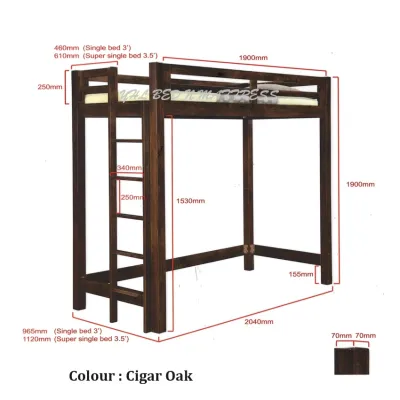
A super single loft bed is engineered specifically for a super single mattress, which measures 107 centimetres wide by 190 centimetres long. You must never use a standard single mattress (91 centimetres wide) on a super single frame. Doing so leaves a dangerous gap of approximately 16 centimetres along the side of the bed. This gap is wide enough for a child’s leg, arm, or even head to slip through, leading to severe entrapment or a fall.
In addition to the length and width, you must strictly adhere to the manufacturer’s maximum mattress thickness recommendation. Most loft beds are designed for mattresses with a thickness of 15 to 20 centimetres. Using a thicker, plush mattress might seem like a comfortable upgrade, but it reduces the effective height of the guardrails, making them ineffective at preventing falls. Always measure the mattress thickness before purchasing to ensure it leaves adequate guardrail clearance.
Check the support slats beneath the mattress as well. The gaps between individual slats must be narrow enough to support the mattress evenly without allowing it to sag or slide. A sagging mattress can create unexpected gaps at the edges of the bed frame, compromising the engineered safety clearances. Ensure the mattress fits snugly within the frame with no gaps wider than 25 millimetres around the perimeter.
Pre-Purchase Verification and Assembly Checklist
Before making a final decision, ask the retailer or manufacturer for safety compliance documentation or test reports. Reputable brands test their loft beds against international safety standards, such as the European standard EN 747 or the American standard ASTM F1427. Look for certification labels on the bed frame itself, which indicate that the design has undergone rigorous testing for stability, strength, and entrapment hazards.
When the bed is delivered to your home, perform a thorough inspection of all parts before beginning the assembly process. Check wooden components for structural cracks, deep splinters, or rough edges that could cause injury. Inspect metal parts for sharp edges, rust, or bent tubes. Ensure that all hardware, including bolts, nuts, and brackets, is present and undamaged. If you notice any defects, contact the retailer for replacements before proceeding.
Follow the assembly instructions exactly, step by step. Use only the hardware and tools specified in the manual. Never substitute missing bolts with random screws from a household toolbox, as they may lack the required shear strength to hold the frame together under load. If the instructions call for anchoring the loft bed to the wall, do not skip this step; wall anchoring provides essential stability and prevents the bed from tipping over during active use.
Once assembly is complete, establish a routine maintenance schedule. In Singapore’s humid environment, wood joints can settle, and metal fasteners can loosen slightly over time due to the natural movement of the bed. Check and tighten all bolts, brackets, and guardrail connections every few months. Regularly inspect the ladder attachment points and the mattress support slats to ensure everything remains secure, rigid, and safe for your child.
Frequently Asked Questions (FAQ)
At what age is it safe for a child to sleep on the top bunk of a loft bed?
Safety guidelines generally recommend a minimum age of six years old before a child is allowed to sleep on the top bunk of a loft bed. At this age, most children have developed the physical coordination, balance, and spatial awareness required to climb the ladder safely and navigate an elevated sleeping area. However, age is only a baseline guideline; parents must also assess their child’s individual maturity, physical coordination, and sleep habits. If your child frequently wakes up disoriented, walks in their sleep, or tends to play roughly, an elevated bed may not be suitable yet. Strictly avoid allowing toddlers or younger siblings to play on or climb the loft bed.
Can I use a standard single mattress on a super single loft bed?
No, you should never use a standard single mattress on a super single loft bed frame. A standard single mattress is 91 centimetres wide, while a super single frame is designed for a 107-centimetre-wide mattress. This dimensional mismatch creates a dangerous gap of approximately 16 centimetres along the side of the bed. This gap is a severe entrapment hazard where a child’s limb or head could become wedged, or they could slip through and fall. Always use a high-quality super single mattress that matches the exact dimensions and thickness specified by the bed manufacturer to ensure a snug, safe fit.

Community discussion
Share your experience or ask a question. Comments are reviewed before publication.