
To ensure a partition bunk bed is safe for children, you must evaluate its structural integrity, guardrail heights, gap clearances, partition stability, and material finishes. A partition bunk bed—which features a built-in divider, wall, or shelving unit to separate sleeping zones or create private study areas—introduces unique structural dynamics compared to standard bunk beds. Checking these physical features and verifying manufacturer-provided specifications before purchase helps prevent falls, entrapment, and tip-over accidents in your children’s bedroom.
In Singapore’s compact high-rise apartments, maximizing bedroom space often leads parents to choose shared room layouts. Partition bunk beds have become a popular solution, offering a sense of personal space and privacy for each child within a single footprint. However, adding a partition panel, integrated shelving, or a dividing wall to an elevated bed frame alters the center of gravity and introduces new physical gaps. Ensuring your children’s safety requires looking beyond aesthetics to carefully inspect the structural joints, guardrail dimensions, and anchoring mechanisms.
Structural Integrity and Fall Prevention
Guardrails on the upper bunk serve as the primary defense against accidental falls during sleep. When evaluating a partition bunk bed, measure the distance from the top of the guardrail to the top of the mattress support platform. To provide adequate protection, the guardrail must extend significantly above the top surface of the mattress. A common safety benchmark is to maintain a continuous barrier that stands at least 127 millimeters above the mattress surface. This means you must check the manufacturer’s recommended mattress thickness, as an overly thick mattress will compromise the effective height of the guardrail.
Products mentioned in this guide
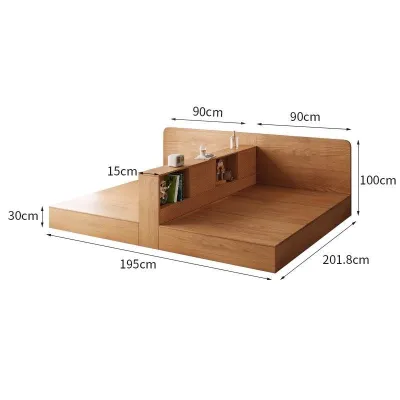

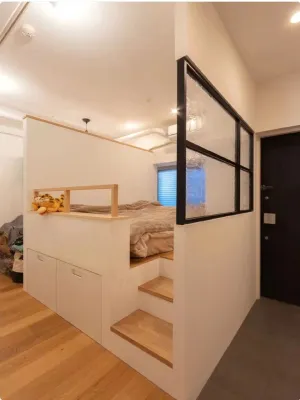

Prices are valid at publication and may change. Please refer to the product page for the latest price.
The design of the guardrail itself must be continuous along both sides of the upper bunk, with the exception of the ladder entry point. If the bed features a partition wall that acts as part of the guardrail, verify that this partition is securely fastened to the bed frame at multiple points. Any gap in the guardrail, including the access opening for the ladder, should be wide enough for easy entry but narrow enough to prevent a child from slipping through. Typically, the access opening should not exceed 380 millimeters in width to minimize the risk of accidental falls while sleeping.
Ladders and stairs require close inspection, as they are the primary access points to the elevated bed. A safe ladder must be securely bolted or hooked to the main bed frame so that it cannot slide, tilt, or detach during use. Look for ladders with wide, flat rungs rather than thin, round dowels, as flat steps provide better traction and support for small feet. The spacing between the rungs should be uniform, ideally between 250 and 300 millimeters, to prevent slipping during climbs. If the partition bed utilizes a staircase design with integrated storage, ensure each step has a non-slip surface and a sturdy handrail.
Verifying the manufacturer-stated weight limits is another critical step in assessing structural integrity. These limits must account for the weight of the mattress, bedding, and the child. When reviewing product specifications, look for clear weight capacity ratings for both the upper and lower bunks. The upper bunk typically has a lower weight capacity due to its elevated position, and this limit must never be exceeded. Ensure the manufacturer provides these ratings based on structural testing, and avoid beds that do not clearly state their maximum load capacities in the product documentation.
Entrapment Hazards and Gap Clearances
Entrapment hazards occur when a child’s head, neck, or limbs become wedged in gaps between different components of the bed. To prevent these dangerous situations, you must measure the clearances between the guardrails, the bed frame, and the partition wall. Any gap where a child could potentially slide through feet-first must be either small enough to prevent the body from passing through, or large enough to allow the head to pass through safely. Specifically, gaps should be less than 90 millimeters to prevent a child’s torso or limbs from slipping through, or greater than 230 millimeters to ensure the head does not get trapped.

The fit of the mattress within the bed frame is equally important for preventing entrapment. A mattress that is too small for the frame can shift, leaving dangerous gaps along the sides or ends. When purchasing a partition bunk bed, compare the interior dimensions of the bed frame with the exact dimensions of the mattress you plan to use. The mattress must fit snugly against the frame, with no more than a 25-millimeter gap between the mattress edge and the surrounding bed structure. This tight fit prevents limbs from slipping down the sides and getting wedged during the night.
Partition panels often feature decorative cutouts, windows, or shelving units to allow light and air to pass through. While these design elements can make the bed look appealing, they can pose serious snagging or entrapment risks. Inspect these cutouts carefully to ensure they do not have sharp angles, narrow V-shapes, or small openings where a child’s fingers, head, or clothing drawstrings could get caught. Any opening within the partition panel should follow the same safety clearance rules as the guardrails, avoiding gaps between 90 and 230 millimeters.
Additionally, pay close attention to the joints where the partition wall meets the bed frame. These areas should be completely sealed or have clearances that do not allow small fingers to be pinched. If the partition includes integrated shelving, verify that the shelves are fixed in place and cannot be easily pulled down or dislodged by a child climbing on them. Ensuring all decorative and functional elements of the partition are smooth and gap-free is essential for a safe sleeping environment.
Partition Stability and Anti-Tip Measures
The defining feature of a partition bunk bed is the dividing wall or panel, which adds weight and alters the bed’s overall stability. Because this partition is often tall and vertical, it can act as a lever if a child leans, pushes, or climbs on it. You must verify how the partition wall anchors to the main bed frame. A safe design will use heavy-duty steel bolts, brackets, and metal-to-metal connectors to secure the partition at multiple points along the bed’s base and upper frame. Avoid designs that rely solely on wood screws or dowels, as these can loosen over time under active use.
To prevent the entire structure from tipping over, especially during active play or climbing, the bed frame must be anchored to the wall. Check the product specifications to see if the manufacturer includes a dedicated wall-anchoring kit or anti-tip hardware. In Singapore homes, where walls are typically made of concrete or drywall, you must use the appropriate wall plugs and anchors suitable for your specific wall type. Anchoring the bed to the wall ensures that even if a child climbs on the outer frame or leans heavily against the partition, the bed remains securely upright.
The physical footprint of the bed also plays a major role in its resistance to tipping. A bed with a wider base or integrated lower-bunk extensions generally has a lower center of gravity and greater stability. When planning your room layout, ensure the bed sits on a completely level floor surface. If the floor is uneven, the center of gravity shifts, increasing the risk of wobbling or tipping. You can verify stability by checking that the bed frame makes full, even contact with the floor at all support points.
Furthermore, consider the weight distribution of the partition itself. If the partition contains heavy materials or integrated storage shelves, these should ideally be positioned lower in the structure to keep the center of gravity as low as possible. Avoid placing heavy books, toys, or decorative items on high shelves within the partition, as this can make the bed top-heavy and more susceptible to tipping. Regularly checking the alignment of the bed against the wall will help you spot any shifting before it becomes a safety hazard.
Material Safety and Surface Finishes
The physical materials and surface finishes of a partition bunk bed directly impact your child’s daily safety and health. When inspecting a bed in a showroom or upon delivery, run your hands along all accessible surfaces to check for rounded edges and smooth joints. Sharp corners on bed posts, guardrails, or the partition wall can cause painful bumps and cuts during play. Ensure that all hardware, such as bolts, screws, and brackets, is countersunk or covered with smooth plastic caps so that it cannot snag clothing or scratch skin.
Do not assume a bed is safe or durable simply because the product description lists a material like solid wood or steel. Instead, look for specific indicators of quality construction, such as mortise-and-tenon joints, reinforced corner blocks, and heavy-duty metal hardware. If the bed is made of engineered wood, check that the edges are fully banded and sealed to prevent moisture absorption and splintering. For metal frames, inspect the welds to ensure they are smooth, continuous, and free of sharp burrs or cracks.
Surface coatings, including paints, varnishes, and sealants, must be thoroughly evaluated for chemical safety. Children often touch, lean against, or even bite bed frames, making non-toxic finishes essential. Read the product labels and manufacturer documentation to verify that the finishes are free from lead and other heavy metals. Look for certifications or manufacturer declarations indicating that the coatings comply with international safety standards for children’s products, which restrict the use of harmful chemicals.
Additionally, check for low volatile organic compound (VOC) emissions to maintain healthy indoor air quality in your child’s bedroom. Many modern furniture finishes release gases that can irritate respiratory systems, particularly in enclosed, air-conditioned rooms common in Singapore. Choosing a bed with certified low-VOC finishes helps ensure that the air your children breathe while sleeping remains clean and safe. Always request this information from the retailer if it is not clearly stated on the product label.
Assembly Requirements and Ongoing Maintenance
Safe usage of a partition bunk bed begins long before your children sleep in it, starting with careful room planning and proper assembly. Before purchasing, measure your room’s dimensions, paying close attention to the ceiling height. There must be adequate clearance between the top of the upper mattress and the ceiling to prevent head injuries when a child sits up. A minimum clearance of 760 millimeters is recommended. Additionally, ensure the bed is positioned away from ceiling fans, light fixtures, and windows to eliminate external hazards.
During assembly, it is vital to follow the manufacturer’s instructions precisely, using the specified tools and hardware. Do not substitute missing screws or bolts with random hardware from a toolbox, as this can compromise the structural integrity of the joints. Pay close attention to torque requirements; over-tightening can split wooden components or strip metal threads, while under-tightening leaves joints loose and prone to wobbling. If you are not confident in your assembly skills, hiring a professional installation service is a highly recommended step to ensure the bed is built safely.
Once the bed is assembled, safety requires ongoing vigilance and regular maintenance checks. Bunk beds experience significant dynamic forces as children climb, roll, and play on them, which can cause fasteners to loosen over time. Establish a routine inspection schedule—such as once every three months—to check the tightness of all bolts, screws, and brackets. Pay special attention to the joints connecting the partition wall, the ladder attachments, and the guardrails, as these areas experience the most stress.
During your routine inspections, examine the wood or metal components for any signs of wear, cracking, or splintering. If you notice any structural damage, such as a cracked ladder rung or a loose guardrail bracket, stop using the bed immediately until the damaged part can be repaired or replaced with official manufacturer parts. Keeping a close eye on the bed’s physical condition ensures that minor wear does not escalate into a serious safety hazard, preserving a secure sleeping environment for your children.
Frequently Asked Questions (FAQ)
At what age is it safe for a child to sleep on the top bunk of a partition bed?
Most safety standards and manufacturers recommend that children under the age of six should not sleep on the top bunk of any elevated bed, including partition bunk beds. At this developmental stage, younger children may lack the physical coordination, balance, and spatial awareness required to safely navigate ladders and elevated platforms, especially in the dark. Additionally, younger children are more prone to active movement during sleep, which increases the risk of accidental falls. Before allowing an older child to use the top bunk, assess their behavioral readiness, ensuring they understand that the upper bed is strictly for sleeping and not a play area.
Can I use a thicker mattress on the top bunk if it has high guardrails?
You should not use a mattress that exceeds the manufacturer’s maximum thickness specification, even if the guardrails appear high. The safety of the upper bunk relies on maintaining a minimum distance of 127 millimeters from the top of the mattress to the top of the guardrail. Using a thicker mattress reduces this protective barrier, making it easier for a child to roll over the guardrail during sleep. Always check the product manual or the safety label on the bed frame for the maximum allowable mattress height, and choose a low-profile mattress specifically designed for bunk beds to ensure the guardrails remain fully effective.
What should I do if the partition bunk bed starts wobbling after assembly?
If you notice any wobbling or instability, stop using the bed immediately and prevent your children from climbing on it. Begin troubleshooting by checking that all bolts, screws, and brackets are fully tightened according to the assembly manual, as loose fasteners are the most common cause of instability. Next, verify that the bed is sitting on a completely level floor and that the wall-anchoring brackets are securely attached to both the frame and the wall. If the wobbling persists after tightening all hardware and leveling the bed, do not attempt temporary DIY fixes; instead, contact the manufacturer or a professional furniture installer to assess the structure for potential defects or assembly errors.

Community discussion
Share your experience or ask a question. Comments are reviewed before publication.