
Quick Answer: Core Safety Checks for Children's Bunk Beds
When shopping for a double decker bed, safety must be your absolute priority. Before making a purchase, verify four critical safety areas to ensure your child’s sleeping environment is secure. First, ensure the top bunk has continuous guardrails on all sides with a height that rises at least 12.7 cm above the mattress surface. Second, check that the ladder is securely bolted to the frame, features wide, slip-resistant steps, and offers a comfortable climbing angle. Third, confirm that the mattress dimensions match the bed frame perfectly to eliminate dangerous gaps. Finally, test the structural integrity of the frame for wobbling and verify that the manufacturer’s weight limits accommodate your child’s growth.
Guardrails and Fall Prevention Standards
Guardrails are the primary defense against nighttime falls, making them the most critical safety feature on any double decker bed. A safe design requires continuous guardrails on both sides of the elevated bed. Even if you plan to place the bed flush against a bedroom wall, a child can still slip into the gap between the mattress and the wall. Having a permanent guardrail on the wall-facing side prevents this dangerous entrapment scenario.

To ensure the guardrails do their job, you must measure their height relative to the mattress you plan to use. Safety guidelines dictate that the top of the guardrail must sit at least 12.7 cm (5 inches) above the top surface of the mattress. This means you cannot choose a mattress that is too thick, as a high-profile mattress will compromise the protective barrier of the guardrail. Always check the bed frame’s specifications for the maximum recommended mattress thickness before buying.
Products mentioned in this guide



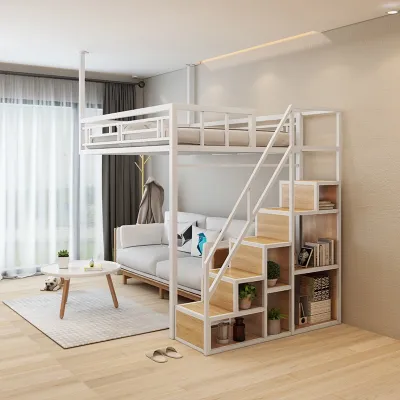
Prices are valid at publication and may change. Please refer to the product page for the latest price.
Beyond height, the spacing of the guardrail slats is equally important. Inspect the gaps between the individual vertical or horizontal slats of the guardrail, as well as the space between the bottom rail and the bed frame. These openings must be small enough to prevent a child’s head, torso, or limbs from slipping through. A reliable rule of thumb is that no gap should exceed 9 cm (3.5 inches).
Finally, physically test the guardrails in the showroom or upon delivery. They must be rigidly attached to the bed frame using heavy-duty bolts or screws. A child should not be able to wiggle, slide, or detach the guardrails through normal play or by leaning against them. Avoid models with clip-on guardrails that can be easily dislodged.
Ladder Design and Safe Access
Getting up and down from the top bunk safely requires a well-engineered ladder. When comparing different double decker models, pay close attention to how the ladder attaches to the bed frame. Prioritize ladders that are permanently fixed or bolted directly into the structure. Detachable or hook-on ladders are prone to shifting, slipping, or tipping over if a child climbs up too quickly or unevenly.
Step design directly impacts how easily a child can maintain their balance. Look for ladders with wide, flat steps rather than narrow, round rungs. Flat steps distribute weight more evenly across the sole of the foot, reducing discomfort and the risk of slipping. Additionally, check the surface texture of the steps; built-in grooves, rubberized grips, or textured finishes provide essential traction for bare feet or socks.
Consider the angle of the ladder and how it fits into your child’s bedroom layout. Slanted ladders are generally easier and safer for younger children to climb because they allow for a more natural center of gravity. However, they do extend further into the room, which can create a tripping hazard in tight spaces. Vertical ladders save valuable floor space but require greater physical coordination and upper-body strength to climb safely.
Spacing between the ladder rungs must be uniform from top to bottom. Uneven spacing can cause a child to misstep, especially when climbing down in the dark. Ensure the rungs do not flex or bend when an adult applies downward pressure, as any structural give in the ladder can cause a child to lose their footing.
Structural Integrity and Material Safety
A double decker bed must withstand years of active use, climbing, and weight shifts. When inspecting a bed in person, perform a physical shake test. Grab the corner posts of the bed frame and shake them firmly. A safe, well-constructed bed should feel solid and grounded, with no noticeable swaying, wobbling, or squeaking. Any movement at the joints indicates weak connections that will only worsen over time.
Examine the materials used in the construction of the frame. Solid hardwoods like rubberwood, oak, or beech are highly durable and provide excellent stability. If you prefer a metal frame, ensure the tubing is thick and the welded joints are clean and robust. Avoid lightweight materials or low-grade particle boards that can crack or warp under stress.
Weight capacity labels provide crucial information about the bed’s limits. Locate the manufacturer’s official weight ratings for both the top and bottom bunks. Keep in mind that these limits must cover not only your child’s current weight but also their projected growth, the weight of the mattress, and the occasional weight of a parent sitting on the edge of the bed during storytime.
Run your hands along all accessible surfaces, edges, and corners of the bed frame. Children frequently grab the frame for support, so every surface must be sanded perfectly smooth. Check for exposed hardware, such as protruding bolts or sharp screw heads, which can snag clothing or scratch skin. All assembly hardware should be recessed or covered with smooth plastic caps.
Mattress Fit and Entrapment Hazards
Using the wrong mattress size on a double decker bed can create hidden hazards. If a mattress is too small for the bed frame, it will slide around, leaving dangerous gaps along the sides, headboard, or footboard. A child’s arm, leg, or head can easily become trapped in these spaces. To prevent this, always match the mattress dimensions exactly to the internal measurements of the bed frame.
When placing the mattress inside the frame, perform a simple gap check. There should be no space wider than 3 cm between the mattress and the sides of the bed. If you can easily fit more than two fingers between the edge of the mattress and the wooden frame, the mattress is too small and should not be used.
Avoid using soft, sagging, or overly plush mattresses on the top bunk. A firm mattress provides better support and prevents a child from sinking too deeply, which could otherwise reduce the effective height of the guardrails. Additionally, never use a box spring or a thick mattress foundation on a double decker bed, as these will raise the sleeping surface to a dangerous height, rendering the guardrails useless.
Ensure the mattress sits completely flush against both the headboard and the footboard. If the bed frame features decorative cutouts or open slats on the headboard, verify that these openings are either completely sealed or small enough to prevent a child’s head from getting stuck.
Verifying Safety Certifications and Manufacturer Guidelines
Before purchasing any double decker bed, look for evidence of rigorous safety testing. Reputable manufacturers will display compliance labels indicating that the bed meets recognized international safety standards, such as ASTM F1427 or EN 747. These certifications guarantee that the bed has undergone testing for structural strength, entrapment hazards, and material toxicity.
Pay close attention to the manufacturer’s age recommendations. The general consensus among safety experts and manufacturers is that the top bunk is strictly unsuitable for children under six years of age. Younger children lack the physical coordination, balance, and developmental maturity to safely navigate the ladder and sleep on an elevated surface without falling.
Review the assembly instructions carefully, even if you plan to hire a professional installer. The manual will outline the exact hardware required and the precise steps needed to ensure structural stability. Never attempt to modify the bed’s design, skip steps, or substitute original hardware with generic screws from a hardware store, as DIY modifications can compromise the entire structure.
Keep the manufacturer’s manual, safety guidelines, and warranty information in a safe, accessible place. This documentation will be invaluable if you ever need to disassemble and reassemble the bed during a move, or if you need to order replacement parts directly from the manufacturer to maintain the bed’s safety over time.
Room Placement and Environmental Safety
Even the safest double decker bed can become hazardous if it is placed in the wrong part of a bedroom. Before buying, measure your room’s ceiling height carefully. In typical Singapore homes, ceiling heights average around 2.6 meters. To ensure your child can sit up comfortably on the top bunk without bumping their head, you need at least 75 to 90 cm of clear headroom between the top of the mattress and the ceiling.
Position the bed far away from potential ceiling hazards. This is especially important in tropical climates where ceiling fans are common. The top bunk must be placed well outside the sweep radius of any ceiling fan blades or hanging light fixtures. A child sitting up or moving on the top bunk should never be within arm’s reach of a moving fan.
Avoid placing the bed directly under or adjacent to a window. A child playing on the top bunk could lean against the window glass or screen, leading to a dangerous fall. Additionally, keep the bed away from window blind cords, curtains, or wall decorations with hanging strings, as these present serious strangulation hazards.
Finally, ensure the path to the ladder is always clear and well-lit. Consider installing a plug-in nightlight near the base of the ladder to help your child navigate the steps safely during nighttime bathroom visits. Maintain plenty of open floor space around the bed so that if a minor slip does occur, there are no sharp toys or hard furniture nearby to cause injury.
Frequently Asked Questions (FAQ)
At what age is it safe for a child to sleep on the top bunk?
Children should be at least six years old before they are allowed to sleep on the top bunk of a double decker bed. This age limit is a standard recommendation across safety certifications because younger children do not have the necessary coordination to climb the ladder safely, especially when half-awake. Before transitioning a child to the top bunk, assess their maturity, sleep habits, and physical ability. If your child is prone to sleepwalking, tossing and turning restlessly, or frequently waking up disoriented in the night, they should remain on the bottom bunk or a standard single bed regardless of their age.
How often should I inspect the bunk bed's hardware and joints?
You should perform a thorough safety inspection of your child’s double decker bed every three to six months, as well as immediately after moving or reassembling the frame. Daily climbing, shifting weight, and normal play will naturally cause screws, bolts, and brackets to loosen over time. Focus your inspection on the main structural joints, the ladder attachments, and the guardrail brackets. If you notice any new squeaks, a slight wobble when the bed is shaken, or visible gaps opening up between the wooden joints, use the appropriate tools to tighten the hardware immediately. If any structural component appears cracked, bent, or damaged, discontinue use of that bunk until you can obtain official replacement parts from the manufacturer.
Community discussion
Share your experience or ask a question. Comments are reviewed before publication.