
When maximizing floor space in compact bedrooms, a loft bed offers an excellent layout solution, but safety must remain your primary consideration before making a purchase. Ensuring an elevated bed is safe for your child requires a systematic evaluation of its physical design, structural stability, and how it fits into your specific room layout. By focusing on critical features such as guardrail height, ladder security, weight limits, and room clearance, you can create a secure sleeping and study environment that prevents accidents.
In high-rise apartments where concrete walls and standard ceiling heights of around 2.6 to 2.8 metres are common, choosing the right loft bed involves more than just picking an appealing style. You must carefully measure your available space, understand the structural requirements for secure anchoring, and verify that the bed’s design matches your child’s developmental stage. Taking the time to inspect these safety features beforehand ensures the bed remains a functional and secure addition to your home for years to come.
Evaluating Guardrails for Fall Prevention
Guardrails serve as the primary defense against accidental falls during sleep, making them one of the most critical safety features to inspect on any elevated bed. When evaluating a loft bed, check that the guardrails are continuous on all four sides of the platform. Even if you plan to place the bed flush against a wall, a gap between the mattress and the wall can still present a trapping hazard or allow a child to slip through. A secure design features robust rails on both the open sides and the wall-facing side, leaving openings only at the designated ladder access point.
Products mentioned in this guide
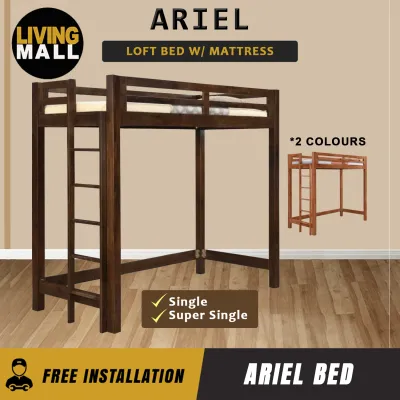

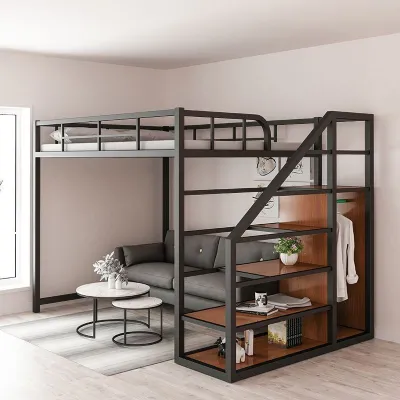

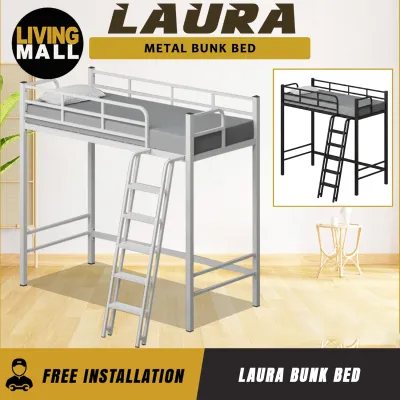


Prices are valid at publication and may change. Please refer to the product page for the latest price.
The height of the guardrail relative to the mattress is another vital factor that directly impacts fall prevention. Safety standards generally dictate that the top of the guardrail must extend at least 127 millimetres above the top surface of the mattress. To verify this, you must account for the specific thickness of the mattress you plan to install. A mattress that is too thick will reduce the effective height of the guardrail, rendering it less effective. Always check the manufacturer’s specifications for the maximum allowable mattress thickness to ensure the guardrail maintains its protective barrier.
Additionally, inspect the spacing between the individual slats or spindles of the guardrails. These gaps must be narrow enough to prevent a child’s head, limbs, or torso from becoming entrapped. Standard safety guidelines recommend that the distance between slats should not exceed 90 millimetres. When browsing options, physically measure these gaps or consult the product manual to confirm they meet safety certifications. Ensuring the slats are closely spaced and rigidly constructed prevents dangerous gaps from opening up under pressure.
Assessing Ladder and Access Stability
The ladder or staircase is the sole pathway to the elevated sleeping platform, meaning its stability and ease of use are paramount for daily safety. When choosing between a straight vertical ladder, an angled ladder, or built-in stairs, consider your child’s age, physical coordination, and the layout of the bedroom. Vertical ladders save the most floor space but require more upper-body strength and coordination to climb safely. Angled ladders offer a more gradual incline, making them easier to navigate, though they extend further into the room’s footprint.

For younger children or those who may need to descend the bed in the dark, built-in stairs with wide treads and integrated handrails provide a highly secure access route. Regardless of the style you choose, inspect the steps or rungs for anti-slip features. Look for textured surfaces, grooved steps, or grip tape that prevents slipping, especially when wearing socks. The width of each step should be sufficient to support the child’s entire foot comfortably, reducing the risk of missteps during late-night descents.
Equally important is how the ladder attaches to the main bed frame. A safe ladder must lock securely into place using heavy-duty brackets, screws, or hooks that prevent it from shifting, sliding, or detaching during use. Avoid models where the ladder simply hooks loosely over the side rail without a secondary locking mechanism. During your inspection, apply physical pressure to the ladder to ensure there is no play or movement at the connection points, as a shifting ladder can easily cause a child to lose balance.
Verifying Structural Integrity and Weight Limits
A loft bed must be structurally sound enough to withstand not only the static weight of a sleeping child but also the dynamic forces of climbing, shifting, and daily use. Begin by locating the manufacturer’s stated maximum weight capacity, which is typically found on a safety label affixed to the frame or detailed in the instruction manual. This weight limit must accommodate the combined weight of the child, the mattress, bedding, and any personal items kept on the bed. Keep in mind that children grow quickly, so choosing a bed with a generous weight margin is a prudent long-term decision.
Next, examine the mattress support system, which usually consists of wooden or metal slats running horizontally across the frame. These slats must be made of dense, high-quality materials and spaced closely together to provide uniform support for the mattress. Verify that the slats are securely fastened to the side rails with screws or heavy-duty brackets rather than simply resting on a ledge. A weak or poorly secured slat system can collapse under sudden impact, posing a severe safety risk to the child sleeping above or playing below.
If you are viewing an assembled display model in a retail showroom, perform a physical shake test to assess its overall stability. Grasp the bed frame firmly and shake it to check for excessive wobbling, swaying, or joint movement. A high-quality loft bed should feel rigid and solid, with no noticeable flexing in the posts or guardrails. Listen closely for any squeaking or creaking sounds, which often indicate loose hardware, poor joint tolerances, or weak materials that may degrade further over time.
Planning Room Clearance and Safe Placement
Safe placement of a loft bed requires careful planning of the surrounding room dimensions and potential hazards. Before purchasing, measure the vertical clearance between the top of the mattress and your bedroom ceiling. To allow a child to sit up comfortably in bed without bumping their head, you should maintain a minimum clearance of 760 millimetres between the mattress surface and the ceiling. In homes with standard ceiling heights, this measurement is crucial and may require you to opt for a low-loft design rather than a full-height model.
The positioning of the bed relative to other room fixtures is equally critical for preventing injuries. Ensure the loft bed is situated far away from ceiling fans, air conditioning units, and low-hanging light fixtures. A child sitting up quickly or stretching their arms could easily make contact with a spinning fan blade or hot light bulb. Additionally, keep the bed clear of windows, window blind cords, and electrical outlets to eliminate the risks of falls through glass or accidental strangulation from dangling cords.
Finally, consider the anchoring requirements for the specific model you select. Because loft beds have a high center of gravity, they can be prone to tipping if a child climbs on the outer frame. Many manufacturers include wall-anchoring kits or anti-tip brackets with their products. In homes where bedroom walls are made of solid concrete or brick, you will need appropriate masonry drills and wall plugs to secure these anchors firmly. Properly anchoring the bed frame to the wall provides an essential layer of stability that prevents tip-over accidents.
Setting Age Guidelines and Household Safety Rules
Even the most structurally sound loft bed requires proper usage guidelines to ensure ongoing safety in the home. Manufacturer recommendations generally state that loft beds and top bunks are not suitable for children under six years of age. Younger children often lack the coordination, balance, and spatial awareness required to safely navigate the ladder and elevated platform, especially when waking up disoriented in the middle of the night. Adhering strictly to this age limit is one of the simplest ways to prevent serious injuries.
Once the bed is installed, establish clear and non-negotiable household safety rules with your children. Prohibit rough play, wrestling, and jumping on the elevated platform, as these activities place extreme dynamic stress on the frame and increase the risk of falls. Emphasize that the ladder is the only approved method for climbing up and down, and discourage children from climbing up the outer frame or guardrails. Additionally, forbid the hanging of items such as belts, ropes, bags, or jump ropes from the bed frame, as these present severe strangulation hazards.
The space underneath the loft bed must also be managed carefully to maintain a safe environment. If you configure this lower area as a study zone or play nook, ensure it is well-lit and kept free of sharp objects, clutter, or hard edges that could cause injury if a child bumps their head while standing up. Regularly inspect the underside of the bed to ensure that no hardware has loosened and that the mattress support slats remain securely in place, keeping the entire structure safe from top to bottom.
Frequently Asked Questions (FAQ)
Can I use any mattress thickness on a loft bed?
No, you cannot use just any mattress thickness on a loft bed. Thicker mattresses reduce the effective height of the guardrails, which can compromise fall protection. To maintain a safe barrier, the top of the guardrail must sit at least 127 millimetres above the mattress surface. Always check the manufacturer’s specifications for the maximum recommended mattress thickness—typically between 120 and 150 millimetres—before purchasing a mattress for your loft bed.
How often should I check the loft bed's hardware?
You should inspect and tighten the loft bed’s hardware at least once every six months, or immediately if you notice any new squeaking, wobbling, or movement. Over time, the physical stress of climbing and shifting can cause bolts, screws, and joints to loosen slightly. Following the manufacturer’s care instructions and periodically tightening all connection points ensures the frame maintains its structural integrity and remains safe for daily use.

Community discussion
Share your experience or ask a question. Comments are reviewed before publication.