
A safe loft bed staircase must feature robust structural stability, slip-resistant steps with a child-friendly depth-to-height ratio, continuous handrails scaled for small hands, and a gentle incline angle that prevents loss of balance. Unlike vertical ladders, a well-designed staircase provides a solid foundation that supports a child’s natural climbing posture, making it the preferred choice for parents prioritizing safety. To ensure independent and secure use, parents must look beyond aesthetics and evaluate specific engineering details, from the anchoring mechanisms to the spacing of the guardrails. By focusing on these critical safety dimensions, you can create a secure sleeping and play environment that accommodates your child’s physical development and coordination.
Structural Stability and Weight Capacity
The foundation of any safe loft staircase lies in its structural integrity and how securely it connects to the main bed frame. When evaluating different models, inspect the connection points closely to ensure they utilize heavy-duty steel bolts or robust metal brackets rather than simple wood screws. Wood screws can loosen over time due to the constant dynamic forces of climbing, leading to structural degradation.
Anti-tip anchoring is another critical safety feature that prevents the staircase from shifting or tipping away from the bed. Look for staircase units that feature dedicated wall-mounting brackets or secure interlocking systems that physically bind the stairs to the bed frame. If the staircase is freestanding, it must be anchored directly to the wall studs using heavy-duty straps or L-brackets to eliminate tipping risks.
Products mentioned in this guide


Prices are valid at publication and may change. Please refer to the product page for the latest price.
Weight capacity is a vital specification that must accommodate more than just your child’s current weight. Verify the manufacturer’s stated weight limits to ensure the structure can support your child, their bedding, and any heavy items they might carry. Choosing a staircase with a higher weight capacity also ensures it can support an adult when changing sheets or assisting a sick child.
Post-assembly stability testing is essential before allowing any child to use the stairs. Once assembled, apply firm physical pressure from multiple angles to check for any swaying, wobbling, or creaking. Establish a routine to inspect the hardware every few months, re-tightening any bolts that may have loosened from daily vibrations, and immediately suspend use if you detect structural movement.
Step Design and Slip Resistance
The physical dimensions of each step directly influence how safely a young child can navigate the staircase. Standard adult stair dimensions are often too steep or deep for a child’s shorter stride, making a specialized child-friendly depth-to-height ratio essential. Look for steps that offer a shallow riser height and a generous tread depth so your child can place their entire foot securely on each step.

Slip resistance is a non-negotiable feature for steps navigated in socks, bare feet, or pajamas. Raw, polished wood or smooth laminate surfaces can be incredibly slippery, especially in humid climates or air-conditioned rooms. Opt for staircases that feature built-in textures, deep grooves carved into the wood, or factory-applied non-slip grip tapes that provide reliable traction.
If you choose a wooden staircase, inspect the finish to ensure it is smooth to the touch with no exposed wood grain that could cause splinters. All edges and corners of the steps must be rounded or chamfered to minimize the severity of any accidental bumps. Additionally, check that there are no protruding screw heads or hardware along the path of travel.
Visual contrast on the edge of each step helps children judge depth, particularly when descending. Steps that blend seamlessly into one another can cause a child to misjudge where a step ends, leading to slips. Selecting a staircase with distinct edge markings, or adding high-contrast non-slip treads, provides a clear visual guide that supports safe navigation during both daytime and nighttime use.
Handrails and Guardrails
A continuous, easy-to-grip handrail is one of the most effective defenses against falls on a loft staircase. The handrail must be positioned at a height that matches your child’s standing stature, allowing them to maintain a natural, upright posture. Ensure the handrail’s diameter is small enough for a child’s hand to wrap around completely, providing a secure grip they can maintain without letting go.
Guardrails and balusters along the open side of the staircase must be spaced closely together to prevent dangerous entrapment hazards. Standard safety principles dictate that the gaps between vertical balusters or horizontal rails must be narrow enough to prevent a child’s head, limbs, or torso from slipping through. Carefully measure these gaps during assembly to ensure they comply with standard child safety guidelines, which typically restrict openings to under 10 centimeters.
The transition zone where the top of the staircase meets the loft bed platform is a common site for accidents if not properly designed. There must be a seamless connection between the staircase handrails and the bed’s guardrails, leaving no wide gaps. The entry point to the bed should be clearly defined, with the bed’s guardrails extending fully around the rest of the perimeter to prevent falls.
Verify that all guardrails are rigidly attached and do not flex when a child leans their full weight against them. A flimsy guardrail can give a false sense of security, leading to structural failure if a child slips and grabs the rail for support. Look for solid wood or reinforced metal guardrail systems bolted directly into the main support posts.
Incline Angle and Space Requirements
The incline angle, or pitch, of the staircase determines how much physical effort and balance are required to climb it. While steep, space-saving staircases are tempting for smaller bedrooms, they force children into a more vertical climbing posture that increases the risk of falling backward. A gentler, standard angled staircase allows children to maintain their center of gravity over their feet, making climbing significantly safer.
A safer, gentler incline naturally requires a larger spatial footprint, meaning you must carefully measure your room’s floor space before purchasing. Ensure there is ample bottom clearance at the foot of the stairs so your child can step off safely onto a flat, unobstructed floor. A cramped landing area can force a child to step off awkwardly, increasing the risk of trips.
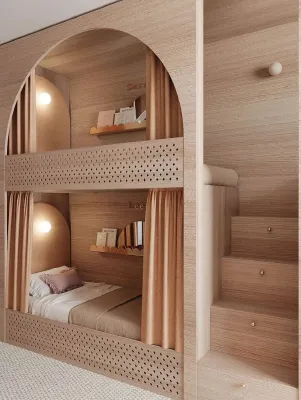
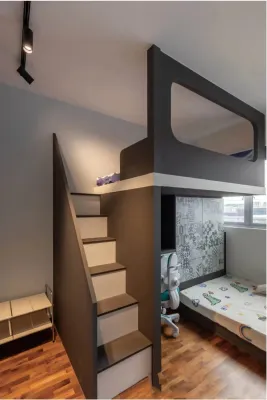
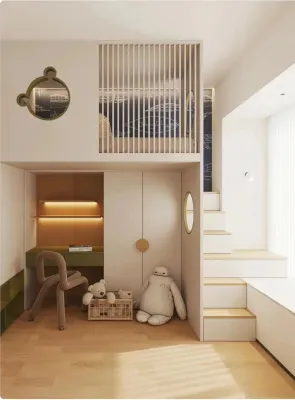
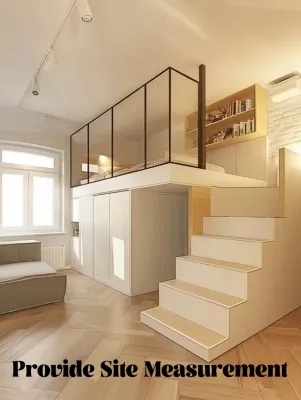
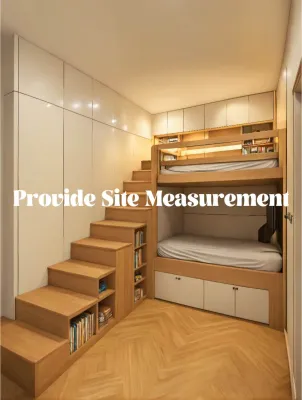
When planning the layout of the bedroom, maintain a clear buffer zone around the climbing area of the staircase. Avoid placing the staircase near doors that open inward, windows, or sharp-edged furniture like desks and dressers. If space is limited, consider a loft bed layout where the staircase is integrated with built-in storage drawers, which maximizes utility without sacrificing safety.
Take into account the delivery and installation logistics of a larger staircase unit within your home. Measure your doorways, hallways, and lift access points to ensure the flat-packed or pre-assembled components can be easily transported. A staircase that is difficult to maneuver may suffer damage during transport, compromising its structural integrity before it is even installed.
Pre-Purchase and Installation Safety Checks
Before finalizing your purchase, thoroughly review the manufacturer’s product labels, instruction manuals, and safety warnings. Confirm that the loft bed and staircase are rated for your child’s age group, as most manufacturers recommend loft beds only for children aged six and older. Additionally, check the required ceiling height to ensure your child will have enough headroom to stand comfortably on the top step.
During the assembly process, follow the manufacturer’s instructions meticulously, ensuring that every single bolt, dowel, and bracket is installed in its correct position. Never skip steps or substitute hardware, as even a minor omission can compromise the overall stability of the staircase. If the instructions call for specific tools, use them exactly as directed to ensure a secure, long-lasting bond.
Once assembly is complete, perform a rigorous load test and physical inspection of all joints and fasteners. Walk up the stairs yourself if the weight limit allows, or apply heavy pressure to each step to check for flexing. Inspect the wood for any signs of cracking, splitting, or manufacturing defects that may have occurred during shipping or assembly, and contact the manufacturer immediately if you find issues.
Establish a routine maintenance schedule to keep the loft staircase in safe working condition over years of use. Check all fasteners every three to six months, as natural wood expansion and contraction can cause bolts to loosen over time. Define clear stop-use conditions for your household, such as a loose handrail, a cracked step, or worn-down non-slip surfaces, and restrict access until repairs are completed.
Frequently Asked Questions (FAQ)
At what age is it safe for a child to use a loft staircase independently?
While many manufacturers recommend loft beds for children aged six and older, age is only one factor to consider when determining readiness for independent use. You must assess your child’s individual physical coordination, balance, and motor skills, ensuring they can climb up and down confidently without holding onto external objects other than the handrail. Additionally, evaluate their cognitive ability to understand and consistently follow safety rules, such as not playing or jumping on the stairs.
The transition from active parental supervision to independent use should be gradual and based on observed behavior. Spend time watching your child use the stairs, correcting any unsafe habits like carrying large toys that block their vision or climbing with socks on slippery steps. To support safe independent use, especially during the night, install motion-activated nightlights along the staircase path so your child can clearly see each step without searching for a light switch.
Should I choose a staircase or a ladder for my child's loft bed?
Choosing between a staircase and a ladder involves balancing safety, usability, and available bedroom space. A staircase offers flat, wide steps that support the entire foot, making it significantly more stable and easier to navigate than a ladder with narrow rungs. This added stability is particularly beneficial for younger children, those with developing motor skills, or any child who needs to use the restroom at night.
Ladders, while highly space-saving, require a higher level of upper-body strength, balance, and coordination, as the climbing angle is much steeper and the foot support is minimal. If your child is younger or prone to sleepwalking, a staircase is the safer choice, whereas a ladder may be suitable for older children in compact rooms. If your room layout cannot accommodate the larger footprint of a safe staircase, it may be wiser to choose a standard floor bed.
Community discussion
Share your experience or ask a question. Comments are reviewed before publication.