
An entrance hall cabinet should ideally hold between 12 to 24 pairs of shoes for an average household of three to four people. This capacity keeps your daily footwear accessible at the main entry point of your home without causing visual clutter or physical obstruction. Rather than trying to cram your entire footwear collection into a single piece of furniture, the secret to a functional entryway lies in separating your active daily rotation from your long-term, archived storage.
In Singapore’s compact apartments and high-density residential developments, space is at a premium. A cluttered foyer not only looks uninviting but can also pose safety hazards during an emergency evacuation. By choosing an entrance hall cabinet with the correct capacity, you can establish an organized, high-efficiency transition zone that keeps your home clean, safe, and welcoming. Let us break down the exact steps, measurements, and design choices needed to determine the perfect shoe storage capacity for your specific living space.
A Simple Formula to Calculate Your Shoe Storage Needs
To avoid purchasing a cabinet that is either frustratingly small or unnecessarily bulky, you can use a flexible baseline formula to calculate your minimum capacity requirements. This formula moves away from arbitrary industry averages and focuses entirely on your household’s actual daily patterns.
Products mentioned in this guide
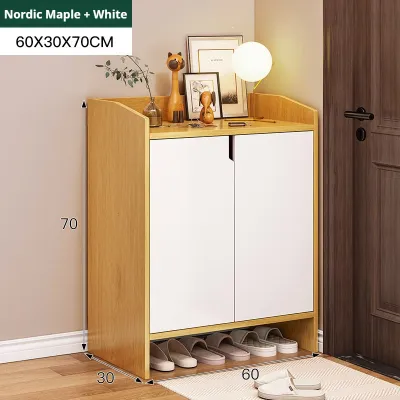
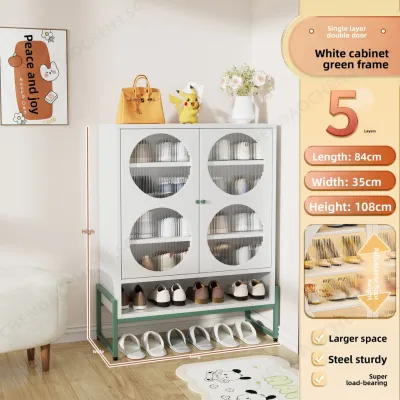
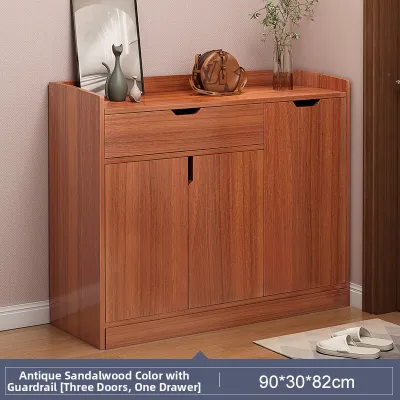
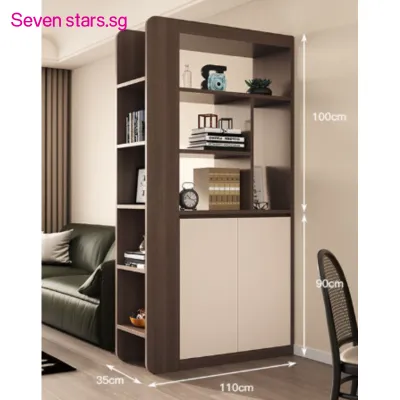
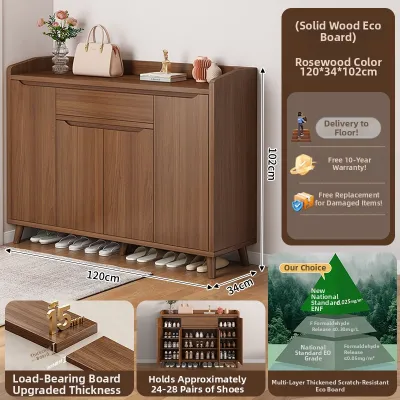
Prices are valid at publication and may change. Please refer to the product page for the latest price.
The baseline calculation is structured as follows:
Minimum Capacity = (Number of Household Members × Average Daily Rotation Pairs) + Guest/Seasonal Buffer
To apply this formula effectively, you must first define what constitutes an “active daily pair.” These are the shoes that household members wear multiple times throughout a typical week, such as work shoes, school shoes, daily walking sneakers, or casual sandals. For most individuals, this active rotation consists of two to three pairs.
The “Guest/Seasonal Buffer” represents the extra space reserved for visitors’ footwear or specialized shoes that you need to access quickly, such as rain boots or exercise shoes. In a standard household, a buffer of two to four pairs is generally sufficient.
For example, in a three-person household where each person keeps an active rotation of three pairs of shoes, the calculation would look like this:
(3 members × 3 active pairs) + 3 buffer pairs = 12 pairs of minimum capacity.
This baseline number represents the absolute minimum storage capacity your entrance hall cabinet should provide. It is designed to keep your entryway clear of loose shoes while ensuring that the cabinet itself remains compact. It is important to emphasize that this calculation is a starting point rather than a rigid, unyielding rule. If your household has unique lifestyle requirements, you will need to adjust this baseline upward. However, keeping this calculation focused strictly on high-frequency footwear prevents you from over-sizing the cabinet and consuming valuable floor space in your foyer.
Estimating Shoe Pairs Based on Household Habits
Refining your baseline capacity requires an honest assessment of your household’s daily habits, routines, and overall lifestyle. If you do not align your cabinet’s capacity with how your family actually lives, you may find your entryway reverting to a cluttered state within a few weeks of installing your new furniture.

Daily Rotation vs. Long-Term Storage
The primary reason entrance hall cabinets overflow is the failure to distinguish between daily rotation and long-term storage. To determine your true storage needs, start by conducting a comprehensive audit of your current entryway clutter. Take note of how many pairs of shoes are currently sitting on the floor, on open racks, or piled near the door.
Next, track which of these shoes are actually worn on a weekly basis. You will likely find that a significant portion of the footwear clogging your entryway consists of formal wear, specialized sports gear, out-of-season items, or even collectible sneakers that are rarely worn.
To maintain an efficient entrance hall cabinet, you must establish a strict boundary between active and archived footwear. The entryway cabinet should be treated as a high-velocity transit zone reserved almost exclusively for active pairs. Non-essential, seasonal, or rare-use shoes should be systematically relocated to secondary storage areas, such as bedroom wardrobes, under-bed storage containers, or dedicated utility closets. By keeping only your active weekly rotation at the front door, you can drastically reduce the required size of your entrance hall cabinet, allowing for a sleeker, more streamlined furniture piece.
Adjusting for Lifestyles and Footwear Types
Different lifestyles and professions naturally demand different types of footwear, which directly impacts both the quantity and physical volume of the shoes you need to store. A single formula cannot account for these variations without some manual adjustment.
For instance, an active runner or fitness enthusiast may require two or three different pairs of athletic shoes, each serving a specific training purpose. A corporate professional might need several pairs of formal dress shoes, heels, or leather loafers to match different outfits. Families with rapidly growing children face a different challenge: kids’ shoe sizes change constantly, and they often require separate pairs for school, sports, and casual wear. If your household falls into these categories, you should increase your per-person active pair estimate from two to four or five.
Furthermore, you must consider the physical volume of your footwear rather than just the raw number of pairs. Footwear is not uniform in size. Bulky basketball sneakers, steel-toed work boots, and high-top hiking shoes occupy significantly more physical space than flat sandals, canvas slip-ons, or ballet flats. If your household primarily wears bulky, high-volume shoes, a standard-sized shelf that normally holds four pairs of flats might only accommodate two or three pairs of boots or sneakers. When planning your cabinet capacity, take a physical count of these high-volume shoes and allocate extra internal width and height to accommodate them without crushing the materials.
Matching Cabinet Dimensions to Your Entrance Layout
While your household habits dictate how much storage you want, the physical layout of your entryway dictates how much storage you can actually have. Before purchasing an entrance hall cabinet, you must carefully reconcile your calculated shoe capacity with the spatial realities of your home.
Measuring the Footprint
Begin by taking precise measurements of the available space in your foyer or hallway. You will need to measure three critical dimensions:
- Width: The horizontal wall space available for the cabinet. Ensure the cabinet does not overlap with light switches, electrical outlets, or decorative wall trim.
- Height: The vertical space from the floor to the ceiling or any low-hanging features like electrical distribution boards, intercom systems, or decorative wall sconces.
- Depth: The distance the cabinet will protrude from the wall into the walking path. This is often the most restricted dimension in narrow hallways.
Clearance and Safety
Your entrance hall cabinet must never compromise the safety or mobility of the people living in your home. When positioning the cabinet, you must check all relevant clearances:
- Door Swing Radii: Ensure that the main entrance door, safety gates, and any adjacent room doors can open fully without striking the cabinet.
- Walkway Widths: Maintain a comfortable walking path. In Singapore, residential safety guidelines and HDB estate rules for shared common corridors require a clear escape path of at least 1.2 metres. While this rule applies strictly to external corridors, maintaining a similar clearance inside your private foyer ensures safe, unobstructed movement during emergencies.
- Accessibility: Verify that you can comfortably stand in front of the cabinet, open its doors or drawers fully, and bend down to retrieve shoes without feeling cramped or blocking the passage of other household members.
Depth Verification
Do not rely on generic “standard” cabinet depths when shopping. A common and frustrating mistake is buying a cabinet only to find that your shoes do not fit straight inside, forcing you to place them at an angle and drastically reducing the overall capacity.
To prevent this, measure the physical length of the largest pair of shoes in your household—typically a family member’s largest sneakers or dress shoes. Add at least 2 to 3 centimetres to this measurement to account for the thickness of the cabinet’s back panel, the front doors, and any internal shelf support hardware. For most adult shoes, a minimum internal shelf depth of 35 centimetres is required. If your household includes individuals with larger shoe sizes (such as UK size 10 or above), you may need an internal depth of 38 to 40 centimetres. If your entryway is too narrow to accommodate a 35-centimetre-deep cabinet, you will need to look at alternative internal configurations, such as tilt-out shoe drawers, which store shoes vertically rather than horizontally.
Maximizing Capacity with Smart Cabinet Interiors
The external dimensions of an entrance hall cabinet only tell half the story. The internal configuration, shelving mechanisms, and spatial design play a massive role in determining how many pairs of shoes can actually fit inside the unit.
Adjustable vs. Fixed Shelves
When selecting an entrance hall cabinet, prioritize units with adjustable shelving over those with fixed shelves. Fixed shelves create uniform vertical compartments that often lead to wasted space. For example, a compartment designed with enough height to fit ankle boots will have a massive amount of empty, unusable space above it if you use it to store flat sandals or flip-flops.
Adjustable shelves allow you to customize the vertical clearance of each tier to match the exact height of the shoes stored on it. You can compress the clearance for low-profile shoes like flats and sandals, allowing you to fit more shelves into the same vertical space. Conversely, you can expand the clearance for taller footwear like boots or high heels, preventing them from being bent or creased. This simple internal flexibility can increase your cabinet’s actual capacity by up to 30% without changing its external footprint.
Door and Drawer Mechanisms
The way your cabinet opens determines both its space efficiency and its suitability for your specific hallway layout:
- Standard Hinged Doors: These offer full, unobstructed access to the entire interior of the cabinet at once. However, they require significant clearance in front of the cabinet to swing open, making them less suitable for narrow corridors.
- Sliding Doors: Ideal for tight spaces, sliding doors do not require any front clearance to open. The trade-off is that you can only access one half of the cabinet at a time, which can make organizing and retrieving shoes slightly more tedious.
- Tilt-Out Drawers: These mechanisms store shoes vertically or at an angle inside shallow drawers that tilt outward. This design is incredibly space-efficient, allowing for cabinets with an external depth of as little as 17 to 24 centimetres. The limitation is capacity and shoe type: tilt-out drawers are generally unsuitable for tall boots, high heels, or exceptionally large, bulky sneakers, and they typically hold fewer pairs overall compared to traditional shelving.
- Pull-Out Shelves: These shelves slide out on drawer runners, allowing you to easily access shoes stored at the very back of deep cabinets. While highly convenient, the sliding hardware takes up some vertical and horizontal space, slightly reducing the total number of pairs you can store.
Vertical Utilization
If your entryway floor space is limited, the best way to increase your shoe storage capacity is to utilize vertical space. A tall, floor-to-ceiling entrance hall cabinet maximizes storage efficiency by taking advantage of unused wall space.
To make the most of a tall cabinet, organize it into functional zones based on accessibility. Keep the prime eye-level and waist-level zones (typically between 60 and 150 centimetres from the floor) for your most frequently used daily footwear. Use the lowest shelves for heavy shoes, boots, or children’s footwear that needs to be easily reached. The upper sections of the cabinet—which require reaching or a step stool to access—should be reserved for less frequently used items. This includes out-of-season footwear, shoe boxes, cleaning and maintenance kits, or guest slippers. This vertical zoning keeps your daily routine fast and seamless while keeping clutter completely out of sight.
Common Sizing Mistakes to Avoid Before Buying
Purchasing an entrance hall cabinet is a long-term investment in your home’s organization. To ensure you choose a piece of furniture that remains functional for years, avoid these common sizing and design mistakes.
Ignoring Shoe Boxes
Many homeowners prefer to store their shoes inside their original cardboard boxes or clear plastic organizer bins to protect them from dust and maintain order. However, shoe boxes are significantly wider, taller, and deeper than the loose shoes they contain. If you plan to store shoes in boxes, you must calculate your cabinet’s internal dimensions based on the dimensions of the boxes, not the shoes. Storing shoes in boxes can easily cut your cabinet’s physical capacity in half, so you will need to purchase a much larger cabinet or commit to storing your daily footwear loose on the shelves.
Overlooking Ventilation
Singapore’s tropical climate is characterized by high humidity levels, which can quickly turn a fully enclosed, non-ventilated shoe cabinet into a breeding ground for mold, mildew, and unpleasant odours. Daily-wear shoes absorb moisture from sweat and rain; trapping them in an airtight space is a recipe for damaged footwear and a smelly entryway.
When choosing an entrance hall cabinet, look for designs that incorporate built-in ventilation. Excellent options include cabinets with louvered doors, perforated back panels, or small ventilation gaps at the top and bottom of the doors. If you prefer a fully closed minimalist look, ensure you regularly air out the cabinet or place moisture-absorbing dehumidifier packs on the shelves to protect your footwear.
Misjudging Shelf Thickness
When calculating how many vertical tiers you can fit inside a cabinet of a certain height, do not just divide the total height by the height of your shoes. You must also account for the physical thickness of the shelves themselves. Standard wooden cabinet shelves are typically 1.5 to 2 centimetres thick. Over a tall cabinet with eight to ten shelves, this thickness can add up to 15 to 20 centimetres of lost vertical space—essentially costing you an entire tier of shoe storage. Always factor shelf thickness and support pin clearances into your vertical calculations to avoid underestimating the space you need.
Frequently Asked Questions (FAQ)
Should I store all my shoes in the entrance hall cabinet?
No, you should not store your entire shoe collection in your entrance hall cabinet. The entryway cabinet is most effective when treated as a high-frequency transit zone reserved for your current daily rotation (typically two to three pairs per household member) and a few pairs of guest slippers. Storing your entire collection here leads to overcrowded shelves, crushed shoes, and an unorganized entryway. Instead, distribute your less active footwear—such as formal wear, specialized sports shoes, and out-of-season items—to secondary storage locations like bedroom wardrobes, under-bed storage, or dedicated storage boxes in utility closets.
How do I accommodate tall boots in a standard cabinet?
To store tall boots in a standard entrance hall cabinet without bending or damaging the shafts, you should utilize adjustable shelves. Simply remove one or two adjustable shelves to create a tall, dedicated vertical slot on one side of the cabinet. To keep the boots upright and prevent them from creasing, use plastic boot shapers, inflatable inserts, or even rolled-up magazines inside the boot shafts. If your cabinet’s internal depth is too shallow for the boots to stand straight, you can lay them flat on their sides on a dedicated shelf, or use hanging boot organizers that clip onto the inside of the cabinet doors if space permits.
Community discussion
Share your experience or ask a question. Comments are reviewed before publication.